Last updated:
As an Amazon Associate we earn from qualifying purchases. This does not change what we recommend. See our affiliate disclaimer.
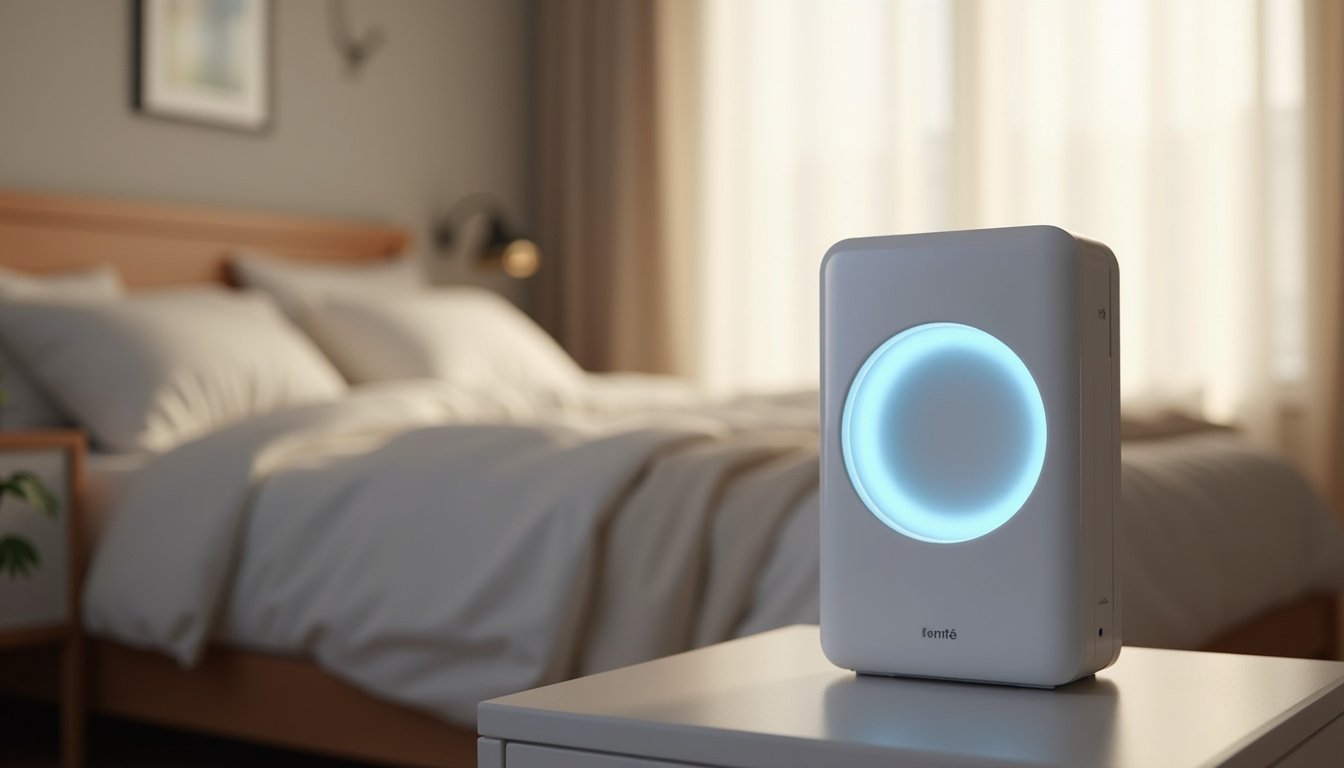
A blue glow from a purifier is less alarming than a red one and more puzzling. It may have been blue since it arrived, it may have just turned blue after an hour of green, or a small blue light may have appeared inside the housing. People ask whether blue is good, whether the unit is doing anything, and whether the glow itself is a worry.
A blue light on an air purifier almost always means one of four things. On most units with a color-coded air quality indicator, blue is the clean end of the scale: the particle sensor reads low, the fan has settled to its lowest speed in auto mode, and the room is as clean as the unit can measure. On others, blue is simply the power or standby color, lit whenever the unit is on, or the color of a sleep mode or Wi-Fi status. A blue light visible through the grille or inside the housing is usually a UV-C lamp, which some units include to irradiate the filter, or an LED beside an ionizer. None of these is a fault. Blue is never a warning color on purifiers; warnings are red, orange, flashing or a code. The questions worth asking are practical: whether a blue clean-air reading is accurate, whether the UV or ionizer the blue light marks should be switched off, and how to stop a bright blue ring lighting a bedroom at night.
In short: blue means clean air or simply power on, and sometimes a UV lamp or ionizer indicator. It is not a fault. Check the manual for which, switch off ionizers, and use sleep mode to dim it.
Maker manuals across brands assign blue to the cleanest air quality band or to power and standby indicators, and describe internal blue glows as UV-C lamps or ionizer indicators. The EPA notes that consumer particle sensors are indicative rather than precise and cautions against ozone-producing features.
This guide is research-based, drawn from maker manuals, EPA guidance on consumer sensors and air cleaners and published color conventions. We have not tested the units in the comparison table and quote no prices or ratings. Nothing here is medical advice.
Blue is routine when
- It is the air quality ring showing the cleanest band
- It is the power, standby, sleep or Wi-Fi indicator
- It is a UV-C lamp visible through the grille
- It appeared as the room cleared after cooking or cleaning
Worth a second look when
- Blue is accompanied by an ionizer or plasma feature you did not choose
- The light stays blue during obvious smoke or dust, suggesting a dirty sensor
- A UV glow is visible from outside the housing where the manual says it should not be
- The blue is too bright for sleep and no setting dims it
Key Takeaways
- On most units blue is the cleanest air quality band: the sensor reads low and the fan has settled.
- On others blue is the power, standby, sleep or Wi-Fi indicator and says nothing about the air.
- A blue glow inside the housing is usually a UV-C lamp or an ionizer indicator; check the manual for which.
- Blue is never a warning color on purifiers; warnings are red, orange, flashing or a code.
- A unit that stays blue during visible smoke or dust probably has a dusty sensor lens; clean it with a dry swab.
- Ionizers and some UV lamps can produce ozone; the EPA advises against ozone-producing features indoors, so switch them off.
- Sleep mode or a display button dims or switches off the blue ring at night without changing what the unit does.
Purifiers With Clear Indicators and No Ionizer
These widely reviewed units use plain HEPA and carbon filtration with readable air quality indicators, no ionizer or one that switches off, and displays that go fully dark in sleep mode. Compare the maker-listed CADR against your room and note which indicator colors the manual assigns.






How This Guide Approaches the Question
We looked at how brands assign blue across air quality, power and status indicators, at the UV and ionizer glows that show through housings, at how to tell whether a clean reading is trustworthy, and at how to live with a blue light in a bedroom. Product details in the table come from maker specifications.
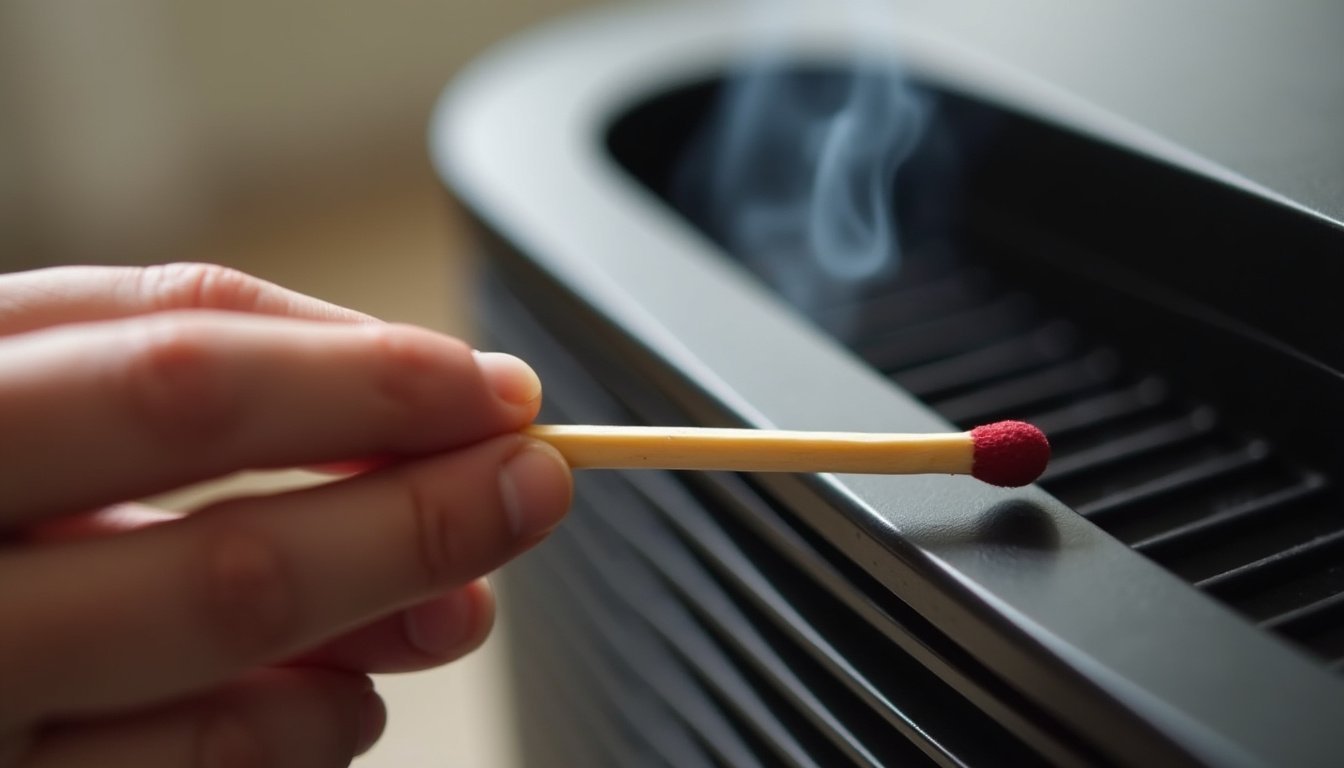
The quickest way to decode a blue light is to make the air dirty on purpose: light a match nearby and blow it out. If the blue shifts to green, amber or red and the fan rises, it is the air quality indicator and the sensor works. If nothing changes, it is a status light.
Four Meanings of a Blue Light
Purifier indicator design follows a loose convention in which blue sits at the clean end, red at the dirty end, and small single-color LEDs report power, mode and features. The same blue therefore carries different messages depending on which light it is.
| Where the blue light is | Most likely meaning | Driven by | Changes when |
|---|---|---|---|
| Large ring, bar or panel | Cleanest air quality band | Particle sensor | Air gets dirty: shifts to green, amber or red |
| Small power LED | Unit is on, or in standby | Power state | Only on or off |
| Moon or sleep icon | Sleep mode engaged | Setting | Mode changes |
| Wi-Fi or app symbol | Connected | Network | Connection drops: flashes or changes color |
| Glow through the grille or filter door | UV-C lamp | UV feature | Feature switched off or door opened |
| Small LED beside an ion or plasma symbol | Ionizer or plasma stage active | Feature | Feature switched off |
| Numeric display with blue background | Low PM2.5 reading | Particle sensor | Reading rises |
Where a unit has one ring doing several jobs, the manual’s indicator page shows which color belongs to which band; blue-green-amber-red and blue-purple-red are both common, and a few brands use blue for moderate and green for clean.
Blue as the Clean-Air Reading
On the commonest designs, blue means the particle sensor is reading its lowest band. The sensor shines light through a sample of air and counts scatter from fine particles; when little is counted, the unit reports clean and, in auto mode, drops the fan to its lowest speed. A room that turns blue twenty or thirty minutes after cooking, cleaning or opening a window is a unit working as intended. A blue reading is relative, not a certified measurement: consumer sensors respond mainly to fine particles, are affected by humidity and dust on the lens, and say nothing about gases or odors, which the sensor cannot see unless the unit has a separate gas sensor.
A unit that is blue while the room visibly smells of smoke, while a pet shakes beside it or while someone vacuums is reporting wrongly, and the cause is almost always a dirty lens. A unit that is blue because it runs on a fixed manual speed may simply have its air light showing the reading without controlling the fan; the reading is still useful.
Blue as Power, Standby or Status
Many makers use blue as the house color for power and status LEDs: a blue dot means on, a dimmer blue means standby, a blue moon means sleep mode, a blue Wi-Fi symbol means connected. These lights do not change with air quality and tell you nothing about the room. If the only blue light on the unit is small and constant, and the unit has no color-changing ring, it is a status indicator and the air quality, if the unit measures it at all, is reported elsewhere or in the app.
- Small constant blue dot: power on.
- Dim blue or breathing blue: standby or sleep mode.
- Blue moon or crescent: sleep mode engaged, display dimmed.
- Blue Wi-Fi arcs: connected to the network; flashing means pairing or dropped.
- Blue ring at startup that changes within a minute: the sensor warming up before reporting.
The Blue Glow Inside the Housing
A soft blue light visible through the grille, around the filter door or from the base is usually a UV-C lamp. Some purifiers include one to irradiate the filter surface, with the aim of reducing microbial growth on captured material. The visible blue is mostly the lamp’s phosphor glow rather than the UV itself, which is invisible, but a lamp that is visible from outside the housing is worth checking against the manual, since UV-C should be shielded from eyes and skin. The EPA notes that UV in consumer air cleaners has limited effect on moving air at typical exposure times and that some UV lamps generate ozone.
A small blue LED beside an ion, plasma or anion symbol marks an ionizer or plasma stage, which charges particles so they stick to surfaces or to the filter. These features can produce ozone, an airway irritant the EPA advises against generating indoors, and they add little to a unit that already has a HEPA filter. Switching them off is the sensible default, and the blue LED goes out with them.
| Internal blue glow | What it is | Keep it on? | Note |
|---|---|---|---|
| Glow through grille or filter door | UV-C lamp | Optional; often little benefit in a filter unit | Should be shielded; check manual if visible |
| LED beside ion or anion symbol | Ionizer | Off is the safer default | Can produce ozone |
| LED beside plasma or cold plasma symbol | Plasma stage | Off is the safer default | Can produce ozone |
| Glow at the base or under the housing | Decorative or ambient light | Personal preference | Usually dimmable |
| Blue through the outlet with no feature listed | Reflection of the display | Not a feature | Nothing to do |
Living With a Blue Light at Night
Blue light is the wavelength that most affects sleep, and a blue ring facing a bed is a problem whatever it means. Most units have a sleep or night mode that dims or extinguishes every indicator while the unit keeps running, and many have a display button that does the same with a long press. Switching the light off does not change what the unit does: the sensor still drives the fan in auto and the filter counter still runs. If no setting exists, a small piece of opaque tape over the ring is harmless as long as it covers no vent or sensor port, and turning the unit so the display faces away from the bed is simpler still.
Worked example: a bedroom unit shows a bright blue ring all night. Its manual assigns blue to clean air and lists a sleep button; a three-second press fixes the fan on low and turns the ring off. The unit keeps cleaning and the room is dark. In the morning a short press brings the display back, still blue.
When Blue Is Wrong
Blue is not a warning, but it can be a wrong answer. A unit that stays blue through smoke, dust or a pet shaking beside it has a sensor that cannot see, almost always from dust on the lens; a dry swab fixes it, and a unit that still reads blue regardless after cleaning has a failed sensor, which is a service part. A unit that reads blue in auto while the room’s air smells stale or of odor is reporting correctly on particles and simply cannot see gases; the fix is a carbon stage and ventilation, not a sensor. And a blue reading with a filter that is grey and past its interval is a reminder that the air light reports the room, not the filter; the filter is judged by its color and the maker’s schedule.
| Situation | What blue means here | What to do |
|---|---|---|
| Blue during visible smoke or dust | Sensor lens dirty | Clean lens with dry swab |
| Blue after cleaning the lens, in any conditions | Sensor failed | Service |
| Blue but the room smells | Sensor sees particles, not gases | Carbon stage; ventilate; find the source |
| Blue with a loaded filter | Air light reports room, not filter | Replace filter by color and schedule |
| Blue at startup for a minute | Sensor warming up | Wait |
| Blue only, never changes, no ring | Power or status LED | Normal; air quality shown elsewhere or not at all |
What Blue Does Not Mean
Blue does not mean the filter is clean, the unit is sterilizing the air, the UV lamp is working on anything in particular, or that the room is free of gases, odors, carbon monoxide or radon, none of which a particle sensor detects. It does not mean the purifier is cooling or humidifying. And a blue glow is not itself a hazard, though the feature it marks may be worth switching off. The EPA’s ozone caution applies to ionizers and some UV lamps whatever color their indicator; carbon monoxide needs alarms, radon needs a test, and odors need carbon and ventilation.
How to Read a Blue Light in 6 Steps
- Find the blue light on the unit: a large ring or bar is an air quality indicator; a small dot or symbol is a status light; a glow inside the housing is a UV lamp or ionizer LED.
- Check the manual’s indicator page for the color scheme; on most units blue is the cleanest band.
- Test the sensor with a blown-out match near the intake: if the color shifts and the fan rises, the reading is live; if not, clean the sensor lens with a dry swab.
- If the blue marks an ionizer or plasma feature, switch it off; the EPA cautions against ozone-producing features indoors.
- If the blue marks a UV lamp visible from outside the housing, check the manual and consider switching it off.
- Use sleep mode or the display button to turn the light off at night; the unit keeps working.
Do and Do Not
Do
- Check the manual’s color scheme.
- Test the sensor with a match if the reading seems stuck.
- Clean the sensor lens monthly with a dry swab.
- Switch off ionizers and plasma features.
- Use sleep mode to darken the display.
Do not
- Do not treat blue as a filter-condition signal.
- Do not assume blue means the air is free of gases or odors.
- Do not stare into a visible UV lamp.
- Do not spray or blow into the sensor port.
- Do not leave a bright blue ring facing the bed when a sleep mode exists.
Who Should Skip This
If the unit has a single small blue LED and no color-changing ring, skip the air quality questions; it is a power light, and the unit either reports air quality in an app or not at all.
If the blue is the clean-air band and the match test moves it, skip everything else; the unit is working and the only decision is whether to dim it at night.
Honest Limits
- Color assignments vary by brand and model; the manual overrides this guide.
- Consumer particle sensors are indicative and respond mainly to fine particles.
- We did not test any unit or measure any sensor, lamp or ionizer.
- UV-C effectiveness and shielding vary by design; follow the manual.
- Ozone output from ionizers and UV lamps differs by model.
- Nothing here is medical advice.
When to See a Professional
Contact the maker if a sensor stays blue regardless of conditions after a lens cleaning, if a UV lamp is visible from outside the housing where the manual says it should not be, or if an ionizer cannot be switched off and you want it disabled.
Use carbon monoxide alarms and a radon test for the gases a particle sensor cannot see, and an HVAC or indoor air professional for persistent odors that filtration and ventilation do not resolve.
Frequently Asked Questions
What does a blue light on an air purifier mean?
On most units with a color-coded ring, blue is the cleanest air quality band: the sensor reads low and the fan has settled. On others it is the power, standby, sleep or Wi-Fi indicator. A blue glow inside the housing is usually a UV-C lamp or an ionizer LED.
Is blue good or bad on an air purifier?
Good or neutral. Blue marks clean air on most color scales or simply shows that the unit is on. Warnings on purifiers are red, orange, flashing or an error code. The only blue worth a second look marks an ionizer or plasma feature, which the EPA’s ozone caution suggests switching off.
Why did my purifier turn from green to blue?
The room got cleaner. On scales that run blue, green, amber, red, blue is the lowest particle band and green the next, so the shift means the sensor is reading fewer fine particles, typically half an hour after cooking, cleaning or closing a window.
Why does my air purifier stay blue even when the room is dusty or smoky?
The sensor cannot see. Dust on its lens makes it read low regardless, so it reports clean through smoke, vacuuming or a shaking pet. Clean the lens with a dry cotton swab through its access port, never compressed air or liquid.
What is the blue glow inside my air purifier?
Usually a UV-C lamp that irradiates the filter, whose phosphor glow shows through the grille, or an LED beside an ionizer or plasma symbol marking that feature as active. Check the manual. UV should be shielded from eyes; ionizers and some UV lamps can produce ozone, which the EPA advises against generating indoors.
Should I turn off the ionizer when its blue light is on?
Yes, as the sensible default. Ionizers and plasma stages charge particles so they stick to surfaces or the filter, add little to a unit that already has HEPA, and can produce ozone, an airway irritant the EPA says to avoid indoors. The blue LED goes out when the feature is off; filtration continues unchanged.
Does a blue light mean my filter is clean?
No. The air quality light reports the room’s particle level, not the filter’s condition, and a unit can read blue with a HEPA that is grey and overdue. Judge the filter by its color and the maker’s schedule, and watch the separate filter icon, an hour counter that turns red when due.
How do I turn off the blue light at night?
Use sleep or night mode, which fixes a low speed and darkens the display, or hold the display or light button to switch indicators off; many apps offer a display-off schedule. The unit keeps cleaning.
Can a blue air quality reading be trusted?
As a relative signal, yes: it reliably means fewer fine particles than the higher bands. As a measurement, no: consumer sensors are indicative, affected by humidity and lens dust, and blind to gases, odors, carbon monoxide and radon.
Is the blue light from a UV lamp harmful?
The visible blue is mostly phosphor glow rather than UV, which is invisible, but UV-C should be shielded inside the housing and not viewed directly. If a lamp is visible from outside where the manual says it should not be, contact the maker.
Bottom Line
A blue light on an air purifier is good news or no news. On most units it is the cleanest air quality band, the sensor reading low and the fan settled; on others it is the power, standby or Wi-Fi indicator; inside the housing it is a UV lamp or an ionizer LED. None is a fault, and blue is never a warning color. A blown-out match near the intake tells you in a minute whether the blue is a live reading or a status light, and a dry swab on the sensor lens fixes the blue that will not budge.
The decisions blue prompts are small: switch off an ionizer or plasma feature the blue LED marks, check that a UV glow is shielded, and use sleep mode so a blue ring does not light the bedroom. The unit keeps cleaning in the dark.
Related reading: Why is air purifier light red, Air purifier UV light not working, Air purifier ionizer on or off.