Last updated:
Disclosure: As an Amazon Associate we earn from qualifying purchases. This does not change what we recommend. See our affiliate disclaimer.
Basements are often damp, dusty and poorly ventilated, which makes them tough on air purifiers. Moisture can encourage mold in filters and housings, laundry and storage add lint and dust and any musty smell can make a filter work harder. A basement purifier needs a bit more attention than one in a bedroom.
We have not tested these products ourselves, so follow your manual. Unplug the unit before cleaning, keep liquids away from electronics and replace filters that smell musty or show dark spots. For widespread mold, the EPA suggests professional help for areas above about 10 square feet.
Do more often
- Check the pre-filter
- Vacuum vents and housing
- Check humidity
Watch for
- Musty smell
- Dark spots on filters
- Damp housing
Key Takeaways
- Control basement humidity around 30 to 50 percent
- Check pre-filters and vents more often
- Replace filters that smell musty or look damp
- Keep the unit off damp concrete and away from steam
A Monthly Basement Maintenance Checklist
Each month, unplug the unit, vacuum the pre-filter, vents and housing with a soft brush attachment and wipe the exterior with a barely damp cloth. Check the main filter for musty smells and dark spots, check the cord and plug for damage and check the humidity reading. Look at the floor and wall nearby for signs of moisture. Record the date and any observations in a log so you can spot a worsening trend before it becomes a larger problem.
Signs of Hidden Moisture Problems
Persistent condensation on windows, peeling paint, white powdery deposits on masonry, a damp smell or water stains all suggest moisture problems. These should be fixed at the source, with better drainage, sealing or ventilation. A purifier will not solve them. Dry conditions help protect both your belongings and your purifier’s filters.
Storing the Unit Over Winter or Summer
If you move the unit out of the basement for part of the year, clean it, let it dry and store it in a dry place. Remove old filters and install fresh ones when you put it back in use. If you leave it in the basement, check it at the start of each season for mustiness, dust and insects.
Floor and Stand Options
A small stand or table lifts the unit above floor dust and potential water. Make sure the stand is stable and the cord does not hang near water. A hard mat can protect the floor. Keep a few inches of space around the unit for airflow.
Safety Around Water and Electricity
Keep the unit and cord away from sump pumps, washing machine hoses, floor drains and any area that could flood. Use a wall outlet with proper protection, such as a GFCI outlet if required by your local code. If the outlet or area is damp, do not use the unit until it is checked.
Choosing a Purifier Size for the Basement
Basement spaces can be large and open. Match the unit’s CADR to the floor area using the rule of thumb of about two-thirds of the floor area for typical 8-foot ceilings, and check the manufacturer’s stated room size. Basement ceilings can be lower, which helps. Consider more than one unit for large or divided spaces.
Filter Choices for Dust and Odors
A true HEPA filter helps with fine dust, and an activated carbon layer helps with some odors. Neither replaces moisture control. Choose a model with replaceable filters at a reasonable price, because you may replace them more often in a basement.
When to Call for Help
If the unit has become wet, smells burnt or has visible mold inside the housing, stop using it and contact the manufacturer. For large mold areas, professional help is suggested. Keep records and photos in case of warranty questions.
Dust, Concrete and Renovation in Basements
Concrete and unfinished surfaces shed fine dust, and renovation or storage activity can raise a lot of particles. If you are working in the basement, check the pre-filter daily during the work and replace the main filter afterward. Seal or paint bare concrete if recommended, and use mats. A purifier can help with airborne dust but cannot replace good cleaning and control of the source.
Air Purifiers to Consider for Basements
These picks come from the Hostinger affiliate plugin. Specs change by model year, so confirm filter type, CADR and replacement costs on the product page before you buy.






Why Basements Are Harder on Purifiers
Basements tend to have higher humidity, less airflow and more dust from storage, laundry and concrete. Moisture can condense on cool surfaces, and musty odors may come from damp materials. A purifier in this environment can load its filters faster and is more likely to develop mold in damp parts.
Check and Control Humidity First
Many guides suggest keeping indoor humidity roughly between 30 and 50 percent. Use a hygrometer in the basement. If humidity stays high, a dehumidifier, better ventilation and fixing leaks will help the purifier and the room. A purifier cannot fix a moisture problem.
A Basement Cleaning Routine
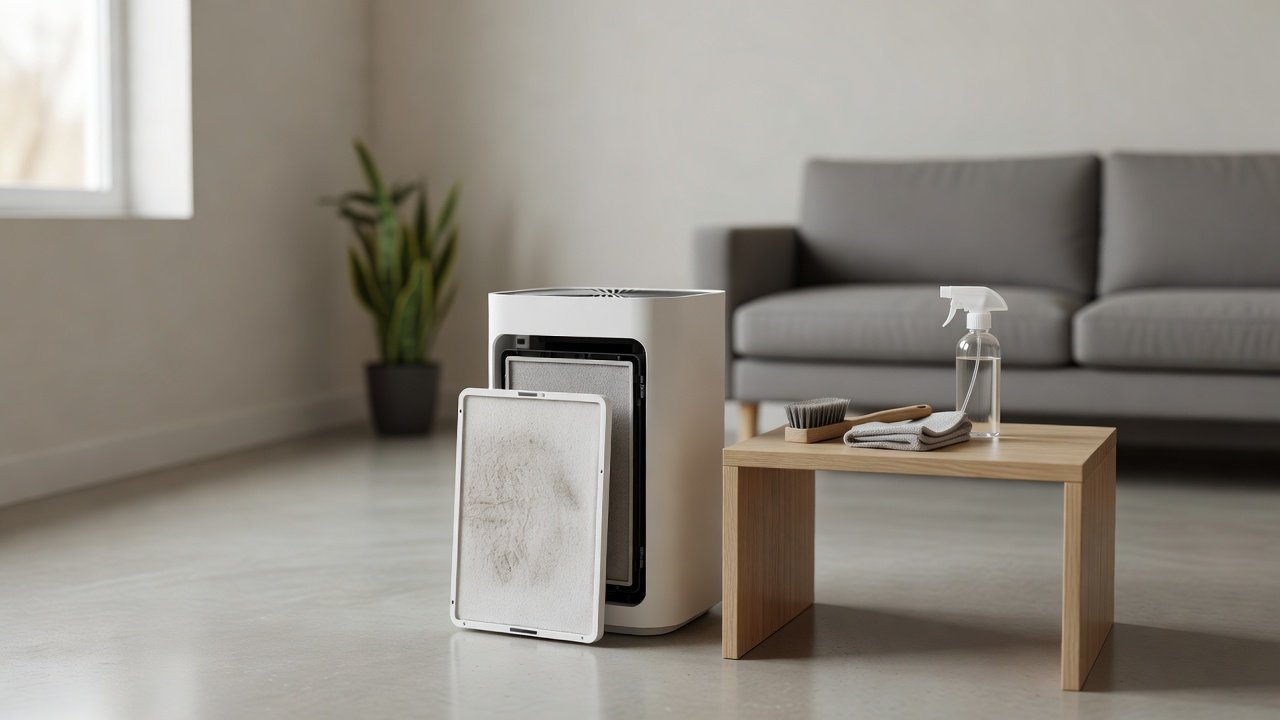
Unplug the unit. Vacuum the vents, exterior and pre-filter with a soft brush attachment. Wipe the housing with a barely damp cloth. Inspect the main filter for dark spots, dampness or a musty smell and replace it if present. Dry everything fully before reassembling. Check more often than you would in an upstairs room.
Placement in a Basement
Place the unit on a stand or table rather than directly on a concrete floor, which can be damp and dusty. Keep it away from laundry steam, sump pits and exterior walls with condensation. Give it space for airflow and keep the cord away from water.
When to Replace Filters Sooner
In a damp or dusty basement, filters may need replacing sooner than the manual’s typical schedule. Replace any filter that smells musty, looks damp or has visible growth. Keep spare filters in a dry place upstairs, not in the basement.
Musty Smells and What They Mean
A musty smell in a basement can come from the room, not the purifier. Damp carpet, stored boxes, leaks and poor ventilation are common sources. If the smell seems to come from the unit, check the filters and housing. Replace musty filters and fix the moisture source.
Laundry Lint and Storage Dust
Dryer lint, cardboard boxes and stored fabric all shed dust. Keep the purifier away from the laundry area and vacuum the pre-filter often. Use sealed plastic bins for storage and keep floors clean to reduce the dust load.
Dehumidifier and Purifier Together
A dehumidifier controls moisture while a purifier handles particles. Place them apart, and clean both as their manuals say. Empty the dehumidifier tank regularly or use a drain hose. Keep the dehumidifier filter clean.
Flood and Leak Aftermath
If the basement has flooded or leaked, unplug and do not use the purifier if it has been wet. Replace filters that got damp and have the unit checked by the manufacturer. Dry the area fully and address mold. For large areas, consider professional help.
Seasonal Checks
Check the unit at the start of humid seasons and after heavy rain. Look for condensation, dark spots and musty smells. Replace filters as needed and log the dates. Run the unit on a schedule that suits the room.
How to Choose
- Look for easy filter access
- Check for washable pre-filters
- Compare replacement filter costs
- Match the CADR to the room
Do
- Match the unit’s rated coverage to your room first
- Run it consistently, not only when the air feels bad
- Leave space around the unit for airflow
- Replace filters on the maker’s schedule
Don’t
- Do not buy on looks or price alone
- Do not block the intake or exhaust
- Do not skip filter changes
- Do not expect a purifier to fix every source of pollution
Honest Limits
- This guide uses manufacturer information and public guidance from the EPA and AHAM, not our own lab tests.
- Features and room ratings change between model years, so confirm on the listing before you buy.
- A purifier is not a medical device and does not replace medical advice or treatment.
Who Should Skip This
When to See a Professional
Frequently Asked Questions
Can an air purifier fix basement mold?
No. Fix the moisture source and clean the mold. A purifier is a supplement.
How often should I clean it?
More often than in dry rooms, such as monthly checks.
Can I use it with a dehumidifier?
Yes, but place them apart and maintain both.
When should I call a professional?
The EPA suggests it for mold areas above about 10 square feet.
Bottom Line
A basement air purifier needs more frequent checks because of moisture and dust. Control humidity around 30 to 50 percent, vacuum vents and pre-filters often, replace filters that smell musty and never run the unit with damp parts. For widespread mold, consider professional help.
Related reading: sens,fan,bed
Sources: EPA, Guide to Air Cleaners in the Home; AHAM Verifide.