Last updated:
Disclosure: As an Amazon Associate we earn from qualifying purchases. This does not change what we recommend. See our affiliate disclaimer.
Baking soda is a popular, inexpensive household cleaner and deodorizer, so people ask whether it is safe on an air purifier. In general, it can be used carefully on the exterior housing and sometimes a washable pre-filter, but it should not be used on HEPA or carbon filters or near the fan and electronics. Residue and moisture are the main risks.
We have not tested these products ourselves, so follow your manual. Unplug the unit first and keep liquids away from the electronics.
Possible uses
- Exterior housing paste
- Odor on washable pre-filter
- Deodorizing nearby
Never
- On HEPA or carbon filters
- Sprinkled inside the unit
- Near the fan or electronics
Key Takeaways
- Use baking soda only on the exterior or a washable pre-filter
- Rinse and wipe away all residue
- Never use it on HEPA or carbon filters or inside the unit
- Replace carbon filters for persistent odors
Step-by-Step: Baking Soda Wipe-Down
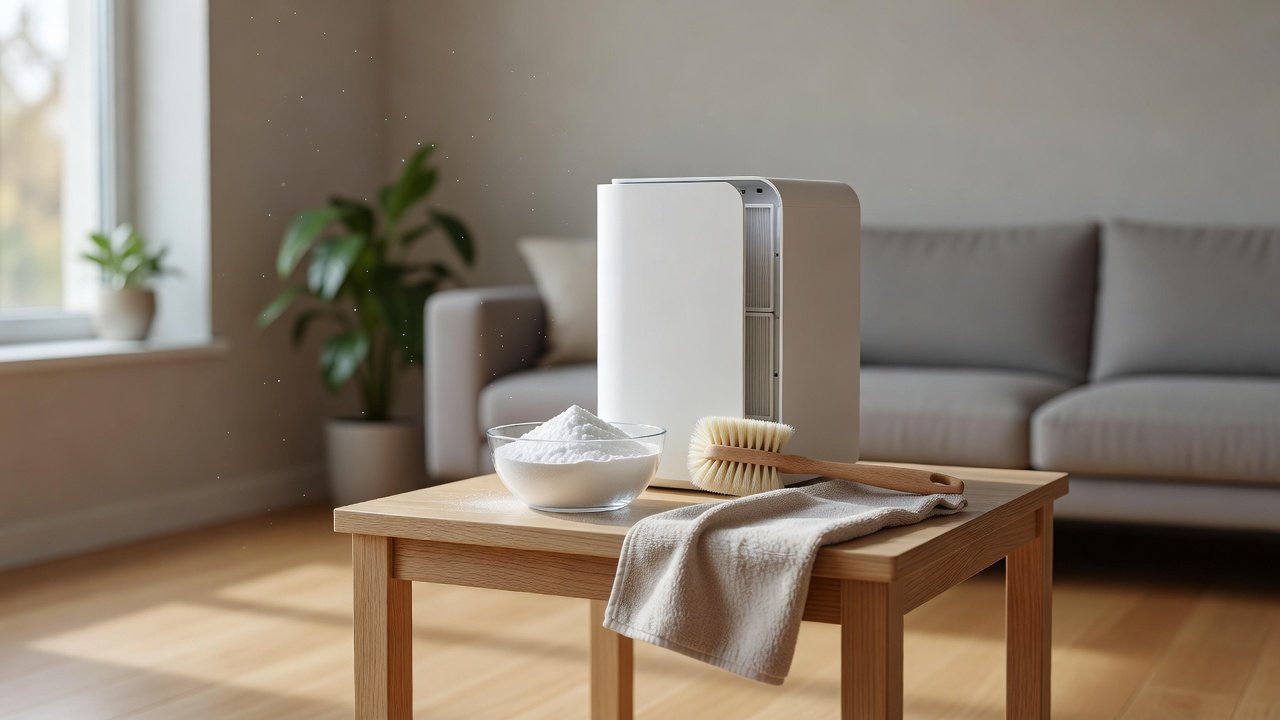
Unplug the unit and make a loose paste with baking soda and water. Apply it to a cloth rather than the unit, wring it out and wipe flat exterior surfaces gently, away from vents and buttons. Wipe with a clean damp cloth until no powder remains, then dry with a clean cloth. Vacuum the vents lightly with a soft brush to remove any dust. Let the unit sit for a few minutes before plugging it in. Check for any chalky residue in good light.
Cleaning Odors From a Washable Pre-Filter
If the manual allows rinsing, dissolve a small amount of baking soda in a bowl of cool water, soak the pre-filter briefly, rinse very thoroughly under cool water and let it dry fully. Do not leave it soaking for long. A damp or soapy pre-filter can smell musty. If the odor persists, replace the pre-filter if the model allows. If the pre-filter is foam and crumbling, replace it.
Common Mistakes With Household Cleaners
Common mistakes include mixing cleaners, using too much liquid, leaving residue and applying products to filters. Do not mix baking soda with vinegar or bleach on or near the unit. Do not use strong fragrances, which can load carbon filters. Keep the routine simple: dust, damp wipe, vacuum vents, replace filters.
When Odor Persists After Cleaning
If odors persist after cleaning, replace the carbon filter, check for mold or damp in the unit and the room and look for the source, such as a pet area, a trash bin or a spill. A purifier cannot remove a strong source of odor on its own. Improve ventilation and clean the source. If the unit itself smells burnt or electrical, stop using it and contact the manufacturer.
Why Baking Soda Is Not a Filter Treatment
Some websites suggest sprinkling baking soda on filters to refresh them, but this is not recommended. The powder can clog the pores of a HEPA filter, reducing airflow and efficiency, and it may reach the fan. Carbon filters work by adsorption and cannot be restored with baking soda. Filters are designed to be replaced, and following the manufacturer’s schedule is the safest way to keep the air clean.
Using Baking Soda Elsewhere in the Room
If you want baking soda to help with odor, use it in the room rather than on the unit. An open container in a closet, near a trash bin or under a sink can absorb some odors. Replace it regularly. For smoke or cooking smells, ventilate and run the purifier with a fresh carbon filter. Baking soda boxes are mild and not a substitute for finding the source of the smell.
Safety Notes When Cleaning With Household Products
Never mix cleaning products, especially bleach with vinegar or ammonia. Ventilate the room while you clean and wear gloves if your skin is sensitive. Keep powders and liquids away from children and pets. Dispose of cleaning water properly. Keep the unit unplugged until it is completely dry, and keep liquid away from the electronics.
A Simple Maintenance Plan That Avoids Odors
Vacuum the pre-filter and vents every month, wipe the exterior with a barely damp cloth, replace filters on schedule and keep humidity around 30 to 50 percent. Keep the unit away from the stove and ashtrays, which load filters quickly. Record dates in a log. This plan is simple, avoids residue and keeps the unit working as designed.
Air Purifiers With Carbon Filters for Odors
These picks come from the Hostinger affiliate plugin. Specs change by model year, so confirm filter type, CADR and replacement costs on the product page before you buy.






What Baking Soda Does
Baking soda is a mild abrasive and can neutralize some odors. It dissolves in water and leaves a fine powder when dry. That powder can drift into vents and fans if used carelessly, so it must be rinsed or wiped away completely.
Cleaning the Exterior With Baking Soda
For a stained or smelly exterior, mix a small amount of baking soda with water into a loose paste, apply it to a cloth rather than the unit and wipe the surface gently. Wipe again with a clean damp cloth until no residue remains and dry. Keep the paste away from vents, buttons and seams.
Washable Pre-Filters
If your manual allows rinsing the pre-filter, you may use a weak baking soda solution to help with odors, then rinse very thoroughly and dry completely. Do not use it unless the manual allows rinsing, and never on HEPA or carbon filters.
What Not to Do
Do not sprinkle baking soda inside the unit or on filters. The powder can clog the media and reach the fan. Do not use baking soda boxes inside the housing. Do not mix baking soda with vinegar near the unit, since the fizz and moisture are unhelpful and can leave residue.
Alternatives for Odors
For odors, replace saturated carbon filters, clean the pre-filter, ventilate the room and find the source. A small open box of baking soda placed in the room, away from the unit, can help absorb odor without touching the purifier.
A Safe Paste Recipe for the Exterior
Mix about one tablespoon of baking soda with a little water to make a loose paste. Dip a cloth into the paste, wring it out and wipe the housing. Wipe again with a plain damp cloth and a dry cloth. Test on a hidden spot first to make sure it does not scratch.
Residue and Why It Matters
Leftover powder can attract dust, look chalky and drift into vents. If you see white residue, wipe again with a damp cloth. Vacuum vents gently with a soft brush. Make sure no powder remains near the intake.
Odor Sources in the Home
If a purifier smells, the odor may be coming from the room, not the unit. Smoke, pets, cooking and damp can all cause it. A saturated carbon filter can release odors. Replace carbon filters on schedule and address the source.
Alternatives: Mild Soap and Water
For most exterior cleaning, a barely damp cloth and a drop of mild dish soap is enough. Wipe off soap with a damp cloth and dry. It is simpler and carries less risk of powder residue than baking soda.
Storing Baking Soda Near the Unit
Keep baking soda boxes or bowls well away from the purifier’s intake. Place them on a stable surface where they cannot spill. Replace them every month or so. They absorb some odors, but they are not a replacement for filter maintenance.
How to Choose
- Look for activated carbon filters
- Check replacement filter costs
- Choose a unit with an easy-access pre-filter
- Match the CADR to the room
Do
- Match the unit’s rated coverage to your room first
- Run it consistently, not only when the air feels bad
- Leave space around the unit for airflow
- Replace filters on the maker’s schedule
Don’t
- Do not buy on looks or price alone
- Do not block the intake or exhaust
- Do not skip filter changes
- Do not expect a purifier to fix every source of pollution
Honest Limits
- This guide uses manufacturer information and public guidance from the EPA and AHAM, not our own lab tests.
- Features and room ratings change between model years, so confirm on the listing before you buy.
- A purifier is not a medical device and does not replace medical advice or treatment.
Who Should Skip This
When to See a Professional
Frequently Asked Questions
Can I put baking soda in my purifier?
No. Powder can clog filters and reach the fan.
Can I wash a HEPA filter with it?
No. Replace HEPA filters.
Is vinegar better?
Vinegar and baking soda do not need to be used on the unit. Mild soap and water are simpler.
How do I remove odors?
Replace saturated carbon filters and ventilate the room.
Bottom Line
Baking soda can help clean and deodorize the exterior or a washable pre-filter if used sparingly and rinsed off completely, but it should never be used on HEPA or carbon filters or inside the unit. For persistent odors, replace carbon filters and find the source.
Related reading: sens,fan,bed
Sources: EPA, Guide to Air Cleaners in the Home; AHAM Verifide.