
Last updated:
Disclosure: As an Amazon Associate we earn from qualifying purchases. This does not change what we recommend. See our affiliate disclaimer.
A single portable purifier is designed for one room or open area. Walls and closed doors limit airflow, so it will not clean every room. In a small open-plan space a large unit may cover most of it. For multiple rooms, plan one unit per priority room or consider whole-home options with a professional. Size by CADR and check the manufacturer’s coverage claims against the CADR rating.
We have not tested these products ourselves. Nothing here is medical advice.
Possible when
- Small open layout
- High CADR
- Doors open
Unlikely when
- Many closed rooms
- Multiple floors
- Large homes
Key Takeaways
- One unit usually cleans one room
- Open layouts need higher CADR
- Prioritize bedrooms
- Ask a professional about whole-home systems
Planning Coverage for a Whole House
Sketch the floor plan and mark priority rooms. Measure each room and calculate CADR targets. Decide which rooms get a unit: bedrooms, living areas and any room with specific triggers. For open layouts, add areas together. Consider HVAC filtration upgrades with a professional, ensuring the system can handle higher-rated filters. Keep doors closed in rooms with units. Run units continuously on a comfortable speed. Maintain filters. Track costs for filters across units. Evaluate and adjust over a few weeks.
Upgrade HVAC Filters
Check compatible ratings.
Zoning
Prioritize rooms.
Noise
Multiple units add noise.
Placement
Clearance.
Smoke Events
Close windows and run higher.
Budget
Plan yearly costs.
How Air Actually Moves Between Rooms
A portable purifier creates a gentle circulation loop in the room it sits in. Air is pulled in, filtered, and pushed out, and that loop weakens quickly at doorways, around corners, and up stairwells. Closed doors stop it entirely. Even with doors open, the air exchange between rooms is slow compared with the purifier’s own throughput, so the far rooms see only a small fraction of the benefit.
This is why a large unit in a hallway rarely makes a bedroom feel better. The bedroom air needs to pass through the filter, and most of it never leaves the bedroom.
Whole-Home Options Compared
- Several correctly sized portable units, one per main room, run continuously
- A whole-home filter upgrade in the HVAC system, if the blower and ductwork can handle a higher MERV rating
- An in-duct purifier installed by an HVAC professional
- A combination: HVAC filtration for background cleaning plus a portable unit in the bedroom
For most households the combination approach gives the best result for the money. The HVAC system handles the whole house while the system runs, and a portable unit covers the room where you sleep, which is where particle exposure matters most over a night.
When One Unit Really Can Cover It
Small studio apartments and open-plan spaces without internal doors can be served by a single large unit placed centrally with plenty of clearance. The key is choosing a CADR that matches the total floor area rather than one room, and running it on a medium speed rather than relying on turbo bursts.
If the space has a loft or high ceilings, treat the volume as larger than the floor area suggests and size up.
Placement for Maximum Reach
Put the unit where air naturally moves: near the room’s main pathway, away from walls and curtains, with intakes and outlets unobstructed. Avoid corners and alcoves. If you want some spillover into an adjoining room, aim the outlet toward the open doorway and run a ceiling fan on low to encourage mixing.
Check results with a particle monitor in the far room. If readings barely change, that room needs its own unit.
Sizing for Open-Plan Homes
Measure the total connected floor area, not just the room where the unit will sit. Multiply by ceiling height if the space has vaulted or double-height areas and compare that volume with the manufacturer’s coverage claim, which usually assumes eight-foot ceilings. Choose a smoke CADR of at least two thirds of the floor area, and add margin if you want to run on a quieter speed.
If the number lands well above what any single consumer unit offers, split the job between two machines placed at opposite ends.
Using Your HVAC System as a Whole-Home Purifier
Central systems move air through every room whenever the blower runs. Upgrading to a MERV 11 to 13 filter captures a useful share of fine particles, provided your system can handle the extra resistance; check with an HVAC professional before going higher than the manufacturer’s rating. Setting the fan to run continuously or on a schedule, rather than only when heating or cooling, keeps the filtration going.
Change these filters on time. A loaded high-MERV filter restricts airflow and strains the blower.
A Practical Setup for a Typical Family Home
- A medium portable unit in each bedroom, run overnight on low
- One larger unit in the main living area, run during the day
- An upgraded HVAC filter for background cleaning
- Doors closed at night so each bedroom unit works on its own volume
This spreads the cleaning to where people actually breathe and avoids relying on one machine to do the impossible.
Stairwells, Lofts, and Multi-Level Homes
Warm air rises, carrying particles upstairs during the day and leaving upper bedrooms with the dustiest air by evening. A purifier placed on a landing does little because the air keeps moving past it. Put units in the upstairs bedrooms where the air finally settles, and let the HVAC filter handle the common areas. In homes without ducted systems, a unit at the top of the stairs can still help a little if doors upstairs stay open, but it is no substitute for bedroom units.
A Quick Answer
One purifier can clean one room well. It cannot clean an entire house through closed doors and hallways. Use a unit per occupied room, or combine HVAC filtration with bedroom units, and put the first unit where you sleep.
Quick Reference
- One unit cleans one room reliably
- Doors and hallways stop the benefit
- Bedrooms first, then living areas
- HVAC filtration covers the rest
- Size to floor area, not to the whole house
Reader Scenario
A reader with an open-plan ground floor and bedrooms upstairs found one large unit downstairs kept the living area clean but did nothing for the bedrooms. Two compact units upstairs, run overnight with doors closed, fixed the problem without moving the big unit.
Final Word
One purifier cleans one room; doors and hallways stop the benefit. Use a unit per occupied room, put the first one where you sleep, and pair portable units with upgraded HVAC filtration for the rest of the house.
Large-Room Air Purifiers
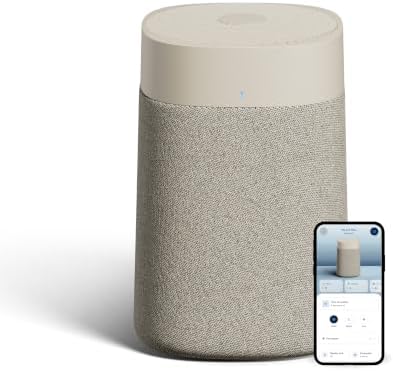
These picks come from the Hostinger affiliate plugin. Specs change by model year, so confirm filter type, CADR, noise and replacement filter costs on the product page.





Why One Unit Rarely Covers a House
Walls and doors limit mixing. A unit mainly cleans the room it is in.
Open Layouts
Add areas together and choose higher CADR for the combined space.
Prioritize Rooms
Start with the bedroom and main living area.
Whole-Home Options
HVAC filtration and ducted systems may help. Ask a professional.
Check Claims
Compare coverage claims to CADR ratings.
Multi-Story Homes
Air does not move well between floors.
HVAC Fan
Running the HVAC fan may help mixing.
Doors
Keep doors closed in priority rooms.
Costs
More units mean more filters.
Maintenance
Replace filters.
How to Choose
- High CADR
- True HEPA
- Quiet operation
- Filter costs
Do
- Match the unit’s rated coverage to your room first
- Run it consistently, not only when the air feels bad
- Leave space around the unit for airflow
- Replace filters on the maker’s schedule
Don’t
- Do not buy on looks or price alone
- Do not block the intake or exhaust
- Do not skip filter changes
- Do not expect a purifier to fix every source of pollution
Honest Limits
- This guide uses manufacturer information and public guidance from the EPA and AHAM, not our own lab tests.
- Features and room ratings change between model years, so confirm on the listing before you buy.
- A purifier is not a medical device and does not replace medical advice or treatment.
Who Should Skip This
When to See a Professional
Frequently Asked Questions
Can one unit clean a house?
Rarely.
What about open plans?
Possibly with high CADR.
Which room first?
Bedroom.
Whole-home options?
Ask a professional.
Bottom Line
One portable unit generally cleans one room or open area. Prioritize key rooms or ask a professional about whole-home options.
Related reading: sens,fan,bed
Sources: EPA, Guide to Air Cleaners in the Home; AHAM Verifide.