Last updated:
As an Amazon Associate we earn from qualifying purchases. This does not change what we recommend. See our affiliate disclaimer.
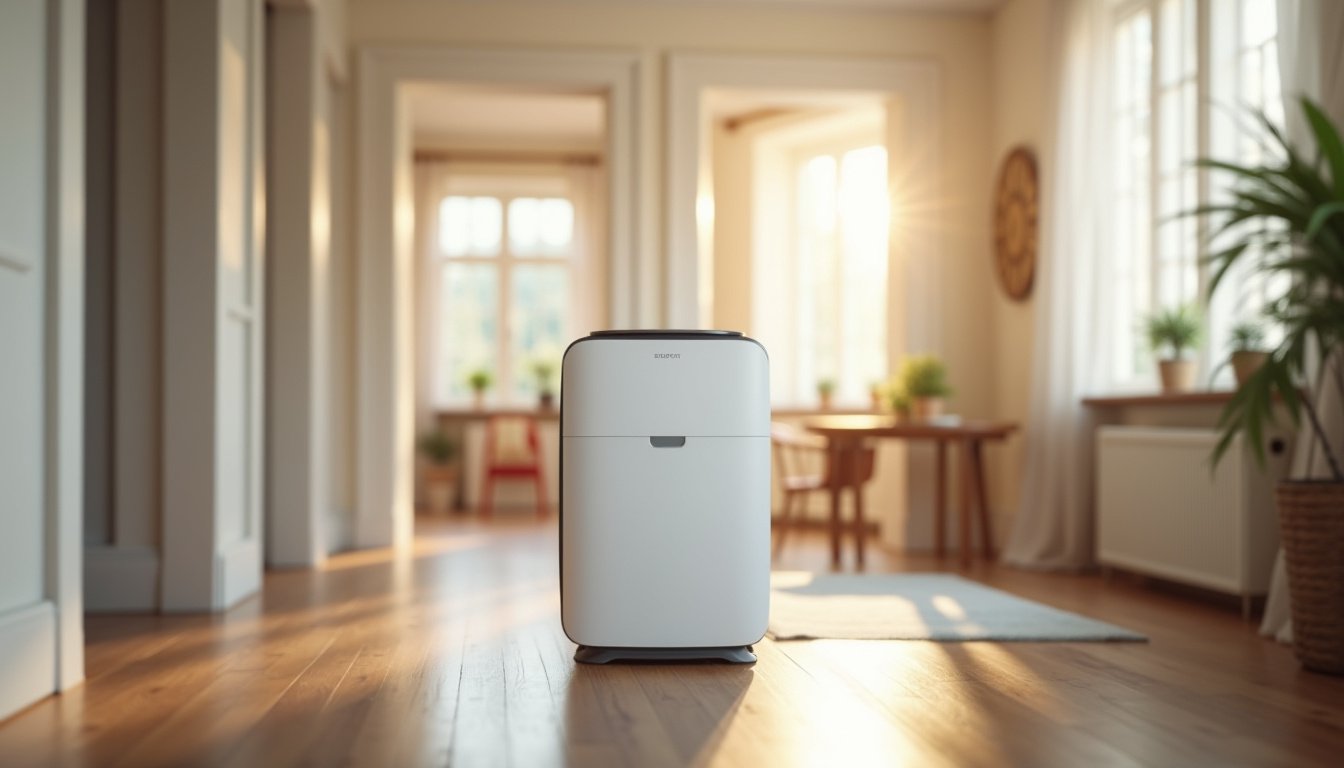
It is a natural hope. Buy one big purifier, park it in the hallway, and let it quietly scrub the air in every room. The packaging on large units, with coverage numbers that sound like a whole floor, seems to encourage the idea. The physics of how air moves through a house, unfortunately, does not cooperate.
The plain answer is no, a single portable air purifier cannot clean an entire house. A portable unit cleans the air that passes through its filter, and that air comes almost entirely from the room it sits in. Doorways, hallways and closed doors throttle air exchange between rooms to a trickle compared with the volume the fan moves inside its own room. A large unit in an open-plan living and kitchen area can do a very good job of that combined space, and it will slightly improve air in rooms that open directly onto it, but a bedroom down the hall with the door closed gets almost no benefit. Whole-house cleaning needs either several portable units or filtration built into the heating and cooling system.
In short: think in rooms, not houses. Put the purifier where you spend the most time, usually the bedroom, then add coverage room by room or through the HVAC system.
The EPA’s guide to air cleaners in the home notes that portable air cleaners are designed to filter the air in a single room, and that upgrading the central system filter is the way to treat the whole home. AHAM’s CADR ratings and room-size guidance are also written for one room at a time.
Everything below is research-based and drawn from maker specifications, EPA and AHAM guidance and the way air circulates in homes. We have not lab-tested the models in the comparison table, and we do not quote prices or ratings, only published features.
One large unit may be enough if
- You live in a studio or open-plan apartment
- The space you care about is one connected area
- Bedrooms are not the priority
- You can run it continuously on medium
You need more than one unit, or HVAC filtration, if
- Bedrooms with closed doors matter, especially for allergies
- The house has more than one floor
- Hallways and doors separate the main rooms
- Wildfire smoke or pets affect the whole home
Key Takeaways
- A portable purifier cleans the room it is in; air exchange through doorways is too slow for it to cover other rooms.
- Coverage figures on the box describe a single open space, not a house of separate rooms.
- Open-plan areas can be treated as one room if the unit’s dust CADR is about two-thirds of the combined floor area.
- The bedroom usually deserves the first unit, because you spend eight hours there breathing near a dust-shedding mattress.
- A pleated MERV 11 to 13 HVAC filter, where the system allows, is the practical whole-house option and works alongside portable units.
- Two right-sized units in the key rooms beat one oversized unit in a hallway.
- During smoke events, closing up the house and running units in occupied rooms works better than trying to clean every room.
Large-Room Purifiers for Open Living Areas
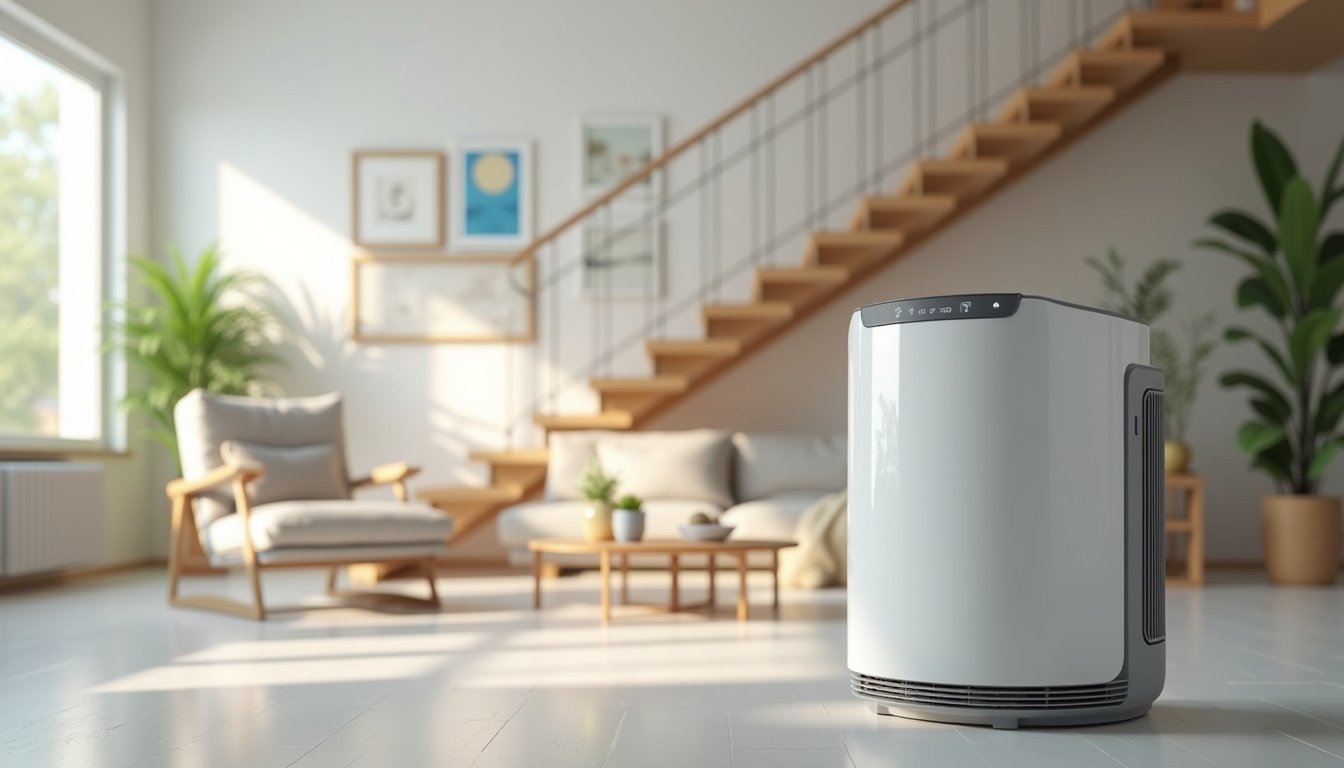
These widely reviewed units carry maker-listed coverage for large or open-plan spaces and make sense as the main-floor piece of a room-by-room plan. Compare their rated room size against your combined living area, and pair them with a smaller unit in the bedroom.





How This Guide Works
We looked at how air moves between rooms in a typical house, the sizing method AHAM and the EPA use for portable cleaners, and the role of central system filtration. For the products in the table we used only the maker’s published room ratings and filter specifications.
The one idea to hold onto is that a purifier is a fan with a filter. It cleans whatever air the fan can pull in, and a fan has a very short reach. Walls, doors and distance defeat it; the only way around them is more fans or a fan that already reaches every room, which is what the furnace blower is.
How Air Actually Moves Between Rooms
Inside a room, a purifier’s fan sets up a gentle circulation. Air is drawn into the intake, filtered, blown out the top or front, mixes with the room and gradually returns. In a closed 12 by 14 foot bedroom a correctly sized unit can pass the entire room volume through the filter four or five times an hour, which is why AHAM’s two-thirds rule works so well for single rooms.
Between rooms, movement is far slower. An open doorway lets air drift through, driven by small temperature differences and by the purifier’s outlet if it happens to point that way, but the exchange is a small fraction of what the fan moves within its own room. A door that is closed cuts it to nearly nothing beyond the gap under the door. Add a hallway and a second doorway and the far room is effectively a separate airspace.
| Layout between purifier and target room | Approximate share of purifier’s airflow that reaches the room | Practical result |
|---|---|---|
| Same open space, no walls | Most of it, if the unit is sized for the whole area | Treated as one room |
| Adjacent room, wide open doorway | A small fraction | Slight improvement, not clean air |
| Down a hallway, door open | Very little | No meaningful effect |
| Any room with the door closed | Essentially none | Needs its own unit |
| Another floor | None | Needs its own unit or HVAC filtration |
Forced-air heating and cooling is the exception. The blower pulls air from return vents in several rooms, pushes it through the furnace filter and sends it back out through supply vents in every room. That is a genuine whole-house loop, which is why the HVAC filter matters so much in the sections below.
What the Coverage Number on the Box Means
Makers list a room size for each unit, and some list two: a smaller one based on several air changes per hour and a larger one based on a single air change. AHAM’s method is the useful one: the dust CADR should be about two-thirds of the floor area in square feet for 8 foot ceilings, which gives roughly 4.8 air changes per hour. A unit advertised for 1,500 square feet on the generous basis may only deliver AHAM-level cleaning in a space a third that size.
Worked example: an open living, dining and kitchen area measures 20 by 30 feet, so 600 square feet. Two-thirds of 600 is 400, so a unit with a dust CADR around 400 treats that area as one room. A nearby 12 by 12 bedroom, 144 square feet, needs its own unit with a dust CADR of about 100 or more, since the door will be closed at night. No single unit fixes both.
When One Unit Really Is Enough
Studios, lofts and open-plan apartments are the honest exception. If living, sleeping and cooking happen in one connected volume with no doors between them, a single unit sized by the two-thirds rule for the whole floor area will do the job. Place it centrally or near the main source, such as the kitchen, and run it on medium continuously.
Small homes where the bedroom is the only separate room can also get by with one unit if it moves between rooms. Roll it into the bedroom at night and back to the living room in the morning. It is not elegant, but a unit that is in the right room at the right time outperforms two that are not. Models with casters or a handle make this practical; see our guide on purifiers with easy-to-move features for the trade-offs.
Large open areas with high or vaulted ceilings need adjustment. The two-thirds rule assumes 8 foot ceilings, so a 12 foot ceiling means adding about half again to the target CADR, or accepting that the unit will run on a higher speed.
HVAC Filtration: The Real Whole-House Option
If the home has forced-air heating or cooling, the system is already a whole-house air mover. Upgrading its filter is the most cost-effective way to filter every room at once. The EPA suggests a MERV 13 or higher filter where the system supports it; many older systems handle MERV 11 comfortably and may need a technician’s advice before going higher, because dense filters can restrict airflow.
The limitation is run time. The furnace filter only works while the blower runs, and in mild weather that may be only a few minutes an hour. Many thermostats have a fan or circulate setting that runs the blower on a schedule without heating or cooling, which turns the HVAC filter into a continuous whole-house cleaner at the cost of some electricity.
| Approach | Rooms covered | Runs when | Strengths | Weaknesses |
|---|---|---|---|---|
| One portable unit | One room | Whenever it is on | Quiet, flexible, strong in its room | Does nothing for other rooms |
| Several portable units | Each occupied room | Whenever they are on | Best particle removal where people are | More filters to buy and maintain |
| Upgraded HVAC filter, MERV 11 to 13 | Every room with a vent | Only while the blower runs | Low cost, whole-house reach | Depends on run time; some systems cannot take MERV 13 |
| HVAC filter plus circulate mode | Every room with a vent | On a schedule | Continuous whole-house filtering | Blower electricity, more frequent filter changes |
| Whole-house media or electronic cleaner | Every room with a vent | While the blower runs | Higher capture than a standard filter | Professional install; avoid ozone-producing types |
Ducted whole-house air cleaners installed by an HVAC contractor are a step up from a standard filter rack. Thick media cabinets work on the same principle as a HEPA unit. Electronic types vary, and the EPA cautions that some produce ozone as a by-product, so filter-based media cabinets are the safer choice.
A Room-by-Room Plan That Works
Most homes end up with a mixed approach: a better HVAC filter for the baseline, plus portable HEPA units in the rooms that matter. Priority goes to where people spend the most hours and where sources are strongest. For nearly everyone that means the bedrooms first, then the main living area, then any room with a specific problem such as a litter box, a home office with a printer or a nursery.
- Bedroom of the person most affected by dust, pollen or dander: a unit sized by the two-thirds rule, run overnight with the door closed.
- Main living area, sized for the combined open space, run on medium during the day and evening.
- Other bedrooms in order of occupancy and symptoms.
- Problem rooms with strong sources, where source control comes first and a unit second.
- HVAC filter upgrade and circulate mode as the whole-house baseline, if the home has forced air.
Wildfire Smoke and Other Whole-Home Events
Wildfire smoke, a nearby fire or heavy outdoor pollution raise the question again, because the whole house fills with the same pollutant. The EPA’s guidance for smoke events is to close windows and doors, set the HVAC to recirculate if it has that option, run the best filter the system can handle, and use portable HEPA units in the rooms where people spend time, creating a clean room if only one unit is available.
A clean room strategy means picking one room, usually a bedroom, closing it up, running the purifier continuously and spending as much time there as possible. It is the one-unit answer to a whole-house problem: not cleaning the house, but making one room reliably clean. Carbon stages help with smoke odor, but the particles are the health concern and HEPA handles those.
Avoid running bathroom and kitchen exhaust fans during smoke events unless necessary, since they pull outdoor air in through every gap. Once the air outside clears, open up and air the house out, then let the purifiers catch the remaining particles.
Multi-Story Homes and Basements
Stairs are wide openings, but they move air vertically mainly through temperature differences: warm air rises, cool air sinks. A purifier on one floor has no practical effect on another. Each occupied floor needs its own plan, and basements deserve special attention because they tend to be damp, hold more dust and may have radon.
For a basement, moisture control through a dehumidifier comes before any purifier, since the EPA suggests holding indoor humidity between 30 and 50 percent to limit mold and dust mites. Test for radon with a kit or a certified tester and mitigate at 4 picocuries per liter or more; no purifier addresses radon. Once those are handled, a HEPA unit sized to the finished area deals with dust and spores.
| Floor or area | First priority | Then | Purifier role |
|---|---|---|---|
| Upstairs bedrooms | Close doors at night | Hot-wash bedding weekly | One HEPA unit per occupied bedroom |
| Main floor living area | Range hood when cooking | Entry mats, HEPA vacuum | Large unit sized to the open area |
| Basement | Dehumidify to 30 to 50 percent, fix leaks | Radon test and mitigation if needed | HEPA unit after moisture control |
| Attic or crawlspace | Seal ducts and air leaks | HVAC inspection | None; fix the source instead |
Covering a Home Without Overspending
The temptation is to buy one premium unit and hope. The better pattern is to start with the cheapest whole-house step, a pleated MERV 11 to 13 HVAC filter if the system allows, then add a right-sized portable unit in the bedroom, and expand only if symptoms or visible dust persist elsewhere. Each portable unit should be judged on dust CADR for its room, filter replacement schedule and noise at medium, since that is the speed it will live on.
Check noise ratings closely for bedroom units; a model that is too loud ends up switched off, which makes it the most expensive unit in the house per hour of use. For the living area, favor capacity, because open spaces are larger than they look once the kitchen is included.
How to Plan Whole-Home Coverage in 7 Steps
- List the rooms where people spend the most time and note which doors are usually closed.
- Measure each of those rooms, or the combined open area, and multiply length by width for square feet.
- Take two-thirds of each area as the minimum dust CADR for a unit in that space; adjust for high ceilings.
- If the home has forced air, check the system manual and upgrade to a pleated MERV 11 to 13 filter where supported.
- Buy the bedroom unit first, then the main living area unit, then others as needed.
- Choose true HEPA units with quiet medium speeds and clear filter schedules; skip ionizer-only designs.
- Run the units continuously in their rooms and consider the thermostat’s circulate mode for the HVAC filter.
Do and Do Not
Do
- Place units where people sleep and sit, not in hallways.
- Close bedroom doors at night so the unit works on a small volume.
- Upgrade the HVAC filter as the whole-house baseline.
- Size each room separately with the two-thirds rule.
- Create a clean room during smoke events if you have one unit.
Do not
- Do not expect a hallway unit to clean the bedrooms around it.
- Do not trust the largest coverage number on the box.
- Do not carry one unit’s rating across closed doors or floors.
- Do not use ozone generators as a whole-house shortcut.
- Do not skip radon testing and moisture control in basements.
Who Should Skip This
If you live in a studio or open loft, you do not need a multi-unit plan at all. One unit sized by the two-thirds rule for the whole floor area and run continuously on medium handles it. Spend the remaining budget on a better filter schedule or a quieter model rather than a second unit.
If your home has forced air and nobody has allergy or asthma symptoms, a MERV 13 filter with the blower on a circulate schedule may be all the whole-house filtration you need. Add a portable unit later only for a specific room with a specific problem.
Honest Limits
- No portable purifier cleans rooms beyond the one it sits in; walls and doors stop it.
- HVAC filtration works only while the blower runs and only in homes with forced air.
- Even several units cannot overcome a strong, continuous source such as an active smoker or unvented cooking.
- Purifiers do not remove radon, carbon monoxide or humidity, which are common whole-house concerns.
- Coverage numbers on packaging are not comparable between brands unless they cite AHAM CADR.
- Running units everywhere raises filter and electricity costs; prioritize occupied rooms.
When to See a Professional
See a doctor or allergist if someone in the home has persistent symptoms that seem tied to indoor air, such as morning congestion, wheezing or asthma flare-ups. Identifying the trigger tells you which rooms to prioritize and whether filtration will help at all. Nothing on this page is medical advice.
Call an HVAC professional before installing a MERV 13 or denser filter in an older system, to install a whole-house media cabinet, or if dust pours from supply vents, which suggests duct leaks. Use a certified radon professional for testing and mitigation, and a mold professional for growth over about 10 square feet, as the EPA suggests.
Frequently Asked Questions
Can one air purifier clean a whole house?
No. A portable unit filters the air in the room it occupies, and air exchange through doorways is too slow to carry that benefit to other rooms, especially with doors closed. Whole-house coverage comes from several units in occupied rooms, an upgraded HVAC filter, or both.
Will a purifier in the hallway clean the bedrooms?
Not meaningfully. The hallway air becomes clean while bedrooms with closed doors keep their own air. Even with doors open, only a small fraction of the purifier’s airflow reaches an adjacent room. Place units in the rooms where people sleep and sit instead.
How many air purifiers do I need for my house?
One for each room where people spend significant time with the door closed, typically each occupied bedroom plus the main living area. Size each by the AHAM rule: dust CADR of about two-thirds of the room’s floor area in square feet, adjusted for high ceilings.
Can I move one purifier from room to room?
Yes, and in a small home it works well: living room by day, bedroom at night. Units with casters or a handle make this practical. It cleans the room you are in, which matters more than cleaning empty rooms, but it leaves the other room untreated meanwhile.
Is upgrading the HVAC filter as good as a purifier?
It is the practical whole-house option, filtering every room with a vent, but only while the blower runs. The EPA suggests MERV 13 or higher where the system supports it. Pair it with portable HEPA units in bedrooms for continuous cleaning where you sleep.
What does the room size on the box mean?
It is the maker’s rating, often based on a single air change per hour. AHAM’s method is stricter: a dust CADR of about two-thirds of the floor area in square feet gives roughly 4.8 air changes per hour. A unit rated for a large space may only deliver that in a much smaller room.
Does an open floor plan count as one room?
Yes, if the living, dining and kitchen areas are connected without doors, treat them as one space and size a unit for the combined floor area. Rooms off that space with doors, such as bedrooms, remain separate and need their own units.
Will a purifier on the first floor help upstairs?
No. Stairwells move air slowly and mainly by temperature differences, so a unit on one floor has no practical effect on another. Each occupied floor needs its own plan, and basements need moisture control and radon testing before a purifier.
What should I do during wildfire smoke with one purifier?
Follow the EPA clean room approach: close windows and doors, set the HVAC to recirculate if possible, pick one room such as a bedroom, run the purifier there continuously and spend most of your time in it. Add units for other occupied rooms if you can.
Is a whole-house electronic air cleaner a good alternative?
Filter-based media cabinets installed in the HVAC system are a sound whole-house upgrade. Be cautious with electronic types, since the EPA notes some produce ozone as a by-product. Any ducted cleaner works only while the blower runs, so pair it with the circulate setting.
Bottom Line
One portable air purifier cannot clean an entire house, however large its coverage number. It cleans the room it is in, and doorways and closed doors keep that benefit from traveling. The exception is a studio or open-plan home where the whole living space is effectively one room.
The approach that works is room by room: a right-sized HEPA unit where people sleep, another for the main living area, and an upgraded HVAC filter as the whole-house baseline in homes with forced air. Add a clean room strategy for smoke events and moisture and radon control in basements, and the whole home ends up covered without a single oversized unit pretending to do it all.
Related reading: How many air purifiers do I need, Air purifiers with easy to move features vs fixed models, Does an air purifier clean dust.