Last updated:
As an Amazon Associate we earn from qualifying purchases. This does not change what we recommend. See our affiliate disclaimer.
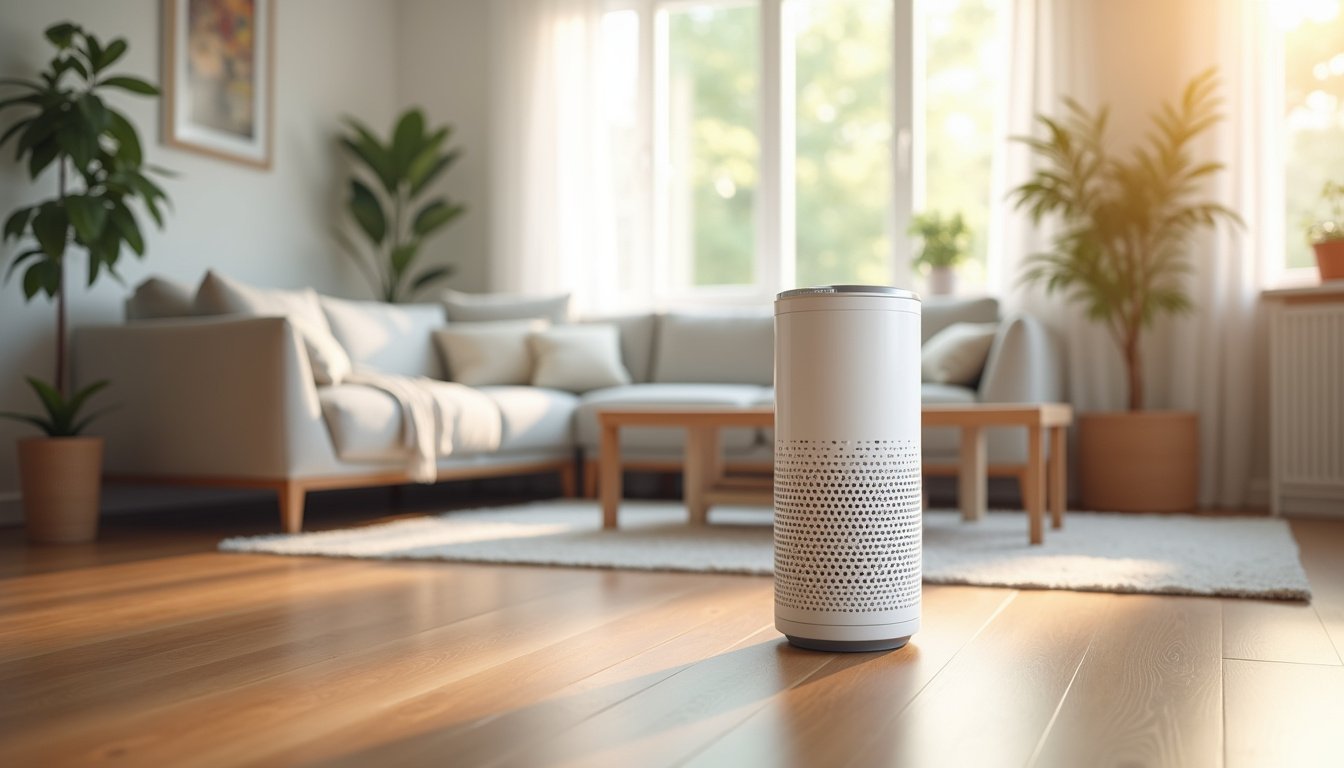
Shopping for an air purifier quickly turns into a question of format: do you want a unit you can pick up and carry from room to room, or a bigger floor-standing, wall-mounted or in-duct system that stays put? This guide compares the two approaches on the things that decide real-world results: how much air each type can clean, how loud it gets, how easy the filters are to maintain, and where the unit actually sits in your home.
Short answer: a fixed or large floor-standing purifier is usually the better choice for a room you spend many hours in, such as a living room or main bedroom, because bigger housings tend to hold larger filters and move more air at lower noise. A portable unit wins when you need flexibility: a rental, a home office you use part of the day, a nursery that changes rooms, or a second purifier for a smaller space. In both cases the number that matters most is the clean air delivery rate, matched to the size of the room.
In short: pick by room size and how long you stay in the room, then decide how much movability you really need. If one unit will live in one room, buy the strongest one that room requires. If you want to share one unit across several rooms, accept that it will clean each of them less often.
The EPA describes portable air cleaners as devices designed to filter the air in a single room or area, and notes that most are rated by clean air delivery rate (CADR), which helps you match a unit to a room. It also says that source control and ventilation come first, with filtration as a supplement. Those points shape everything below.
The picks in this guide are research-based, built on manufacturer information and published guidance rather than lab tests of our own, and the buttons open Amazon listings where you can confirm the exact variant. Nothing here is medical advice.
Choose a fixed or larger floor unit if
- One room needs cleaning most of the day
- You want lower fan speeds and quieter nights
- You can leave it in a spot with clear airflow
- You would rather change filters less often
Choose a portable unit if
- You rent or move furniture often
- You want to follow your activity from room to room
- The space is a small bedroom, office or nursery
- You need a second unit for a smaller area
Key Takeaways
- Portable and fixed are not performance categories. Performance comes from CADR, filter quality and room fit, and either type can have all three.
- Larger fixed units usually deliver more airflow at a given noise level, because a bigger fan can turn slowly and still move a lot of air.
- Moving one purifier between rooms means each room is cleaned less often. It suits short stays better than all-day coverage.
- Match CADR to floor area: the EPA guide gives roughly 65 CADR for 100 square feet and 390 for 600 square feet, assuming 8-foot ceilings.
- Furnace and in-duct filters clean the whole home, but only while the system runs, which the EPA says is often less than 25 percent of the heating and cooling season.
- Whatever you choose, avoid units that intentionally produce ozone, and replace filters on the maker schedule.
- A purifier reduces airborne particles and some odors. It does not replace source control, ventilation or medical care.
Top Picks: Portable and Larger Air Purifiers
The table below mixes compact units that are easy to carry with larger models built to stay in one room. Each button opens the Amazon listing, where you can confirm the exact variant and current details.






How We Compared Portable and Fixed Units
We compared the two formats using manufacturer information, AHAM and EPA guidance, and widely published features. We did not run lab tests, and we do not show prices or ratings because they change daily.
The criteria were airflow and room coverage, noise at the speeds people use, filter size and upkeep, placement flexibility, safety around children and pets, and the practical side of owning one unit versus several.
What Portable and Fixed Really Mean
Retailers rarely use these words the same way. A plug-in unit for a desk and a ten-pound cylinder for a nightstand are both called portable. A tower that weighs 25 pounds or more is rarely carried anywhere, even though it has no wiring and can be rolled to another spot. A wall-mounted unit is fixed in the obvious sense, and an in-duct system is fixed in the strongest sense because it is part of the home.
Thinking in terms of use is more helpful than thinking in terms of labels. Ask whether the unit will be moved weekly, seasonally or almost never. If the honest answer is almost never, the extra convenience of a handle matters less than the airflow and filter size you get from a bigger body.
| Type | Typical use | Main strength | Main trade-off |
|---|---|---|---|
| Compact portable | Desk, nightstand, small bedroom | Easy to carry, small footprint | Lower airflow, smaller filters |
| Mid-size floor unit | Bedroom or living room | Balance of airflow, size and noise | Takes floor space, heavier to move |
| Large floor tower | Open living areas, large rooms | High airflow at lower fan speeds | Bulky, filters can be costly |
| Wall-mounted | Rooms where floor space is tight | Out of the way, steady placement | Needs a good wall spot and outlet |
| In-duct or furnace filter | Whole home | Cleans every room served by the system | Only works while the system runs |
Airflow and CADR: The Number That Matters
CADR measures how much particle-free air a purifier delivers, and the EPA says a higher CADR means more particles removed and a larger area served. The rating is usually measured at the highest fan speed, so a unit that looks fine on paper may be loud when you run it flat out. The CADR system covers particles, not gases.
The EPA sizing chart works out to about two-thirds of the floor area as the minimum CADR, assuming 8-foot ceilings. For ceilings higher than that, choose a unit rated for a larger area, or use more than one. Treat an open floor plan as one big room rather than several small ones.
| Room | Floor area | Minimum CADR (about two-thirds) | Likely format |
|---|---|---|---|
| Small bedroom, 10 by 10 ft | 100 sq ft | About 65 | Compact or mid-size |
| Bedroom, 12 by 14 ft | 168 sq ft | About 112 | Mid-size floor unit |
| Living room, 15 by 20 ft | 300 sq ft | About 200 | Mid-size to large |
| Open plan, 20 by 30 ft | 600 sq ft | About 390 | Large tower or two units |
Worked example: a 12 by 14 foot bedroom is 168 square feet. Two-thirds of that is about 112, so a unit with a listed CADR near or above 112 is the target. A compact portable unit with a lower rating will still clean the room, but more slowly, and it may need to run at a louder setting to keep up.
Noise and Power: Why Bigger Can Be Quieter
A large fan can move the same amount of air as a small fan while turning more slowly, and slower fans are generally quieter. That is why many larger floor units sound calmer on a medium setting than a compact unit does on its top setting. Noise ratings are published by makers at specific fan speeds, so compare the same speed across models.
Portable units shine when low noise is not the main concern, such as a daytime office. For a bedroom, check the sleep setting and the lowest listed noise level. Remember that people sleep better with steady, low sound than with a fan that ramps up and down.
Energy use differs more by fan speed than by type. A big unit running slowly can use less power than a small unit running fast. If a purifier will run around the clock, look at the power draw at the speed you will actually use, not the maximum.
Filters and Upkeep
Filter size drives both performance and running effort. Larger units usually hold more filter surface, which tends to give a longer interval between replacements, though how long a filter lasts depends on the air in your home. The EPA says all filters need regular replacement and that typical recommendations run every 60 to 90 days for some filters, so follow your manual rather than a calendar rule.
Compact portable units often use smaller, simpler filters that are quick to swap. That is a plus if you dislike maintenance, but you will usually change them more often. If you want to know how filter design affects your costs, our guide to washable versus replaceable filters explains the trade-off, and the quick versus complex filter replacement post covers how easy upkeep should be.
| Format | Typical filter setup | Upkeep to expect |
|---|---|---|
| Compact portable | Single combined filter, sometimes with a pre-filter | Quick swap, more frequent |
| Mid-size floor unit | HEPA-type filter plus carbon layer and a pre-filter | Moderate interval, pre-filter cleaning |
| Large floor tower | Larger multi-stage filter set | Longer interval, larger replacement |
| In-duct or furnace | Pleated furnace filter, MERV 13 where supported | Check on a schedule set by the HVAC pro |
- Write the replacement date on the filter or in your calendar.
- Vacuum a pre-filter if the maker says it is cleanable.
- Do not wash a filter that is not labeled washable.
- Replace sooner after smoke, renovation dust or heavy pet shedding.
Placement and Movability
Where a purifier sits changes how well it works. Most need a few inches of clearance around the intake and outlet, and they work best when air can circulate across the room rather than into a corner full of furniture. A portable unit lets you test positions, which is one of its quiet advantages.
Moving one unit around creates a rhythm problem. A purifier cleans the whole room volume several times an hour when it runs continuously, but if you carry it to the kitchen for dinner and back to the bedroom for sleep, the rooms spend long stretches uncovered. If you need both rooms cleaned, two correctly sized units can serve you better than one unit shuttled between them.
Wall-Mounted and In-Duct Options
Wall-mounted units free up floor space and keep a steady position, which suits small rooms and shared spaces. They still need an outlet nearby and a spot where the intake is not blocked. They are less common than floor towers, so the selection of sizes and filter types is narrower.
In-duct and furnace-filter approaches treat the air in every room the system serves. The EPA advises using a filter rated MERV 13 or the highest the system can accommodate, and suggests checking with an HVAC technician. The main limit is run time: the EPA says a typical heating and cooling system runs less than 25 percent of the season, and running it longer to get more filtration can raise electricity costs.
Whole-home filtration and portable purifiers are not rivals. Many households use a better furnace filter for baseline coverage and place a purifier in the room where the air matters most.
Which Type Fits Which Home
Different homes push toward different answers. A renter who may move in a year has a good reason to favor a unit that is easy to carry and unplug. A homeowner with one main living area and a nursery may be better served by a large tower in the living area and a smaller unit in the nursery. A person who works from a home office three days a week might prefer a compact unit that can follow them.
For room-by-room sizing advice, see our guide to small versus large rooms, and for where to place a unit once you have it, read the comparison of bedroom and living room needs.
Cost of Ownership Without the Price Tags
We do not list prices because they move, but you can still think about cost clearly. The cost of a purifier is the purchase plus filters plus electricity over several years. A large unit with big, long-lasting filters can cost less to run than a small unit whose filters need frequent changes, even if the purchase price is higher.
Count how many units you really need. One well-sized unit in the room you use most is usually a better use of money than three tiny units that each run on their top speed. Whatever you buy, confirm the filter is easy to get for several years, because an orphaned filter turns a good purifier into e-waste.
How to Choose in 6 Steps
- Measure the room you want to clean and multiply length by width.
- Find the minimum CADR: about two-thirds of the floor area for 8-foot ceilings, more for higher ceilings.
- Decide whether the unit will stay in one room or move, and be honest about how often.
- Compare noise at the speed you will actually use, not the maximum.
- Check the filter type, the replacement interval in the manual and that replacements will stay available.
- Choose a filter-based unit, and avoid anything that intentionally produces ozone.
Do and Do Not
Do
- Size to the room, using CADR
- Leave clearance around the intake and outlet
- Run the unit on a steady schedule in the room you use most
- Follow the manufacturer filter schedule
Do not
- Do not choose by looks or handle alone
- Do not carry one unit between rooms and expect all-day coverage
- Do not block intakes with furniture or curtains
- Do not buy ozone-producing devices
Who Should Skip This
Skip this comparison if your only concern is cooking odor or a gas such as fumes from paint. Particle filters are not the right tool for gases, and the page you want is about carbon filtration and ventilation.
Skip it too if your problem is a specific appliance that needs repair. A purifier will not fix a source of pollution, and the EPA says source control and ventilation are the most effective strategies.
Honest Limits
- A purifier cleans only the air that passes through it. It does not remove dust that has settled on surfaces.
- CADR ratings cover particles, not gases or odors.
- Portable and fixed units are only as good as their filter and fan, and both depend on regular maintenance.
- Running a unit does not replace ventilation, source control or cleaning.
When to See a Professional
If you or someone in your household has asthma, allergies or another health concern, talk with a doctor or allergist about what will help. A purifier may reduce airborne particles, but it is not a treatment.
For problems with ducts, ventilation, mold or electrical wiring, call an HVAC, mold remediation or electrical professional. This page is general information, not medical or professional advice.
Frequently Asked Questions
Is a portable air purifier as effective as a fixed one?
It can be, if its CADR matches the room size. Effectiveness comes from airflow, filter quality and the number of air changes per hour, not from whether you can carry it. Compact units simply tend to have lower airflow than larger floor units.
Can I move one air purifier between rooms?
Yes, but each room is cleaned less often. A purifier cleans the air in a room only while it runs there, so moving it means the other rooms spend time uncovered. For all-day coverage, use correctly sized units in the rooms you use most.
How much CADR do I need for my room?
As a rule of thumb, about two-thirds of the floor area in square feet for 8-foot ceilings. The EPA guide gives about 65 for 100 square feet and 390 for 600 square feet. For higher ceilings, size up or use more than one unit.
Are bigger purifiers louder?
Not necessarily. A large fan can turn more slowly to move the same air, so a large unit on a medium setting may sound calmer than a compact unit on high. Compare noise at the same fan speed, and check the sleep setting for bedrooms.
Do wall-mounted purifiers work as well as floor units?
They can, if the CADR matches the room and the intake is not blocked. Their advantage is saving floor space. The main limit is that selection is narrower and you need a good wall position with an outlet nearby.
Is a whole-house filter better than a portable purifier?
They do different jobs. The EPA says furnace and HVAC filters clean the whole home but only while the system runs, often less than 25 percent of the season. A room purifier cleans one space continuously. Many homes use both.
How often should I change the filter?
Follow your manual. The EPA says all filters need regular replacement and mentions typical recommendations of about every 60 to 90 days for some filters. Replace sooner after smoke, renovation dust or heavy pet shedding, or when the filter looks heavily soiled.
Do I need to avoid ozone?
Yes. The EPA advises avoiding air cleaners that intentionally produce ozone, a lung irritant, and notes that some ionizers and electrostatic units can emit it. California and AHAM keep lists of cleaners that emit little or no ozone, so check those.
Is it worth buying two smaller purifiers instead of one big one?
Sometimes. Two units can cover two rooms or a long space better than one, and they are easier to move. For a single large room, one correctly sized unit is usually quieter and simpler than two units running at high speed.
Will a purifier help with cooking smells or gases?
Not much, unless it has a substantial carbon filter, and even then the effect is limited. CADR ratings cover particles only. Ventilation, a range hood and removing the source work better for gases, and a purifier is a supplement at best.
Bottom Line
A portable purifier is the right answer when you need flexibility, and a larger fixed or floor-standing unit is the right answer when one room needs consistent coverage. The more useful question is not which type is better but which size and filter match the room you are trying to clean.
Start with the floor area, find the CADR you need, choose a filter-based unit with a replacement schedule you will follow, and place it where air can move. If your home needs both flexibility and coverage, two sensible units usually beat one that is carried around.
Related reading: small versus large rooms, bedroom and living room needs, washable versus replaceable filters.