Last updated:
As an Amazon Associate we earn from qualifying purchases. This does not change what we recommend. See our affiliate disclaimer.
You hold a hand over the purifier’s outlet and the air is warmer than the room. The unit is supposed to clean air, not heat it, and the warmth raises two worries: that the room will get hot, and that something inside is overheating. One is almost never a problem and the other occasionally is.
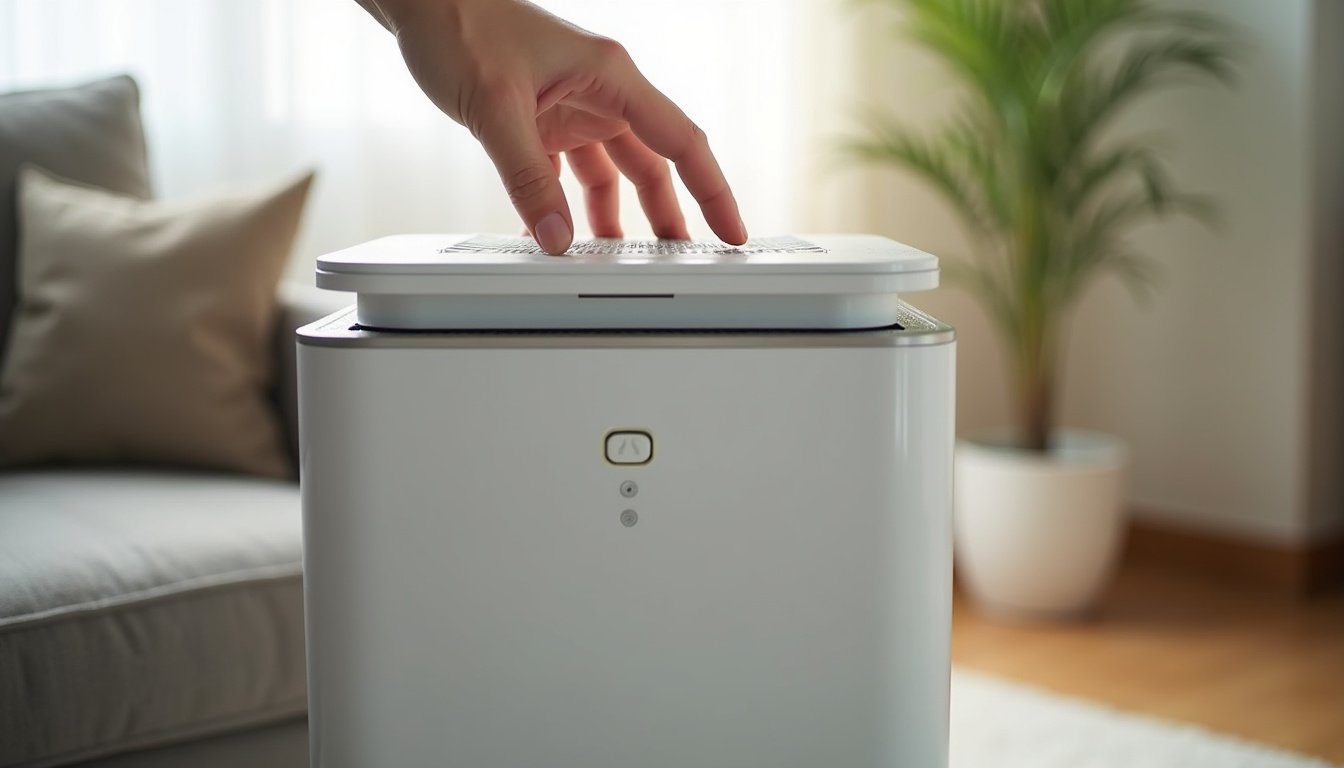
An air purifier blowing out air slightly warmer than the room is normal. The fan motor and electronics convert a little of their input to heat, which leaves with the airflow, so on any purifier the outlet runs a degree or two above the intake, more on high and on compact units where the motor sits near the outlet. It does not heat a room measurably. What is not normal is air that is noticeably hot, a housing or plug hot to the touch, a hot electrical smell, or warmth that has grown over weeks at the same setting. Those point to the motor working harder than it should, usually because a clogged filter or blocked intake is choking airflow, or because the unit is boxed into a cabinet where its own warm exhaust is recirculated, or, less often, to a failing bearing or an electrical fault. Check the filter and the clearance first, since they fix most warm-air complaints, and unplug and contact the maker for anything that smells hot, sounds wrong or is hot rather than warm.
In short: a degree or two warmer than the room is the motor doing its job. Hot air, a hot housing, a burning smell or rising warmth is a choked or failing unit: check the filter and clearance, then call the maker.
Maker manuals describe slight outlet warmth as normal and list restricted airflow from loaded filters or blocked intakes as the common cause of overheating; many units have a thermal cutout that stops the motor if it gets too hot. Consumer electrical safety guidance advises unplugging any appliance that is hot to the touch, smells of burning or has a hot plug.
This guide is research-based, drawn from maker manuals and consumer electrical safety guidance. We have not tested the units in the table and quote no prices or ratings.
Normal
- Outlet air a degree or two above room temperature
- Slightly more warmth on high and on compact units
- Housing at most slightly warm after hours of running
- No smell, no change in sound, room temperature unchanged
A fault or a choke
- Outlet air clearly hot, or warmth rising over weeks
- Housing, cord or plug hot to the touch
- Hot electrical or burning smell
- Unit shutting itself off, slowing or buzzing
Key Takeaways
- Every purifier’s outlet air is slightly warmer than the room because the motor and electronics shed a little heat into the airflow.
- That warmth is a degree or two, more on high, and does not heat a room measurably.
- A clogged filter or blocked intake makes the motor work harder and run hotter; replace the filter and clear the space around the unit.
- A unit in a cabinet, corner or against a wall recirculates its own warm exhaust; give it clearance.
- Hot air, a hot housing or plug, a burning smell, or a unit shutting itself off means unplug and contact the maker.
- Purifiers with built-in heaters or combination units are a different case; check the mode.
- Ionizer and plasma stages can add a faint warmth and sometimes ozone; switch them off.
Purifiers With Efficient Motors and Clear Airflow Paths
These widely reviewed units use efficient DC motors and open intake and outlet designs that keep the motor cool at normal speeds, so outlet warmth stays slight. Give any unit clearance and fresh filters, and compare the maker-listed CADR to your room so it does not have to run on high.






How This Guide Approaches the Question
We looked at where the warmth comes from, how much is normal, what makes a purifier run hotter than it should, how to check it in a minute, and which signs mean the unit should be unplugged. Product details in the table come from maker specifications.
Two numbers settle it: the air temperature at the outlet against the room, and whether that gap has grown since the filter was new.
Where the Warmth Comes From
A purifier is a fan motor, a control board and sometimes a display, all drawing electricity. Most consumer units draw 5 to 60 watts depending on size and speed, and whatever is not converted into moving air becomes heat in the motor windings and electronics. That heat is carried away by the airflow, which is why it shows up at the outlet. A unit drawing 40 watts on high releases about as much heat as a small incandescent bulb, spread through hundreds of cubic feet of air a minute, which raises the outlet temperature a degree or two and the room temperature not at all. Compact units with the motor near the outlet, and units on high, feel warmest; large units on low barely register.
| Setting | Typical draw (watts) | Outlet warmth above room | Room effect |
|---|---|---|---|
| Sleep or low | 3 to 10 | Barely detectable | None |
| Medium | 10 to 30 | About 1 degree | None |
| High | 20 to 60 | 1 to 3 degrees | None measurable |
| Large unit on turbo | 60 to 100 | 2 to 4 degrees | Negligible |
How to Check in a Minute
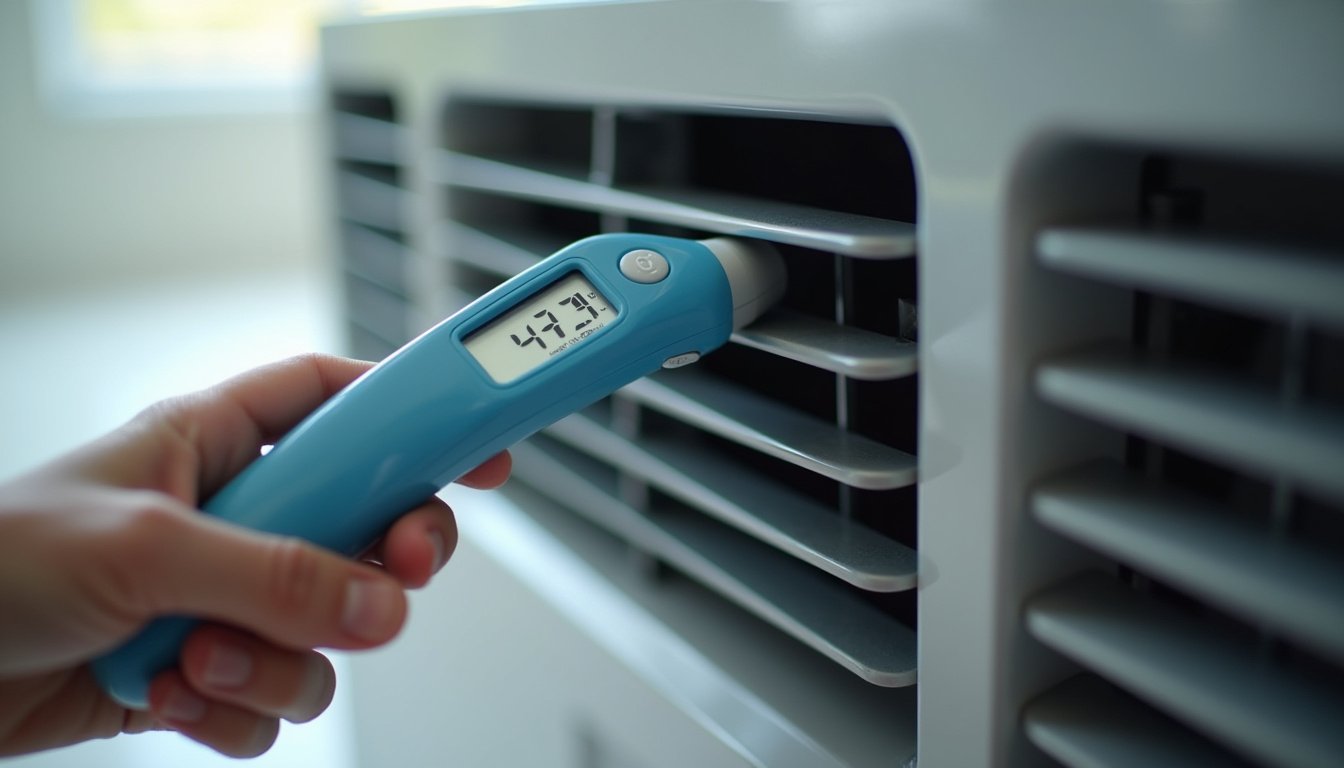
Hold a digital thermometer in the airflow at the outlet for a minute, then away from the unit in the room, and compare. A gap of one to three degrees is normal. Feel the housing with the back of a hand after an hour: slightly warm is fine, hot is not. Feel the plug at the wall: it should be at most barely warm. Listen: the fan should sound as it always has, without new strain, buzz or slowing. Sniff the outlet: there should be no hot electrical or burning smell. Then compare with memory: if the unit used to be cooler at the same setting, something has changed, and the usual culprit is airflow.
Choked Airflow: The Usual Cause of Extra Warmth
A fan motor is cooled by the air it moves. When airflow drops, the motor works harder against the resistance and sheds less heat, so it runs hotter, and the smaller volume of air leaving the outlet carries the same heat in less air, which makes it feel warmer. The causes are a loaded HEPA or pre-filter, an intake pressed against a wall, curtain or furniture, an outlet blocked by a shelf, a unit in a cabinet or closet, or a filter still in its plastic wrap. Each of these also makes the unit louder and reduces how much it cleans. Replace the filter, rinse the pre-filter, pull the unit into the open with a few feet of clearance, and the outlet temperature drops back.
| Cause | Sign | Fix |
|---|---|---|
| Loaded HEPA filter | Warmer and louder than when new; weak airflow | Replace the filter |
| Packed pre-filter | Same, especially with pets | Rinse or vacuum monthly |
| Intake against a wall or curtain | Warm; airflow weak | Pull out; give a few feet of clearance |
| Unit in a cabinet or closet | Warm exhaust recirculated; housing warm | Move into the open |
| Filter in plastic wrap | Very weak airflow; warm; may shut down | Unwrap and refit |
| Dust on the fan and motor | Gradual warming over months | Vacuum the intake grille; contact maker if internal |
Worked example: a bedroom purifier has grown warmer and louder since spring. The HEPA is grey and the pre-filter matted with cat hair; the unit has crept into the gap between the nightstand and the wall. A new filter, a rinsed pre-filter and a move to open floor bring the outlet back to a degree above the room and the sound back to a soft whoosh.
Recirculated Exhaust
A purifier in a confined spot pulls in its own warm outlet air and warms it again. In a cabinet, a corner with the outlet facing the wall, or under a desk, the air around the unit creeps up a few degrees and the outlet follows. The room is not warming; the pocket around the unit is. Give the unit clear space on the intake and outlet sides, and aim the outlet toward open room so the warm air disperses. This also matters for filtration: a unit recirculating its own exhaust is cleaning the same air repeatedly rather than the room’s.
When Warm Becomes Hot: Faults
If the filter is fresh, the unit is in the open and the outlet air is still clearly hot, or the housing or plug is hot, or there is a hot electrical smell, the cause is inside: a motor bearing failing and the motor straining, dust packed on the motor, a failing power supply or control board, or a loose electrical connection heating up. Many units have a thermal cutout that shuts the motor down when it overheats and restarts it when it cools, so a purifier that stops and starts on its own is telling you it is too hot. None of these is an owner repair. Unplug the unit, leave it unplugged and contact the maker with the model and serial number.
| Sign | Likely cause | Action |
|---|---|---|
| Hot outlet air with fresh filter and clearance | Motor straining or failing | Unplug; contact maker |
| Housing hot to the touch | Internal overheating | Unplug; contact maker |
| Plug or cord hot | Loose connection or damaged cord | Unplug; do not use; contact maker |
| Burning or hot electrical smell | Electrical fault | Unplug; keep unplugged; contact maker |
| Unit stops and restarts by itself | Thermal cutout tripping | Check filter and clearance; if it persists, contact maker |
| Grinding or whine with warmth | Bearing failure | Unplug; contact maker |
Units That Are Supposed to Blow Warm Air
Some appliances combine a purifier with a fan heater, and in heating mode they blow hot air by design; check that the unit is not in heat mode, since a bumped remote or an app schedule can switch it. Combination purifier-fans in cooling mode blow room-temperature air that feels cool because it moves; the same unit on low with the fan nearly still can feel warm from the motor. Purifiers with an ionizer or plasma stage may add faint warmth from the high-voltage electronics and sometimes a sharp ozone smell; switch the feature off, since the EPA cautions against ozone indoors and the HEPA stage does the work. Dehumidifier combinations blow warm dry air by design, since the compressor rejects heat into the airflow.
Keeping a Purifier Running Cool
Fresh filters, clear space and the right speed keep the motor cool. Replace the HEPA on the maker’s schedule or earlier in dusty homes, rinse the pre-filter monthly, keep a few feet of clearance around intake and outlet, keep the unit out of cabinets and direct sunlight, and size it so medium suits the room, since a unit running flat out on high is the one that runs warmest. Vacuum the intake grille between filter changes. A unit treated this way stays a degree or two above room temperature for its whole life, and any change from that is a signal worth acting on.
- Filters replaced on schedule; pre-filter rinsed monthly.
- A few feet of clearance; no cabinets, no curtains over the intake.
- Out of direct sunlight and away from radiators.
- Sized so medium does the job; high only for an hour after an event.
- Intake grille vacuumed between filter changes.
- Any new warmth, smell or sound treated as a prompt to check the filter, then the maker.
How to Deal With Warm Air From a Purifier in 6 Steps
- Measure: hold a thermometer at the outlet and in the room; a gap of one to three degrees is normal.
- Feel the housing with the back of your hand and the plug at the wall; warm is fine, hot is not.
- Sniff the outlet and listen for new strain, buzz or slowing; any of those with heat means unplug now.
- Replace a loaded HEPA, rinse the pre-filter and make sure no filter is still in its wrap.
- Move the unit into the open with a few feet of clearance, outlet aimed at open room, out of cabinets and sunlight.
- If the air is still hot, the housing or plug is hot, or the unit stops and restarts on its own, unplug it and contact the maker.
Do and Do Not
Do
- Expect a degree or two of warmth.
- Check the filter and clearance first.
- Use the back-of-hand test on the housing.
- Unplug for heat, smell or self-stopping.
- Size the unit so it rarely needs high.
Do not
- Do not worry about slight warmth; it is the motor.
- Do not run a unit that is hot to the touch.
- Do not box the purifier into a cabinet or corner.
- Do not open the case to inspect the motor.
- Do not ignore a thermal cutout stopping the unit.
Who Should Skip This
If the outlet is a degree or two above the room, the housing is merely warm, and nothing has changed in sound or smell, skip the troubleshooting; that is normal operation on every purifier made.
If the plug or cord is hot, skip the filter checks and unplug immediately; a hot plug is a connection or cord fault, not an airflow problem, and it belongs with the maker or an electrician.
Honest Limits
- Outlet temperature gaps vary by model, speed and room; the ranges given are typical.
- Thermal cutouts are not fitted to every unit; a unit without one can overheat without stopping.
- We cannot diagnose internal faults remotely, and neither can an owner safely.
- Combination units with heaters or dehumidifiers behave differently and follow their own manuals.
- Nothing here involves opening a sealed appliance.
- Nothing here is a substitute for the maker’s instructions or electrical safety guidance.
When to See a Professional
Contact the maker for any purifier that is hot rather than warm, smells of hot electronics, stops and restarts on its own with a fresh filter and clearance, or has a hot plug or cord; these are motor, electrical or thermal faults and not owner repairs.
Call an electrician if the outlet itself is warm or scorched, or if other appliances on the same circuit also run hot, since the fault may be in the wiring rather than the purifier.
Frequently Asked Questions
Is it normal for an air purifier to blow warm air?
Yes, slightly. The fan motor and electronics shed a little heat into the airflow, so outlet air runs a degree or two above the room, more on high and on compact units. It does not heat the room measurably.
Will an air purifier heat up my room?
No. A purifier draws 5 to 60 watts, about a small bulb’s worth of heat, spread through hundreds of cubic feet of air a minute, which raises the outlet a degree or two and the room not at all. A thermometer across the room will not move.
Why is my air purifier warmer than it used to be?
Almost always choked airflow. A loaded HEPA or pre-filter, an intake pressed against a wall or curtain, or a unit pushed into a cabinet or corner makes the motor work harder and shed heat into less air.
How warm is too warm for an air purifier?
Outlet air one to three degrees above the room, a housing you can rest a hand on, and a plug at most barely warm are normal. Hot outlet air, a housing you pull your hand from, a hot plug or cord, a hot electrical smell or a unit stopping on its own are too warm.
My air purifier keeps turning off and on by itself. Is it overheating?
Probably. Many units have a thermal cutout that stops the motor when it gets too hot and restarts it once it cools. Check for a loaded filter, a wrapped filter and blocked clearance first; if the cycling continues with a fresh filter and open placement, the motor or electronics are faulty.
Does the filter affect how warm the air is?
Yes. A loaded filter raises resistance, so the fan motor works harder and runs hotter while moving less air, and the same heat in a smaller airflow feels warmer at the outlet. The unit also gets louder and cleans less.
Can the purifier catch fire from blowing warm air?
Normal slight warmth carries no such risk. The signs that matter are a housing, plug or cord that is hot to the touch, a burning or hot electrical smell, buzzing, or the unit stopping on its own.
Why does my purifier blow warm air on low but cool on high?
On low the fan barely moves air, so the little motor heat is concentrated in a small airflow and feels warm; on high the same heat is spread through far more air and the moving air feels cool on skin. Neither changes the room temperature.
Should I switch off the ionizer if the air feels warm?
Yes, and leave it off regardless. Ionizer and plasma stages run high-voltage electronics that add faint warmth and can produce ozone, which has a sharp smell and which the EPA cautions against indoors. The HEPA and carbon stages do the cleaning; switching the ionizer off loses nothing worth keeping.
Where should I put the purifier so it runs cooler?
In the open with a few feet of clearance around intake and outlet, outlet aimed at open room so warm exhaust disperses, out of cabinets, away from radiators and direct sunlight. A unit sized so medium suits the room runs cooler than a small one on high, and fresh filters keep the motor from straining.
Bottom Line
An air purifier blowing out slightly warm air is doing what every fan motor does: shedding a little heat into the airflow. A degree or two above room temperature, more on high and on compact units, is normal and does not warm the room. The warmth worth acting on is the kind that has grown since the filter was new, or that comes with a hot housing, a hot plug, a burning smell or a unit that stops on its own.
Check the filter and the clearance first, since choked airflow explains most extra warmth and a fresh filter in an open spot fixes it. For anything hot rather than warm, unplug the unit, leave the case closed and contact the maker. Keep filters fresh, give the unit space, and size it so it rarely needs high, and it will run a degree or two warm for years.
Related reading: Air purifier not turning on, Why is air purifier fan so loud, Air purifier makes room too cold.