Last updated:
As an Amazon Associate we earn from qualifying purchases. This does not change what we recommend. See our affiliate disclaimer.
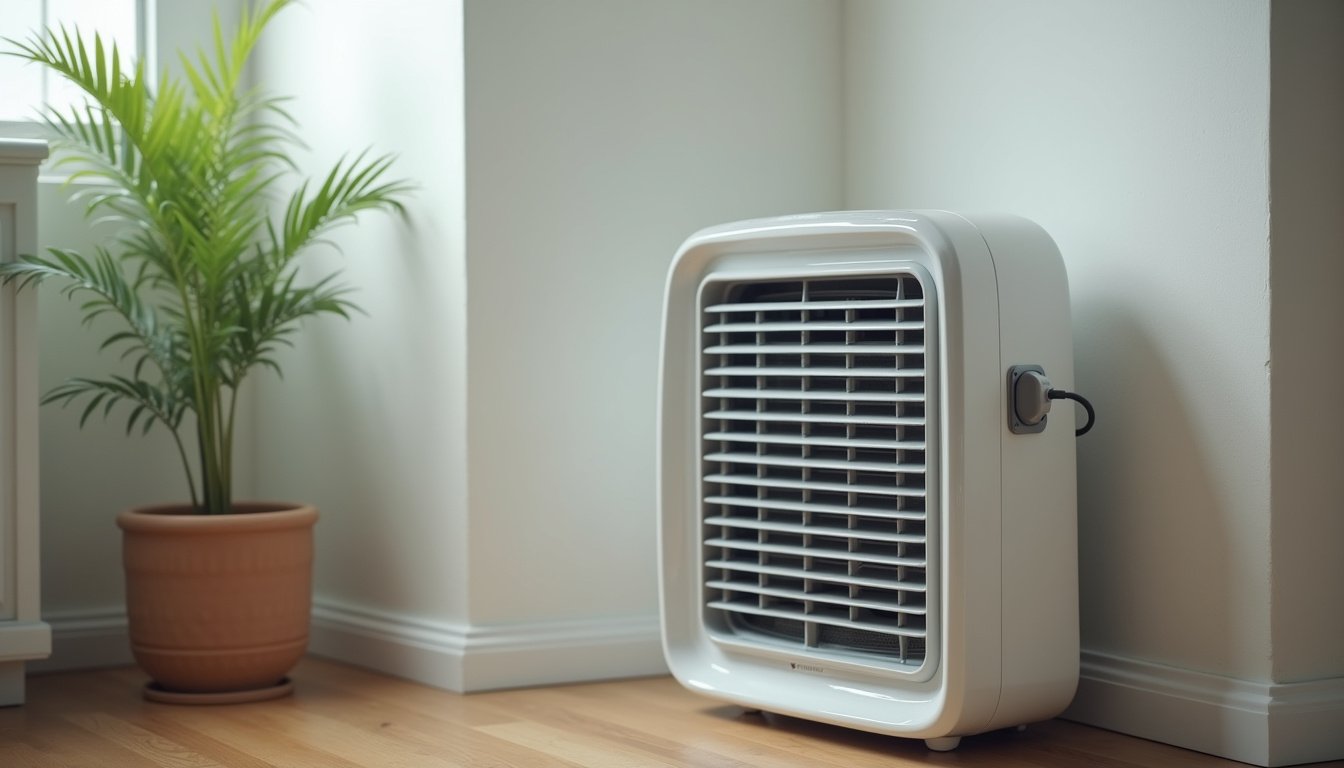
A whistle from a purifier is a thin, steady, high note that was not there when the unit was new. It is easy to ignore for a week and impossible to ignore at night. Unlike a grind, it is rarely a sign of damage; a whistle is the sound of air being forced through a space it was not meant to use, and finding that space is the whole repair.
An air purifier whistles when air moves fast through a narrow gap. The commonest gap is created by a loaded filter: as the HEPA stage or pre-filter clogs, the fan pulls harder and air rushes through whatever small openings remain, around the frame, through a thin spot in the pre-filter or past a slightly unseated cover. The second is a seating gap: a filter that is undersized, backwards or not pressed against its gasket, or a cover not latched flat, leaves a slot that sings. The third is a partial blockage at the intake or outlet, a curtain, a bag, a wall too close or a louver knocked askew, that squeezes the airflow. A unit that only whistles on high is usually at the edge of one of these; one that whistles on every speed has a real gap. The fix is almost always cleaning or replacing the filter, reseating it, latching the cover and clearing the grilles.
In short: a whistle is a gap plus airflow. Clean or replace the filter, seat it and the cover properly, give the unit clearance, and the note disappears.
Maker manuals describe new or changed sounds as a cue to check filter condition and seating, advise a foot of clearance around intakes and outlets, and note that a loaded filter raises fan effort and noise. The EPA’s guide to air cleaners in the home adds that a clogged filter reduces airflow and performance, which is why a whistling unit is often also an underperforming one.
This guide is research-based, drawn from maker manuals, EPA guidance and the acoustics of air moving through small openings. We have not tested the units in the comparison table and quote no prices or ratings. Nothing here involves opening the housing beyond the filter compartment.
Likely a loaded or unseated filter if
- The whistle appeared gradually over weeks
- It is louder on high and faint or absent on low
- The filter is gray or the pre-filter is matted
- It changes or stops when you press on the cover
Look at the surroundings or the grille if
- The whistle started after the unit was moved
- Something sits within a foot of the intake or outlet
- An outlet vane or louver is bent or loose
- It stops when you turn the unit a few degrees
Key Takeaways
- A whistle is air forced through a narrow gap; find the gap and the sound stops.
- A loaded HEPA filter or matted pre-filter is the most common cause; clean the pre-filter and replace the HEPA if due.
- A filter that is undersized, backwards or off its gasket, or a cover not latched flat, leaves a slot that sings.
- Curtains, bags, walls and furniture within a foot of the intake or outlet squeeze the airflow.
- Bent or loose outlet vanes and louvers whistle in the fastest air the unit produces.
- A whistle only on high is a unit near its limit; one on every speed is a real gap.
- A whistling purifier is usually also an underperforming one, because restricted airflow cuts cleaning.
Quiet, Well-Sealed Purifiers to Compare
If the whistle traces to a unit that is undersized or worn, these widely reviewed filter-based models use gasketed filter bays and publish low-speed noise figures. Compare the maker-listed CADR against your room and size a step up so the unit runs on a quiet speed with headroom.






How This Guide Finds the Whistle
We listed the places air can be squeezed in and around a purifier, matched each to the way its whistle behaves with speed, pressure and position, and ordered the checks from most to least likely. Everything stays within the filter compartment and the outside of the unit. Product details in the table come from maker specifications.
The physics is the same as a whistle in the wind or a kettle: fast air through a small opening. Slow the air by cleaning the filter, or close the opening by seating it, and the tone cannot form.
Quick Diagnosis Table
| How the whistle behaves | Likely gap | Fix |
|---|---|---|
| Grew over weeks; louder on high | Loaded HEPA or matted pre-filter | Clean pre-filter; replace HEPA if gray or due |
| Appeared right after a filter change | Filter undersized, backwards or off the gasket; plastic left on | Reseat correctly; confirm exact part; unwrap fully |
| Stops when you press the cover | Cover not latched flat; gasket displaced | Latch until it clicks; press gasket into channel |
| Started after moving the unit | Intake or outlet too close to a wall, curtain or furniture | Give a foot of clearance all round |
| Stops when you turn the unit slightly | Reflection or a nearby object in the airflow | Reposition; move the object |
| Comes from the top or front outlet | Bent or loose vane, louver or grille fin | Press the vane home; maker part if cracked |
| Whistles on low too | A real slot: gasket missing, frame cracked, cover warped | Inspect gasket and frame; maker part if damaged |
| Stops with the filters out | Filter or pre-filter is the gap | Clean, replace or reseat the filter |
Cause 1: A Loaded Filter
As a HEPA filter fills with dust, air finds it harder to pass through the media and the fan pulls harder against it. The pressure difference across the filter rises, and air accelerates through any small path that remains easier than the media: the thin line where frame meets gasket, a worn spot in a pre-filter, a hairline gap at the cover seam. Fast air through a small opening whistles. The same loading also makes the fan louder and the outlet breeze weaker, so a whistling unit is often a unit that is cleaning poorly.
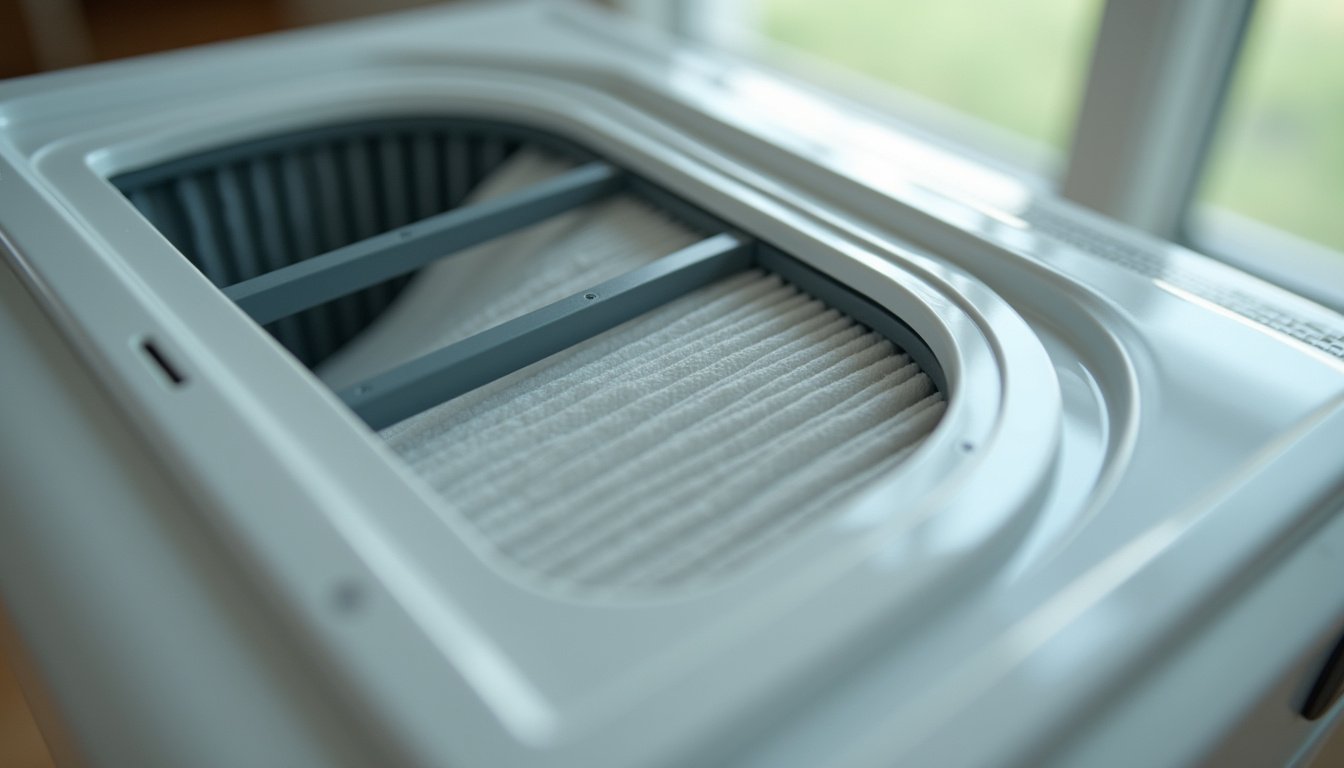
Unplug, open the bay and look at the filters. A pre-filter matted with hair and lint is vacuumed or rinsed and dried. A HEPA face that is uniformly gray or brown, with a noticeably weaker breeze at the outlet, is due for replacement regardless of what the indicator says. In pet, dusty or smoky homes expect the short end of the maker’s 6 to 12 month interval.
Cause 2: A Seating Gap
A whistle that starts the day a new filter goes in is nearly always a seating problem. A replacement that is slightly smaller than the exact part leaves a slot along one edge. A filter installed backwards rests on tabs instead of between them and cannot meet the gasket. Shipping plastic or a cardboard insert left on changes the thickness. A pre-filter clipped on three of four tabs holds the main filter off its seal at one corner. A gasket pushed out of its channel during the change leaves a hard-plastic-to-hard-plastic line that sings.
- Unplug and remove the filter; confirm the designation on the frame matches the manual and that all packaging is off.
- Check the gasket on the frame or bay rim is intact and in its channel.
- Reinstall with the airflow arrow, tab or open end oriented as the manual shows.
- Press the frame flush against the gasket all the way around; there should be no visible gap.
- Refit the pre-filter on every tab and lock every clip.
- Latch the cover until it clicks and check that it sits flat with no edge standing proud.
- Run on high and pass a tissue around the cover seams; a flutter marks the remaining gap.
Worked example: a panel unit starts whistling on medium and high after a filter change. The owner finds the pre-filter frame on three tabs and the new filter’s bottom edge a few millimeters off the gasket. Reseating both and pressing the cover until it clicks ends the whistle; a week later the clean side of the filter is still white, confirming the seal.
Cause 3: The Cover or Gasket
The cover is what presses most filters home, and a cover that is closed but not latched, or latched but slightly warped, leaves a seam that air escapes through under pressure. Pressing on the cover with the unit running and hearing the whistle change or stop is the diagnostic. A gasket that has flattened with age or torn at a corner does the same from inside.
| Finding | Meaning | Fix |
|---|---|---|
| Whistle stops when the cover is pressed | Cover not applying pressure | Latch until it clicks; if it will not, cover or latch is worn |
| Cover will not latch flat with the filter removed | Warped cover, worn latch or hinge pin out | Maker replacement cover or latch; do not force or tape |
| Gasket loose in the bay | Displaced during a change | Press back into its channel |
| Gasket flattened or torn | Age or damage | Maker part; do not substitute weatherstrip |
| Whistle from the cover seam on low speed too | A real slot | Inspect for a cracked cover or frame; maker part |
Cause 4: Something Too Close Outside
A whistle that began when the unit was moved usually comes from its new neighbors. An intake a few inches from a wall, a curtain hem drawn against the grille, a bag or a cushion leaning on the side, or an outlet aimed into the underside of a shelf all squeeze the airflow and raise its speed through the remaining opening. Turning the unit a few degrees or pulling it out from the wall changes the note immediately, which is the tell.
Give the unit a foot of clearance on every side, more behind a rear intake, keep curtains and soft furnishings away, and set it on a hard floor or a low stand rather than deep carpet if the intake is at the base. Clearance also improves airflow and filter life, so the fix for the whistle is good practice anyway.
Cause 5: Vanes, Louvers and Grilles
The outlet is where air leaves fastest, and a vane or louver that has been bent, knocked loose or has lost a clip sits at an angle that turns the airflow into a reed. Snap-on grilles with a popped tab leave a slot along one edge. Both whistle on medium and high and change when the vane or grille is touched.
- Press each vane or louver gently; a loose one moves more than its neighbors and often clicks back into its seat.
- Check snap-on grilles for all their tabs and press any popped ones home.
- Clear lint and dust from the outlet grille with a soft brush; a half-blocked grille whistles too.
- If a vane pivot is cracked or a grille tab is broken, order the maker’s part; glue fouls the airflow path and rarely holds.
Whistles Only on High
A unit that whistles only at its top speed is at the edge of one of the gaps above: the filter is partly loaded, the seal is marginal, or the clearance is tight. Any of them lets enough air through quietly at medium and sings when the fan pushes harder. It is also a hint about sizing. A unit that lives on high to meet its room’s cleaning target is both louder and more prone to whistling than one a size larger running on medium.
Check the unit’s dust CADR against two-thirds of the room’s floor area, AHAM’s rule of thumb. If high is needed to reach it, the unit is undersized; a correctly sized unit on medium is quieter, lasts longer between filter changes and does not hunt for gaps.
Sounds That Are Not Whistles
A few high-pitched sounds get called whistles and are something else. A steady squeal that does not change when the cover is pressed or the filters are removed, and that may fade as the unit warms, is a dry motor bearing; stop using the unit and contact the maker. A faint electronic whine from the control board or power supply on some units is normal and does not change with airflow. A tonal fan hum on a small unit at high speed is the fan itself, which sizing up addresses.
After the Fix
Once the note is gone, confirm the airflow came back with it. Hold a hand at the outlet on medium; the breeze should feel like it did when the filter was new. A week later, open the bay and check the clean side of the filter is white, which confirms the seal held. If the whistle returns within weeks with a fresh filter, the gap is structural, a flattened gasket or a warped cover, and the maker’s part is the fix.
| Check | When | Pass |
|---|---|---|
| Whistle gone on every speed | Right after the fix | Silence except fan sound |
| Outlet breeze on medium | Right after the fix | Noticeably stronger than before |
| Tissue at cover seams on high | Right after the fix | Hangs still |
| Clean side of filter | One week later | White, no streaks |
| Fan tone | Ongoing | Steady, not strained |
How to Stop a Whistling Purifier in 6 Steps
- Note when it whistles: which speeds, whether it changes when you press the cover or turn the unit, and whether it started after a filter change or a move.
- Unplug, open the bay and inspect: clean a matted pre-filter and replace a gray HEPA filter.
- Confirm the filter is the exact part, fully unwrapped and oriented correctly; press it flush against an intact gasket.
- Refit the pre-filter on every tab, lock every clip and latch the cover until it clicks and sits flat.
- Give the unit a foot of clearance all round and check outlet vanes and grilles for anything bent or loose.
- Run on each speed; if a high note persists with the filters out and the cover open, it is the motor, so stop and contact the maker.
Do and Do Not
Do
- Clean the pre-filter and replace a loaded HEPA.
- Use the exact filter and seat it against the gasket.
- Latch the cover until it clicks.
- Keep a foot of clearance around the unit.
- Treat a whistle on high as a filter and sizing warning.
Do not
- Do not pad gaps with tape or foam.
- Do not force a warped cover closed.
- Do not ignore a whistle that comes with weak airflow; the unit is underperforming.
- Do not glue vanes or grille fins.
- Do not run a unit whose squeal ignores the filters; that is the motor.
Who Should Skip This
If the whistle appeared the day a new filter went in, skip the search elsewhere. Unwrap, reorient and reseat the filter, lock the clips and latch the cover; a seating gap is the cause nine times out of ten.
If the high note is still there with the filters out and the cover open, skip every airflow check. That is a bearing or motor sound, not a gap, and the unit should be unplugged and the maker contacted.
Honest Limits
- Housing designs vary; the manual’s diagram shows the gasket and clip locations for your model.
- A whistle can have two causes at once, a loaded filter and a marginal seal; fix both.
- Clearance and placement advice assumes a room with somewhere else to put the unit.
- Flattened gaskets and warped covers are maker parts; improvised seals change airflow and hide bypass.
- Some electronic whines are normal and unrelated to airflow.
- Nothing here applies to the motor or housing interior, which are not owner serviceable.
When to See a Professional
Contact the maker for a squeal or whine that persists with the filters out and the cover open, a cover that will not latch flat with the filter removed, a torn or flattened gasket not sold separately, or a cracked vane or grille; stop using the unit for any motor sound, heat or burning smell.
See a doctor or allergist if symptoms persist in a room where a correctly sealed and sized purifier runs; the trigger may not be airborne. Nothing on this page is medical advice.
Frequently Asked Questions
Why is my air purifier making a high-pitched whistling sound?
Air is being forced fast through a narrow gap. The usual gaps are a loaded HEPA filter or matted pre-filter that raises fan pressure, a filter or cover not seated against the gasket, something within a foot of the intake or outlet, or a bent vane or loose grille.
Why did my purifier start whistling after I changed the filter?
The new filter is probably not seated: slightly undersized, installed backwards, still wearing plastic or an insert, off its gasket, or held up by a pre-filter on three of four tabs. Unplug, unwrap fully, orient by the arrow, press flush against the gasket, lock every clip and latch the cover until it clicks.
Does a whistling filter mean it needs replacing?
Often. As a HEPA filter loads, the fan pulls harder and air whistles through whatever small gaps remain, and the outlet breeze weakens. Clean the pre-filter first; if the whistle stays on high a day later and the HEPA face is gray, replace it regardless of the indicator.
Why does it only whistle on high speed?
Because high pushes the most air, and a marginal gap or a partly loaded filter that passes air quietly on medium sings under more pressure. Clean and reseat the filter and check clearance. A unit that must run on high to clean its room is undersized; one size larger on medium is quieter.
The whistle stops when I press on the cover. What does that mean?
The cover is not applying enough pressure to seal the filter, usually because it is not latched until it clicks, or its latch is worn or the cover warped. Latch it fully; if it will not sit flat with the filter removed, the cover or latch needs the maker’s replacement part.
Can something outside the purifier make it whistle?
Yes. A wall a few inches from the intake, a curtain hem against the grille, a cushion leaning on the side or an outlet aimed at the underside of a shelf all squeeze the airflow.
How do I fix a whistling outlet vane or grille?
Press each vane or louver gently to find the loose one and click it back into its seat; press popped grille tabs home; brush lint off the outlet. A cracked vane pivot or broken tab needs the maker’s part rather than glue, which fouls the airflow path.
Is a whistle a sign the purifier is not cleaning well?
Usually. The same restricted airflow that produces the whistle, a clogged filter or a gap that bypasses the media, also means less air is being filtered. Fix the whistle and the outlet breeze typically returns to normal, which is the sign the unit is cleaning at its rated rate again.
What if the high-pitched noise is still there with the filters out?
Then it is not air through a gap. A squeal or whine that persists with the filters out and the cover open, and may fade as the unit warms, is a dry motor bearing or an electronic whine. A bearing sound is a stop condition: unplug the unit and contact the maker.
Can I seal a whistling gap with tape or foam?
No. Padding hides bypass, can be drawn into the fan, blocks cooling or sensor vents and changes how the filter sits. Fit the exact filter and seat it against an intact gasket; if the gasket is flattened or the cover warped, order the maker’s part.
Bottom Line
A whistling air purifier is air squeezing through a gap under pressure, and the gap is almost always one of four things: a loaded filter making the fan pull harder, a filter or cover not seated against its gasket, something crowding the intake or outlet, or a vane knocked askew. Clean or replace the filter, seat it, latch the cover and clear a foot around the unit, and the note goes with the gap.
Listen to what the whistle is also telling you. It arrives when airflow is restricted, so a unit that whistles is a unit cleaning less than it should, and one that whistles only on high is one running at its limit. Treat the sound as a reminder to maintain the filter, check the seal and, if high is a daily necessity, size up.
Related reading: Air purifier making a fluttering noise, Air purifier leaking air, Air purifier making grinding noise.