Last updated:
As an Amazon Associate we earn from qualifying purchases. This does not change what we recommend. See our affiliate disclaimer.
A purifier draws about as much power as a few light bulbs, so when the lights go out the moment it starts, something is wrong, and it is not always the purifier. Breakers trip to protect wiring from too much current or a fault to ground. Working out which fired, and whether the purifier or the circuit caused it, is the whole task.
When an air purifier trips a breaker, the cause is one of four things. The circuit is overloaded: the purifier is sharing a line with a space heater, a hair dryer, a microwave or a window air conditioner, and its startup surge tips the total over the breaker’s rating. The outlet or circuit has a fault: a worn outlet, a loose connection, a damaged extension cord or an aging breaker. The purifier’s cord or plug is damaged, letting conductors short or arc. Or the purifier itself has an internal fault, a failing motor drawing excess current, moisture inside the housing or a short on a board, which means the unit must not be used again until the maker has looked at it. The safe sequence is to unplug the purifier, reset the breaker, and test in that order.
In short: unplug, reset, and test the purifier alone on a known-good outlet with nothing else running. If it trips that, stop using it and contact the maker. If it does not, the problem is the circuit or what shares it.
Maker manuals are consistent that a purifier should be plugged directly into a wall outlet rather than a power strip shared with high-draw appliances, and that a unit which trips breakers, smells of burning or sparks should be unplugged and the maker contacted. CPSC electrical safety guidance makes the same points about overloaded circuits and damaged cords.
This guide is research-based, drawn from maker manuals, CPSC and NFPA electrical safety guidance and the way household circuits are protected. We have not tested the units in the comparison table and quote no prices or ratings. Nothing here involves opening the purifier or working on wiring.
Likely the circuit, not the purifier, if
- A heater, hair dryer, microwave or AC shares the circuit
- It trips only on startup or only when something else is running
- The same outlet trips with other appliances too
- The purifier runs fine on an outlet in another part of the house
Stop using the purifier and contact the maker if
- It trips a known-good outlet by itself, with nothing else running
- The plug or cord is warm, discolored, cracked or frayed
- There is any burning smell, smoke, sparking or buzzing
- The fan grinds, runs hot or has been wet
Key Takeaways
- Unplug the purifier before resetting the breaker, then test it alone on a known-good outlet.
- Most trips are overloaded circuits: a purifier sharing a line with a heater, hair dryer or microwave.
- A damaged cord, worn outlet or aging breaker can trip without the purifier being at fault.
- A purifier that trips a good outlet by itself has an internal fault and must not be used again.
- GFCI and AFCI breakers trip on ground faults and arcing, which can point to moisture or a damaged cord.
- Never run a purifier on an extension cord or power strip shared with heating appliances.
- Repeated trips, warm plugs or burning smells are electrician and maker matters, not home repairs.
Reliable Filter-Based Purifiers to Compare
If the fault turns out to be the purifier, these widely reviewed filter-based units publish their power draw and run on a few watts to a few dozen at most. Compare the maker-listed CADR against your room and plug the replacement directly into a wall outlet on a lightly loaded circuit.






How This Guide Approaches a Tripping Breaker
We separated the reasons a breaker trips into overload, circuit faults, cord and plug damage and internal purifier faults, drew on maker manuals and electrical safety guidance from the CPSC and NFPA, and set out a test sequence an owner can follow without tools or opening anything. Product details in the table come from maker specifications.
One rule governs the sequence: a purifier is a mains appliance, and an electrical fault is not a troubleshooting puzzle to solve by trying again. If the unit itself is at fault, the conversation moves to the maker.
First Steps
- Unplug the purifier. Do not reset the breaker with the purifier still plugged in.
- Check the purifier’s plug and the outlet for heat, discoloration, a burnt smell or melted plastic. If any are present, leave the breaker off and call an electrician.
- Note what else is on the circuit: look for a space heater, hair dryer, iron, microwave, toaster, window air conditioner, dehumidifier or vacuum running at the time.
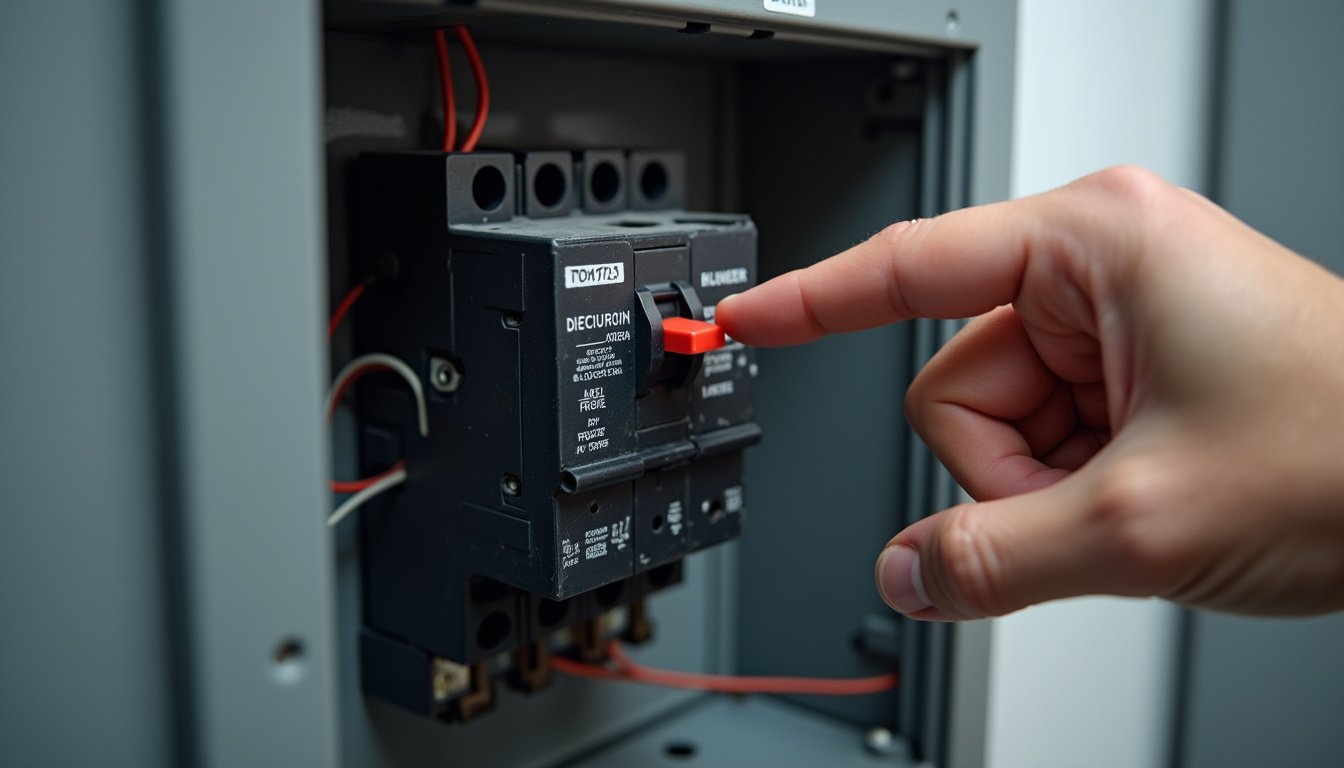
- Reset the breaker at the panel: push it fully off, then on.
- With the purifier still unplugged, see whether the breaker holds. If it trips again with nothing plugged in, the fault is in the wiring; call an electrician.
- If it holds, continue with the isolation test below.
Quick Diagnosis Table
| Pattern | Likely cause | What to do |
|---|---|---|
| Trips when the purifier starts while a heater or dryer runs | Circuit overload from combined load | Move the purifier to a different circuit; never share with heating appliances |
| Trips only on startup, holds afterward, nothing else running | Marginal breaker or startup surge on a loaded circuit | Try another circuit; have an electrician check the breaker |
| Trips with the purifier alone on a known-good outlet | Internal purifier fault | Stop using; contact the maker |
| Trips on one outlet but not another | Outlet or circuit fault | Stop using that outlet; call an electrician |
| GFCI outlet or breaker trips | Ground fault: moisture in unit, damaged cord, wet location | Dry and inspect; if it persists on a dry outlet, maker |
| AFCI breaker trips | Arcing: damaged cord, loose plug, internal fault | Inspect cord and plug; if intact, maker |
| Breaker trips with the purifier unplugged | Wiring fault | Electrician |
| Trips after the unit got wet or sat in a damp room | Moisture inside the housing | Unplug; do not use; contact the maker |
Cause 1: An Overloaded Circuit
Most household circuits are protected at 15 or 20 amps. A space heater alone can draw 12 to 15 amps, a hair dryer similar, a microwave 10 or more. A purifier draws under an amp at low speed and perhaps half an amp to an amp at high, but its motor pulls a brief surge when it starts, and if the circuit is already near its limit that surge is enough. The purifier gets the blame because it was the last thing switched on.
Trace the circuit. Outlets in a bedroom often share a breaker with a hallway or bathroom; a kitchen circuit may serve several counter outlets. Switch the suspected heavy appliance off, reset the breaker, and start the purifier alone. If it holds, the answer is simply to put the purifier on a circuit that does not carry a heating appliance, or never run the two together. Power strips and extension cords do not add capacity; they add connections that can overheat.
Worked example: a bedroom purifier starts tripping the breaker in winter. A space heater on the same circuit draws 12.5 amps; the room’s lamps and a phone charger add about half an amp; the purifier’s startup surge tips a 15 amp breaker. Running the purifier from an outlet on the hallway circuit, or turning the heater down to low while the purifier starts, stops the trips. The purifier was never the fault.
Cause 2: The Outlet, Circuit or Breaker
Outlets wear. A loose, worn receptacle that grips the plug weakly can arc and heat, which trips AFCI breakers and can eventually trip a standard breaker or start a fire. Loose wire connections behind an outlet or at the panel do the same. Breakers also age and can begin tripping below their rating, especially older ones. If the purifier runs normally on an outlet in another room but trips one particular outlet, the outlet or its circuit is the suspect.
- Feel the outlet and plug after a few minutes of running: warmth is a warning.
- Look for scorch marks, discoloration, cracked faceplates or a plug that sits loose.
- Test the outlet with a lamp; flickering or a loose fit confirms a worn receptacle.
- Try the purifier on a known-good outlet on a different circuit.
- If the problem follows the outlet, stop using that outlet and have an electrician replace it and check the connections and breaker.
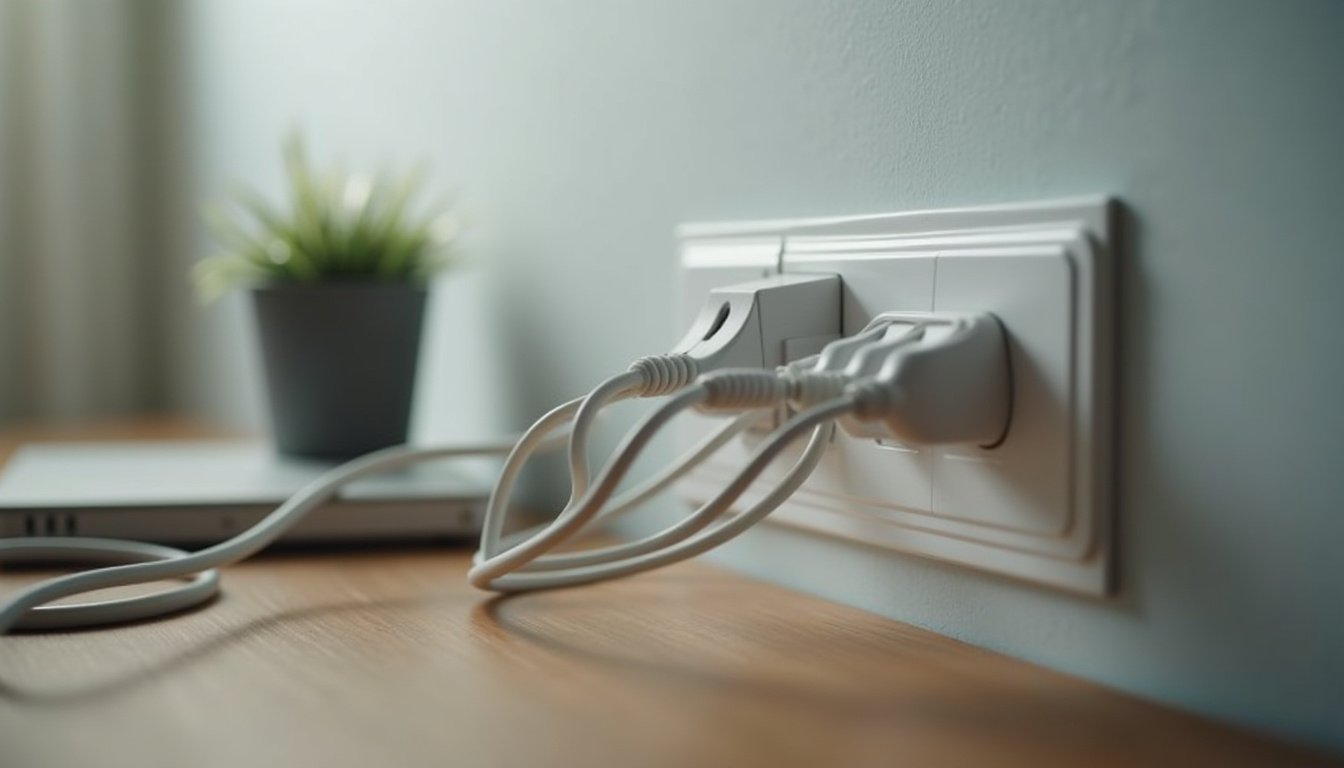
Extension cords and power strips are a frequent culprit here. A thin cord carrying a purifier plus a lamp is fine; the same cord shared with a heater is a fire risk and a trip generator. Makers specify a direct wall connection for a reason.
Cause 3: A Damaged Cord or Plug
A cord pinched under a leg, run under a rug, chewed by a pet or repeatedly bent at the plug can crack its insulation and let conductors touch or arc. That can trip a standard breaker on a short, an AFCI breaker on arcing or a GFCI on a ground fault, and it is a fire risk even when the breaker holds. Inspect the full length of the cord and the plug with the unit unplugged.
| What you find | Meaning | Action |
|---|---|---|
| Cracked, frayed or cut insulation | Conductors exposed or near exposure | Do not use; maker for a detachable cord or service; retire if hardwired and no service |
| Plug warm, discolored or loose pins | Arcing at the plug | Do not use; maker; electrician to check the outlet |
| Cord warm along its length | Overloaded or internally damaged cord | Do not use; maker |
| Kinks, flattened sections, pet bite marks | Possible hidden damage | Replace via maker; do not tape |
| Cord intact, plug firm, no heat | Cord is not the cause | Continue to the purifier test |
Cause 4: A Fault Inside the Purifier
If the purifier trips a known-good outlet by itself, with nothing else running and the cord and plug intact, the fault is inside. Common reasons are a failing fan motor drawing excess current, often with a grind, whine or hot housing; moisture inside the unit from a humidifier, a spill, a damp basement or wet storage, which trips GFCI protection; a short on a control board; or a capacitor failure. None of these are owner repairs, and running the unit again to see if it recurs risks damage and fire.
Unplug it, do not use it, and contact the maker with the model number and a description of the test you did. Units under warranty are typically replaced. Out of warranty, a purifier with an internal electrical fault should be retired and recycled as e-waste rather than repaired at home or kept in service.
- Signs that confirm an internal fault: burning smell, smoke, sparking, buzzing from the housing, a hot case, a grinding or slow fan, or a recent soaking.
- A unit that has been wet may work after drying but can trip GFCIs or fail later; let the maker decide.
- Do not open the housing beyond the filter compartment; mains wiring and capacitors are inside.
- Do not try the unit on a non-GFCI outlet to avoid a GFCI trip; the GFCI is detecting a real fault.
GFCI and AFCI: Different Protections, Different Clues
Not all trips are overloads. A GFCI, found in bathroom, kitchen, garage and outdoor outlets and some breakers, trips when current leaks to ground, as it does through moisture or a damaged cord; a purifier in a damp basement or next to a humidifier tripping a GFCI is reporting a ground fault, not a load problem. An AFCI breaker, common in bedrooms in newer homes, trips on arcing, the sparking that happens at a loose plug, a damaged cord or a failing motor. A standard breaker trips on overload or a hard short.
| Protection | Trips on | Typical purifier-related cause | First check |
|---|---|---|---|
| Standard breaker | Overload or short circuit | Shared heater; shorted cord or internal short | What else is on the circuit |
| GFCI outlet or breaker | Current leaking to ground | Moisture in the unit; damaged cord; damp location | Is the unit or location wet? |
| AFCI breaker | Arcing | Loose plug; damaged cord; failing motor | Cord, plug and outlet fit |
| Combination AFCI/GFCI | Either | Any of the above | Both checks |
Knowing which device tripped narrows the search quickly. A GFCI trip points first at moisture and cords; an AFCI trip at connections and the motor; a standard breaker at load.
Setting Up So It Does Not Happen Again
- Plug the purifier directly into a wall outlet, never a power strip or extension cord shared with heating appliances.
- Put it on a circuit that does not carry a space heater, hair dryer, iron, microwave or window air conditioner, or never run them together.
- Keep it on a dry floor or stand, several feet from humidifiers, away from bathroom steam and out of damp basements unless on a stand with humidity controlled.
- Route the cord along a wall where it cannot be pinched, stepped on or chewed, and never under a rug.
- Check the plug for warmth after the first hour of use in a new location.
- Register the unit with the maker and check for recall notices once a year.
When It Is a Professional’s Job
Two professionals cover every case this guide cannot. An electrician handles anything on the house side: an outlet that is warm, loose or scorched, a breaker that trips with the purifier unplugged or trips below its rating, a circuit that cannot carry a normal room’s load, and any GFCI or AFCI that trips with other appliances too. The maker handles anything on the purifier side: a unit that trips a good outlet alone, a damaged cord or plug, moisture inside, a hot housing or a failing motor. Neither job is done at home.
If there has been any smoke, scorching or a burning smell, treat it as an electrical incident: leave the breaker off, keep the purifier unplugged and have the circuit inspected before using the outlet again.
How to Diagnose a Tripping Breaker in 6 Steps
- Unplug the purifier and check the plug and outlet for heat, discoloration or a burnt smell; if present, leave the breaker off and call an electrician.
- Note what else was running on the circuit, especially heaters, hair dryers, microwaves or air conditioners.
- Reset the breaker with the purifier unplugged; if it trips anyway, the wiring is at fault and an electrician is next.
- Inspect the full cord and plug; any damage means stop and contact the maker.
- Plug the purifier alone into a known-good outlet on a different circuit with nothing else running; if it trips, stop using it and contact the maker.
- If it runs fine there, move it off the shared circuit permanently and have an electrician check the original outlet if it was warm or loose.
Do and Do Not
Do
- Unplug before resetting the breaker.
- Test the purifier alone on a known-good outlet.
- Plug directly into the wall, never a shared power strip.
- Keep the purifier dry and away from humidifiers.
- Call an electrician for warm, loose or scorched outlets.
Do not
- Do not reset and retry repeatedly.
- Do not replace a breaker with a higher rating or bypass a GFCI.
- Do not tape or splice a damaged cord.
- Do not run a purifier that trips a good outlet by itself.
- Do not open the purifier housing.
Who Should Skip This
If the purifier trips a known-good outlet by itself, with nothing else running and the cord intact, skip every other check. The unit has an internal fault; unplug it, do not use it and contact the maker. Out of warranty, retire and recycle it.
If the breaker trips with the purifier unplugged, or the outlet is warm, loose or scorched, skip the purifier entirely and call an electrician; the problem is in the house wiring and no appliance change will fix it.
Honest Limits
- This guide covers isolation and safe next steps only; it does not diagnose wiring or purifier internals.
- Current figures for appliances are typical ranges; your nameplates give the real numbers.
- A unit that passes the isolation test once may still have an intermittent fault; recurring trips on a good outlet mean the maker.
- GFCI and AFCI behavior varies by device and home age.
- A dried-out unit that was wet is not necessarily safe; moisture damage can be hidden.
- Nothing here applies to repairing cords, plugs, outlets or the purifier, which are professional or maker tasks.
When to See a Professional
Call an electrician for any outlet that is warm, loose or scorched, a breaker that trips with the purifier unplugged or trips below its rating, a circuit that cannot carry a normal load, or any sign of scorching or smoke at the outlet; leave the breaker off until it is inspected.
Contact the maker for a purifier that trips a known-good outlet by itself, has a damaged cord or plug, has been wet, runs hot or has a grinding motor; stop using it meanwhile and do not open the housing. Units under warranty are usually replaced; out of warranty with an electrical fault, retire and recycle the unit.
Frequently Asked Questions
Why does my air purifier trip the circuit breaker?
Usually because the circuit is overloaded by something else, a space heater, hair dryer, microwave or air conditioner, and the purifier’s startup surge tips it over. Less often a worn outlet, aging breaker or damaged cord is at fault. A purifier that trips a known-good outlet by itself has an internal fault.
How do I tell if the purifier or the circuit is the problem?
Unplug the purifier, reset the breaker and see if it holds with nothing running. Then plug the purifier alone into a known-good outlet on a different circuit. If it trips there, the purifier is at fault and must not be used. If it runs fine, the original circuit or what shares it is the problem.
Can an air purifier overload a circuit on its own?
Almost never. Purifiers draw under an amp at low speed and about an amp at high, with a brief startup surge. The overload comes from sharing a 15 or 20 amp circuit with a heater or hair dryer drawing 12 to 15 amps. Move the purifier to a circuit without heating appliances.
Is it safe to keep resetting the breaker and trying again?
No. A breaker trips to protect the wiring from overheating or a fault. Reset once with the purifier unplugged to test the circuit, then test the purifier alone on a good outlet. Repeated resets with the fault present risk damage and fire; a purifier that trips a good outlet alone should not run again.
Why does my purifier trip the GFCI outlet?
A GFCI trips when current leaks to ground, which points to moisture inside the unit, a damaged cord or a damp location such as a basement or beside a humidifier. Dry and inspect; if a dry unit with an intact cord still trips a GFCI, it has an internal fault; contact the maker.
Can I use an extension cord or power strip for the purifier?
Makers specify a direct wall outlet. A light-duty extension cord carrying only the purifier is low risk, but a cord or strip shared with a heater or other high-draw appliance can overheat and trip breakers. Never share a power strip between a purifier and heating appliances.
The plug is warm. Is that normal?
No. A warm plug or outlet indicates a loose connection, a worn receptacle or arcing. Unplug the purifier, stop using that outlet and have an electrician inspect it. If the plug itself is discolored or its pins are loose, contact the maker; a damaged plug is not an owner repair.
My purifier got wet and now trips the breaker. What should I do?
Unplug it and do not use it. Moisture inside the housing can cause ground faults and shorts that persist even after the outside looks dry, and GFCI trips are the typical sign. Contact the maker; under warranty the unit is usually replaced, and out of warranty it should be retired.
Can a failing motor cause breaker trips?
Yes. A motor with a failing bearing or winding can draw excess current, arc internally and run hot, tripping standard or AFCI breakers, often with a grind, whine or hot housing. It is not an owner repair; stop using the unit and contact the maker.
When should I throw the purifier away?
When it trips a known-good outlet by itself, has a damaged hardwired cord with no maker service available, has been wet and still trips, runs hot or grinds, or shows any burning smell, smoke or sparking, and it is out of warranty. Recycle it as e-waste rather than putting it in household trash.
Bottom Line
An air purifier tripping a breaker is usually the smallest appliance on the circuit taking the blame for the largest. A heater or hair dryer on the same line, a worn outlet or an aging breaker explain most trips, and the isolation test, purifier unplugged, breaker reset, purifier alone on a known-good outlet, sorts them out in a few minutes without tools.
When the purifier itself fails that test, or its cord, plug or housing is warm, damaged or has been wet, the diagnosis is over and the unit is finished until the maker says otherwise. Never defeat the breaker, never repair a cord, never open the housing, and never share a circuit between a purifier and a heater again.
Related reading: Why isn’t my air purifier working, Air purifier housing cracked, Air purifier maintenance cost.