Last updated:
As an Amazon Associate we earn from qualifying purchases. This does not change what we recommend. See our affiliate disclaimer.
A purifier that is not working can mean several different things. Sometimes it will not turn on at all. More often it runs but the room does not seem any cleaner, or the fan sounds wrong, or the air quality light stays red, or a smell has appeared that was not there before. Each of these has a short list of likely causes, and most are fixed in a few minutes without tools.
The most common reasons an air purifier seems not to work are, in rough order of frequency: a filter that is loaded or still wrapped in its shipping plastic, a unit too small for the room or placed where it cannot pull air, a door left open so the unit is fighting the whole house, a dusty sensor that keeps auto mode on low, a filter seated badly so air bypasses it, and a filter indicator that has been ignored or never reset. Electrical faults are rarer, and they are the only category you should not try to fix yourself. Work through the cheap and obvious checks first, in the order below, and most units are back to doing their job before you consider a replacement.
In short: check the filter and its wrapping, close the door, clean the sensor, confirm the unit is big enough for the room, and only then suspect the hardware.
The EPA’s guide to air cleaners in the home notes that performance depends on correct sizing, placement and filter maintenance, which is where most apparent failures originate. AHAM’s CADR rule of thumb, a dust CADR of about two-thirds of the room’s floor area, is the quick test for whether the unit ever stood a chance in that room.
This troubleshooting guide is research-based, built from maker manuals, EPA and AHAM guidance and the mechanics of fans, filters and particle sensors. We have not tested the units in the comparison table and quote no prices or ratings, only published features relevant to reliability and maintenance.
Likely an easy fix if
- The unit runs but the air does not seem cleaner
- The fan is louder or weaker than it used to be
- The air quality light behaves oddly
- A faint dusty or musty smell appears
Stop and contact the maker if
- There is a burning or hot plastic smell
- You see sparks, smoke or scorch marks
- The unit trips a breaker or the cord is damaged
- It makes grinding or scraping noises
Key Takeaways
- Most apparent failures are a loaded filter, a filter still in its plastic, or a unit too small for the room.
- A dusty particle sensor keeps auto mode on low and makes the unit look lazy; clean it with a dry swab.
- An open door turns a bedroom unit into a whole-house unit, which it cannot be.
- Weak airflow with a louder fan almost always means the filter needs replacing.
- Reset the filter indicator after each change or it will nag early and mislead you.
- Judge results with a PM2.5 monitor or a two-week trial, not a single evening.
- Burning smells, sparks, breaker trips and grinding noises mean stop, unplug and call the maker.
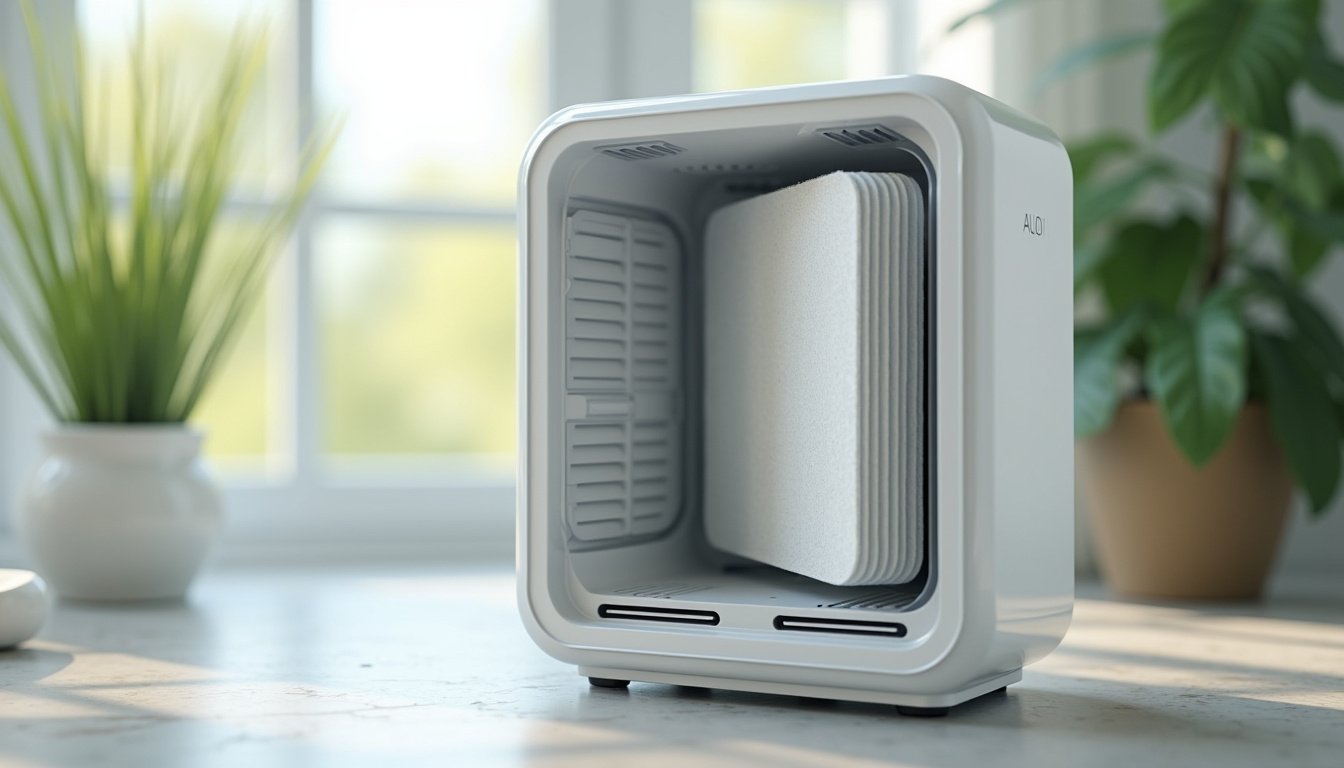
Reliable, Easy-to-Service Purifiers to Compare
If troubleshooting points to a unit that is undersized or worn out, these widely reviewed filter-based models publish clear filter schedules and room ratings. Compare maker-listed CADR against your room and favor washable pre-filters and sensor-based indicators.






How This Guide Approaches the Problem
We grouped owner complaints into symptoms, matched each to the mechanisms that produce it, and ordered the fixes cheapest and most likely first. Safety issues are separated out, because the right fix there is to stop using the unit. Product details in the table come from maker specifications.
Keep one principle in mind: a purifier can only fail at three things, moving air, filtering it, or sensing it. Every symptom below traces back to one of those, which keeps the diagnosis short.
Quick Diagnosis Table
| Symptom | Most likely cause | First fix | When to replace |
|---|---|---|---|
| Will not turn on | Outlet, cord, child lock, or filter cover not latched | Try another outlet; check lock and cover switch | Dead with a known-good outlet and cover latched |
| Runs but air does not seem cleaner | Undersized unit, open door, filter in plastic or loaded | Close the door; unwrap or inspect filter; check CADR vs room | Unit far too small for the room |
| Weak airflow, louder fan | Loaded filter or blocked intake | Clean pre-filter; replace HEPA; clear clearance | Airflow stays weak with new filters |
| Air quality light stuck on red or green | Dusty sensor or sensor in a draft | Clean sensor inlet with dry swab; move away from vents | Sensor dead after cleaning, if auto mode matters |
| Stays on low in auto mode | Dusty sensor reading clean air | Clean sensor; override to medium | Rarely needed |
| Dusty or musty smell | Loaded or damp filter | Replace filter; check for moisture nearby | Not needed once filters are fresh |
| Chemical or plastic smell when new | Off-gassing of new parts | Run on high in a ventilated room for a day | Persists beyond a week |
| Burning smell, sparks, breaker trips | Electrical fault | Unplug immediately; contact the maker | Yes if out of warranty |
| Rattling or grinding | Debris in fan or failing motor bearing | Unplug; check for loose items in intake | Grinding continues with nothing lodged |
| Filter light on right after a change | Indicator not reset | Follow the manual’s reset procedure | Never for this reason |
It Will Not Turn On
Start with the outlet: plug a lamp into it, or plug the purifier into an outlet you know works. Power strips and extension cords with their own switches are a common culprit. Next, look for a child lock, a feature on many units that disables the buttons after a long press; the manual explains how to release it. Then check the filter cover. Most purifiers have a safety switch that prevents the fan from running when the back panel or filter door is not fully latched, and a cover that looks closed can still be a millimeter off.
If the unit has a display that lights but the fan does not start, remove the filters and confirm none is wedged against the fan or still wrapped. If the display is dead with a known-good outlet and latched cover, the fault is internal. Do not open the housing beyond the filter compartment; contact the maker, since units under warranty are typically replaced rather than repaired.
| Check | How | What it rules out |
|---|---|---|
| Outlet | Plug in a lamp or use a known-good outlet | Dead outlet, switched power strip |
| Child lock | Long-press per the manual to release | Locked controls |
| Filter cover | Open and re-latch firmly until it clicks | Safety switch not engaged |
| Filters | Remove; confirm none is wrapped or wedged | Blocked fan, shipping plastic |
| Display | Note whether it lights at all | Internal fault if dead with the above checked |
It Runs but the Air Does Not Seem Cleaner
This is the most common complaint and usually the easiest to explain. Work through the list in order.
- Check that the filters are unwrapped. New filters ship in plastic, and a surprising number of units run for months with the bag still on, moving air around a sealed filter.
- Confirm the unit’s dust CADR is at least two-thirds of the room’s floor area in square feet. A unit rated for a small bedroom cannot change a 350 square foot living room.
- Close the door. A bedroom unit with the door open is trying to clean the hallway and every room beyond it.
- Check placement: at least a foot of clearance around intake and outlet, not behind a sofa, not under a curtain, not on deep carpet with a bottom intake.
- Inspect the pre-filter and HEPA stage; a loaded filter cuts airflow and therefore cleaning.
- Raise the speed from low to medium, or override auto mode if the sensor is dusty.
- Give it time: particles fall within an hour on a monitor, but surface dust and symptoms take one to two weeks to show a trend.
Worked example: a 15 by 20 foot living room, 300 square feet, needs a dust CADR of about 200. A compact unit with a dust CADR around 70 will struggle regardless of settings. The fix is either a larger unit or moving the compact one to a 10 by 12 bedroom, 120 square feet, where it is correctly sized and will show results overnight with the door closed.
Weak Airflow and a Louder Fan
A fan that sounds harder-working while the breeze at the outlet gets weaker is describing a clogged filter. Fiber filters capture particles until the mat becomes dense enough to restrict air; the fan then strains against it. Clean the pre-filter first, since a matted pre-filter alone can halve airflow. If the breeze is still weak, remove the HEPA stage and look at it against a white surface: uniformly dark pleats mean replacement.
Blocked intakes mimic the same symptom. Check for laundry, pet beds or curtains against the unit, dust bunnies in the grille, and in bottom-intake designs a thick rug underneath. If airflow is still weak with new, correctly seated filters and clear grilles, the motor or fan may be failing; that is a maker conversation, not a home repair.
Air Quality Light and Auto Mode Problems
Optical particle sensors sit behind a small inlet and read the air passing through. Dust settles on the lens over months and the sensor begins reporting clean air while the room is not, so auto mode idles on low and the light stays green. The reverse also happens: a sensor near a kitchen, a humidifier or a sunny window can read high constantly. Clean the sensor inlet with a dry cotton swab or a gentle puff from a hand bulb, never liquids or canned air, and move the unit out of direct drafts, steam and sunlight.
| Sensor behavior | Likely reason | Fix |
|---|---|---|
| Always green, fan on low, room still dusty | Dust on the lens | Clean the inlet; run medium manually for a day |
| Always red, fan on high | Steam, cooking, humidifier mist or a real source | Relocate; fix the source; clean inlet |
| Jumps around at night | Sensor in a draft or near movement | Move away from vents and doors |
| Never changes at all | Sensor failed | Use manual speeds; contact the maker if auto matters |
Sensors are a convenience, not the core of the unit. A purifier with a dead sensor still filters perfectly on a manual speed.
Smells From the Purifier
A dusty smell when the unit starts usually means a loaded filter releasing a little of what it holds; replacement fixes it. A musty or sour smell means a filter has been damp, from a humid room, a humidifier nearby, a spill or wet storage; replace it and remove the moisture source, and never run a unit with a wet filter. A plastic or chemical note from a brand-new unit is off-gassing of new components and usually fades within days of running on high in a ventilated room.
Some units with an ionizer or UV feature produce a faint sharp or metallic smell; that can be ozone, which the EPA advises against in occupied spaces. Switch the ionizer or UV function off and keep it off. The filtration continues unaffected.
Rattles, Clicks and Grinding
New noises usually have simple causes. A rattle often comes from a filter not fully seated, a loose cover, or a small object such as a hair clip pulled into the intake. Unplug, remove the filters and look into the fan area with a flashlight. Clicking at speed changes is normal on many units. A hum that varies with speed is the motor; a hum that does not is often a vibrating panel against a wall or floor, fixed by moving the unit or placing it on a firm mat.
Grinding, scraping or a fan that squeals steadily points to a bearing or a damaged blade. That is a maker issue; continuing to run a grinding fan can damage the motor further. If the unit is out of warranty and the maker offers no fan replacement, it is time to retire it rather than attempt a repair.
Filter Indicator Confusion
Filter lights cause two opposite problems. One lights immediately after a new filter because nobody reset it; most indicators are timers that must be cleared with a long press described in the manual. The other stays dark while the filter is clearly spent, because the timer has not reached its count even though a dusty or smoky home loaded the filter early. Treat the light as a reminder to look, and let a visual inspection make the decision.
Write the change date on the filter frame. When the light and the frame disagree, the frame plus your own inspection wins.
When the Unit Itself Is the Problem
Most purifiers last many years, and the filters are the consumable. A unit is at the end of its life when airflow stays weak with new filters and clear grilles, when the motor grinds, when it trips breakers or shows electrical symptoms, or when replacement filters are no longer made. A unit that was simply too small for its room is not broken; move it to a smaller room and buy a correctly sized one for the large space.
How to Troubleshoot in 7 Steps
- Rule out safety issues first: any burning smell, sparks, smoke or breaker trip means unplug and call the maker.
- Confirm power: known-good outlet, child lock released, filter cover latched.
- Unwrap and inspect the filters; clean the pre-filter and replace a dark HEPA stage.
- Clean the sensor inlet with a dry swab and set a manual medium speed for a day.
- Check sizing: dust CADR at least two-thirds of the room’s floor area; close the door; clear a foot around the unit.
- Test with a PM2.5 monitor for an hour, or run two weeks and compare mornings and surface dust.
- If airflow is still weak or noises persist with new filters, contact the maker about the fan or motor.
Do and Do Not
Do
- Unplug before opening the filter compartment.
- Check the shipping plastic on new filters.
- Clean the sensor lens with a dry swab only.
- Reset the indicator after every filter change.
- Keep the cord, plug and clearance in view on a weekly glance.
Do not
- Do not run a unit that smells of burning or sparks.
- Do not open the housing beyond the filter area.
- Do not use liquids or canned air on the sensor.
- Do not wash a HEPA filter to restore airflow.
- Do not judge results after one evening on low.
Who Should Skip This
If the unit has any electrical symptom, skip the rest of the troubleshooting. Burning smells, sparks, smoke, a warm cord or breaker trips are not maintenance problems; unplug it, do not run it again and contact the maker. A unit out of warranty with these faults should be retired, not repaired at home.
If the unit is simply too small for the room, as the CADR check will show, no troubleshooting will help. Move it to a room it fits and size a new unit for the larger space using the two-thirds rule.
Honest Limits
- This guide covers common symptoms; your manual may list model-specific error codes and resets.
- A correctly working purifier still cannot clean other rooms, settled dust or gases.
- Sensor readings are trends, not measurements; a standalone monitor is the better judge.
- Some symptoms, such as weak airflow with new filters, can only be resolved by the maker.
- Electrical faults are outside the scope of owner maintenance entirely.
- Expectations also fail: a unit used an hour a day on low will not seem to work however healthy it is.
When to See a Professional
Contact the maker’s support line for any electrical symptom, persistent weak airflow with new filters, grinding fan noise or a unit that will not power on with a good outlet and latched cover; stop using it meanwhile. An electrician should check any outlet that is warm, loose or scorched, and a breaker that trips repeatedly.
See a doctor or allergist if symptoms continue in a room where a correctly sized, maintained purifier is running; the trigger may not be airborne or may need treatment beyond filtration. Nothing on this page is medical advice.
Frequently Asked Questions
Why does my air purifier run but not clean the air?
Usually one of a few things: filters still in their shipping plastic, a loaded filter, a unit too small for the room, an open door or poor placement. Unwrap and inspect the filters, close the door, clear a foot around the unit and check that dust CADR is at least two-thirds of the floor area.
Why is my air purifier blowing weak air?
A loaded filter or a blocked intake. Clean the pre-filter, inspect the HEPA stage and replace it if the pleats are dark, and clear curtains, laundry or rugs from the grilles. If airflow stays weak with new filters and clear grilles, the fan or motor is wearing and the maker should be contacted.
Why is the air quality light always green while the room is dusty?
The particle sensor lens is dusty and reading clean air, so auto mode idles on low. Unplug, clean the small sensor inlet with a dry cotton swab or a hand bulb puff, and run a manual medium speed for a day. Never use liquids or canned air on the sensor.
Why does my purifier smell?
A dusty smell means a loaded filter; a musty smell means a filter got damp; a plastic smell on a new unit is off-gassing that fades in days. Replace loaded or damp filters and remove moisture sources. A burning smell is an electrical fault: unplug and contact the maker.
Why did the filter light come on right after I changed the filter?
The indicator was not reset. Most filter lights are timers that need a long press to clear, described in the manual. Reset it, and write the change date on the filter frame so you can compare the light against reality next time.
Why will my air purifier not turn on?
Check the outlet with a lamp, release any child lock, and make sure the filter cover or back panel is fully latched, since a safety switch stops the fan otherwise. If the display is dead with a good outlet and latched cover, the fault is internal and the maker should be contacted.
Is it normal for an air purifier to make noise?
A steady fan sound that rises with speed is normal, and clicks at speed changes are common. Rattles usually mean an unseated filter, a loose cover or debris in the intake. Grinding, scraping or squealing points to a bearing or blade problem and should go to the maker.
Can I fix an air purifier that smells like burning?
No. Burning or hot plastic smells, sparks, smoke, scorch marks or breaker trips are electrical faults. Unplug the unit immediately, do not run it again, and contact the maker. Units under warranty are usually replaced; out of warranty, retire it rather than attempt a repair.
How long should I wait before deciding it does not work?
Use a PM2.5 monitor in a closed room: a correctly sized unit shows a clear drop within an hour. Without a monitor, run it continuously for two weeks and compare morning symptoms and surface dust. One evening on low with the door open proves nothing either way.
When should I replace the purifier instead of the filter?
When airflow stays weak with new filters and clear grilles, when the fan grinds, when it shows electrical faults, or when replacement filters are no longer available. A unit that is merely too small for its room is not broken; move it to a smaller room and size a new one properly.
Bottom Line
An air purifier that is not working is usually a purifier that is undersized, blocked, running a loaded or still-wrapped filter, reading the room through a dusty sensor, or fighting an open door. Those account for most complaints and each is fixed in minutes. Weak airflow with a louder fan means new filters; an odd light means a swab on the sensor; no improvement means check the CADR against the room and close the door.
The exceptions are electrical: burning smells, sparks, breaker trips and grinding motors mean unplug and call the maker, never a home repair. Work the list from cheapest to rarest, prove the result with a monitor or a two-week trial, and the question of whether it works answers itself.
Related reading: Air purifier maintenance checklist, How long do HEPA filters last in air purifiers, Air purifier causing a chemical smell.