Last updated:
As an Amazon Associate we earn from qualifying purchases. This does not change what we recommend. See our affiliate disclaimer.
A nursery is the one room where people stop guessing and read labels. The paint was low-VOC, the mattress was researched, and now the question is whether the air needs a machine. Nursery purifier marketing leans on fear; the honest answer is calmer: a purifier can lower particles in a small room, it is not a safety device, and the choices that matter are plain.
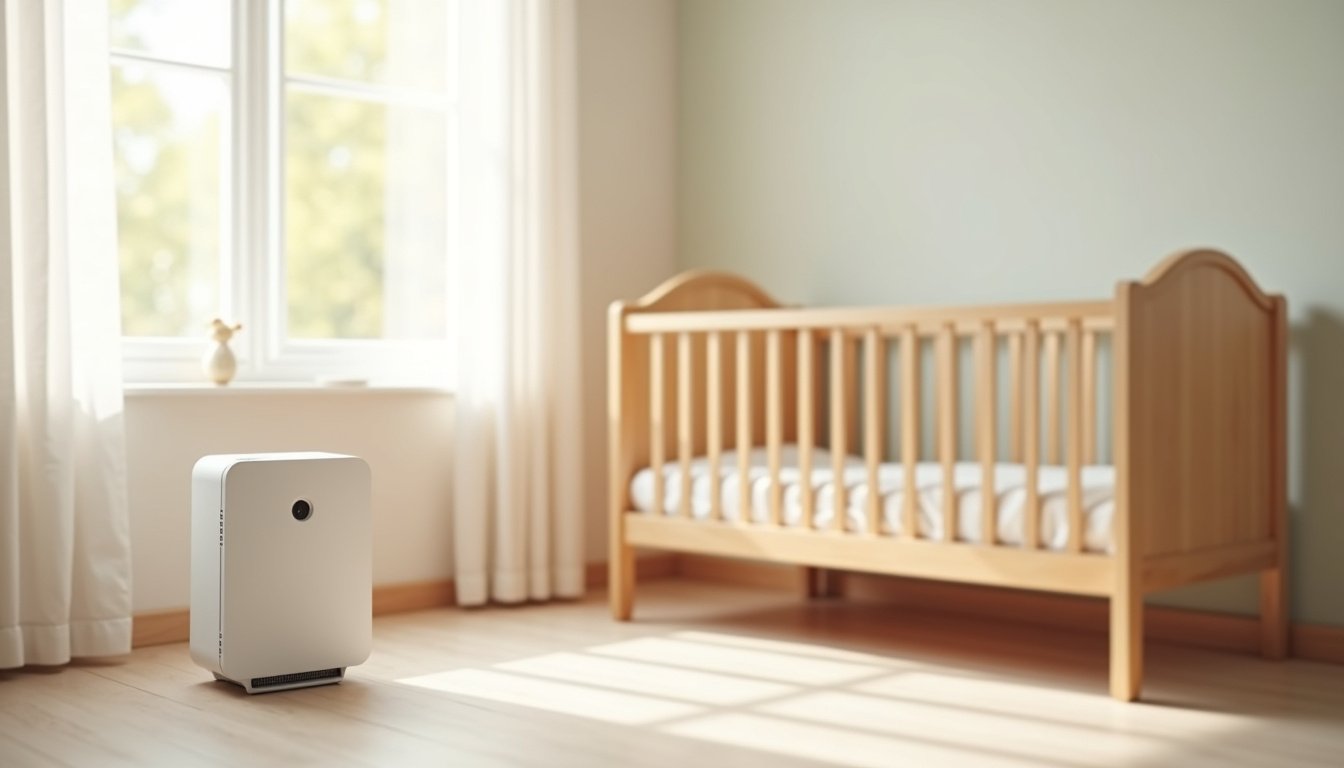
The right air purifier for a baby nursery is a plain mechanical one: a true HEPA filter for particles, activated carbon for odors and some gases, and no ionizer, plasma, UV or ozone feature, because those can produce ozone, an airway irritant that the EPA says has no safe place indoors and to which small children are more sensitive. Size it by clean air delivery rate, roughly two thirds of the floor area in square feet, so a 120 square foot nursery needs a CADR around 80 and a unit rated 100 to 130 runs quietly on medium. Place it on the floor or a low stand several feet from the crib, outlet pointing away from where the baby sleeps, cord out of reach and nothing on top. Choose a model quiet enough on low and medium to leave running, with a display that dims or switches off, and change the filter on schedule. A purifier does not replace ventilation, a smoke-free home, a clean dry room or pediatric safe sleep guidance, and nothing here is medical advice; a baby’s breathing is a matter for a pediatrician.
In short: HEPA plus carbon, no ionizer, sized to the room, placed clear of the crib with the outlet aimed away, quiet and dimmable. It helps the air; it is not a safety device.
The EPA recommends HEPA filtration sized by CADR and cautions against ozone-producing devices indoors, noting children’s greater sensitivity. The American Academy of Pediatrics’ safe sleep guidance covers sleep position, a bare firm surface and a smoke-free home, and does not include air purifiers.
This guide is research-based, drawn from EPA guidance on air cleaners and ozone, pediatric safe sleep guidance and maker specifications. We have not tested the units in the table and quote no prices or ratings. Nothing here is medical advice.
A good nursery purifier
- True HEPA with activated carbon and a pre-filter
- No ionizer, plasma, UV or ozone feature, or one that switches fully off
- CADR of at least two thirds of the room’s square footage
- Quiet low and medium speeds; display that dims or turns off
Avoid
- Ozone generators and units with always-on ionizers
- Units that are loud on any speed you would actually use
- Scented filters, fragrance cartridges or essential oil features
- Anything placed where the baby could reach it, pull it over or be in its outlet stream
Key Takeaways
- Choose mechanical filtration only: true HEPA, activated carbon, pre-filter, and no ionizer, plasma, UV or ozone stage.
- Size by CADR at about two thirds of the room’s floor area; a small nursery needs less than most units offer, which lets it run quietly.
- Place the unit several feet from the crib, outlet aimed away, cord out of reach, nothing on top and nothing blocking intake or outlet.
- Quiet matters: look for low and medium speeds you can sleep beside, and a display that dims or switches off.
- Run it continuously on low or medium; auto mode may idle on fine particles and cycle loudly at night.
- A purifier is not a safety device and is not part of pediatric safe sleep guidance; it lowers particles, nothing more.
- Nothing here is medical advice; a baby’s breathing or allergies are matters for a pediatrician.
Quiet HEPA Purifiers for Small Rooms
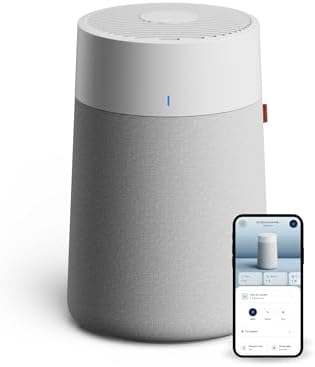
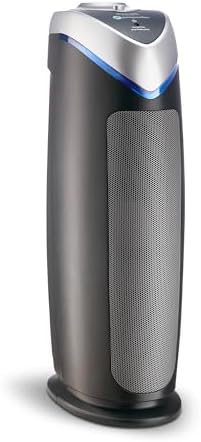
These widely reviewed small-room units use true HEPA and carbon with no ionizing stage, or one that switches off, and run quietly on low and medium. Compare the maker-listed CADR against the nursery’s square footage and check that the display can be dimmed.




How This Guide Approaches the Question
We looked at what filtration types are appropriate around infants, how to size a unit for a small room, where it can safely stand, how loud is too loud, and what a purifier does and does not contribute to a nursery. Product details in the table come from maker specifications.
A nursery is small and the stakes feel high, which is exactly the combination that sells over-featured machines. The best choice is usually the plainest one in the right size.
Why Plain HEPA and Nothing Fancy
A true HEPA filter captures 99.97 percent of particles at 0.3 microns, which covers dust, dander, pollen, mold spores and smoke particles, and it does so by trapping them in fibers without producing anything. Activated carbon adsorbs some odors and gases, from diaper pails to new-furniture off-gassing, and likewise adds nothing. Together they are the entire sensible feature list for a nursery.
The features to avoid are the ones that produce or can produce ozone: ionizers, electrostatic precipitators, plasma stages, photocatalytic oxidation and some UV lamps. The EPA advises against ozone-generating devices indoors and notes that children, whose airways are smaller and who breathe faster relative to body size, are more sensitive to it. Many units bundle an ionizer with a separate button; if the unit you already own has one, leave it off permanently. Fragrance features and scented filters add volatiles to the room and have no place in a nursery either.
| Feature | In a nursery | Why |
|---|---|---|
| True HEPA | Yes | Captures particles; adds nothing |
| Activated carbon | Yes | Adsorbs odors and some gases; adds nothing |
| Washable pre-filter | Yes | Extends HEPA life; catches lint and hair |
| Ionizer or anion | No; switch off if present | Can produce ozone |
| Plasma, PCO, electrostatic | No | Can produce ozone and byproducts |
| UV-C lamp | Not needed; check for ozone | Some lamps produce ozone; little benefit in a filter unit |
| Ozone generator | Never | Airway irritant |
| Fragrance or aroma feature | No | Adds volatiles |
| Humidifier combination | Separate appliance preferable | Mist near filters invites mold |
Sizing for a Small Room
Nurseries are small, and that is good news: the unit does not need to be large, and a modest one can run on its quiet speeds and still turn the room’s air over several times an hour. The clean air delivery rate, CADR, is the maker’s figure for cubic feet per minute of filtered air; AHAM’s rule is a CADR of at least two thirds of the room’s floor area in square feet, which gives roughly five air changes an hour at a standard ceiling. Choosing a unit whose CADR is somewhat above that lets it run on medium rather than high, which is where quiet comes from.
| Nursery size | Square feet | Minimum CADR | Comfortable choice |
|---|---|---|---|
| Very small | 80 | About 55 | 80 to 100 |
| Small | 100 | About 65 | 90 to 120 |
| Typical | 120 | About 80 | 100 to 140 |
| Larger | 150 | About 100 | 120 to 170 |
| Shared or large | 200 | About 135 | 160 to 220 |
Worked example: a 10 by 12 foot nursery is 120 square feet, so the minimum CADR is about 80. A unit rated 120 CFM on high reaches roughly 80 on medium, which means it can run quietly all night and still deliver the target. A unit rated 80 would have to run on high to manage the same, and high is where the noise lives.
Placement: Clear of the Crib
Placement in a nursery has two goals: the unit must be able to move air, and it must not be a hazard. Set it on the floor or a low, stable stand, several feet from the crib, so the baby cannot reach it from the crib as they grow, cannot pull it over and is not in the direct stream from the outlet. Aim the outlet away from the sleeping area or choose an upward-discharge design. Keep the cord routed behind furniture and out of reach, with no dangling loop; a cord that runs near a crib is a hazard in its own right. Leave a foot or two of clear space around intake and outlet; a unit pushed into a corner or behind a dresser cannot breathe.
- Several feet from the crib, out of reach as the child grows and stands.
- Outlet aimed away from the sleep area, or an upward-discharge unit.
- Cord behind furniture, no loops, nothing to pull on; consider a cord cover.
- Nothing placed on top of the unit, and nothing draped over it.
- Clear space around intake and outlet; not in a closet or behind a door.
- Away from any humidifier’s mist, which dampens filters.
Noise: How Quiet Is Quiet Enough
A purifier that is loud on medium either runs loud all night or gets switched off, and either way it fails. Makers list noise in decibels per speed; the useful figures are low and medium, since those are the speeds that run while the baby sleeps. Many small units sit around 25 to 35 dB on low and 35 to 45 dB on medium, which is library to quiet conversation. Steady broadband fan noise is generally less disturbing than cycling, which is why a fixed low or medium speed usually beats auto mode at night: auto responds to fine particles, not to a sleeping baby, and may surge to high unexpectedly.
| Setting | Typical sound level | Sleep suitability |
|---|---|---|
| Low | 25 to 35 dB | Quiet; most babies sleep through it |
| Medium | 35 to 45 dB | Acceptable for most; check the specific unit |
| High | 50 to 60 dB | Daytime or empty room only |
| Auto mode at night | Varies; may surge | Unpredictable; a fixed speed is usually better |
| Sleep mode | Lowest speed, display off | Good if CADR on that speed suits the room |
Lights matter as much as sound. Choose a unit whose display dims fully or switches off, and avoid units with bright status rings or blue LEDs that cannot be covered. Sleep modes on many units do both at once.
What a Nursery Purifier Does and Does Not Do
A correctly sized HEPA unit lowers the concentration of airborne particles in the nursery while it runs: dust, dander, pollen, mold spores, smoke and the fine fraction from traffic and cooking that drifts through the house. Carbon takes the edge off diaper pail and new-furniture odors. Those are real, measurable effects on the air. What a purifier does not do is more important to state plainly: it does not replace fresh air, it does not remove carbon dioxide, it does not make smoking indoors acceptable, it does not stop allergens settled in carpet and bedding, it is not part of any pediatric safe sleep recommendation, and it prevents nothing on its own. Pediatric authorities’ safe sleep guidance is about sleep position, a bare firm surface, room-sharing without bed-sharing and a smoke-free home. The purifier is a comfort measure for the air, nothing more.
Running and Maintaining It
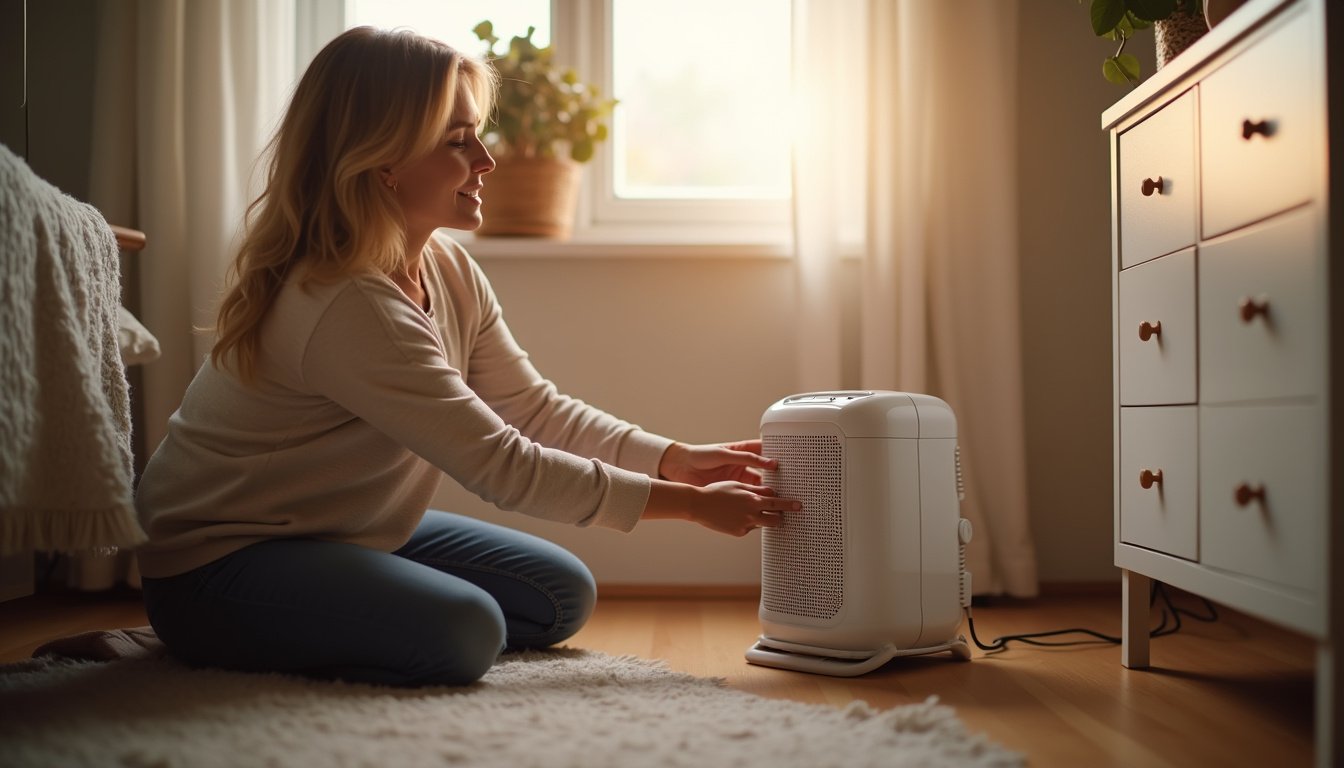
Run the unit continuously on low or medium rather than only at nap times; particles arrive all day and a steady low speed is both quieter and more effective than bursts. Rinse the pre-filter every two to four weeks, since a nursery generates lint from laundry and soft furnishings, and replace the HEPA and carbon on the maker’s schedule, sooner if the home has pets or smoke exposure. Change filters outside the nursery and bag the old one at once. Wipe the housing with a damp cloth, never with sprays near the intake. Keep it away from any humidifier; a damp filter grows mold, which is the last thing to put in front of a fan in a nursery.
Worked example: a 110 square foot nursery gets a unit rated 110 CFM with HEPA and carbon and no ionizer, set on low at 28 dB with the display off, on a low stand six feet from the crib with the cord behind the dresser. The pre-filter is rinsed monthly, the HEPA changed yearly, and the unit is never adjusted. The room’s dust and odor are noticeably lower; the baby sleeps as babies do.
When the Air Is the Real Worry
Some situations go beyond a purifier. A nursery in a home with a smoker needs the smoking stopped, not filtered. A room with visible mold, a musty smell or condensation on windows needs the moisture fixed and the mold removed; mold over about ten square feet is a professional job. A nursery near a busy road or during wildfire smoke benefits from a purifier with a higher CADR and from sealing gaps around windows. A home with a gas stove, a fireplace or an attached garage needs carbon monoxide alarms on every level regardless of any purifier. And a baby who coughs, wheezes or breathes with difficulty needs a pediatrician, not an appliance; nothing here is medical advice.
How to Choose and Set Up a Nursery Purifier in 6 Steps
- Measure the nursery in feet, multiply length by width, and take two thirds of the square footage as the minimum CADR.
- Choose a true HEPA unit with activated carbon and a pre-filter, and no ionizer, plasma, UV or ozone feature, or one that switches fully off.
- Check the maker’s noise figures for low and medium and confirm the display dims or switches off.
- Place it on the floor or a low stable stand several feet from the crib, outlet aimed away, cord behind furniture and out of reach.
- Run it continuously on low or medium with the display off, rather than on auto at night.
- Rinse the pre-filter monthly, replace the HEPA and carbon on schedule, and keep it away from any humidifier’s mist.
Do and Do Not
Do
- Choose HEPA and carbon only.
- Size by CADR to the room.
- Keep it several feet from the crib with the cord out of reach.
- Run on a fixed low or medium speed at night.
- Change filters on schedule, outside the nursery.
Do not
- Do not use ionizers, plasma, UV or ozone features.
- Do not place it where the baby can reach it or in the outlet stream.
- Do not use fragrance or scented filters.
- Do not run a damp or musty filter.
- Do not treat a purifier as a safety device or a substitute for safe sleep guidance.
Who Should Skip This
If the unit you already own is HEPA and carbon with an ionizer button, skip buying a new one: switch the ionizer off permanently, check the CADR against the room, and place it as described.
If the nursery’s problem is smoke, visible mold or a gas appliance, skip the purifier question until that is addressed; filtration does not fix any of those.
Honest Limits
- CADR figures are maker-listed under AHAM test conditions; we have not verified them.
- Noise figures vary with measurement distance and room acoustics.
- Ozone output from ionizing features differs by model; we have not measured any unit.
- A purifier’s effect on any child’s health is not something this guide can claim.
- Safe sleep guidance changes; follow the current AAP recommendations.
- Nothing here is medical advice; a baby’s breathing or allergies are matters for a pediatrician.
When to See a Professional
Talk to a pediatrician about any breathing, coughing, wheezing or allergy concern in a baby, and before relying on any appliance for a child’s health; nothing on this page is medical advice.
Call a mold remediation professional for visible mold over about ten square feet or a persistent musty smell, and have a qualified technician check any gas appliance in a home with a nursery; carbon monoxide alarms belong on every level.
Frequently Asked Questions
Is an air purifier safe in a baby’s nursery?
A plain HEPA and carbon unit with no ionizer, plasma, UV or ozone feature adds nothing to the air and is appropriate, placed several feet from the crib with the outlet aimed away and the cord out of reach. Avoid any ozone-producing feature; the EPA notes children are more sensitive to it.
What type of air purifier is best for a nursery?
True HEPA for particles, activated carbon for odors, a washable pre-filter, and nothing else. Skip ionizers, plasma, photocatalytic and UV stages, which can produce ozone, and skip fragrance features. Choose a size whose CADR is at least two thirds of the room’s square footage so it can run quietly on medium.
What size air purifier does a nursery need?
Multiply the room’s length by width in feet and take two thirds as the minimum CADR in cubic feet per minute. A 120 square foot nursery needs about 80; a unit rated 100 to 140 reaches that on medium and runs quietly.
Where should I put the air purifier in the nursery?
On the floor or a low, stable stand several feet from the crib, out of reach as the baby grows, with the outlet aimed away from the sleep area and a foot or two of clear space around it. Route the cord behind furniture with no loops.
Should I avoid ionizers in a baby’s room?
Yes. Ionizers, electrostatic stages, plasma features and some UV lamps can produce ozone, an airway irritant the EPA advises against generating indoors, and children’s smaller, faster-breathing airways make them more sensitive. If your unit has an ionizer button, leave it off permanently. Mechanical HEPA filtration needs no such feature.
How loud should a nursery air purifier be?
Quiet enough to leave on low or medium all night, typically 25 to 45 dB at those speeds, which is library to quiet conversation. Steady fan noise is less disturbing than cycling, so a fixed speed usually beats auto mode at night.
Should the purifier run all night in the nursery?
Yes, continuously on low or medium, since particles arrive all day and a steady low speed is quieter and more effective than bursts. Avoid auto mode at night, which responds to fine particles rather than a sleeping baby and may surge to high.
Does an air purifier help a baby sleep or breathe better?
It lowers airborne particles and some odors in the room while it runs, which is a measurable change to the air. Whether that affects a particular baby’s sleep or breathing is a question for a pediatrician. A purifier is not part of pediatric safe sleep guidance, which concerns position, surface and a smoke-free home.
Can I use a purifier instead of opening windows?
No. Filters remove particles but not carbon dioxide or stale air, so a nursery still needs fresh air daily, ideally when outdoor air is clean and pollen is low. The purifier handles particles between airings and during smoke or pollen events when windows stay shut. The two are complements, not alternatives.
How often should I change the filter in a nursery purifier?
Rinse the pre-filter every two to four weeks, since nurseries generate lint from laundry and soft furnishings, and replace the HEPA and carbon on the maker’s schedule, typically six to twelve months, sooner with pets or smoke exposure. Change filters outside the nursery, bag the old one immediately and never wash HEPA media.
Bottom Line
An air purifier for a baby nursery should be the plainest competent machine you can find: true HEPA, activated carbon, a pre-filter, and no ionizer or ozone-producing feature of any kind. Size it by CADR to the small room so it runs quietly on medium, place it several feet from the crib with the outlet aimed away and the cord hidden, switch the display off and leave it running.
It will lower dust, dander, pollen, spores and odors in the room, which is a real benefit to the air. It is not a safety device, it is not part of safe sleep guidance, and it does not replace fresh air, a smoke-free home or a dry clean room. For anything about a baby’s breathing, the right appliance is a phone, and the right call is to a pediatrician.
Related reading: Best air purifier for small bedroom, Air purifier ozone smell, Can air purifiers cause coughing.