Last updated:
As an Amazon Associate we earn from qualifying purchases. This does not change what we recommend. See our affiliate disclaimer.
Basements are where mold problems start and where air purifiers are most often bought for the wrong reason. The space is cool, damp and poorly ventilated, the smell drifts up the stairs, and a purifier seems like the obvious response. It has a role, but it is the last item on the list, and buying it first usually means living with the smell and the spores for another season.
An air purifier can reduce airborne mold spores in a basement, which helps anyone who spends time there and limits what drifts upstairs, but it cannot fix basement mold. Mold grows because the basement is wet: foundation seepage, condensation on cold walls and pipes, a leaking water heater, a clogged sump or a dryer venting indoors. Until the moisture is controlled and the growth is removed, the colony keeps producing spores and odor faster than any filter can clear them. The sequence that works is to find and stop the water, dry the space, hold indoor relative humidity between 30 and 50 percent with a dehumidifier as the EPA recommends, clean small areas of growth or bring in a professional for anything over about 10 square feet, and then run a true HEPA purifier with activated carbon, sized by CADR for the finished area, to keep spores and odor low.
In short: dehumidifier and repairs first, cleanup second, purifier third. The purifier keeps a fixed basement clean; it does not fix a wet one.
The EPA’s mold guidance is explicit that moisture control is the key to mold control, that indoor humidity should be kept between 30 and 50 percent, and that mold over about 10 square feet or hidden growth calls for a professional. Its guide to air cleaners describes portable units as a way to reduce airborne particles, including spores, as a supplement to source control.
This guide is research-based, drawn from EPA mold and air cleaner guidance, AHAM CADR sizing and maker specifications. We have not tested the units in the comparison table and quote no prices or ratings. Nothing here is medical advice; basements also raise radon and carbon monoxide questions that no purifier addresses.
A purifier earns its place in the basement if
- The moisture source has been found and fixed
- A dehumidifier holds the space at 30 to 50 percent humidity
- Visible mold has been cleaned or professionally removed
- People use the space or the HVAC draws air from it
Do not buy one yet if
- Walls or floors are damp, or a musty smell is strong
- Humidity reads above 60 percent
- Mold covers more than about 10 square feet or is behind finishes
- You have not tested for radon in a basement people use
Key Takeaways
- Basement mold is a water problem; a purifier treats the air, not the water.
- Find the moisture source first: seepage, condensation, leaks, sump or drain failures, indoor-vented dryers.
- A dehumidifier that holds 30 to 50 percent relative humidity does more against basement mold than any purifier.
- Clean small areas of hard-surface mold yourself with protection; call a professional for over about 10 square feet or hidden growth.
- Then run true HEPA plus carbon, sized by CADR for the finished area, continuously.
- Avoid ozone generators and ionizers; the EPA advises against ozone, and it does not fix mold.
- Test for radon in any basement people spend time in; no purifier removes it.
HEPA and Carbon Purifiers to Compare for a Fixed Basement
Once the moisture is under control, these widely reviewed filter-based units combine true HEPA with activated carbon and include large-room models suited to open basement areas. Compare the maker-listed CADR and room size against the finished floor area you actually use.






How This Guide Is Organized
We followed the EPA’s order of operations for mold, moisture first, then cleanup, then air cleaning, and applied it to the specific ways basements get wet. Sizing uses AHAM’s CADR rule; product details come from maker specifications.
A basement differs from an upstairs room in three ways that shape everything below: it is the wettest space in the house, it often feeds the HVAC return, and it may have radon. The purifier question cannot be answered without those.
Why Basements Grow Mold
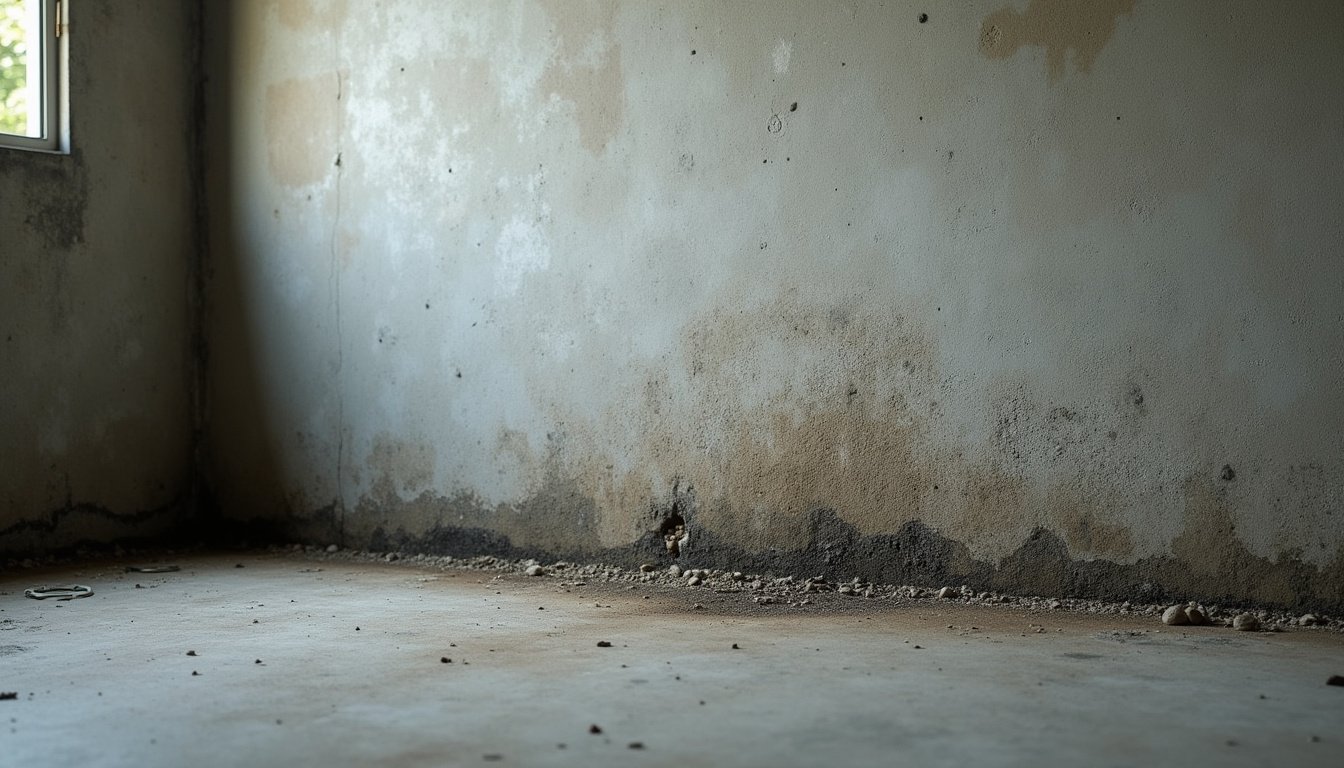
Mold needs moisture, a food source and moderate temperature. Basements supply all three. Concrete walls and floors wick ground moisture and stay cool, so warm humid air condenses on them in summer. Foundation cracks and window wells let water in during rain. Water heaters, washing machines, sump pumps and floor drains fail quietly. Dryers vented indoors or disconnected ducts dump gallons of water vapor a week. Stored cardboard, carpet, drywall and wood framing provide food.
The result is relative humidity that sits above 60 percent for months, which is the condition mold needs. The EPA’s target of 30 to 50 percent is not a comfort preference; it is the range in which mold and dust mites cannot thrive. A cheap hygrometer in the basement, read morning and evening for a week, tells you how far off you are.
| Moisture source | Clues | First fix |
|---|---|---|
| Foundation seepage | Damp patches or efflorescence on walls after rain; water at the wall-floor joint | Grade soil away from the house; extend downspouts; seal cracks; interior drainage or sump if persistent |
| Condensation | Beads on pipes, ducts and walls in summer; damp feel | Dehumidify; insulate cold pipes and ducts; air-seal rim joists |
| Plumbing or appliance leak | Wet spots under heater, washer or softener | Repair; add a drip pan and leak alarm |
| Sump or floor drain failure | Standing water; pump not cycling; sewer smell | Service the pump; add a battery backup; clear drains |
| Dryer vented indoors | Lint on surfaces; humid laundry area | Vent to the outdoors with rigid duct |
| Bathroom or kitchen above venting into the basement | Moist air near ducts | Correct the venting |
The Order of Operations
Everything about basement mold follows one sequence, and skipping ahead to the purifier is the most common and expensive error.
- Find and stop the water using the table above; most basements have more than one source.
- Dry wet materials within 48 hours with fans and a dehumidifier; discard porous items that stayed wet, such as cardboard, carpet pad and soaked drywall.
- Run a dehumidifier sized for the space with a drain hose to a floor drain or sump, set to hold 45 to 50 percent, and confirm with a hygrometer.
- Clean small areas of mold on hard surfaces with detergent and water, wearing an N95 respirator, gloves and goggles; for over about 10 square feet, hidden growth, HVAC involvement or sewage water, call a professional.
- Test for radon and install carbon monoxide alarms if fuel-burning appliances are in the basement.
- Only now add a true HEPA purifier with carbon, sized for the finished area, and run it continuously.
The Dehumidifier Is the Main Appliance
In a basement, the dehumidifier is the primary air appliance and the purifier is secondary. It removes the water vapor that mold depends on, which a purifier cannot touch. Capacity is rated in pints per day; damp basements need larger units than bedrooms, and very wet or large basements may need the largest portable units or a whole-house dehumidifier connected to the HVAC system. A continuous drain hose to a floor drain or sump avoids the daily tank emptying that leads to units being switched off.
| Basement condition | Signs | Typical dehumidifier approach |
|---|---|---|
| Slightly damp, 50 to 60 percent | Faint musty smell in summer | Mid-capacity portable with hose drain, humidistat at 45 to 50 percent |
| Damp, 60 to 70 percent | Musty smell, condensation on pipes | Large-capacity portable, continuous drain, run year round |
| Wet, over 70 percent or visible water | Standing water, saturated walls | Fix the water first; large unit or whole-house dehumidifier after |
| Finished basement people use | Any of the above | Size for the whole open area; consider whole-house unit |
Set the humidistat to hold the EPA range rather than running the unit flat out; 45 to 50 percent is usually achievable and sufficient. Clean the dehumidifier’s intake screen monthly and its coil per the manual, and never let a tank sit full; a neglected dehumidifier can grow mold itself.
Cleanup: What You Can Do and When to Call
The EPA’s rule of thumb is that homeowners can clean mold on hard surfaces covering less than about 10 square feet, roughly a 3 by 3 foot patch, with detergent and water, protective gloves, goggles and an N95 respirator. Porous materials that are moldy, such as drywall, ceiling tiles, carpet and insulation, generally must be removed and discarded. Larger areas, growth inside walls or ducts, and contamination from sewage or long-standing flooding call for a professional remediator.
Run a HEPA purifier on high during any cleanup to capture spores stirred into the air, and for a day or two after. Replace its pre-filter and inspect the HEPA stage afterward, since cleanup loads filters heavily.
Sizing a Purifier for a Basement
Once moisture is controlled, size the purifier like any room, with adjustments for basement layouts. AHAM’s rule is a dust CADR of at least two-thirds of the floor area in square feet for 8 foot ceilings. Basements often have lower ceilings, 7 feet is common, which slightly reduces the volume, but they are also often open across the whole footprint, so measure the area the unit will actually serve. Closed storage rooms and mechanical rooms can be left out unless mold was found there.
Worked example: a finished basement living area is 16 by 24 feet, 384 square feet, with a 7 foot ceiling. Two-thirds of 384 is about 256; the lower ceiling allows a little slack, so a unit with a dust CADR of 230 to 260 is a sound choice, run on medium continuously. If the basement is one open 30 by 30 foot space, 900 square feet, no single portable unit is adequate; use two units in the areas people use, or rely on the dehumidifier plus HVAC filtration and put a purifier only in the finished room.
| Basement layout | Floor area to size for | Approach |
|---|---|---|
| Finished rec room, separate from utility area | The rec room only | One unit sized by two-thirds rule |
| Open footprint, partly finished | Finished area people use | One large unit in the used area; dehumidifier covers the rest |
| Very large open basement | Too large for one unit | Two units, or one in the used room plus HVAC filter upgrade |
| Low ceiling under 7 feet | Same area, slightly smaller volume | Minimum CADR can be a little lower |
| Basement bedroom | That room | Size as a bedroom; run overnight, door closed |
HEPA Plus Carbon, and Nothing That Makes Ozone
Mold releases spores, which are particles 2 to 20 microns and captured efficiently by true HEPA, and musty odor compounds, which are gases and need activated carbon. A basement purifier should have both: true HEPA or H13 in a sealed housing and a substantial carbon stage, ideally a pound or more of granular carbon rather than a coated pad, since basement odor is persistent. Replace carbon when the smell returns and replace any filter that itself smells musty or has been damp.
Ozone generators are marketed heavily for basement mold and musty smells. The EPA advises against ozone-generating air cleaners in occupied spaces, and ozone does not fix the moisture that causes the growth. Ionizers add nothing for mold and some emit ozone. UV lamps in a portable unit see spores for a fraction of a second. Choose a plain fan pushing air through HEPA and carbon.
Radon, Carbon Monoxide and Other Basement Hazards
Basements raise two safety issues that are often confused with air quality purchases. Radon, a radioactive gas from soil, enters through foundation cracks and collects in basements; the EPA recommends testing every home and mitigating at 4 picocuries per liter or above. No air purifier reduces radon in any useful way; mitigation is a vent system installed by a certified contractor. Carbon monoxide from furnaces, water heaters and boilers in the basement requires CO alarms on every level and annual appliance service, and again no purifier addresses it.
If you are spending money on basement air, a radon test kit and CO alarms come before any purifier, and a mitigation system comes before a dehumidifier if the test is high.
Keeping Basement Air Out of the Rest of the House
Basement air rarely stays in the basement. The stack effect pulls it upward through stairwells, gaps around pipes and leaky return ducts, which is why a musty basement makes the whole house smell. Seal return duct joints in the basement, close gaps around pipes and wiring penetrations in the floor above with fire-rated sealant, and keep the basement door closed. Upgrading the HVAC filter to a pleated MERV 11 to 13 where the system supports it, as the EPA suggests, captures spores that do get into the system.
A purifier in the basement reduces what is available to drift upstairs, which is a real benefit even if nobody uses the basement, but sealing the pathways does more for less.
Maintaining the Setup
- Read the hygrometer weekly; if humidity creeps above 50 percent, the dehumidifier needs service or more capacity, or a new water source has appeared.
- Clean the dehumidifier screen monthly and keep its drain hose clear; a kinked hose shuts the unit down.
- Clean the purifier pre-filter every two to four weeks; basement dust and fiber load it quickly.
- Inspect the HEPA stage every two months and smell it; replace anything musty.
- Replace carbon when the odor returns.
- Walk the basement after heavy rain and look for new damp spots.
- Retest for radon every two years or after any foundation or HVAC work.
How to Tackle Basement Mold in 7 Steps
- Place a hygrometer and read it for a week; above 50 percent means moisture is the problem.
- Find and fix the water sources: grading, downspouts, cracks, leaks, sump, dryer venting.
- Dry everything within 48 hours and discard porous materials that stayed wet.
- Install a dehumidifier with a drain hose and hold 45 to 50 percent; consider a whole-house unit for large or very damp basements.
- Clean small areas of hard-surface mold with protection; call a professional for over about 10 square feet, hidden growth or HVAC involvement.
- Test for radon and install CO alarms; mitigate radon at 4 picocuries per liter or above.
- Add a true HEPA plus carbon purifier sized by CADR for the finished area, set it off the floor, and run it continuously.
Do and Do Not
Do
- Measure humidity before buying anything.
- Treat the dehumidifier as the main appliance.
- Seal basement air pathways to upstairs.
- Run the purifier during and after cleanup.
- Replace any filter that smells musty.
Do not
- Do not buy a purifier before fixing the water.
- Do not use ozone generators for musty smells.
- Do not clean more than about 10 square feet of mold yourself.
- Do not set the purifier on a damp concrete floor.
- Do not assume a purifier addresses radon or carbon monoxide.
Who Should Skip This
If the basement is actively wet, has standing water or a strong musty smell with humidity above 60 percent, skip the purifier entirely for now. Spend on drainage, repairs and a properly sized dehumidifier, and revisit the purifier when the hygrometer has held 30 to 50 percent for a month and any growth has been removed.
If mold covers more than about 10 square feet, is inside walls or on the HVAC equipment, or followed sewage or flooding, skip all appliance decisions and call a remediation professional first, following EPA guidance.
Honest Limits
- A purifier removes airborne spores and some odor; it does not remove mold from surfaces or stop growth.
- It cannot lower humidity or dry materials.
- Persistent musty odor after cleanup means growth remains, often hidden.
- One portable unit cannot cover a very large open basement.
- No purifier reduces radon or carbon monoxide.
- A purifier kept in a damp basement can itself develop a musty filter.
When to See a Professional
Call a mold remediation professional for growth over about 10 square feet, growth inside walls or on HVAC equipment, or contamination from sewage or prolonged flooding, following EPA guidance. Use a certified radon professional for testing and mitigation, an HVAC technician for coil, drain and duct inspection, and a waterproofing contractor or plumber for seepage and leaks.
See a doctor if anyone has persistent respiratory symptoms, congestion or asthma flare-ups in a home with a damp basement; mold exposure is one possible trigger among several, and nothing on this page is medical advice.
Frequently Asked Questions
Will an air purifier get rid of basement mold?
No. It captures airborne spores and some musty odor while running, which helps people in the space and reduces what drifts upstairs, but mold on surfaces keeps growing and releasing spores until the moisture is fixed and the growth is removed. Treat the purifier as the last step.
What should I buy first for a moldy basement, a purifier or a dehumidifier?
The dehumidifier, after fixing the water sources. Mold depends on moisture, and a dehumidifier that holds relative humidity at 30 to 50 percent, as the EPA recommends, removes the condition it needs. A HEPA and carbon purifier comes afterward to keep spores and odor low.
What humidity should a basement be to prevent mold?
Between 30 and 50 percent relative humidity per EPA guidance; 45 to 50 percent is usually achievable in a basement with a dehumidifier. Above about 60 percent, mold growth on cool walls and stored materials becomes likely. Use a hygrometer to check weekly.
What type of air purifier is best for a basement?
A filter-based unit with true HEPA for spores and a substantial activated carbon stage, a pound or more, for musty odor, sized by CADR for the finished area and set off the floor. Avoid ozone generators and ionizers; the EPA advises against ozone and it does not fix mold.
How big a purifier do I need for a basement?
Use AHAM’s rule: a dust CADR of at least two-thirds of the floor area you actually use, in square feet. A 16 by 24 foot finished room, 384 square feet, needs about 250. Very large open basements need two units or a purifier only in the used room plus HVAC filtration.
Can I clean basement mold myself?
For hard surfaces under about 10 square feet, yes, with detergent and water, an N95 respirator, gloves and goggles, and the HEPA purifier running. Discard moldy porous materials such as drywall and carpet. For larger areas, hidden growth, HVAC involvement or sewage water, call a professional.
Why does my whole house smell musty from the basement?
Basement air rises through stairwells, pipe gaps and leaky return ducts. Seal return duct joints and floor penetrations, keep the basement door closed, fix the basement moisture, and upgrade the HVAC filter to a pleated MERV 11 to 13 where the system allows.
Do I need to test for radon if I am dealing with mold?
Yes, if people spend time in the basement. Radon enters through the same foundation cracks that admit water, and the EPA recommends testing every home and mitigating at 4 picocuries per liter or above. No purifier or dehumidifier reduces radon; mitigation is a vent system installed by a certified contractor.
Are ozone generators good for basement mold smell?
No. The EPA advises against ozone-generating air cleaners in occupied spaces; ozone is a lung irritant, and it does not remove the moisture or the growth causing the smell. Fix the water, dehumidify, remove the mold and use activated carbon for lingering odor.
Can the purifier itself get moldy in a basement?
Yes, if its filter absorbs moisture. Set the unit on a stand or shelf away from the floor, sump, dehumidifier exhaust and sweating walls, and replace any filter that smells musty rather than running it. A dry basement held at 30 to 50 percent humidity protects the purifier too.
Bottom Line
An air purifier for basement mold is a finishing step, not a fix. The basement grows mold because it is wet, and only stopping the water, drying the space and holding humidity at 30 to 50 percent with a dehumidifier changes that. Clean small areas yourself or bring in a professional for anything over about 10 square feet, test for radon, and seal the paths that carry basement air upstairs.
Then the purifier does real work: a true HEPA and carbon unit sized for the finished area, set off the floor and run continuously, keeps spores and musty odor low in a basement that has been fixed. Buy it in that order and it will be the quiet success it should be, rather than a humming disappointment in a damp corner.
Related reading: What type of air purifier is best for mold, Air purifier vs dehumidifier for asthma, Can one air purifier clean an entire house.