Last updated:
As an Amazon Associate we earn from qualifying purchases. This does not change what we recommend. See our affiliate disclaimer.
Ozone is the quiet worry in air purifier shopping. Some machines are sold as cleaners but make a gas that the EPA says irritates the airways, and the label does not always say so. Others are fine, and the difference is rarely obvious from a product photo.
The concern comes down to a few facts. Ozone generators produce ozone deliberately. Some ionizers, plasma and similar modes make it as a byproduct. Mechanical purifiers with true HEPA and carbon make none. The EPA advises against using ozone-emitting air cleaners in occupied spaces, because ozone is a lung irritant and levels too low to clean the air can still irritate. California limits ozone from air cleaners sold in the state and certifies models that meet the limit. A sharp, fresh-after-lightning smell from a unit is a clue, not a measurement. The practical response is simple: choose mechanical filtration, avoid products that advertise ozone or ionization as the main feature, switch off any such mode, and look for CARB certification. Nothing here is medical advice.
In short: HEPA plus carbon adds no ozone, ionizers and plasma modes may, and ozone generators are the ones to avoid. If you already own an ionizer model, switch that mode off and run on the filters alone.
This guide is research-based, drawn from EPA and California Air Resources Board guidance and AHAM standards. We have not tested the units in the table and quote no prices or ratings. Nothing here is medical advice.
Adds no ozone by design
- True HEPA filter
- Activated carbon filter
- Pre-filters
- Units with CARB certification
May add ozone
- Ionizers and negative-ion modes
- Plasma and ion cluster modes
- Some UV lamps designed to make ozone
- Ozone generators sold as air cleaners
Key Takeaways
- The EPA advises against ozone-emitting air cleaners in occupied spaces.
- Ozone generators make ozone on purpose; they are not purifiers in any useful sense.
- Ionizers and plasma modes can produce ozone as a byproduct; switch them off.
- True HEPA with carbon is mechanical and adds no ozone.
- California Air Resources Board certification means a model meets the state’s ozone limit.
- A sharp, fresh-after-lightning smell suggests ozone; trust the label and certification more than your nose.
- Choose mechanical filtration and check the maker’s documentation before buying.
Mechanical Purifiers Without Intentional Ozone
These widely reviewed units use true HEPA with carbon, publish AHAM-verified CADR and do not rely on ozone, which suits buyers who want to avoid the gas. Check each model’s page for CARB certification before choosing.






How This Guide Approaches the Question
We looked at which technologies can produce ozone, at what the EPA and California say about it, and at how a buyer can tell. Product details in the table come from maker specifications.
Ozone is a case where the safest choice and the simplest design are the same: a fan and a filter.
Where Ozone Comes From in Air Cleaners
Ozone is a reactive gas made of three oxygen atoms. Ozone generators make it on purpose and are sold for odor or mold treatment of empty rooms. Ionizers and plasma modes charge air or particles, and the process can leave ozone as a byproduct. Some UV lamps at certain wavelengths make ozone; others do not. A fan pushing air through a mechanical filter creates none.
| Technology | Ozone | Notes |
|---|---|---|
| True HEPA filter | None | Mechanical capture |
| Activated carbon | None | Adsorbs gases |
| Ozone generator | Intentional | EPA advises against use around people |
| Ionizer | Possible byproduct | Switch off if possible |
| Plasma or ion cluster mode | Possible byproduct | Check the maker’s page |
| UV-C lamp, enclosed | Usually low | Depends on lamp type |
| Electrostatic precipitator | Possible byproduct | Check certification |
Because output depends on design, two units that look alike can behave differently. A maker that states that a model produces no ozone and shows a CARB listing has given you more than a marketing line about fresh air. If a product page talks about ions, plasma or oxygen activation without saying what they produce, treat that as a reason to ask or to choose another unit. Reviews that mention a sharp smell near the outlet are worth reading before buying.
What the EPA and California Say
The EPA’s guidance is that ozone is a lung irritant, that devices sold as ozone generators are not effective at removing most indoor pollutants at concentrations that are safe, and that air cleaners that intentionally produce ozone should not be used in occupied spaces. California regulates air cleaners sold in the state and limits ozone emission, with certified models listed by the Air Resources Board. Certification is the clearest signal a buyer has.
| Agency | Position | What it means for a buyer |
|---|---|---|
| EPA | Advises against ozone-emitting air cleaners in occupied spaces | Prefer mechanical filtration |
| California Air Resources Board | Limits ozone emission from air cleaners sold in the state | Look for the certification listing |
| AHAM Verifide | Verifies CADR, not ozone | Use it for sizing, not for ozone safety |
Ozone also reacts with other chemicals indoors, including those from cleaning products and fragrances, and the reaction products can themselves irritate. That is one reason the guidance is to avoid the gas rather than to manage a small amount of it. A mechanical purifier avoids the question entirely, which is why it is the default recommendation in this guide.
How to Spot a Unit That Makes Ozone
Read the product page. Words such as ozone, activated oxygen, O3, ionizer, plasma, bipolar, needlepoint or cold plasma suggest ozone is possible. A sharp, fresh smell like air after a thunderstorm, especially near the outlet, is a clue. A switch or button for an ionizer is a chance to turn the feature off. A CARB certificate or listing is better evidence than a smell.
- Search the product page for ozone, ionizer and plasma.
- Look for CARB certification or an AHAM Verifide listing.
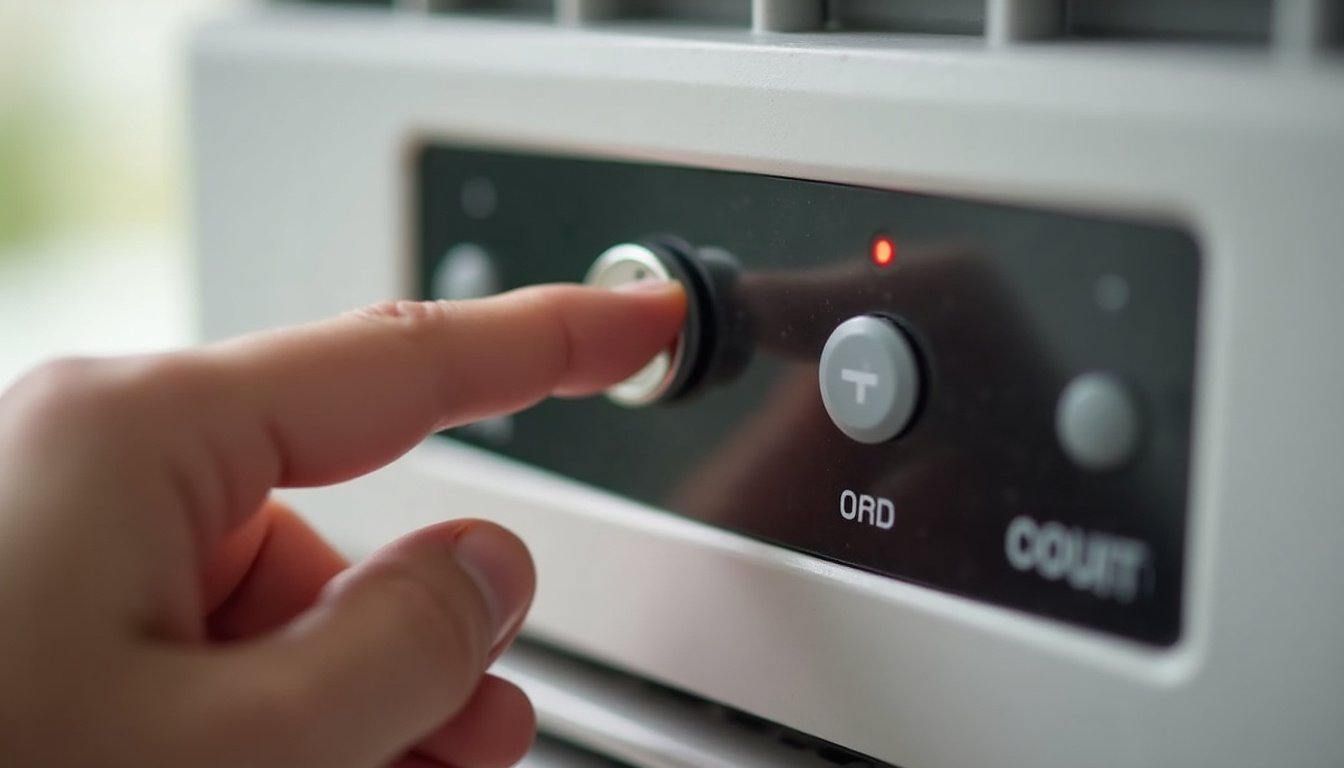
- Switch off ionizer and plasma modes and run on HEPA and carbon only.
- Smell near the outlet when the unit is on; a sharp smell is a clue.
- Return a unit that makes the smell and cannot switch it off.
Choosing a Purifier Without Ozone
The simplest choice is a mechanical purifier: pre-filter, true HEPA, activated carbon and a fan. Look for a published CADR from AHAM and for CARB certification. Size by CADR, at least two thirds of the room’s floor area. Ignore extra features that add little, such as ionizers, and use them only if they can be switched off.
| Room size (sq ft) | Minimum CADR (CFM) |
|---|---|
| 100 | 67 |
| 150 | 100 |
| 200 | 133 |
| 300 | 200 |
| 400 | 267 |
Worked example: a 200 square foot bedroom needs a CADR of about 133. A unit rated 150 with true HEPA and carbon, and a CARB listing, meets the need without any ozone feature. A cheaper unit with a prominent ionizer button and no certification adds a risk the first does not.
Features that sound useful but add little are common. An ionizer button rarely improves a purifier that already has a good HEPA filter, and it adds a variable. Paying for a larger CADR or a better carbon stage usually does more for the room, so spend there and treat any ionizer as optional and switched off.
If You Already Own One
If your purifier has an ionizer or plasma mode, switch it off and use the HEPA and carbon alone. Air the room. If you notice a sharp smell with the feature off, check the other causes, including a saturated carbon filter or new-unit off-gassing, and contact the maker if it persists. Keep ozone generators out of occupied rooms.
If you decide to keep a unit with an ionizer, make switching it off the default. Some models turn it back on after a power cut or a mode change, so check after those. Air the room regularly, keep the HEPA and carbon replaced on schedule, and never wash the HEPA, because water collapses its fibers and compressed air drives dust back into the room.
How to Avoid Ozone From an Air Purifier in 6 Steps
- Choose a mechanical purifier with true HEPA and activated carbon rather than one sold on ionization or ozone.
- Check the product page and manual for the words ozone, ionizer, plasma and O3.
- Look for CARB certification or an AHAM Verifide listing.
- Switch off any ionizer or plasma mode and run on HEPA and carbon only.
- Size the unit by CADR, at least two thirds of the room’s floor area.
- Return or stop using a unit that smells sharp near the outlet and cannot run without an ozone-making mode.
Do and Do Not
Do
- Choose mechanical filtration.
- Check CARB certification.
- Switch ionizers off.
- Size by CADR.
- Read the manual.
Do not
- Do not run an ozone generator in an occupied room.
- Do not buy on ionizer claims.
- Do not rely on smell alone.
- Do not wash the HEPA.
- Do not ignore a sharp smell from the outlet.
Who Should Skip This
If your purifier is mechanical, with HEPA and carbon only and no ionizer, skip the ozone worry: it makes none.
If a sharp smell persists with all ionizer modes off, skip the ozone theory and check the carbon filter and new-unit off-gassing.
Honest Limits
- Ozone output varies by model and mode and is rarely published for non-certified units.
- Smell is a poor measure of ozone.
- CARB certification applies to units sold in California and is a useful guide elsewhere.
- We did not test any unit or measure ozone.
- Nothing here is medical advice.
When to See a Professional
Contact the maker for a sharp smell that persists with ionizer modes off, or ask for ozone documentation.
If you suspect high ozone in a home from a generator, stop using it, ventilate, and consult an indoor air quality professional.
Frequently Asked Questions
Do air purifiers produce ozone?
Mechanical purifiers with true HEPA and carbon do not. Ozone generators produce it deliberately, and some ionizers, plasma and similar modes can make it as a byproduct. Check the product page, look for CARB certification, and switch off any ionizer mode.
Is ozone from an air purifier harmful?
The EPA says ozone is a lung irritant and advises against air cleaners that intentionally produce it in occupied spaces, because levels too low to clean the air can still irritate. Choose mechanical filtration and switch off ionizer modes. Nothing here is medical advice.
What is CARB certification for air purifiers?
The California Air Resources Board limits ozone from air cleaners sold in California and lists certified models. Certification means the unit meets the state’s ozone emission limit. It is the clearest signal a buyer has, and useful even outside California.
How can I tell if my purifier makes ozone?
Look on the product page for ozone, ionizer, plasma or O3. A sharp, fresh-after-lightning smell near the outlet is a clue. A CARB listing is better evidence than smell. Switch off any ionizer mode and see whether the smell goes.
Do ionizers make ozone?
They can. Ionizers and plasma modes charge air or particles, and ozone can be a byproduct. Output varies by model. If your unit has a switch, turn the ionizer off and rely on HEPA and carbon. Avoid units that cannot run without it.
Does a HEPA filter make ozone?
No. A true HEPA filter is mechanical and captures particles as air passes through it. The same is true of activated carbon, which adsorbs gases. A purifier built from a fan, HEPA and carbon adds no ozone.
Are UV air purifiers safe from ozone?
It depends on the lamp. Some UV lamps at certain wavelengths produce ozone and others are designed not to. Enclosed UV-C sections in a mechanical purifier usually add little. Check the maker’s documentation or CARB listing rather than assuming.
Should I use an ozone generator to remove odors?
The EPA advises against using ozone generators in occupied spaces and says they are not effective at safe concentrations. If someone uses one in an empty room, ventilate fully before reentering. A mechanical purifier with real carbon and source cleaning is the safer route.
My purifier smells sharp. Is that ozone?
It might be, particularly with an ionizer or plasma mode on. Switch the feature off. If the smell persists, consider a saturated carbon filter or new-unit off-gassing. A persistent sharp smell with all modes off deserves a call to the maker.
What kind of purifier should I buy to avoid ozone?
A mechanical one: pre-filter, true HEPA, activated carbon and a fan, with a published AHAM CADR sized to the room and, ideally, CARB certification. Skip units sold on ionization or ozone, or use them only if the feature switches off.
Bottom Line
Ozone is a concern with a clear answer. The EPA advises against air cleaners that produce it in occupied spaces, and the way to avoid it is to choose mechanical filtration, check certification and switch off ionizer modes.
If you already own an ionizer unit, run it on HEPA and carbon only. If it smells sharp with the feature off, check the carbon and call the maker. Nothing here is medical advice.
Related reading: Air purifier smells like ammonia, Air purifier ozone smell, Do air purifiers produce ozone.