Last updated:
As an Amazon Associate we earn from qualifying purchases. This does not change what we recommend. See our affiliate disclaimer.
Search for a low EMF air purifier and you will find listings that promise low emissions, shielded motors and a calmer bedroom. The phrase sounds precise, but it is mostly a marketing label rather than a measured standard, and that gap is where a lot of shoppers get confused. This guide explains what electric and magnetic fields are, where they come from inside a purifier, what you can actually compare, and what to do if you simply want a unit that keeps electronics to a minimum.
Every plugged-in air purifier has a motor and some electronics, so every one produces some electric and magnetic fields while it runs. There is no common standard for calling a unit “low EMF,” and most makers do not publish field measurements. What you can compare is design: simple mechanical controls, no wireless radios, no display, and no ionizer or plasma stage. Distance helps too, since fields weaken quickly as you move away from the source. We make no health claims either way, and we focus on features you can check.
In short: treat “low EMF” as a prompt to ask questions, not as proof. Look for fewer electronics, check what the maker actually publishes, and give the unit some distance from where you sleep or sit.
The National Institute of Environmental Health Sciences explains electric and magnetic fields as invisible energy associated with electrical power and lighting, and it separates this non-ionizing energy from ionizing radiation such as X-rays. That distinction is useful background, because a household appliance is a very different thing from medical imaging.
Our picks are research-based, built from manufacturer information and published guidance, not from field measurements of our own, and nothing here is medical advice or a promise about health outcomes.
A simpler unit may suit you if
- You want fewer electronics and no wireless radio
- You prefer physical dials over a touchscreen
- You will place it a few feet from the bed or desk
- You want to avoid ionizer or plasma features
Be careful about
- Listings that claim “EMF-free” or “zero radiation”
- Claims with no measured numbers
- Paying extra for shielding you cannot verify
- Treating a label as a health guarantee
Key Takeaways
- No plugged-in air purifier is free of electric and magnetic fields. The motor, power supply and any display or radio all contribute.
- “Low EMF” has no standard definition in this product category, and many listings give no measurements at all.
- You can compare features: wireless radios, displays, ionizer or plasma stages, and the simplicity of the controls.
- Fields weaken with distance, so placement and a few feet of space are free and effective.
- A consumer meter can show differences between units, but low-cost meters have limits and should not be treated as precise.
- Avoid ionizer-style features partly for ozone reasons, which are separate from EMF and covered by EPA guidance.
- If you have health concerns about fields, talk with a doctor. A purifier choice is not a medical decision.
Top Picks: Simpler, Filter-Based Air Purifiers
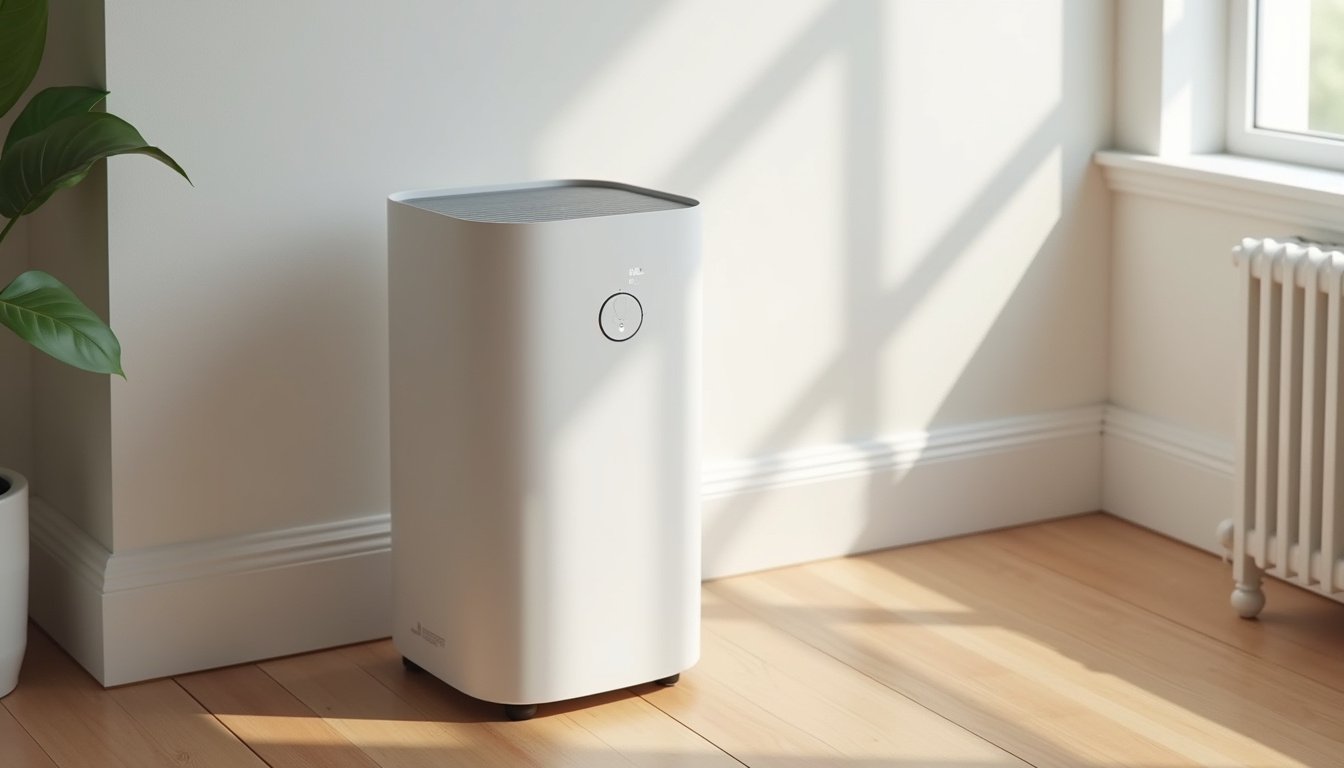
These filter-based models are a sensible starting point if you want to keep electronics modest, but check each listing for the exact controls and features of the variant you choose. Each button opens the Amazon listing.






How We Approached the Low EMF Question
We looked at what makers typically publish, what components an air purifier contains, and how a shopper can tell one design from another. We could not find a common standard or a widely published set of measurements, so we compare features, not field strengths.
What Electric and Magnetic Fields Are
Electric fields come from voltage and magnetic fields come from current, so anything plugged into a wall and doing work creates both. A fan motor, a transformer and a control board all produce small fields around the unit while it runs. The same is true of a lamp, a clock radio, a hair dryer and a refrigerator.
These are called low-frequency fields when they come from household electricity. They are different from the radio waves used by Wi-Fi and Bluetooth, which are higher-frequency fields used to carry signals. A purifier with an app has a small radio inside, and one with only knobs does not.
| Type of field | Where it comes from in a purifier | Present in every unit? |
|---|---|---|
| Low-frequency electric and magnetic | Motor, power supply, wiring | Yes, while running |
| Radio-frequency | Wi-Fi or Bluetooth module for app control | Only in app-enabled models |
| High-voltage components | Ionizer or plasma stage, if fitted | Only in units with that feature |
What the Low EMF Label Really Means
There is no common standard behind the phrase for air purifiers. A listing may mean that the unit has few electronics, that the motor is a type some makers describe as lower-field, or simply that the maker wants to appeal to people who are concerned. It rarely comes with a number, a test method or a laboratory name.
That does not make the claim false, but it does mean you cannot compare it across brands. The honest response is to look for specifics. If a maker says its unit is low EMF, ask what was measured, at what distance, and by whom. If the answer is not available, treat the label as marketing.
Design Features You Can Compare
Without published measurements, features are the practical way to compare. A unit with physical buttons, a simple display and no app has fewer electronics than one with a touchscreen, sensors, a Wi-Fi radio and a motor controller.
| Feature | Why it matters here | What to look for |
|---|---|---|
| Wi-Fi or Bluetooth control | Adds a radio inside the unit | Choose a model without an app if you want none |
| Touchscreen or bright display | More electronics, and a light in the room | Simple dial or button panel |
| Ionizer or plasma stage | High-voltage components and possible ozone | Filter-only operation |
| Air quality sensor with auto mode | Adds sensors and a control board | Manual speeds if you want simplicity |
| Power adapter outside the unit | Moves the transformer away from the casing | Check the listing for the power supply design |
This list is about simplicity, not a promise of lower fields. A well-built unit with more features can still be fine, and a simple unit with a poor motor may not be. If you also want the benefits of automatic speed control, weigh that against your preference for minimal electronics, and see our comparison of smart sensors versus basic models.
Placement: The Free Way to Reduce Exposure
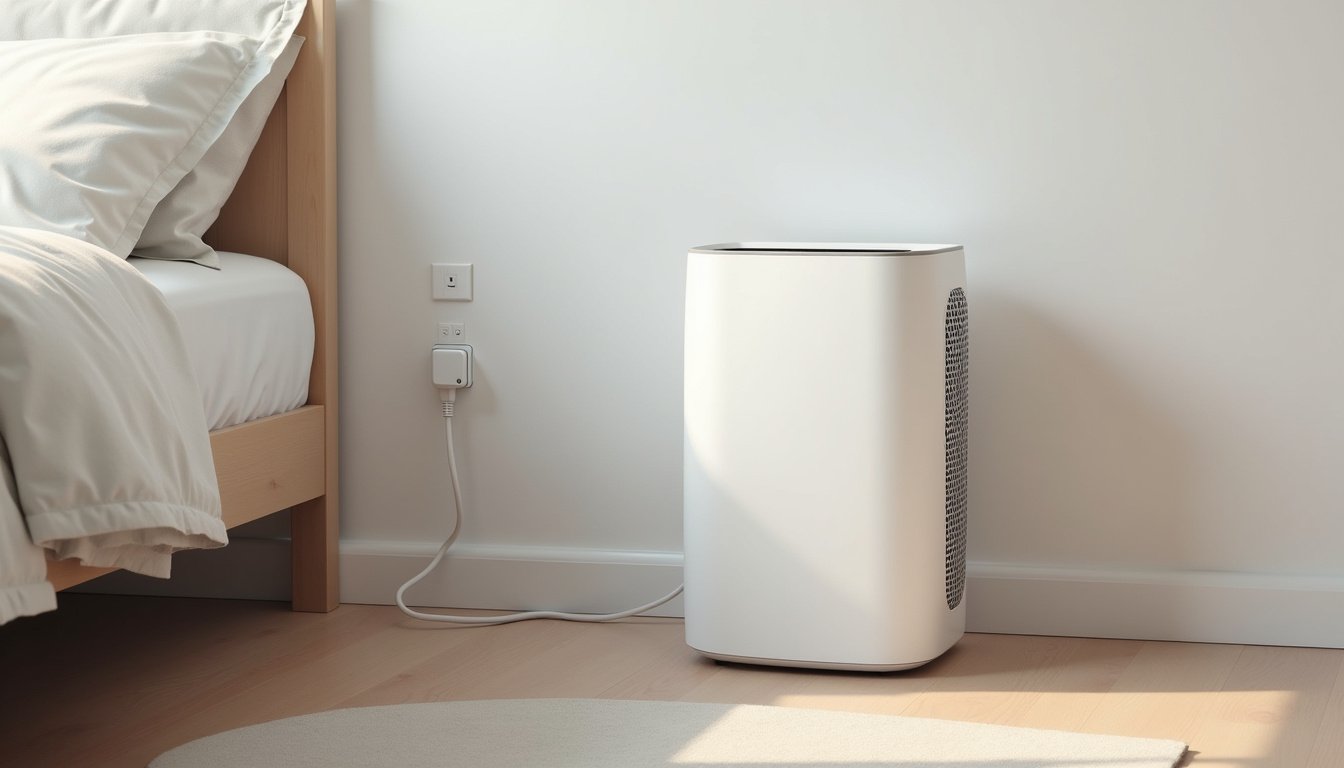
Fields from a small appliance weaken quickly as you move away from it. That means that the practical difference between a unit on your pillow and a unit a few feet away is much bigger than the difference between most models. Moving the unit away from the bed or desk costs nothing.
For a bedroom, place the purifier across the room or on a low surface a few feet from the bed, with clear space around the intake and outlet. Most purifiers work best when they have room to move air, so good placement helps the purifier and your preferences at once.
| Where you place it | Practical effect |
|---|---|
| On the bedside table | Closest to your head, strongest exposure in the room |
| A few feet from the bed | Weaker at the bed, still good airflow |
| Across the room, clear airflow | Weakest at the bed, check CADR still covers the room |
| Behind furniture | Weaker fields but blocks airflow, avoid |
Why Ionizer Features Are a Separate Issue
Some purifiers include an ionizer or plasma stage. These use high voltage to charge particles or create ions, and the EPA says that ionizers, electrostatic devices and some UV units may emit ozone, a lung irritant. That concern is separate from EMF, and it is why we recommend filter-based units without these features.
If you are choosing a purifier mainly to keep electronics minimal, an ionizer-free model is also the better choice for ozone reasons. Our guide to HEPA versus ionic purifiers explains the differences in more detail.
Using a Meter: Possible, but Limited
Handheld EMF meters are sold to consumers, and they can show that a field is stronger near the unit than across the room. Low-cost meters vary in accuracy, measure different kinds of fields and often show readings that are hard to interpret without context.
If you use one, compare units under the same conditions: the same distance, the same fan speed and the same room. Treat the numbers as a rough comparison, not as a safety verdict, and do not rely on a single reading. Many people find that placement does more than a meter ever will.
What Matters More Than the Label
For most households, the characteristics that decide how well a purifier works have nothing to do with fields. Matching CADR to room size, a true HEPA filter, a carbon layer if you need odor control, a sensible noise level and filters you will actually replace make the biggest difference to your air.
A purifier that is too small for the room, or one whose filters are not replaced, delivers less benefit than a larger unit with a few more electronics. Prioritize what the purifier is for, then use the low EMF question to break ties between similar units.
How to Choose in 6 Steps
- Measure your room and find the CADR you need, about two-thirds of the floor area for 8-foot ceilings.
- Choose a filter-based unit with true HEPA and a carbon layer if you need odor control.
- Decide whether you want an app and a display, or physical controls only.
- Skip ionizer and plasma features.
- Ask the maker whether any field measurements are published, and do not rely on a label alone.
- Place the unit a few feet from where you sleep or sit with clear airflow around it.
Do and Do Not
Do
- Compare features and published specifications
- Choose the right size first
- Give the unit distance from the bed
- Replace filters on schedule
Do not
- Do not trust “EMF-free” claims
- Do not pay extra for shielding you cannot verify
- Do not choose a too-small unit to save electronics
- Do not buy ionizer or ozone-producing devices
Who Should Skip This
Skip this guide if your goal is to treat a health condition. A purifier is not a treatment, and decisions about health belong with a doctor.
Skip it too if you only want the best filtration for a given room. In that case, size, filter type and noise level matter more than anything on a low EMF label.
Honest Limits
- We have no measurements of any unit, and we do not know the field strength of any specific model.
- The phrase low EMF has no common standard in this product category.
- Consumer meters give rough readings, not precise ones.
- Choosing a simpler unit does not make a purifier more effective at cleaning the air.
When to See a Professional
If you have concerns about electric or magnetic fields and your health, or you use a medical device such as a pacemaker, talk with your doctor and check the device maker guidance for appliances. This page is general information, not medical advice.
If a unit hums, overheats, smells like burning or has damaged wiring, unplug it and contact the manufacturer or a qualified electrician.
Frequently Asked Questions
Does an air purifier give off EMF?
Yes. Any plugged-in unit with a motor and electronics produces some electric and magnetic fields while running. The amount depends on the design and your distance from it. App-enabled units also contain a small radio for Wi-Fi or Bluetooth control.
What does low EMF mean on an air purifier listing?
Usually nothing standardized. It can mean fewer electronics, a particular motor type or just marketing language. Few makers publish measurements, so ask what was measured and at what distance. A label alone is not evidence.
Is there an EMF-free air purifier?
No plugged-in purifier with a motor can be free of electric and magnetic fields. A claim of EMF-free or zero radiation should make you cautious. Compare features and placement instead of trusting an absolute claim.
Do app-controlled purifiers emit more?
They include a small radio for Wi-Fi or Bluetooth, which adds a different kind of field. If you prefer no wireless radio, choose a model with physical controls and no app. The filtering performance does not depend on the app.
Does distance really matter?
Yes. Fields from a small appliance weaken quickly as you move away from it, so a few feet makes a big difference compared with a unit on the pillow or bedside table. Just make sure airflow around the unit stays clear.
Can I measure EMF at home?
You can with a consumer meter, but low-cost meters have limited accuracy and read different kinds of fields. Use one for rough comparisons at the same distance and fan speed, not as a safety verdict.
Are ionizer purifiers worse for EMF?
They add high-voltage parts, but the bigger issue is ozone. The EPA says some ionizers and electrostatic units may emit ozone, a lung irritant. A filter-only unit avoids both concerns, which is why we recommend filter-based models.
Does a simpler purifier clean the air as well?
It can, if it has a true HEPA filter and the right CADR for your room. Cleaning performance comes from airflow and filtration, not from the number of electronic features. Simpler units may lack auto mode or an app.
Where should I put a purifier in the bedroom?
A few feet from the bed, with clear space around the intake and outlet, is a good start. Avoid the bedside table if you want distance, and avoid corners or furniture that block airflow. Check the CADR matches the room size.
Should I worry about EMF from my purifier?
That is a personal decision, and we make no health claims either way. If you are concerned, choose a simpler filter-based unit, give it distance and talk with your doctor. Focus first on getting the right size and filters.
Bottom Line
Low EMF on a purifier listing is a prompt for questions, not a proven feature. Every plugged-in unit makes some fields, the label has no standard definition, and measurements are rarely published. What you can do is compare designs, avoid ionizer features and give the unit some distance.
Choose the right size and filter first, then use simplicity of controls and placement to match your preferences. A well-sized, filter-based purifier with simple controls placed a few feet from the bed is a sensible, low-drama answer.
Related reading: smart sensors versus basic models, HEPA versus ionic purifiers, bedroom and living room needs.