Last updated:
As an Amazon Associate we earn from qualifying purchases. This does not change what we recommend. See our affiliate disclaimer.
Stuffy mornings, pressure behind the eyes, a nose that runs in one room and clears in another: sinus complaints are among the most common reasons people start shopping for an air purifier. The connection is intuitive, since the nose is the first thing indoor air touches. Whether a purifier helps depends entirely on what is irritating the sinuses in the first place, and that is not something a product page can tell you.
An air purifier may help with sinus symptoms when those symptoms are triggered by airborne particles such as dust, pollen, pet dander, mold spores or smoke, because a true HEPA filter lowers the concentration of those particles in the room where it runs. Many people with allergic rhinitis, the medical term for a nose and sinuses reacting to allergens, report less morning congestion after running a correctly sized unit in the bedroom overnight. A purifier does nothing for sinus problems caused by infections, structural issues such as a deviated septum or polyps, dry air, strong fragrances and chemical irritants unless it carries real carbon, or conditions unrelated to the air at all. It is not a treatment, and persistent or painful sinus symptoms belong with a doctor, who can identify the cause.
In short: if your sinuses react to airborne particles, a HEPA purifier in the bedroom may help; if the cause is something else, it will not, and a doctor is the person to sort out which it is.
The American Academy of Allergy, Asthma and Immunology lists reducing exposure to indoor allergens among environmental measures for allergic rhinitis, and the EPA’s guide to air cleaners describes portable HEPA units as a way to reduce airborne particles. The EPA also recommends keeping indoor humidity between 30 and 50 percent, since very dry air irritates nasal passages and very damp air favors mold and dust mites.
This article is research-based and educational, drawing on EPA, AAAAI and American Lung Association material and maker specifications for the units in the comparison table, which we have not tested and for which we quote no prices or ratings. Nothing here is medical advice; sinus symptoms that persist, recur or come with pain or fever need a doctor.
A purifier is worth trying if
- Symptoms are worse in the morning, in pollen season or around pets
- A doctor or allergist has identified airborne allergens as a trigger
- Dust, dander or smoke are present in the bedroom
- You will run a true HEPA unit all night with the door closed
Look elsewhere first if
- Symptoms came on suddenly with fever, facial pain or colored discharge
- A doctor has identified a structural cause or chronic sinusitis
- The air is very dry and the nose feels raw
- Fragrances, cleaning sprays or smoke are the irritants and the unit has only a thin carbon pad
Key Takeaways
- A HEPA purifier lowers airborne particles such as dust, pollen, dander, spores and smoke in one room; that is all it does.
- People whose sinus symptoms are allergic may notice easier mornings; people with infections or structural causes will not.
- Only a doctor can tell which kind of sinus problem you have; a purifier is not a diagnostic or a treatment.
- Humidity matters: keep the bedroom at 30 to 50 percent, since dry air irritates nasal passages and damp air breeds allergens.
- Fragrances, sprays and smoke irritate sinuses as gases; only a substantial carbon stage addresses them.
- Avoid ozone generators and ionizers; ozone irritates the airways, and the EPA advises against it.
- Bedding, pets, pollen habits and source control usually matter as much as the purifier.
HEPA Purifiers to Compare for a Bedroom
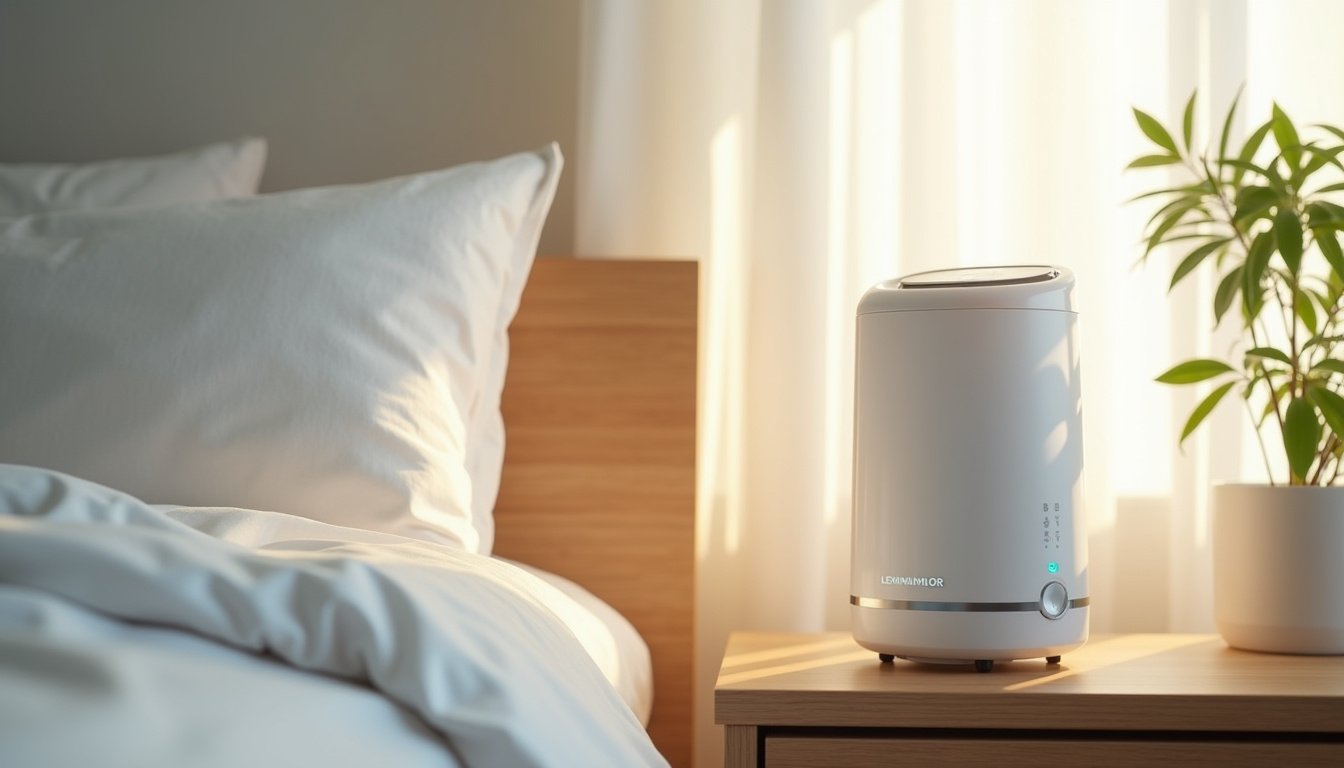
These widely reviewed filter-based units pair true HEPA with carbon and span bedroom to living room sizes. Compare the maker-listed CADR against your bedroom’s floor area and choose a model quiet enough on medium to run all night with the door closed.






How This Guide Approaches the Question
We separated sinus complaints by their likely causes using mainstream medical and allergy organization material, identified which causes involve airborne particles or gases a purifier can affect, and described what a correctly used unit can and cannot change. Product details come from maker specifications.
The honest frame is that sinuses respond to many things. A purifier addresses one category, airborne particles, well, and a second, gases, only with real carbon. The rest is for a physician.
What Causes Sinus Symptoms, Briefly
Sinus congestion, pressure and drainage have several common origins, and they feel similar from the inside. Allergic rhinitis is the nose and sinus lining reacting to inhaled allergens such as pollen, dust mite allergen, pet dander and mold spores. Viral and bacterial infections cause acute sinusitis, with fever, facial pain and colored discharge. Chronic sinusitis lasts months and may involve polyps or inflammation that a doctor manages. Non-allergic rhinitis reacts to irritants such as smoke, fragrances, cold or dry air and weather changes. Structural issues such as a deviated septum narrow drainage.
| Cause | Typical pattern | Can a purifier help? | Who to see |
|---|---|---|---|
| Allergic rhinitis | Seasonal or year-round; sneezing, itching; worse mornings or around pets | Yes, for airborne allergens in the room | Allergist or doctor |
| Acute sinus infection | Sudden; fever, facial pain, colored discharge | No | Doctor |
| Chronic sinusitis | Months of congestion and pressure | Not directly; may lower irritants | ENT or doctor |
| Non-allergic rhinitis from irritants | Reacts to smoke, fragrance, sprays | Partly, with real carbon; source removal matters more | Doctor |
| Dry air irritation | Raw, crusted nose in winter or air conditioning | No; humidity control helps | Doctor if persistent |
| Structural narrowing | Constant one-sided blockage | No | ENT |
Only a clinician can place a given person in the right row. The sections below explain what a purifier does for the rows where it applies.
What a Purifier Actually Changes
A filter-based purifier pulls room air through true HEPA media rated to capture 99.97 percent of particles at 0.3 microns under test conditions. Pollen, dander, spores and dust mite allergen are larger and captured even more completely. In a closed bedroom with a unit sized by CADR, airborne particle levels fall within an hour and stay low while the fan runs, which is measurable on an inexpensive PM2.5 monitor.
For someone whose sinuses react to those particles, lower levels overnight mean less allergen reaching the nasal lining during eight hours of sleep, and many such people report easier mornings within a couple of weeks. The purifier does not change what is in the mattress, the carpet or the rest of the house, does not alter humidity, and does not touch gases unless it carries real carbon. It changes the particle count in one room, and that is the whole of its effect.
If Allergens Are the Trigger
When an allergist confirms that pollen, dust mites, pet dander or mold are behind the symptoms, the environmental plan allergy organizations describe usually includes filtration in the bedroom, and this is where a purifier earns its place. Pair it with the measures that address allergen reservoirs the purifier cannot reach.
- Run a true HEPA unit in the bedroom all night with the door closed, sized so its dust CADR is at least two-thirds of the floor area in square feet.
- Use allergen-proof encasements on the mattress and pillows and hot-wash bedding weekly for dust mites.
- Keep pets out of the bedroom and groom and wash them regularly for dander.
- Close windows on high-pollen days, shower and change before bed in pollen season.
- Hold humidity between 30 and 50 percent to limit dust mites and mold, as the EPA recommends.
- Fix moisture and remove any mold growth; the EPA suggests a professional for areas over about 10 square feet.
Worked example: a person wakes congested every morning in a 12 by 13 foot bedroom, 156 square feet, with a cat and an allergist’s confirmation of dander and dust mite allergy. A true HEPA unit with a dust CADR of about 104 on medium runs all night with the door closed, the cat sleeps elsewhere, the mattress is encased and the sheets are washed weekly in hot water. Over two weeks mornings improve; the allergist’s plan continues unchanged.
If Irritants and Gases Are the Trigger
Non-allergic rhinitis reacts to smoke, perfume, cleaning sprays, paint fumes and similar irritants, which are gases rather than particles. HEPA media does nothing for them. Activated carbon adsorbs a share, but only if the unit carries a meaningful amount, a pound or more rather than a thin coated pad, and even then source removal does more. Stop using fragranced products, aerosols and candles in the bedroom, move smoking outdoors, ventilate after cleaning or painting and let new furniture off-gas elsewhere before it comes in.
Smoke is the overlap case: its particles are captured by HEPA and its gases partly by carbon. During wildfire smoke the EPA’s clean room approach, a closed room with a HEPA unit running continuously, reduces the particle exposure that irritates sinuses as well as lungs.
| Irritant | Particle or gas | HEPA | Carbon | Best measure |
|---|---|---|---|---|
| Tobacco or wildfire smoke | Both | Yes for particles | Partly for odor and gases | Smoke outdoors; clean room during events |
| Perfume, air fresheners, candles | Gas and fine aerosol | Little | Partly, with real carbon | Remove from the bedroom |
| Cleaning sprays | Gas and droplets | Little | Partly | Fragrance-free products; ventilate; clean when the room is empty |
| Paint and new furniture VOCs | Gas | No | Partly; formaldehyde poorly | Ventilate; air items out first |
| Cold or dry air | Neither | No | No | Humidity 30 to 50 percent; scarf outdoors |
Humidity: Often the Missing Piece
Dry indoor air, common in heated homes in winter and in heavily air-conditioned rooms, dries the nasal lining and can leave it raw, crusted and prone to irritation and nosebleeds. Very damp air does the opposite kind of harm by favoring mold and dust mites. The EPA’s 30 to 50 percent range balances the two. A purifier does not change humidity at all, so if a hygrometer shows a bedroom at 20 percent in January, a humidifier used carefully, kept clean and placed several feet from the purifier so the filter stays dry, addresses a cause the purifier cannot.
Keep the humidifier itself clean according to its manual; a dirty humidifier disperses microbes and minerals that irritate airways, the opposite of the intent.
Choosing and Using a Purifier for a Sinus-Prone Sleeper
The unit is the same one recommended for any allergy bedroom: true HEPA in a sealed housing, a dust CADR of at least two-thirds of the room’s floor area reached on medium so it runs quietly all night, no ozone output and any ionizer switched off, and a substantial carbon stage only if smoke or fragrance irritants are part of the picture. Place it a few feet from the bed with the outlet aimed away, since cold moving air across the face can itself irritate a sensitive nose, and keep it away from humidifier mist.
Run it continuously rather than only at night; particles return within an hour or two of switching off, and a room that is already clean at bedtime is the goal. Use a fixed low or medium overnight rather than auto mode, whose fan surges can wake you, and dim the display.
Avoid Ozone and Ionizers
Ozone is a respiratory irritant that inflames nasal and sinus linings as readily as it inflames lungs, and the EPA advises against ozone-generating air cleaners in occupied spaces. Ozone generators release it deliberately; some ionizers, electrostatic, plasma and UV devices release it as a by-product. For anyone with sensitive sinuses, a filter-based unit with every electronic air feature off is the only sensible choice. If a running purifier gives the air a sharp, metallic or after-thunderstorm smell, switch off the ionizer or UV function.
Scented filters and fragrance cartridges are likewise the wrong direction: they add volatile compounds to the air, and fragrance is itself a common sinus irritant.
What to Expect and How to Judge It
Expect measurable change in the room quickly and modest change in symptoms slowly, if at all. A PM2.5 monitor shows particles falling within an hour in a closed room with a sized unit. People whose symptoms are allergic often report easier mornings within one to two weeks of continuous bedroom use alongside bedding and source measures. People whose symptoms have another cause may notice nothing, which is itself useful information to bring to a doctor.
Keep a short diary of symptoms by morning for a few weeks before and after, noting pollen counts, weather, cleaning and any changes in the home. It separates the purifier’s effect from a good pollen week and gives a doctor something concrete.
| After two weeks of continuous use | What it suggests | Next step |
|---|---|---|
| Mornings clearly easier | Airborne allergens were a factor | Continue; maintain filters; keep source measures |
| Slight improvement | Partial contribution; other triggers remain | Review bedding, pets, humidity, fragrances |
| No change | Cause is likely not airborne particles | See a doctor; check humidity and irritants |
| Symptoms worse | Draft on the face, new-unit smell, ozone feature, or coincidence | Aim outlet away; switch ionizer off; see a doctor if it persists |
When to See a Doctor
Sinus symptoms that last more than about ten days, recur frequently, come with fever, severe facial pain, swelling around the eyes, colored or bloody discharge, or affect only one side consistently are reasons to see a doctor regardless of what the air is like. So are symptoms that disrupt sleep or daily life, or that have not responded to over-the-counter measures a pharmacist has suggested. An allergist can test for specific allergens, which tells you whether a purifier is even aimed at the right target; an ENT specialist assesses structural and chronic causes.
Nothing in this article replaces that visit. A purifier is an environmental measure that may lower one kind of trigger; it is not a diagnosis, a treatment or a reason to delay care.
How to Decide and Set Up in 6 Steps
- See a doctor or allergist, especially for persistent, painful or one-sided symptoms, and ask whether airborne allergens are a factor.
- Put a hygrometer in the bedroom; bring humidity into the 30 to 50 percent range with a clean humidifier or a dehumidifier as needed.
- Remove fragrances, sprays, candles and smoke from the bedroom; these irritate sinuses as gases that HEPA does not touch.
- If allergens are confirmed, choose a true HEPA unit with no ozone output, sized so its dust CADR is at least two-thirds of the bedroom’s floor area on medium.
- Place it a few feet from the bed with the outlet aimed away, run it continuously with the door closed, and pair it with encasements, hot washes and pets out of the bedroom.
- Keep a two-week symptom diary and bring the results to your doctor rather than adjusting any treatment yourself.
Do and Do Not
Do
- Get the cause identified by a clinician.
- Check and correct humidity first.
- Choose true HEPA, sealed, no ozone.
- Aim the outlet away from the bed.
- Combine the purifier with bedding, pet and pollen measures.
Do not
- Do not treat a purifier as a sinus remedy.
- Do not use ozone generators, ionizers or scented filters.
- Do not let it blow across your face at night.
- Do not expect it to help with infections or structural causes.
- Do not delay a doctor’s visit for persistent or painful symptoms.
Who Should Skip This
If symptoms arrived suddenly with fever, facial pain, swelling or colored discharge, skip the purifier question entirely and see a doctor; those are signs of infection, which no air cleaner affects.
If a hygrometer shows the bedroom under 30 percent humidity and the nose feels dry and raw, skip straight to careful humidification and see whether that alone helps before spending on a purifier; dry air is a cause the purifier cannot address.
Honest Limits
- A purifier reduces airborne particles in one room while running; it does not treat any sinus condition.
- Allergens in bedding, carpet and upholstery are out of its reach.
- Gases and irritants need real carbon and, more importantly, source removal.
- It does not change humidity, which is often a major factor.
- Results vary by cause and by person; no outcome is promised.
- Diagnosis and treatment belong with a doctor; nothing here is medical advice.
When to See a Professional
See a doctor for sinus symptoms lasting more than about ten days, recurring often, or accompanied by fever, severe facial pain, swelling around the eyes, colored or bloody discharge or one-sided blockage; see an allergist for testing that identifies airborne triggers and an ENT for structural or chronic causes. A purifier supports, and never replaces, that care. Nothing on this page is medical advice.
Call a mold professional for visible growth over about 10 square feet, as the EPA suggests, and an HVAC professional if dust blows from vents or humidity cannot be brought into range. Stop using and contact the maker for any purifier that produces a sharp metallic smell or any electrical symptom.
Frequently Asked Questions
Do air purifiers help with sinus problems?
They may, when symptoms are triggered by airborne particles such as pollen, dust mite allergen, pet dander, mold spores or smoke, because a true HEPA unit lowers those in the room where it runs. They do not help with infections, structural causes or dry air. A doctor can tell you which applies.
Will an air purifier help with sinus infections?
No. Acute sinus infections are caused by viruses or bacteria and come with fever, facial pain and colored discharge; a purifier does not affect them. See a doctor for infection symptoms. A purifier’s role, if any, is in reducing airborne allergens for people with allergic rhinitis.
What type of air purifier is best for sinus problems?
A filter-based unit with true HEPA in a sealed housing, no ozone output and any ionizer switched off, sized so its dust CADR is at least two-thirds of the bedroom’s floor area on medium. Add a substantial carbon stage only if smoke or fragrance irritants are part of the problem.
Where should I put a purifier for sinus symptoms?
In the bedroom, a few feet from the bed, outlet aimed away from your face or blowing upward, with the door closed and the unit running continuously on a fixed low or medium. A stream of air across the pillow can dry and irritate the nose, so placement and direction matter.
Can an air purifier make sinus problems worse?
Ozone-producing units can, since ozone irritates nasal and sinus linings; the EPA advises against them. A filter-based HEPA unit does not create pollutants, but a draft across the face, a damp or musty filter, scented filters or new-unit off-gassing can bother a sensitive nose. Aim the outlet away and keep filters fresh.
Does humidity matter more than a purifier for sinuses?
Often, yes. Dry air under 30 percent relative humidity dries and irritates the nasal lining; damp air over 50 percent favors mold and dust mites. A purifier does not change humidity. Check a hygrometer and correct humidity into the EPA’s 30 to 50 percent range alongside any filtration.
How long before I know if the purifier helps my sinuses?
Airborne particles fall within an hour in a closed room with a sized unit. Symptom changes, if the cause is allergic, usually show within one to two weeks of continuous bedroom use alongside bedding and source measures. No change after two weeks suggests the cause is not airborne particles.
Will a purifier remove dust mite allergen for my sinuses?
Only the share that becomes airborne when bedding is disturbed. Mites live in mattresses, pillows and carpet. Allergen-proof encasements, weekly hot washes and humidity below about 50 percent are the main measures allergists recommend; the purifier supports them.
Do ionizers or ozone purifiers help sinuses?
No, and they can harm. Ozone is a respiratory irritant that inflames nasal and sinus linings, and the EPA advises against ozone-generating air cleaners. Some ionizers emit ozone as a by-product. Choose a filter-based true HEPA unit and leave electronic air features off.
Can an air purifier replace sinus medication or a doctor’s visit?
No. A purifier may reduce exposure to airborne allergens in one room; it does not treat rhinitis, sinusitis or any condition. Persistent, painful, feverish or one-sided symptoms need a doctor, and any medication or treatment decision belongs with that doctor, not with an appliance.
Bottom Line
Air purifiers can help with sinus problems in one specific situation: when the sinuses are reacting to airborne particles such as pollen, dust mite allergen, dander, spores or smoke, and a true HEPA unit sized for the bedroom runs all night with the door closed. For infections, structural causes, dry air and most chemical irritants, the purifier is beside the point, and only a doctor can say which situation applies to you.
Set the room up well regardless: humidity at 30 to 50 percent, fragrances and sprays out of the bedroom, encasements and hot washes, pets elsewhere, and a filter-based unit with no ozone and its outlet aimed away from your face. Then let a symptom diary and a doctor’s judgment, not the purifier’s marketing, decide whether it is doing anything for you.
Related reading: Best air purifiers for allergies, Air purifier vs dehumidifier for asthma, Quiet air purifiers for the bedroom.