Last updated:
As an Amazon Associate we earn from qualifying purchases. This does not change what we recommend. See our affiliate disclaimer.
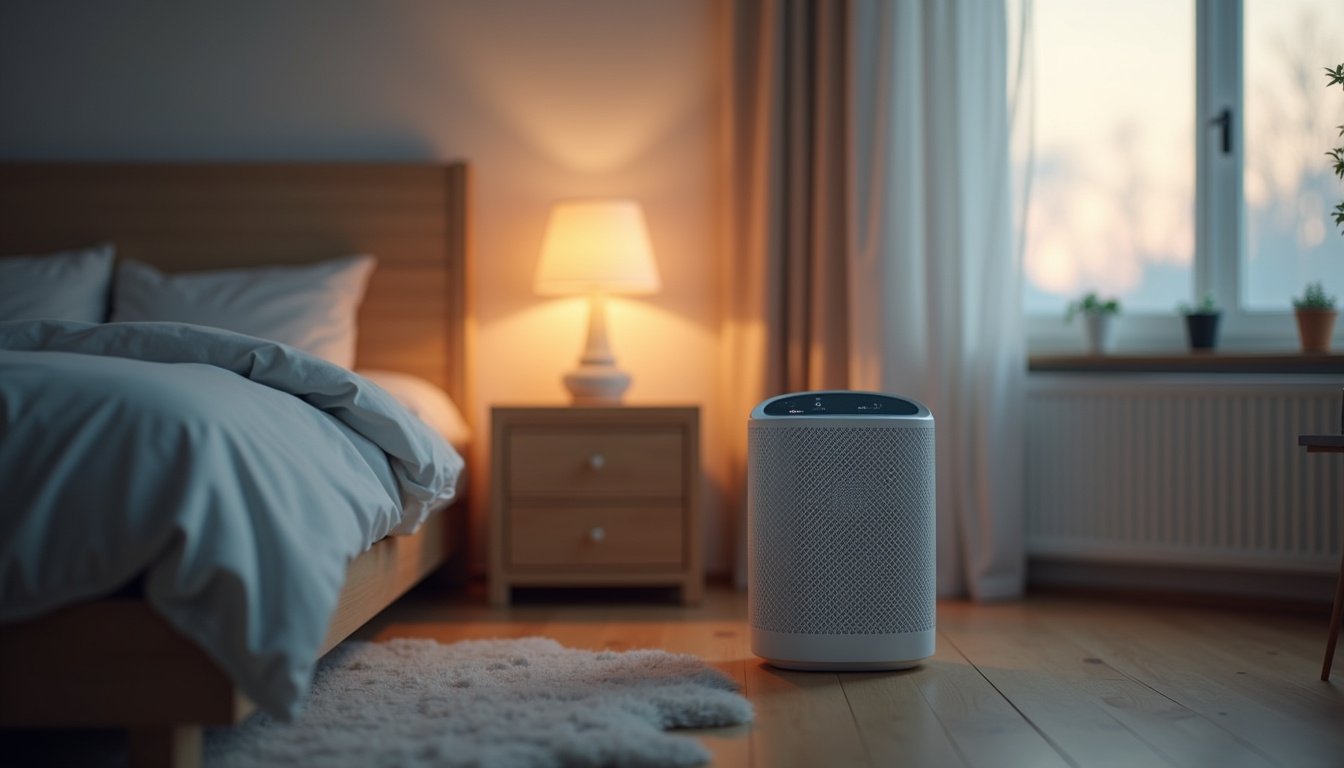
A bedroom purifier has one job that matters more than any specification on the box: it has to stay on all night. Every unit cleans air when it runs; the difference between a good bedroom purifier and a useless one is whether its owner reaches over and switches it off at midnight. Noise, and to a lesser extent light, decide that.
The quietest air purifier for a bedroom is not the smallest one or the one with the lowest advertised decibel figure. It is a true HEPA unit large enough to meet the room’s cleaning target, a dust CADR of about two-thirds of the floor area in square feet, on its low or medium speed, where fans are soft and steady. A compact unit that only reaches that target on high is loud by definition. Beyond size, look for a published noise rating on the speed you will actually use, a sleep mode that caps fan speed and dims or switches off the display, an upward-blowing outlet so no draft crosses the bed, and a fan tone that is smooth rather than whiny. A filter-based design with no ionizer is quiet by nature and avoids ozone, which has no place near a sleeper.
In short: buy one size larger than the room needs, run it on low or medium with the display dimmed, and the purifier becomes background sound rather than a reason to lose sleep.
The EPA’s guide to air cleaners in the home notes that noise is a key factor in whether a portable unit is run at an effective setting and advises choosing a model that is quiet enough to leave on at the speed the room requires. AHAM’s CADR ratings make it possible to size a unit so that speed is a low one.
The guidance and picks here are research-based, drawn from maker-published noise and CADR figures, EPA and AHAM material and the acoustics of small fans. We have not measured these units ourselves and quote no prices or ratings, only published specifications.
You will sleep fine beside a purifier if
- Its dust CADR meets two-thirds of the room’s floor area on low or medium
- The published noise figure on that speed is in the quiet-fan range
- It has a sleep mode that caps speed and dims the display
- The outlet blows upward or away from the bed
Expect to switch it off if
- It only meets the CADR target on high
- The display or air quality light glows all night
- It sits on the nightstand blowing across your face
- Auto mode spikes to high when you roll over
Key Takeaways
- Noise is the main reason bedroom purifiers get switched off, and a purifier that is off cleans nothing.
- Size one step up so the CADR target is met on low or medium, the speeds where fans are quiet.
- Compare published noise figures on the speed you will use, not the quietest setting.
- Sleep mode should cap fan speed and dim or switch off every light.
- Upward-blowing outlets and a few feet of distance avoid drafts on the sleeper.
- Fan tone matters: smooth broadband sound is easier to sleep beside than a whine or a rattle.
- Filter-based units with no ionizer are quiet by nature and produce no ozone.
Quiet Bedroom Purifiers to Compare
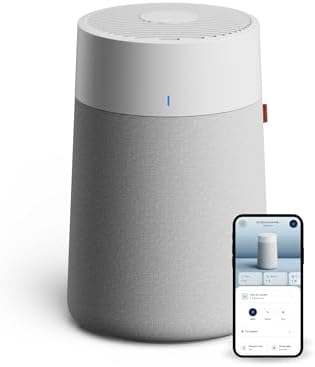
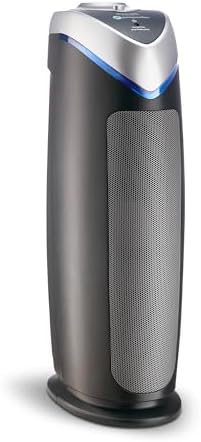
These widely reviewed small-room units pair true HEPA with carbon, publish low-speed noise figures and offer sleep modes suited to bedrooms. Compare the maker-listed CADR against your room so the target is met on a quiet speed, and check the noise rating for that speed.




How We Judged Quietness
We looked at how fan noise scales with speed and size, how makers publish decibel figures, what sleep modes actually do, and how placement changes what a sleeper hears. CADR sizing follows AHAM’s rule. Product details in the table come from maker specifications.
One principle explains most of what follows: a large fan moving air slowly is quieter than a small fan moving the same air fast. Quiet purifiers are usually bigger than their rooms strictly need.
Why a Bigger Unit Is a Quieter Unit
Fan noise rises steeply with speed. Doubling the airflow of a given fan raises its sound far more than it doubles the cleaning, because turbulence at the blade tips and the grille grows with velocity. A larger fan and a larger filter move the same volume of air at lower velocity, with less turbulence and a softer tone. That is why a unit rated for a 300 square foot room running on low is quieter than a unit rated for 150 square feet running on high, even though both are cleaning a 150 square foot bedroom at the same rate.
AHAM’s rule of thumb gives the target: a dust CADR of at least two-thirds of the floor area in square feet for 8 foot ceilings. For a bedroom, find that number, then choose a unit that reaches it on low or medium. Practically this means a model rated for a room one size larger than yours.
| Bedroom | Floor area | Dust CADR target | Unit that meets it quietly |
|---|---|---|---|
| 10 by 11 ft | 110 sq ft | About 73 | Rated 100 to 130 CADR on high; runs on low or medium |
| 11 by 13 ft | 143 sq ft | About 95 | Rated 130 to 170 CADR on high; runs on medium |
| 12 by 15 ft | 180 sq ft | About 120 | Rated 170 to 220 CADR on high; runs on medium |
| 14 by 16 ft | 224 sq ft | About 150 | Rated 220 to 280 CADR on high; runs on medium |
| Any room, 10 ft ceiling | Same footprint | Add about a quarter | Step up one more size |
Worked example: a 12 by 15 foot bedroom, 180 square feet, needs a dust CADR of about 120. A compact unit rated at 130 on high meets it only at full speed, which is loud. A unit rated at 200 on high typically delivers 120 to 140 on medium and perhaps 80 to 90 on low; medium meets the target at a soft fan level, and low is nearly silent for nights when a little less cleaning is acceptable.
Reading Noise Ratings
Makers publish noise in decibels, usually as a range from the lowest to the highest speed, sometimes per speed. The lowest figure is the one on the box and the least useful, since it describes a speed that may barely move air. The number that matters is the one for the speed that meets your CADR target. Decibels are logarithmic: a 10 dB increase sounds roughly twice as loud, so the gap between a low setting in the low 20s and a high setting in the 50s is enormous.
| Published figure | What it sounds like | Sleep suitability |
|---|---|---|
| Low 20s dB | A whisper or rustling leaves; near the floor of hearing in a quiet room | Excellent |
| Upper 20s to low 30s dB | Soft, steady fan; a quiet library | Good for most people |
| Mid to upper 30s dB | Noticeable fan; quiet conversation at a distance | Acceptable for some; white noise for others |
| 40s dB | Clear fan noise; a running refrigerator | Most people will switch it off |
| 50s dB and up | Conversation level or louder | Not for sleeping |
Measurement conditions vary between makers, so compare figures within a brand confidently and across brands cautiously. Where a maker publishes figures per speed, you can match the speed that meets your CADR to its decibel figure and know what you are buying.
Tone Matters as Much as Level
Two fans at the same decibel figure can be very different to sleep beside. A smooth, broadband sound like steady wind is easy for most people to ignore and is the basis of white noise machines. A tonal whine from a small high-speed motor, a periodic tick from a blade passing a strut, a rattle from a loose panel or a hum from a vibrating base all stand out against silence and wake light sleepers. Larger, slower fans tend toward the smooth end; compact units on high tend toward the whiny end.
Listening before buying is rarely possible online, but there are proxies. Units with larger diameter fans and bigger filters are more likely to be smooth. Reviews that mention a hum or whine on low speed are a warning. A unit that arrives with a tonal noise on low is worth returning; a smooth one on medium is worth keeping even at a slightly higher decibel figure.
Sleep Modes and Lights
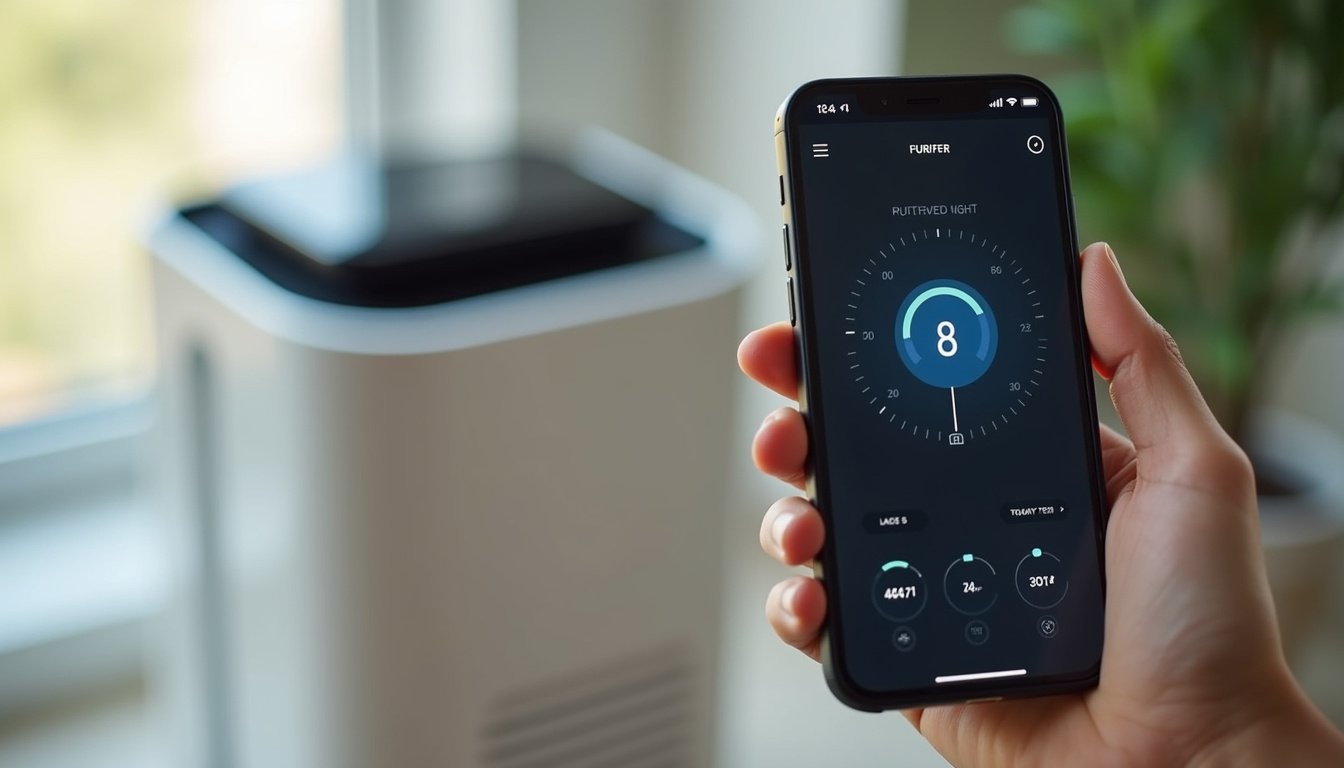
Sleep mode means different things on different units. The useful version caps the fan at a low speed, switches off or heavily dims the display and air quality light, and silences button beeps. A weaker version only dims the display and leaves auto mode free to ramp the fan when the sensor spikes, which in a bedroom happens every time someone rolls over or a pet jumps up. Check the manual for what the mode actually does.
- Display off or dimmable to near-black; a glowing ring or status LED is a common reason units are unplugged.
- Fan capped at low or a fixed medium; no auto ramping during sleep hours.
- Beeps and chimes silenced.
- Timer or schedule so the unit returns to auto in the morning.
- If no true sleep mode exists, set a fixed low or medium speed manually and cover the display with a strip of tape.
Placement for a Quiet Night
Where the unit sits changes both what you hear and whether a draft reaches you. Sound falls off with distance, so a unit six to eight feet from the pillow is noticeably quieter than one on the nightstand. Hard, bare floors reflect sound; a rug under or near the unit softens it, provided the intake is not on deep pile that clogs the pre-filter. Avoid placing it against a hollow wall or on a resonant surface such as a dresser top, which can amplify a hum.
Drafts matter more than people expect. Many purifiers exhaust upward, which is ideal; those that exhaust from the front or side should be aimed away from the bed. A cool stream of air across the face at night wakes people and makes the unit feel louder than it is.
Auto Mode at Night
Auto mode is useful by day and often disruptive at night. The particle sensor responds to bedding being disturbed, a pet settling, or a window opening, and ramps the fan to a speed that wakes you. Some units cap auto’s maximum in sleep mode; others do not. The reliable approach is a fixed low or medium overnight and auto during the day, using a schedule if the unit has one. A fixed medium on a correctly sized unit cleans the room steadily without surprises.
Sensors also read falsely low once their inlet is dusty, which makes auto run on low all the time; a monthly wipe with a dry swab keeps daytime auto honest. None of this affects a fixed speed overnight.
Compact Versus Mid-Size for the Bedroom
Compact units are tempting for bedrooms because they take little space, but they are often the loud choice, because they reach their rated CADR only at high speed through a small filter. A mid-size unit sized one step above the room sits a little larger in the corner and runs on low or medium all night. The trade is a few inches of floor space for several decibels and a smoother tone.
| Choice | Noise at the room’s CADR target | Filter life | Footprint | Verdict for sleep |
|---|---|---|---|---|
| Compact unit sized exactly to the room | High speed needed; loud and often tonal | Loads fast at high speed | Small | Poor |
| Compact unit for a very small room under 100 sq ft | Low or medium suffices | Normal | Small | Good |
| Mid-size unit one step up | Low or medium suffices; smooth | Longer; less air per unit of cleaning | Medium | Best |
| Large unit several steps up | Lowest speed; near silent | Longest | Large | Good, if space allows |
Filters, Maintenance and Creeping Noise
A quiet purifier gets louder as its filter loads. Restricted airflow makes the fan work harder and raises its pitch, and a clogged pre-filter can add a whistle. If a unit that was quiet becomes noticeable at the same setting, inspect the pre-filter and HEPA stage before assuming the fan is failing. Clean the pre-filter every two to four weeks and replace the HEPA stage on the maker’s schedule, typically 6 to 12 months.
A new rattle or tick usually means a filter not fully seated, a loose cover or something small drawn into the intake. Unplug, reseat everything and check the fan area with a flashlight. Grinding or squealing points to the motor; stop using the unit and contact the maker.
If You Like White Noise
Some sleepers want a purifier to double as a white noise machine, and a smooth fan on medium does that well. If so, choose by tone rather than by the lowest decibel figure, and place the unit where its sound fills the room evenly rather than beside one ear. Avoid units whose medium speed has a tonal component, which becomes irritating rather than soothing over hours.
For light sleepers who want silence, the strategy reverses: size up two steps, run on the lowest speed with the display off, and place the unit across the room.
How to Choose a Quiet Bedroom Purifier in 7 Steps
- Measure the bedroom and take two-thirds of the floor area as the dust CADR target; add a quarter for high ceilings.
- Shortlist true HEPA units rated for a room one size larger, so the target is met on low or medium.
- Find the published noise figure for that speed; aim for the upper 20s to low 30s decibel range.
- Check that sleep mode caps fan speed, dims or switches off every light and silences beeps.
- Prefer upward-blowing outlets and larger fans for a smoother tone; skip ionizer features.
- Plan placement six to eight feet from the pillow, off deep carpet, away from hollow walls.
- Run a fixed low or medium overnight and auto by day; clean the pre-filter every two to four weeks to keep it quiet.
Do and Do Not
Do
- Size one step up for quiet operation.
- Compare the medium-speed noise figure.
- Use a fixed speed at night, auto by day.
- Dim or cover the display.
- Keep filters clean so the fan stays quiet.
Do not
- Do not buy a compact unit that needs high to meet the target.
- Do not trust the lowest decibel figure on the box.
- Do not place it on the nightstand blowing at your face.
- Do not run ionizers overnight.
- Do not ignore a new rattle or whine; reseat filters or contact the maker.
Who Should Skip This
If your bedroom is under about 100 square feet, you can skip the mid-size category; a quality compact true HEPA unit will meet the CADR target on low or medium and be quiet enough. Check its per-speed noise figure and sleep mode and place it across the room.
If you already own a purifier that is too loud at the speed the room needs, skip trying to fix it with schedules or placement. Move it to a smaller room where its low speed is enough, and buy a correctly sized unit for the bedroom.
Honest Limits
- Published decibel figures use different test conditions across brands; compare cautiously.
- Tone and individual sensitivity vary; a figure that suits one sleeper bothers another.
- A quiet unit that is undersized cleans slowly; quiet and effective requires sizing up, not just low speed.
- Filters load and fans get louder over time; maintenance is part of staying quiet.
- A purifier cleans only the bedroom with the door closed; the rest of the house is a separate question.
- Sleep improvements from cleaner air vary by person and are not a medical claim.
When to See a Professional
See a doctor if sleep problems persist regardless of the bedroom environment, or an allergist if night-time congestion or asthma symptoms are the reason you want a bedroom purifier; the unit is a supporting measure and nothing on this page is medical advice.
Contact the maker, not a home repair, for a fan that grinds, squeals or runs hot, or for any burning smell; stop using the unit until resolved. An electrician should check any outlet that is warm or loose beside the bed.
Frequently Asked Questions
What is the quietest type of air purifier for a bedroom?
A true HEPA unit sized one step larger than the room, so it meets the dust CADR target of two-thirds of the floor area on low or medium speed. Larger fans moving air slowly are quieter and smoother than compact units on high. Filter-based designs with no ionizer are quiet by nature.
How many decibels is quiet enough for sleeping?
Most people sleep well beside a unit in the upper 20s to low 30s decibels, which is a soft steady fan, and nearly everyone beside one in the low 20s. Figures in the 40s are noticeable and usually switched off. Compare the figure for the speed that meets your room’s CADR, not the lowest setting.
Why is my small air purifier so loud in the bedroom?
Compact units reach their rated cleaning only at high speed through a small filter, and fan noise rises steeply with speed. A mid-size unit sized one step above the room meets the same cleaning target on low or medium, where the fan is quiet and smooth.
Should I run the purifier on auto mode at night?
Usually not. Particle sensors respond to bedding being disturbed or a pet moving and ramp the fan to a speed that wakes you. Set a fixed low or medium overnight, ideally in a sleep mode that caps speed and dims the display, and use auto during the day.
Where should I place a purifier in the bedroom for quiet?
Six to eight feet from the pillow, on a firm surface or thin rug rather than deep carpet or a resonant dresser top, away from hollow walls, with the outlet blowing upward or away from the bed. Keep the door closed so the unit works on the bedroom’s air only.
What should a good sleep mode do?
Cap the fan at a low or fixed medium speed, switch off or dim the display and air quality light to near-black, and silence beeps. A sleep mode that only dims the display while auto ramps the fan is not enough; set a fixed speed manually in that case.
Can a quiet purifier still clean the room properly?
Yes, if it is sized so that its quiet speed meets the room’s CADR target. A unit rated for a larger room delivers the needed clean air on low or medium. A compact unit run on low because high is too loud will under-clean, which is why sizing up matters.
Is an air purifier good as a white noise machine?
A smooth fan on medium works well for people who like white noise, and it cleans the air at the same time. Choose by tone rather than the lowest decibel figure, avoid units with a whine on medium, and place it where the sound fills the room evenly rather than beside one ear.
Why has my purifier gotten louder over time?
A loading filter restricts airflow and makes the fan work harder, raising its pitch; a clogged pre-filter can whistle. Clean the pre-filter and inspect the HEPA stage before suspecting the fan. A new rattle usually means an unseated filter or loose cover; grinding or squealing means contact the maker.
Are ionizers a quiet alternative to running the fan?
No. Ionizers do not remove particles from the room, they push them onto surfaces, and some emit ozone, a respiratory irritant the EPA advises against. Keep ionizer and plasma features off at night; a correctly sized HEPA unit on low is both quiet and effective.
Bottom Line
A quiet bedroom air purifier is mostly a matter of buying the right size. A true HEPA unit rated for a room one step larger than yours meets the cleaning target on low or medium, where fans are soft and smooth, and that is the whole secret behind models people describe as silent. Check the noise figure for that speed, insist on a sleep mode that dims every light and caps the fan, and skip ionizers.
Place it six to eight feet from the pillow with the outlet aimed away, run a fixed speed at night and auto by day, and keep the pre-filter clean so it stays quiet. A purifier you never notice is the one that runs all night, and running all night is what makes bedroom air better.
Related reading: Air purifier for small rooms, Best air purifiers for bedrooms vs living rooms, Should you leave a HEPA air purifier on all the time.