Last updated:
As an Amazon Associate we earn from qualifying purchases. This does not change what we recommend. See our affiliate disclaimer.
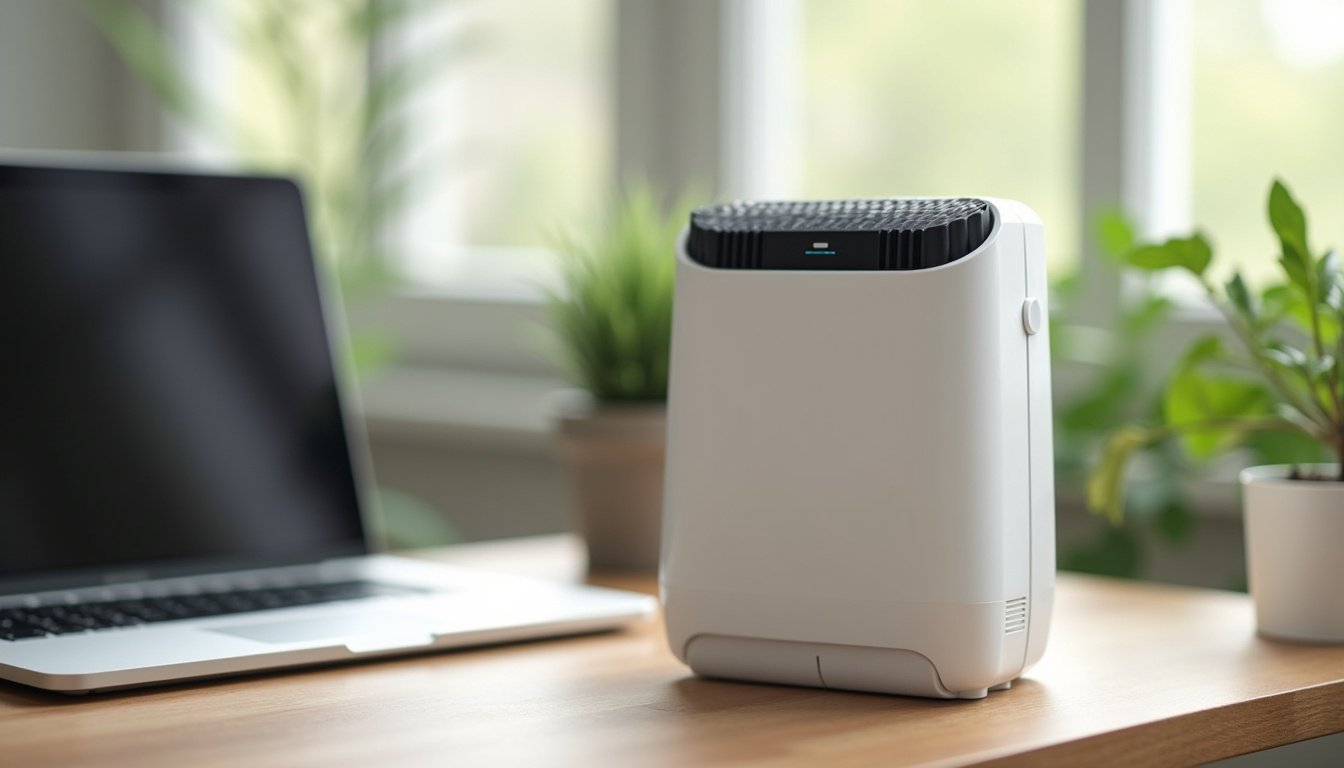
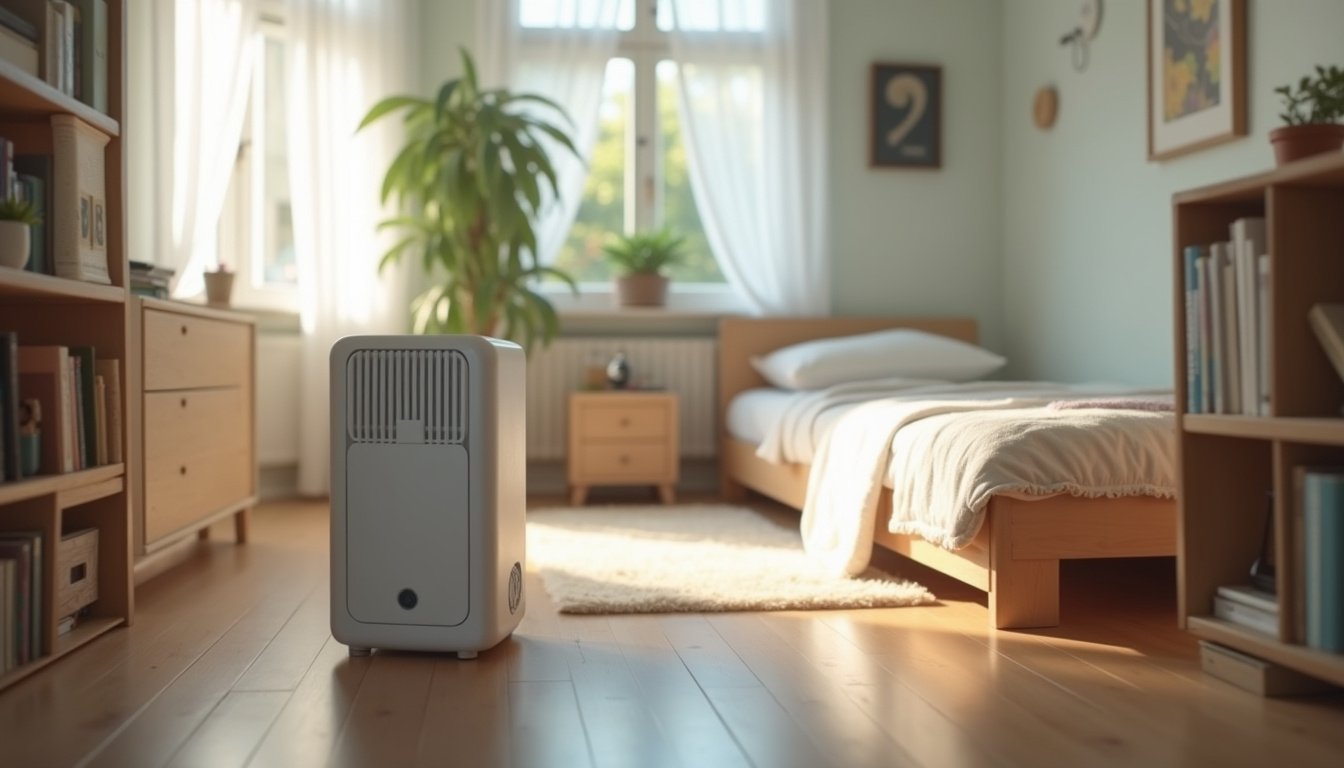
Small rooms are where air purifiers do their best work and where buyers most often overspend or underbuy. A compact bedroom, a home office, a nursery or a dorm room is a small volume of air that a modest unit can turn over many times an hour. The trick is choosing one that is quiet, correctly sized rather than merely small, and placed where its short reach actually covers the room.
For a small room, roughly 100 to 200 square feet with an 8 foot ceiling, the right air purifier is a true HEPA unit with a dust CADR of at least two-thirds of the floor area in square feet, so about 70 to 130, that reaches that figure on a low or medium speed quiet enough to leave on. AHAM’s rule of thumb delivers about 4.8 air changes per hour at that sizing. Compact units often advertise coverage figures based on one air change per hour, which is far less cleaning, so check the CADR rather than the room size on the box. Place the unit a few feet from where you sit or sleep, with a foot of clearance, off deep carpet, and keep the door closed. A real carbon stage is optional unless odors are an issue, and ozone-producing features should be absent or switched off.
In short: size a small-room purifier by CADR, not by how small it is. A unit one step larger than the minimum runs quieter and lasts longer, which matters most in the rooms where you sleep and work.
The EPA’s guide to air cleaners in the home advises choosing a unit by CADR relative to room size and notes that portable cleaners are designed for a single room, which is exactly the small-room case. AHAM’s Verifide program publishes the dust, pollen and smoke CADR figures that make the sizing simple.
Everything below is research-based, drawn from EPA and AHAM guidance and maker specifications. We have not tested the units in the comparison table and quote no prices or ratings, only published room ratings, filter stages and noise figures.
A compact unit is the right call if
- The room is under about 200 square feet with a door that closes
- It is a bedroom, office or nursery where quiet matters
- You will run it continuously on low or medium
- Dust, pollen, dander or smoke are the concern
Step up a size or rethink if
- The room opens onto a larger space or the door stays open
- Ceilings are over 9 feet or the room is oddly long
- You want odor removal, which needs more carbon than compact units carry
- The compact unit only meets the CADR target on its loudest speed
Key Takeaways
- Size by CADR: at least two-thirds of the floor area in square feet, so about 70 to 130 for rooms of 100 to 200 square feet.
- Coverage numbers on compact units often assume one air change per hour; CADR is the honest figure.
- Buy one step larger than the minimum so the target is met on a quiet speed.
- Place the unit a few feet from the bed or desk, with a foot of clearance, off deep carpet, door closed.
- Noise on the speed you will use decides whether the unit stays on; compare published figures.
- Compact units carry thin carbon stages; do not expect odor removal.
- Skip ionizer-only and ozone-producing designs; true HEPA does the work.
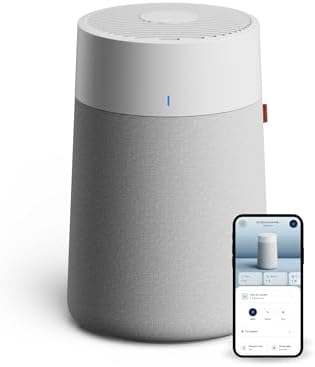
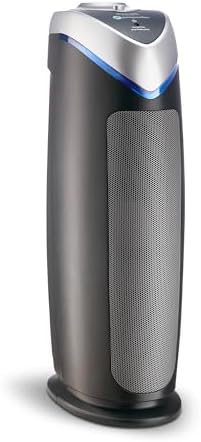
Compact HEPA Purifiers for Small Rooms to Compare
These widely reviewed small-room units pair true HEPA with carbon in compact housings suited to bedrooms, offices and nurseries. Compare the maker-listed CADR and room size against your floor area and check the noise figure on the speed you plan to run.




How This Guide Sizes Small Rooms
We applied AHAM’s CADR rule to typical small-room dimensions, looked at how compact purifiers publish their coverage and noise figures, and worked through placement in tight spaces. Product details in the table come from maker specifications.
A small room forgives less than a large one in one respect: you are close to the unit. Noise, airflow direction and a glowing display matter more at three feet than at twelve, so this guide weighs them heavily.
What Counts as a Small Room
For purifier purposes a small room is one a compact unit can serve on a quiet speed: typically 100 to 200 square feet with an 8 foot ceiling, such as a 10 by 12 bedroom, a 9 by 11 office or an 11 by 13 nursery. Below 100 square feet, almost any true HEPA unit is more than enough. Above 200, or with high ceilings, you are into mid-size territory and compact units begin to struggle.
| Room | Dimensions | Floor area | Minimum dust CADR | Comfortable target on medium |
|---|---|---|---|---|
| Dorm or box room | 9 by 10 ft | 90 sq ft | About 60 | 80 to 100 |
| Small bedroom | 10 by 12 ft | 120 sq ft | About 80 | 100 to 120 |
| Home office | 9 by 11 ft | 99 sq ft | About 66 | 85 to 100 |
| Nursery | 11 by 13 ft | 143 sq ft | About 95 | 120 to 150 |
| Larger small bedroom | 12 by 15 ft | 180 sq ft | About 120 | 150 or more |
| Any of the above, 10 ft ceiling | Same footprint | Same | Add about a quarter | Step up one size |
The door matters as much as the dimensions. A small bedroom with the door open at night is part of a hallway and whatever rooms join it; a compact unit cannot keep up with that. Close the door and the same unit does its job.
Reading Coverage Claims on Compact Units
Compact purifiers often list a room size that sounds generous for their physical size. Many of those figures assume one air change per hour, which is a slow clean and about a fifth of what AHAM’s rule delivers. Some list two figures, a smaller one at several air changes and a larger one at one. The CADR, if published, settles it: divide the floor area by two-thirds and compare, or multiply the dust CADR by 1.5 to get the room size the unit truly handles at AHAM’s rate.
Worked example: a compact unit lists coverage for 300 square feet and a dust CADR of 80. Eighty times 1.5 is 120 square feet, so that is the room it cleans at about 4.8 air changes an hour. In a 120 square foot bedroom it is well matched; in the 300 square foot room on the box it would provide roughly one air change an hour and little noticeable effect.
Noise Matters More Up Close
In a small room the purifier is within a few feet of your pillow or your desk, so its sound is part of the room. Makers publish noise figures by speed; the number to compare is the speed that meets your CADR target, which for a well-sized compact unit should be low or medium. A unit that only reaches the target on high will be run on low and under-deliver, or run on high and be switched off.
| Speed | Typical compact unit noise | Share of rated CADR | Fit for a small bedroom |
|---|---|---|---|
| Sleep or low | Whisper, near the floor of hearing | A third to a half | Good if the unit is sized a step up |
| Medium | Soft, steady fan | Most of rated CADR | Good for most people |
| High | Noticeable, like a desk fan | Full rated CADR | For an hour before bed, not overnight |
| Auto | Varies | Follows the sensor | Fine if the sensor does not spike at night |
Display brightness is the other up-close issue. A bright air quality ring or status light in a dark bedroom is a common reason compact units get unplugged. Look for a sleep mode that dims or switches off the display, or a model with a plain indicator you can cover.
Placement in a Tight Space
Small rooms leave few options, and the usual mistakes are placing the unit behind a door, under a desk, inside a shelf or against a curtain. The intake needs a foot of clear space, and the outlet should have an open path into the room. Most compact units draw air from the sides or base and exhaust upward, which suits a nightstand, a low stool or the floor beside the bed.
- Put it a few feet from where you breathe most: beside the bed, within reach of the desk, near the crib but out of reach of small hands and cords.
- Keep it off deep carpet if the intake is at the base; a hard floor or a low stand keeps fiber out of the pre-filter.
- Avoid corners boxed in by furniture; air cannot circulate back to the intake.
- Keep it away from humidifier mist, radiators and direct sun, which affect sensors and filters.
- Aim the outlet away from the sleeper if the unit blows sideways; upward exhaust avoids a draft.
- Close the door at night and during work hours so the unit serves the room, not the hallway.
Nurseries and Children’s Rooms
A nursery is a small room where quiet, safety and run time all matter. Choose a unit that meets the CADR target on its sleep or low setting, since it will run all night near a sleeping infant. Place it out of reach, with the cord routed so it cannot be pulled, and confirm the unit is stable; a tall tower on carpet can be tipped by a toddler, so a low, wide unit or a wall-side placement is safer. Dim or cover the display.
Skip ionizers, UV and any ozone-producing feature; the EPA advises against ozone, and small lungs in a small room are the last place for it. Filter-based true HEPA is the whole requirement. A carbon stage is optional; new furniture and paint off-gas VOCs, but ventilation and airing items out before they enter the room do more than a compact carbon pad.
Home Offices and Desks
An office is a small room with its own particle sources: laser printers emit fine particles and some VOCs, paper sheds dust, and a door that stays closed all day lets levels build. A compact true HEPA unit on the floor near the desk, sized by the two-thirds rule, handles the particles, and running it on medium during work hours and low otherwise keeps the room steady. Place it away from the printer’s exhaust rather than next to it, so the fan draws room air rather than a concentrated plume.
Noise again decides. Choose a unit whose medium speed does not intrude on calls, and consider the position of the outlet so papers do not flutter.
Carbon and Odors in Compact Units
Most compact purifiers include a carbon layer, usually a thin coated sheet bonded to the HEPA. It takes the edge off faint smells for a few weeks and then saturates. If the small room has a real odor source, a litter box, a smoker next door, a damp closet, a compact unit will disappoint on smell even while it handles particles well. Odor removal needs carbon by the pound, which means a mid-size unit, or fixing the source: moisture control for musty closets, a cleaner litter routine, sealing gaps on a shared wall.
For a plain bedroom or office with no odor problem, the thin carbon layer is irrelevant and the combined filter is convenient. Just do not pay extra for odor claims on a compact unit.
Filters, Cost and Run Time
Compact units usually use a single combined cartridge, pre-filter, HEPA and carbon in one cylinder or panel, replaced every six to eight months per the maker. The convenience is real; the cost is that the HEPA layer is replaced whenever the carbon gives out. Some have a removable outer pre-filter mesh that can be vacuumed, which extends cartridge life. Check replacement availability and buy a spare.
| Compact unit cost line | Typical pattern | Keep it low |
|---|---|---|
| Combined cartridge | Every 6 to 8 months per maker | Vacuum the outer mesh monthly; run on medium |
| Electricity | A few watts on low, 20 to 40 on high | Size a step up so low or medium is enough |
| Spare cartridge | Buy one ahead | Avoid running a loaded filter while waiting |
| Noise-driven shutoffs | The hidden cost | A quiet unit that stays on beats a cheap one that is switched off |
Electricity is modest. Compact units draw a few watts on low and perhaps 20 to 40 on high. Running one continuously on medium costs little, and continuous operation is what makes a small room consistently clean; particles return within an hour of switching off. In a well-sized small room the unit should rarely need high.
When a Compact Unit Is the Wrong Choice
Compact units fail predictably in four situations: a room that opens onto a larger space, a ceiling well above 8 feet, a real odor problem, and a smoke-prone region where the unit must clear a heavy load fast. In each the fix is a mid-size unit with more CADR and more carbon, even if the room’s footprint is small. A small room with a loft ceiling or an open doorway is not a small volume of air.
The reverse mistake also happens: buying a large unit for a tiny room. It works, and it runs on its quietest speed, but it takes floor space, costs more to filter and may blow more air than a small room wants. Match the CADR to the room with a little headroom and stop there.
How to Choose a Small-Room Purifier in 6 Steps
- Measure the room and multiply length by width; take two-thirds of that as the minimum dust CADR, more for high ceilings.
- Check the unit’s published CADR, not its coverage claim; multiply dust CADR by 1.5 for the honest room size.
- Shortlist true HEPA or H13 units with a sealed filter housing and no ozone-producing features.
- Pick one whose low or medium speed meets the CADR target, and compare the noise figure at that speed.
- Confirm a sleep mode or dimmable display, a vacuumable pre-filter if possible, and available replacement cartridges.
- Place it a few feet from the bed or desk with a foot of clearance, off deep carpet, door closed, and run it continuously.
Do and Do Not
Do
- Size by CADR with a step of headroom.
- Run it continuously on a quiet speed.
- Close the door.
- Dim or cover the display at night.
- Vacuum the pre-filter mesh monthly.
Do not
- Do not trust coverage figures based on one air change an hour.
- Do not accept HEPA-type media for a bedroom or nursery.
- Do not box the unit in behind a door or in a shelf.
- Do not expect odor removal from a compact carbon layer.
- Do not use ionizers or ozone features, especially in a nursery.
Who Should Skip This
If the small room opens onto a living area through an archway or a door that is always open, skip the compact unit and size for the combined space, or close the door. A compact unit cannot clean a room that is really part of a bigger one.
If the room’s problem is a smell, a musty closet or a smoker next door, a compact unit is the wrong tool. Address the source, fix moisture, seal gaps, and if a purifier is still wanted, choose a mid-size unit with carbon by the pound.
Honest Limits
- A compact unit cleans the room it is in while running; an open door defeats it.
- Thin carbon layers do little for odors beyond a few weeks.
- Coverage figures vary in basis; only CADR is comparable across brands.
- Combined cartridges replace the HEPA layer whenever the carbon saturates.
- Compact units cannot keep up with heavy smoke or a strong continuous source.
- No purifier addresses humidity, radon or gas appliances, which small basements and bathrooms sometimes have.
When to See a Professional
See a doctor or allergist if symptoms in a bedroom or nursery persist with a correctly sized, maintained purifier; the trigger may be in bedding, humidity or something that is not airborne. Nothing on this page is medical advice.
Call a mold professional for damp closets or walls with growth over about 10 square feet, as the EPA suggests, and an electrician for any outlet that is warm or loose near a nursery. Stop using and contact the maker for any purifier that smells of burning or sparks.
Frequently Asked Questions
What size air purifier do I need for a small room?
Use AHAM’s rule: a dust CADR of at least two-thirds of the floor area in square feet for 8 foot ceilings. A 10 by 12 foot bedroom, 120 square feet, needs about 80. Choose a unit that reaches that on low or medium so it stays quiet, and raise the target for high ceilings.
Can I trust the room size on a compact purifier’s box?
Cautiously. Many compact units state coverage based on one air change per hour, far less cleaning than AHAM’s rule. Multiply the published dust CADR by 1.5 to get the room size the unit handles at about 4.8 air changes an hour, and size from that.
Is a small air purifier enough for a bedroom?
Yes, if the bedroom is around 100 to 200 square feet, the door is closed at night and the unit’s dust CADR meets two-thirds of the floor area on a quiet speed. Choose true HEPA, place it a few feet from the bed with clearance, and run it continuously.
Where should I put a purifier in a small room?
A few feet from where you sleep or sit, on a nightstand, low stool or hard floor with a foot of clearance around the intake and an open path for the exhaust. Avoid behind doors, under desks, inside shelves and on deep carpet, and keep the door closed.
Are compact air purifiers loud?
On high, most are as loud as a desk fan, which is why sizing matters. A unit that meets the room’s CADR target on low or medium runs quietly enough for sleep and work. Compare published noise figures at the speed you will actually use, not the quietest setting.
Do small purifiers remove odors?
Not well. Most compact units carry a thin carbon layer bonded to the HEPA filter that saturates within weeks. For particles they work; for a real odor source you need carbon by the pound in a mid-size unit, or better, fixing the source and ventilating.
Is a compact purifier safe in a nursery?
A filter-based true HEPA unit is, placed out of reach with the cord secured, stable against tipping, display dimmed and run on its quiet setting. Skip ionizers, UV and any ozone-producing feature; the EPA advises against ozone, and a small room concentrates it.
How often do I replace the filter in a compact purifier?
Most use a combined cartridge replaced every six to eight months per the maker, sooner with pets, dust or smoke. Vacuum any removable pre-filter mesh monthly to extend it, inspect the pleats every couple of months, and keep a spare on hand.
Should I buy a bigger purifier than the room needs?
One step up is the sweet spot: it meets the CADR target on a quieter speed and its filter loads more slowly. A much larger unit works but costs more to run and filter and may move more air than a small room wants. Match CADR with a little headroom.
Can one compact purifier cover a small bedroom and the hallway?
No. A portable unit cleans the room it is in, and an open door turns a small bedroom into part of a larger space the unit cannot handle. Close the door for the compact unit to work, or size a unit for the whole connected area.
Bottom Line
A small room is the easiest space for an air purifier to clean well, provided the unit is sized by CADR rather than by its own footprint. Take two-thirds of the floor area as the minimum, buy one step up so the target is met on a quiet speed, insist on true HEPA, and put it a few feet from the bed or desk with clearance and the door closed.
Ignore coverage claims built on one air change an hour, do not expect a compact carbon layer to fix smells, dim the display, keep the pre-filter clean and run it continuously. Done that way, a compact unit turns a bedroom, office or nursery into the cleanest air in the house.
Related reading: Best air purifiers for bedrooms vs living rooms, How many air purifiers do I need, Best air purifier under 100.