Last updated:
Disclosure: As an Amazon Associate we earn from qualifying purchases. This does not change what we recommend. See our affiliate disclaimer.
Good office air quality depends on ventilation, equipment maintenance, controlled sources and quick response to complaints. Employers and building managers are usually responsible for ventilation and maintenance, while occupants can help by reporting issues and following policies. Local regulations and building standards apply, so check requirements for your area.
This guide gives practical, non-legal guidelines for office premises: what to maintain, what to avoid and how air purifiers can supplement, but not replace, proper ventilation. We have not tested these products ourselves. Nothing here is medical advice or legal advice.
Core priorities
- Adequate ventilation
- HVAC filter and equipment maintenance
- Moisture control
Supporting measures
- Source control
- Clear complaint process
- Supplemental purifiers
Key Takeaways
- Ventilation and maintenance come first
- Control moisture and sources
- Have a complaint process
- Use purifiers as a supplement
A Simple Office Air Audit
Walk through the premises and note stuffy areas, odors, damp spots and visible dust. Check that vents are clear, filters are current and exhaust fans work. Review cleaning product use and equipment placement. Check records of maintenance and any complaints.
Use the findings to set priorities, and ask professionals for HVAC or moisture assessment where needed.
Open-Plan Offices
Open spaces share air, so one source can affect many people. Ensure ventilation covers the whole floor, avoid dead zones and place purifiers where air movement is poor.
Small and Home Offices
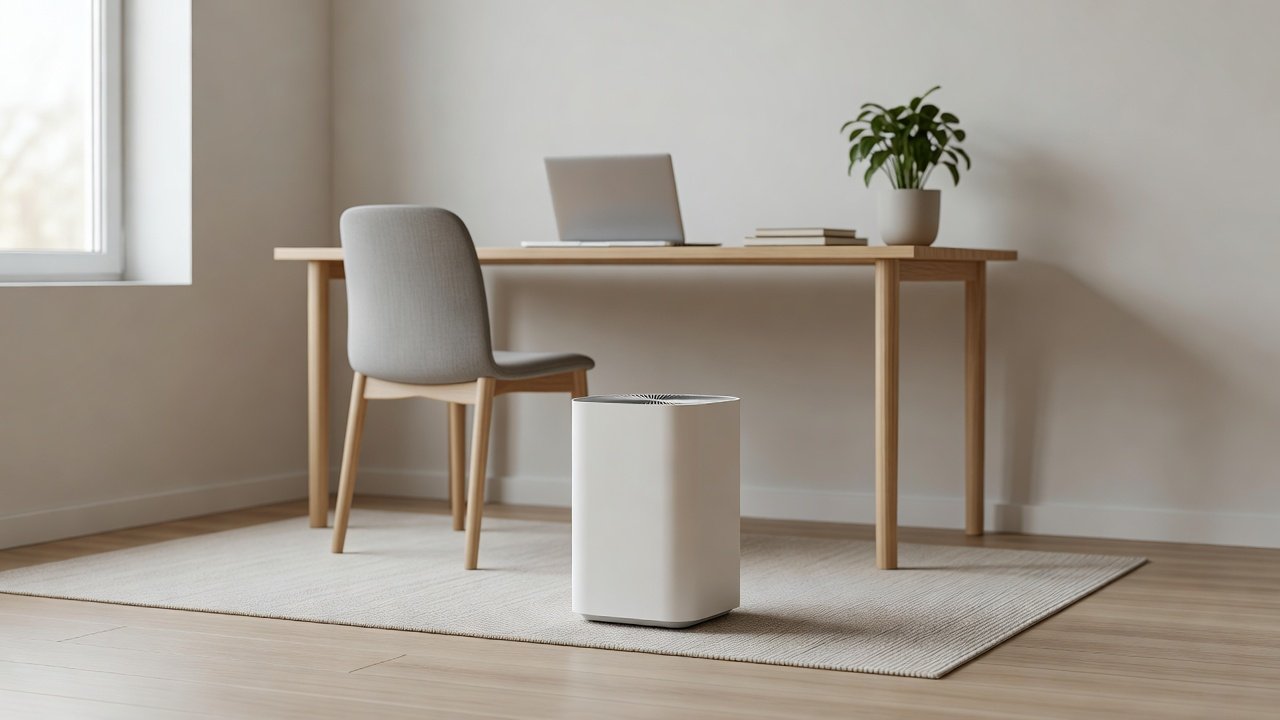
In a small office, open windows when air is good, use a purifier sized for the room and keep humidity balanced. Place the unit away from your face with clearance.
Meeting Rooms
Meeting rooms fill with people and carbon dioxide quickly. Ensure ventilation supply, leave doors open between meetings and avoid overcrowding.
Kitchens and Break Rooms
Use exhaust fans, clean spills and manage food waste promptly to reduce odors and pests.
Seasonal Checks
Adjust ventilation for heating and cooling seasons, check humidity and plan for smoke or pollen events by checking local air quality.
When to Bring in Professionals
Call HVAC technicians, industrial hygienists or occupational health professionals for persistent problems, high complaints, suspected contaminants or compliance questions.
Choosing a Purifier for an Office Room
Measure the room and pick a CADR of about two thirds of the floor area for 8 foot ceilings, with margin for quiet operation. Choose true HEPA and check noise at working speeds, since offices are sensitive to distraction. Place units with clearance away from vents and doors where possible.
Plan for filter replacement and track dates. Check electrical and safety requirements for your building, and ask facility managers before installing equipment.
Communicating With Occupants
Explain what is being done about air quality, how to report concerns and what to expect. Clear communication reduces anxiety and builds trust. Share maintenance schedules and responses to complaints.
Where Office Guidelines Come From
Indoor air quality in workplaces is covered by a mix of occupational health rules, building codes, and ventilation standards. In many countries, employers have a general duty to provide adequate ventilation and a safe environment, and ventilation standards such as those from ASHRAE set recommended outdoor air rates per person and per square metre. Guidance from bodies such as OSHA and national health agencies covers common issues like carbon dioxide, humidity, temperature, and specific hazards. The details vary by jurisdiction, so check the rules that apply where you are.
Nothing here is legal advice; consult the relevant authority for your location.
Practical Targets Most Guidance Agrees On
- Enough outdoor air to keep carbon dioxide well below levels that cause drowsiness and complaints
- Relative humidity roughly between 30 and 50 percent
- Comfortable temperature with minimal draughts
- Low particulate levels, especially fine particles from traffic, printers, and cooking
- Control of specific sources: cleaning chemicals, printer emissions, mold, and renovation dust
- Regular maintenance of ventilation systems and filters
Measuring carbon dioxide, humidity, and particles with simple monitors shows where an office stands.
Where Purifiers Fit in an Office
Portable purifiers supplement ventilation; they do not replace outdoor air. They are useful in meeting rooms, reception areas, print rooms, and spaces with specific particle problems. Choose true HEPA units with a carbon stage, sized to deliver several air changes per hour in the room, placed with clearance away from walkways, and maintained on a logged schedule. Avoid ozone and ionizer features in occupied spaces.
Raising Issues and Keeping Records
Staff who notice stuffiness, headaches, or irritation should report it, and the response should start with ventilation checks rather than air fresheners. Keep records of filter changes, system servicing, and any measurements. Those records matter if an inspector asks or if complaints persist.
Final Word
Office air is governed by ventilation rules and standards that put outdoor air rates, humidity, temperature, and source control first, with portable purifiers as a supplement for meeting rooms and problem areas. Measure carbon dioxide, humidity, and particles to see where an office stands, and keep records.
Air Purifiers for Offices and Workrooms
These picks come from the Hostinger affiliate plugin. Specs change by model year, so confirm filter type, CADR, noise and replacement filter costs on the product page.






Ventilation
Offices need enough outdoor air for the number of people and the activities in the space. Building standards specify ventilation rates, and systems should be designed, commissioned and maintained to meet them.
Carbon dioxide readings are sometimes used as a rough ventilation indicator. Persistently high readings suggest ventilation may be inadequate.
HVAC Maintenance
Replace filters on schedule, inspect coils and drain pans, clean ducts when needed and keep outdoor air intakes clear and away from pollution sources such as exhaust and loading docks.
Keep records of maintenance and inspections.
Moisture and Mold
Fix leaks promptly, dry wet materials quickly and keep humidity under control, with many sources suggesting roughly 30 to 50 percent. Persistent moisture problems should be assessed by professionals.
Cleaning and Products
Choose low-emission cleaning products and schedule cleaning outside occupied hours where possible, with adequate ventilation. Use products according to labels and avoid mixing chemicals.
Limit use of fragrances and air fresheners in shared spaces.
Equipment and Layout
Place printers, copiers and other equipment that can emit particles or fumes in ventilated areas. Avoid blocking vents and returns with furniture and storage.
Smoking policies should keep smoke away from air intakes and entrances.
Complaint Handling
Have a simple process to report air quality concerns, record details and respond. Investigate patterns, such as location and time.
Keep occupants informed.
Renovation and New Furnishings
Plan renovations to limit exposure, use low-emission materials and ventilate during and after work.
Consider scheduling noisy or fume-producing work outside occupied hours.
Occupant Habits
Encourage occupants to avoid strong fragrances, keep food waste sealed and report leaks and odors.
Respect smoking and vaping rules.
Purifier Placement
Place purifiers in meeting rooms, small offices or open areas with clearance, away from workers’ direct airflow where possible.
Check noise and replace filters on schedule.
Sensitive Occupants
Some people are more sensitive to air quality. Offer reasonable adjustments, such as seating changes, and ask occupational health professionals for advice.
Avoid assuming a purifier solves everything.
How to Choose
- CADR sized for the room
- True HEPA filtration
- Quiet operation for workspaces
- Affordable filter replacement
Do
- Match the unit’s rated coverage to your room first
- Run it consistently, not only when the air feels bad
- Leave space around the unit for airflow
- Replace filters on the maker’s schedule
Don’t
- Do not buy on looks or price alone
- Do not block the intake or exhaust
- Do not skip filter changes
- Do not expect a purifier to fix every source of pollution
Honest Limits
- This guide uses manufacturer information and public guidance from the EPA and AHAM, not our own lab tests.
- Features and room ratings change between model years, so confirm on the listing before you buy.
- A purifier is not a medical device and does not replace medical advice or treatment.
Who Should Skip This
When to See a Professional
Frequently Asked Questions
Who is responsible for office air quality?
Usually employers and building managers, subject to local rules.
Can purifiers replace ventilation?
No.
How do I know if ventilation is poor?
Stuffiness, odors and high CO2 readings can be clues.
What should I do if I have concerns?
Report them and ask for an assessment.
Bottom Line
Good office air starts with ventilation, maintenance and moisture control. Supplemental purifiers can help with airborne particles in specific rooms, but they do not replace building systems.
Related reading: sens,fan,bed
Sources: EPA, Guide to Air Cleaners in the Home; AHAM Verifide.