Last updated:
As an Amazon Associate we earn from qualifying purchases. This does not change what we recommend. See our affiliate disclaimer.
A box fan and a few furnace filters can clean a surprising amount of air for the price of the parts. That is the appeal of the box fan filter, often called a Corsi-Rosenthal box after the people who popularized it. It is also a device with real limits, and with safety rules that matter, because it is a fan running continuously with filters attached.
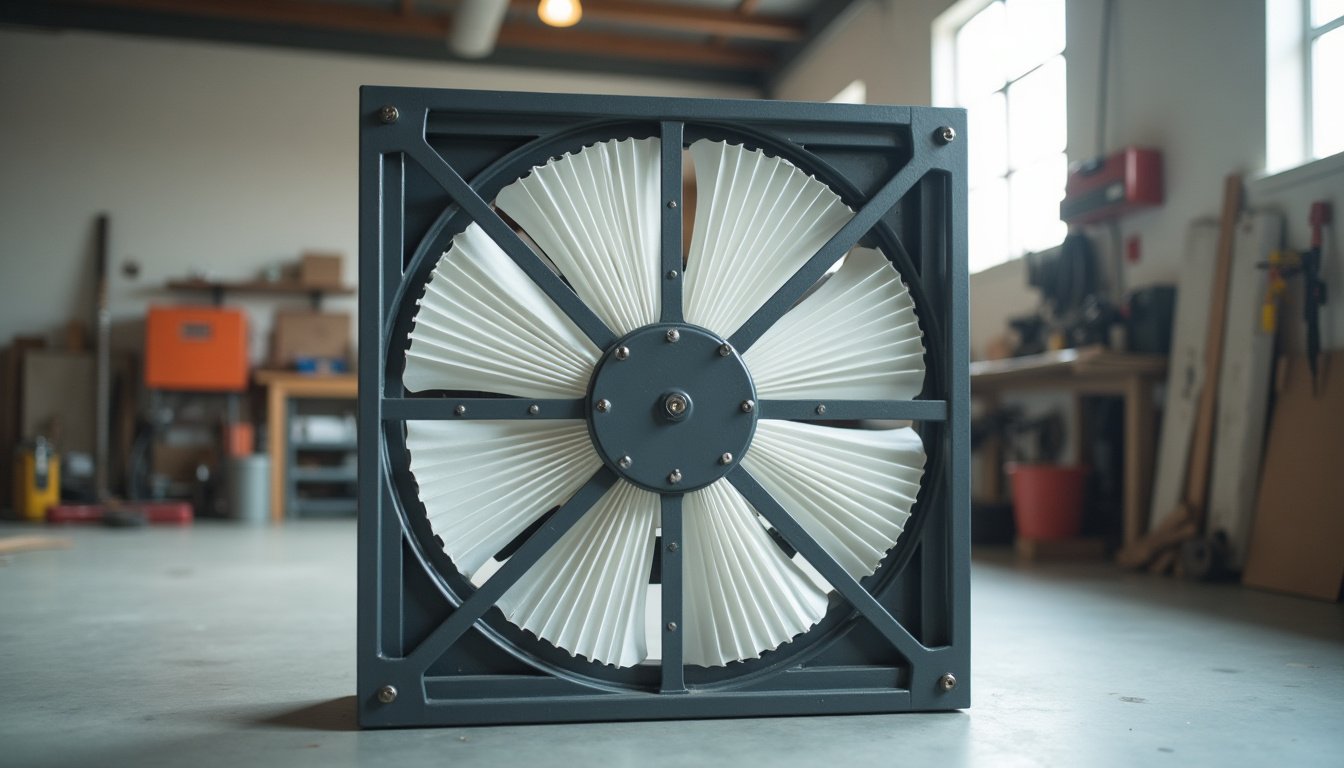
The idea is simple. Furnace filters, usually rated MERV 13, are attached to the intake side of a box fan with tape, so the fan pulls air through them. Several filters in a cube give more filter area and let the fan move more air. The EPA has published guidance on DIY air cleaners, noting that they can reduce particles, especially in wildfire smoke events, but that they are not as well tested as commercial units, can be noisy, do not remove gases or odors, and must be built safely. Use a newer fan with modern safety features, never leave it unattended, keep it away from curtains and other flammable material, do not use a damaged or old fan, and replace filters when they load. This guide covers how it works, how to build it safely, how it compares and when a real purifier is the better choice. Nothing here is medical advice.
In short: a MERV 13 box fan filter can lower fine particles cheaply; follow the safety rules, accept the noise and replace the filters.
This guide is research-based, drawn from EPA guidance on DIY air cleaners and air cleaners, CPSC fan safety information and AHAM standards. We have not tested the units in the table and quote no prices or ratings. Nothing here is medical advice.
Strengths
- Low cost for the airflow
- MERV 13 filters capture fine particles
- Easy to build and replace
- Useful in smoke events and for larger rooms
Limits
- Noisy compared with purifiers
- No odor or gas removal
- Not tested to the same standards
- Fire and safety rules apply
Key Takeaways
- A box fan with MERV 13 furnace filters can lower fine particles cheaply.
- The EPA notes DIY cleaners are less tested than commercial units and do not remove gases.
- Use a newer fan with modern safety features; do not use damaged or old fans.
- Never leave it unattended, and keep it away from flammable materials.
- Seal gaps with tape so air passes through the filters rather than around them.
- Filters load; replace them when they are dirty or airflow falls.
- A commercial HEPA purifier is quieter, sealed, rated by CADR and better suited to everyday use.
Commercial Alternatives to a DIY Box Fan Filter
If you prefer a ready-made option, these widely reviewed purifiers use true HEPA, publish AHAM-verified CADR and are designed for continuous, quiet use. Compare the maker-listed CADR with your room before choosing.






How This Guide Approaches the Question
We looked at how the box fan filter works, what the EPA says, how to build it safely and where it compares with commercial units. Product details in the table come from maker specifications.
It is a clever, cheap tool with defined limits.
How It Works
A box fan moves a lot of air. A MERV 13 furnace filter captures a large share of fine particles passing through it, though less than a true HEPA at the smallest sizes. Attached to the fan so that all the air must pass through the filter, the combination cleans the room’s air. More filter area, as in a cube of four filters with a fan on top, lets the fan work with less resistance and move more air.
| Design | Filters | Notes |
|---|---|---|
| Single filter on a fan | One | Simple; high resistance; limited airflow |
| Two filters in a V | Two | More area; better airflow |
| Corsi-Rosenthal cube | Four plus a top panel | More area; strongest airflow; most popular |
| Fan plus HEPA-type filter | One | Resistance may be too high for a box fan |
| Feature | What it means | Tip |
|---|---|---|
| MERV 13 | Captures a large share of fine particles | Good balance with a box fan |
| MERV 16 or HEPA media | Higher capture; more resistance | May overload a box fan |
| Filter area | More area, more airflow | Use a cube or V |
| Seal | No bypass around the edges | Tape every seam |
The fan matters as much as the filters. A fan with a stronger motor handles more resistance, which allows more filter area and tighter filters. Check the fan’s rating, use the highest speed that is comfortable and ensure it is rated for continuous duty if you plan to run it for hours. Place it on a stable surface, with a few inches of clearance round the intake, and avoid pushing it against a wall, which starves the airflow.
Safety Rules
A fan running for hours with filters taped to it deserves care. Use a newer fan with modern safety features such as those marked with a recognized safety certification, not an old, damaged or very cheap one. Do not leave it running unattended or while you sleep unless you are comfortable with the fan, and check it regularly. Keep it away from curtains, bedding and anything flammable. Keep the cord untangled and out of walkways. Use filters with no metal frames that could contact the fan blades, and keep fingers, pets and children away from the intake.
- Use a newer, certified fan.
- Do not run it unattended.
- Keep it clear of flammables.
- Check the cord and plug for warmth.
- Use cardboard or plastic backing that does not touch the blades.
- Unplug it for any burning smell.
Building It Well
Choose MERV 13 filters sized to the fan, 20 by 20 inches for a standard box fan. Tape the filters to the intake side with duct tape so no air can slip round the edges. For a cube, add a cardboard top and tape the seams. Keep the fan’s airflow direction in mind, so it pulls air through the filters and out the open side. Check that the arrows on the filters point toward the fan.
- Choose a newer box fan and four MERV 13 filters that match its size.
- Tape the filters into a cube or a V on the intake side.
- Cut a cardboard top and tape the seams.
- Check the arrows point toward the fan.
- Seal all gaps with tape.
- Test the airflow and check for warm cords.
Worked example: a 20-inch box fan with four 20 by 20 inch MERV 13 filters in a cube sits in a 250 square foot living room. Run on medium, it noticeably lowers the reading on a particle meter within an hour, though it is louder than a commercial purifier at a similar speed.
Limits Compared With a Commercial Purifier
A DIY filter is cheap, but it has trade-offs. It is noisier, since box fans are not designed for quiet. It has no carbon, so it does not touch odors. It has no sensor, no timer, no safety cutoffs beyond the fan’s own, and no verified CADR. Filters wear out, and the tape and cardboard degrade. It looks like what it is. For occasional use, large rooms or smoke events, it is useful; for everyday bedrooms, a commercial unit is usually the better answer.
| Feature | DIY box fan filter | Commercial HEPA purifier |
|---|---|---|
| Cost | Low | Higher |
| Noise | Louder | Quieter, especially at low speeds |
| Odors | No | Possible with carbon |
| Verified CADR | No | Yes, AHAM-verified |
| Safety design | Depends on the fan | Designed for continuous use |
| Appearance | Utility look | Designed for homes |
Where noise or odor control matter, consider a hybrid: a DIY cube in the living room for occasional use and smoke events, and a sealed commercial purifier with carbon in the bedroom. The cube moves more air for the money, and the commercial unit handles quiet, overnight use. Whatever you choose, size the airflow to the room and test it with a particle meter.
Upkeep and When to Replace
Replace filters when they are visibly dirty, usually every few months, sooner in smoke. Never wash them. Check the tape and cardboard, and re-seal if gaps appear. If airflow weakens or the fan strains, replace the filters. In heavy smoke, check them weekly.
How to Build and Use a DIY Box Fan Air Filter Safely in 6 Steps
- Choose a newer box fan with modern safety features and four MERV 13 filters that match its size.
- Tape the filters into a cube or V on the intake side, with the arrows pointing toward the fan, and cap the top with cardboard.
- Seal every seam with tape so air passes through the filters.
- Place it in the open, away from curtains, bedding and anything flammable, with the cord clear of walkways.
- Run it on medium and do not leave it unattended; check the plug and cord for warmth.
- Replace the filters when dirty, and unplug at once for any burning smell, grinding or heat.
Do and Do Not
Do
- Use a newer, certified fan.
- Seal gaps with tape.
- Supervise it.
- Keep it clear of flammables.
- Replace filters when dirty.
Do not
- Do not use an old or damaged fan.
- Do not leave it unattended.
- Do not use it to remove odors.
- Do not wash the filters.
- Do not ignore a burning smell.
Who Should Skip This
If you need a quiet bedroom unit, skip the DIY build and choose a commercial HEPA purifier.
If you only have an old or damaged fan, skip the build and buy a new fan or a purifier.
Honest Limits
- DIY cleaners are less tested than commercial units, and performance varies with build.
- MERV 13 filters do not match true HEPA at the smallest sizes.
- No odor or gas removal.
- We did not build or test any unit.
- Nothing here is medical advice.
When to See a Professional
Stop using the fan and replace it if it overheats, smells of burning, makes grinding noises or has a damaged cord.
For persistent air quality problems or wildfire smoke planning, an indoor air quality or HVAC professional can advise on better options.
Frequently Asked Questions
Does a box fan with a furnace filter really clean the air?
Yes, it can lower fine particles. MERV 13 filters capture a large share of them, and a cube design moves plenty of air. The EPA notes DIY cleaners are less tested than commercial units, do not remove gases and must be built safely.
Is a DIY box fan air filter safe?
It can be, with care. Use a newer fan with modern safety features, never leave it unattended, keep it away from flammables and unplug it for any burning smell. Do not use an old or damaged fan. Safety depends on the fan.
Which filters should I use on a box fan?
MERV 13 furnace filters sized to the fan, usually 20 by 20 inches. Higher ratings add resistance a box fan may not overcome. Seal the edges with tape so air goes through the filters rather than around them.
Does a box fan filter remove odors or smoke smell?
No, not meaningfully. MERV filters capture particles, not gases. It can lower smoke particles but will not remove the smell. For odors you need activated carbon, and for the source you need cleaning and ventilation.
How noisy is a DIY box fan air filter?
Louder than most commercial purifiers at similar airflow, because box fans are built for moving air, not for quiet. Medium speed is a common compromise. For bedrooms and everyday use, many people prefer a commercial purifier designed for low noise.
How often should I change the filters?
When they are visibly dirty or airflow weakens, typically every few months, and sooner in smoke. Check weekly in heavy smoke. Never wash them. Re-seal the tape and cardboard if gaps appear, and replace the whole filter set together.
Can I leave a box fan filter on overnight?
Only if you are comfortable with the fan’s condition and safety. Use a newer certified fan, keep it clear of flammables and check the plug and cord for warmth. Many people choose not to leave one unattended while they sleep.
Is a box fan filter as good as a HEPA purifier?
For fine particles per dollar it can be competitive, but it is less tested, noisier, has no carbon and no verified CADR. A true HEPA purifier is sealed, quieter and designed for continuous home use.
Should I use a HEPA filter on a box fan?
A true HEPA filter adds more resistance than a box fan usually overcomes, so airflow drops. MERV 13 filters in a cube design give a better balance of capture and airflow for a box fan.
When should I buy a commercial purifier instead?
When you need quiet, odor control, a sensor and timer, or all-night use in a bedroom, or when you cannot supervise a fan. A DIY unit suits occasional use, smoke events and larger rooms on a budget.
Bottom Line
A DIY box fan filter is a cheap way to lower fine airborne particles, and the EPA has acknowledged its value in smoke events. It is also noisier, untested to commercial standards and blind to odors and gases.
Build it with MERV 13 filters, seal the gaps, use a newer fan, keep it clear of flammables and never leave it unattended. For everyday bedrooms, a commercial HEPA purifier is usually better. Nothing here is medical advice.
Related reading: Is air purifier worth it for smoke, How to use air purifier at home, Do you need HEPA filter for air purifier.