Last updated:
As an Amazon Associate we earn from qualifying purchases. This does not change what we recommend. See our affiliate disclaimer.
Smoke is one of the strongest reasons people buy an air purifier, and one of the easiest to be disappointed by. Wildfire haze outside, a smoker in the building, a pan that set off the alarm: in each case a purifier can help, but not with everything, and not by itself.
The case for a purifier is real for the particle part of smoke. Smoke is made of very fine particles, mostly well under 2.5 microns, and a true HEPA filter is designed to capture particles in that range. A purifier of the right size, run continuously with the windows closed, can lower indoor levels of smoke particles substantially. The EPA recommends portable air cleaners as one way to reduce indoor smoke during wildfire events. The limits matter as much. A purifier does not remove carbon monoxide or other gases beyond what its carbon can adsorb, and the carbon in most units is thin. Smoke odor clings to fabrics, walls and furniture, so a purifier slows it but does not erase it. And a purifier is no substitute for source control and ventilation: stop the source, close the windows during outdoor smoke, and clean up afterwards. Nothing here is medical advice.
In short: worth it if smoke recurs and you size it properly, run it continuously and keep up filters; not a cure for gases, odors on surfaces or a continuing source.
This guide is research-based, drawn from EPA guidance on wildfire smoke and air cleaners, and AHAM standards including the smoke CADR rating. We have not tested the units in the table and quote no prices or ratings. Nothing here is medical advice.
Worth it when
- Wildfire smoke recurs where you live
- Someone smokes indoors and cannot stop
- Cooking smoke lingers in a small home
- You can size by CADR and keep filters fresh
Not enough when
- The source is still running
- Windows stay open during smoke
- You need carbon monoxide removed
- Odor in fabrics is the main complaint
Key Takeaways
- True HEPA is built to capture the fine particles that make up most of smoke.
- The EPA recommends portable air cleaners as one way to reduce indoor wildfire smoke.
- The smoke CADR rating is the best guide to size; aim for at least two thirds of the floor area.
- Purifiers do not remove carbon monoxide; use a CO alarm and fix combustion sources.
- Smoke odor clings to surfaces; a purifier slows it but does not remove it.
- Keep windows and doors closed during outdoor smoke and run the unit continuously.
- Filters load faster in smoke; check them and replace sooner than the schedule.
Purifiers With Smoke CADR and Substantial Carbon
These widely reviewed units use true HEPA with a substantial carbon stage and publish AHAM-verified smoke CADR, which suits smoke and odor use. Match the maker-listed smoke CADR to your room before choosing.






How This Guide Approaches the Question
We looked at what smoke is made of, what a purifier can and cannot remove, how to size one and what else matters. Product details in the table come from maker specifications.
The question is not whether a purifier helps with smoke, but how far, and what has to go with it.
What Smoke Is Made Of
Smoke is a mix of fine particles and gases. The particles are very small, mostly well under 2.5 microns, and they stay airborne for hours. The gases include carbon monoxide, volatile organic compounds and odor molecules. A purifier acts on these two parts differently, which is the root of both its value and its limits.
| Component | Example | Does a purifier help? |
|---|---|---|
| Fine particles | Soot, ash, tar droplets | Yes; true HEPA captures them |
| Odor molecules | Smoky smell | Partly; needs substantial carbon |
| Carbon monoxide | Combustion gas | No; use a CO alarm |
| Other gases | Volatile organic compounds | Partly, within carbon limits |
| Residue on surfaces | Film on walls and fabrics | No; clean and launder |
Wildfire Smoke
For wildfire smoke the EPA’s guidance is to keep windows and doors closed, run the air conditioner on recirculate if you have one, and use a portable air cleaner or a good filter in the HVAC system to lower indoor particles. A purifier sized for the room and run continuously on a medium or high setting can bring indoor levels well below outdoor ones. Filters load faster in smoke, so check them often and keep a spare.
- Close windows and doors; seal obvious gaps.
- Run the purifier continuously, in the room you use most.
- Choose a unit with a good smoke CADR for the room.
- Check the filter often during heavy smoke and replace sooner.
- Keep a spare filter on hand before smoke season.
- Do not use ozone-producing units.
Indoor levels also depend on how leaky the home is. A tight, newer home holds clean air in and keeps smoke out better than a draughty one, and a few minutes spent sealing obvious gaps around doors and windows helps. If you have a central system with a good filter, running the fan on recirculate can spread filtered air through the house, but a portable unit in the room you sleep and work in is the part you control directly. After the smoke clears, open the windows to flush the house and wash or replace the filter you used.
Cooking Smoke and Tobacco Smoke
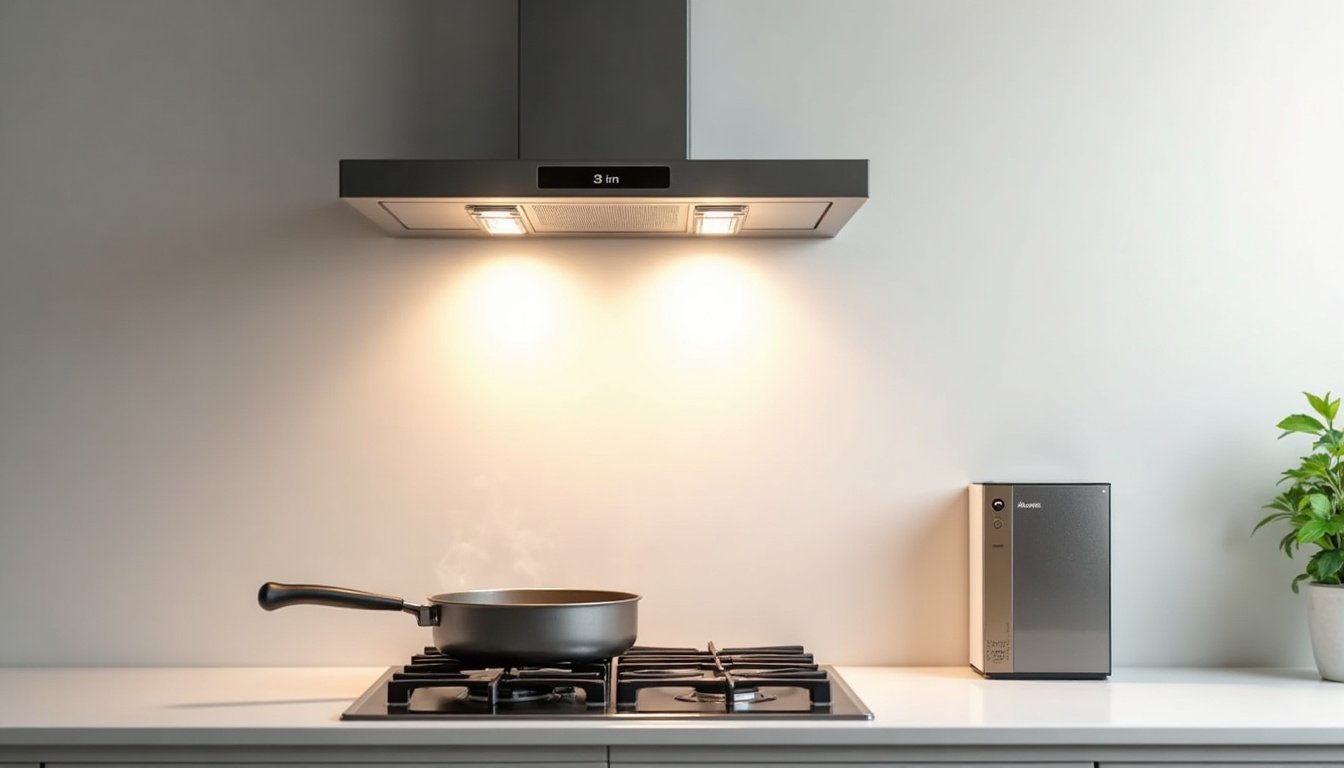
Cooking smoke is best handled at the source with a range hood vented outside and a lid on the pan, with a purifier clearing what escapes. For tobacco smoke the best answer is not to smoke indoors; a purifier lowers particles and some odor but does not make indoor smoking harmless or remove the film that settles on surfaces. Residue and odor need cleaning and laundering.
| Smoke source | First step | Purifier’s role |
|---|---|---|
| Wildfire | Close up; recirculate | Lowers indoor particles |
| Cooking | Hood vented outside; lid on pan | Clears what escapes |
| Tobacco indoors | Smoke outside | Reduces particles and some odor |
| Fireplace or wood stove | Check flue; burn dry wood | Reduces escaped particles |
| Candles and incense | Use less | Reduces particles |
Ventilation matters as much as filtration around cooking. A range hood only helps if it vents outside, and a recirculating hood with a grease filter does little for fine smoke. Turn it on before you start and leave it running for several minutes after. If your kitchen is open to the living area, close doors where you can, and place the purifier between the stove and the room you want clean rather than behind the sofa.
Sizing and Running It
Look for the smoke CADR from AHAM and aim for at least two thirds of the room’s floor area in square feet. A unit with a smoke CADR of 150 suits about 225 square feet. Run it continuously during smoke events, with doors closed. Substantial carbon helps with smoke odor, but check how much; many filters carry only a thin sheet.
| Room size (sq ft) | Minimum smoke CADR (CFM) |
|---|---|
| 100 | 67 |
| 150 | 100 |
| 200 | 133 |
| 300 | 200 |
| 400 | 267 |
Worked example: a 200 square foot bedroom during wildfire smoke needs a smoke CADR of about 133. A unit rated 150 with true HEPA and substantial carbon, run continuously on medium with the door and windows closed, brings a particle meter reading down to a fraction of its starting level within an hour or two.
Limits and Safety
A purifier does not remove carbon monoxide, so fit CO alarms and have combustion appliances serviced. Do not use an ozone-producing unit; the EPA advises against them. Do not wash a true HEPA, and do not blow it out with compressed air. Smoke odor in fabrics and walls needs washing, airing and cleaning. If anyone has health concerns about smoke, they should ask a doctor. Nothing here is medical advice.
How to Get the Most From an Air Purifier for Smoke in 6 Steps
- Deal with the source: stop indoor smoking, use a hood vented outside, and check fireplaces and flues.
- Keep windows and doors closed during outdoor smoke and use recirculate on the air conditioner.
- Choose a unit with a smoke CADR of at least two thirds of the room’s floor area and substantial carbon.
- Run it continuously on medium or high during smoke events.
- Check the filter often in smoke and replace it sooner than the schedule; keep a spare.
- Clean and launder surfaces for odor, fit a carbon monoxide alarm, and avoid ozone-producing units.
Do and Do Not
Do
- Size by smoke CADR.
- Run it continuously.
- Keep windows closed.
- Replace filters sooner in smoke.
- Fit a CO alarm.
Do not
- Do not rely on it for carbon monoxide.
- Do not wash the HEPA.
- Do not use ozone generators.
- Do not leave the source running.
- Do not expect it to remove odor from fabrics.
Who Should Skip This
If smoke is a one-off event in a well-ventilated home, skip the purifier purchase and ventilate and clean.
If you already have a mechanical purifier, skip the shopping and check its CADR, carbon and filter age.
Honest Limits
- Purifier performance depends on room size, placement and filter condition.
- Smoke CADR is maker-listed under AHAM test conditions.
- Carbon capacity varies widely and is rarely published.
- We did not test any unit.
- Nothing here is medical advice.
When to See a Professional
Call a professional for suspected carbon monoxide, with the emergency services if anyone feels unwell; fit alarms and service combustion appliances.
For smoke damage after a fire, a restoration professional can advise on cleaning; an HVAC professional can advise on better filtration in the home system.
Frequently Asked Questions
Is an air purifier worth it for smoke?
Yes for the particle part, if you size it properly, run it continuously and keep filters fresh. True HEPA captures the fine particles in smoke. It does not remove carbon monoxide or odor on surfaces, so source control and ventilation still come first.
Does an air purifier remove smoke smell?
Partly. A substantial activated carbon stage can reduce some smoke odor, but odor clings to fabrics, walls and furniture, which a purifier does not clean. Expect it to slow odor, not erase it, and wash, air and clean surfaces as well.
Does an air purifier help with wildfire smoke?
Yes. The EPA recommends portable air cleaners as one way to reduce indoor wildfire smoke. Keep windows and doors closed, run a right-sized unit continuously and check the filter often, since it loads faster in smoke.
Can an air purifier remove carbon monoxide?
No. HEPA captures particles, and carbon cannot make carbon monoxide safe. Fit carbon monoxide alarms, have combustion appliances serviced, and call the emergency services if you suspect carbon monoxide. A purifier is not a CO device.
What is smoke CADR?
It is the clean air delivery rate AHAM measures for smoke particles, in cubic feet per minute. A higher number means faster cleaning. Aim for a smoke CADR of at least two thirds of the room’s floor area in square feet.
What size purifier do I need for smoke?
Take two thirds of the room’s floor area as the minimum smoke CADR: a 200 square foot room needs about 133. Go higher for ceilings above eight feet, heavy smoke or open-plan spaces, and close doors to shrink the space.
How often should I change the filter in smoke?
Sooner than the maker’s schedule. Filters load quickly in heavy smoke, so check them weekly during an event and replace them when grey or when airflow weakens. Keep a spare on hand before smoke season. Never wash a true HEPA.
Does an air purifier help with cooking smoke?
Somewhat. A range hood vented outside and a lid on the pan do most of the work. A purifier near the kitchen clears what escapes and lowers particles. Carbon helps a little with odor, but it will not remove grease from surfaces.
Does a purifier make indoor smoking safe?
No. It lowers airborne particles and some odor, but does not remove the residue that settles on surfaces or make indoor smoking harmless. The best step is not to smoke indoors. Ask a doctor about health concerns. Nothing here is medical advice.
Are ozone air purifiers good for smoke?
No. The EPA advises against air cleaners that intentionally produce ozone, and they are not effective at safe levels. Choose a mechanical purifier with true HEPA and substantial carbon, and switch off any ionizer mode.
Bottom Line
An air purifier is worth it for smoke when the smoke recurs and you treat the purifier as one part of a plan. True HEPA captures the fine particles, a good smoke CADR sets the pace, and carbon helps a little with odor.
It does not remove carbon monoxide, odor on surfaces or a continuing source. Close windows during outdoor smoke, run the unit continuously, replace filters sooner and clean what the smoke touched. Nothing here is medical advice.
Related reading: Best air purifier for wildfire smoke, Air purifier smells like burning, Air purifier ozone concerns.