Last updated:
Disclosure: As an Amazon Associate we earn from qualifying purchases. This does not change what we recommend. See our affiliate disclaimer.
Used air purifier filters are full of the dust, hair and particles they captured, so handling them carefully keeps that material out of your air. Most can be disposed of with household waste once sealed in a bag, but local rules vary, and some makers offer recycling or take-back programs. A few simple steps make disposal clean and safe.
We have not tested these products ourselves, so follow your manual and your local waste guidance. If a filter was used after a fire, mold event or other special situation, check local advice for disposal.
Do
- Unplug first
- Bag the filter promptly
- Wash your hands
Do not
- Shake it indoors
- Burn it
- Wash and reuse a HEPA filter
Key Takeaways
- Unplug, bag the filter and seal it
- Follow local waste rules; check for take-back programs
- Do not shake it indoors or burn it
- Wash your hands and clean the slot after replacement
A Clean Filter Change, Step by Step
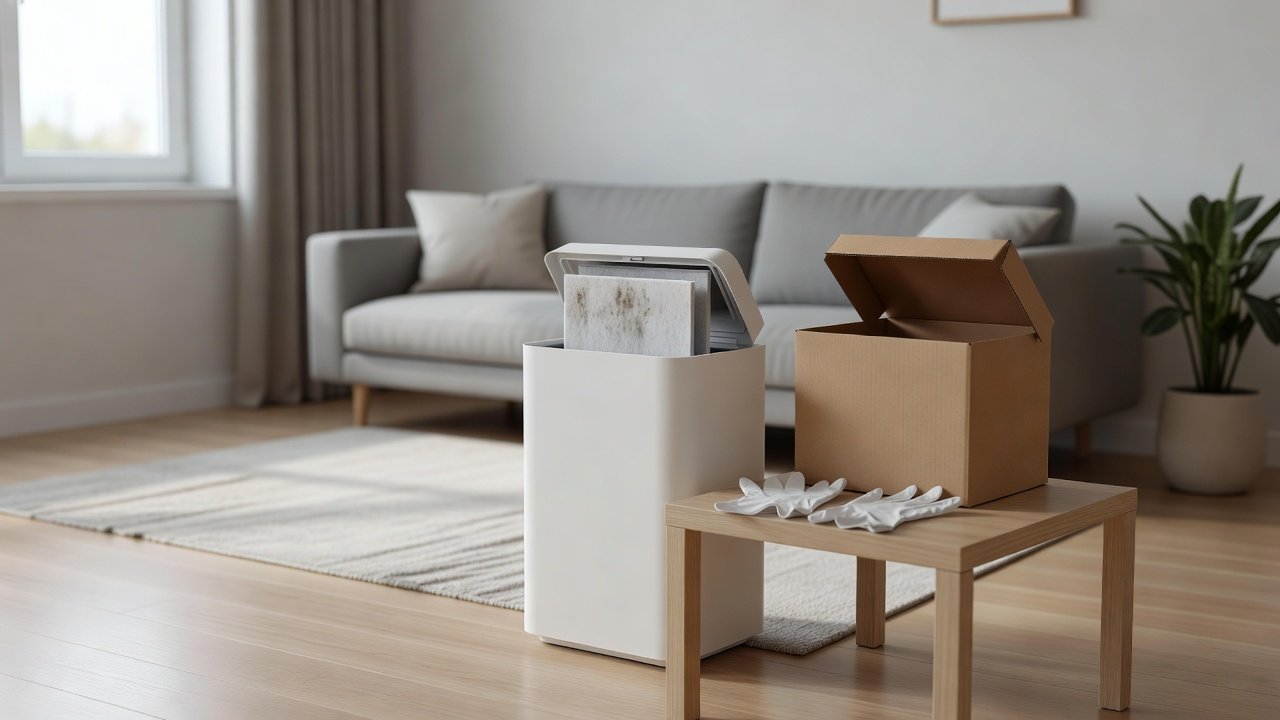
Gather a replacement filter, a bag, gloves and a cloth. Unplug the unit. Open the cover and lift out the old filter slowly, holding it level. Place it in the bag and seal it right away. Vacuum the slot with a soft brush attachment and wipe the housing with a barely damp cloth, then dry. Unwrap the new filter, remove plastic and install it. Close the cover, reset the indicator and plug in the unit. Write the date in your log. Wash your hands.
Disposal for Carbon Filters
Carbon filters contain granules that can spill. Handle them gently and bag them promptly. Avoid crushing them. Carbon is not usually hazardous, but it can hold the odors of what it captured, so double-bag if the smell is strong. Check local rules. Some carbon filters can be reused in other ways, but do not reuse them in the purifier.
Filter Frames, Pre-Filters and Parts
The plastic frame, foam gasket and washable pre-filter may be handled differently. Clean and reuse washable pre-filters as the manual allows. Dispose of damaged foam. Check whether frames are recyclable. Keep parts separated if a recycling program asks.
What If a Filter Was Damp or Moldy
Seal a damp or moldy filter in a bag right away, wear gloves and a mask and do not shake it. Dispose of it and fix the moisture source. Clean the housing with a barely damp cloth and dry. Replace the filter with a new one. Do not try to wash or bleach it.
Environmental and Practical Notes
Filters are a recurring waste item, so choose a unit with filters that last and that you can buy locally. Washable pre-filters reduce waste. Some makers sell refills or offer recycling. Plan replacements so old filters do not pile up. Store used filters in a bag only until disposal and do not leave them where children or pets can reach them.
Common Mistakes When Changing Filters
Mistakes include shaking the filter indoors, leaving the old filter unbagged, not wearing a mask when sensitive, installing the new filter backward, forgetting to remove plastic wrap, not resetting the indicator and not cleaning the slot. Slow down, follow the manual and take a photo of the orientation before removing the old filter.
Questions to Ask the Manufacturer
Ask whether the maker has a take-back program, what the filter frame is made of, whether the carbon is safe for household waste and whether there is any special handling for used filters. Check the support page or contact them. Keep a note of the answers.
Handling Used Filters
- Unplug the unit and open the compartment over a bin bag
- Lift the filter out by its frame and bag it immediately
- Seal the bag before carrying it through the house
- Vacuum the compartment and wash your hands
- Dispose of the sealed bag in general household waste unless local rules say otherwise
Filters from smoky or renovation-dusty rooms deserve extra care; the captured dust is fine and easily released.
Recycling Reality
Most filters are mixed materials and are not recyclable through household schemes. A few manufacturers run take-back programs; check their websites. Cardboard-framed filters can occasionally have the frame separated and recycled, though the effort rarely matches the benefit. Reduce waste instead by using washable pre-filters, keeping sources down so filters last, and replacing on condition rather than on a timer. Whole units go to electrical waste collection, never household bins.
Air Purifiers With Easy-to-Replace Filters
These picks come from the Hostinger affiliate plugin. Specs change by model year, so confirm filter type, CADR and replacement costs on the product page before you buy.






Prepare to Remove the Filter
Unplug the unit and have a sealable bag ready, such as a heavy-duty trash bag or a zip bag. Wear gloves and a mask if the filter is very dusty or you are sensitive to dust. Work in a spot where dust will not blow around.
Remove and Bag the Filter
Remove the filter gently as the manual describes, keeping it level so dust does not spill. Place it straight into the bag and seal the bag. Avoid shaking or tapping the filter indoors.
Dispose Following Local Rules
Most household filters can go in the regular trash once bagged, but local rules vary. Check your municipality’s guidance. Some makers offer recycling programs or take-back options. Do not burn filters.
Special Cases
Filters used after wildfire smoke, in a moldy area or with chemicals may need extra care. Bag them double and check local guidance. Keep them away from children and pets. For widespread mold, the EPA suggests professional help for areas above about 10 square feet.
Clean Up Afterwards
Vacuum the filter slot with a soft brush attachment, wipe the housing with a barely damp cloth and install the new filter. Wash your hands. Empty the vacuum outdoors.
What the Filter Contains
A used filter holds dust, hair, pollen and other particles, and a carbon filter holds adsorbed gases. It is not usually hazardous, but it is dusty. Handle it gently and bag it. Do not try to clean HEPA or carbon filters for reuse.
Recycling and Take-Back Programs
Some manufacturers or retailers offer filter recycling, and some local programs accept parts. Check the maker’s website and your local waste authority. If the filter has a metal or plastic frame, ask whether it can be separated.
Why Not Burn or Wash
Burning a filter can release smoke and chemicals. Washing a HEPA filter can damage it and spread dust. If the manual says a filter is washable, follow it. Otherwise, replace and dispose.
Handling for Sensitive People
If anyone in the home is sensitive to dust, have another person change the filter, wear a mask and ventilate. Bag the filter quickly. We cannot make medical claims, so talk to a healthcare professional about precautions.
Keeping a Replacement Routine
Record the date you replace and dispose of the filter. Keep a spare filter on hand. Check the filter indicator and reset it. A routine avoids rushed changes that spill dust.
How to Choose
- Look for easy filter access
- Check for take-back or recycling options
- Compare replacement filter costs
- Match the CADR to the room
Do
- Match the unit’s rated coverage to your room first
- Run it consistently, not only when the air feels bad
- Leave space around the unit for airflow
- Replace filters on the maker’s schedule
Don’t
- Do not buy on looks or price alone
- Do not block the intake or exhaust
- Do not skip filter changes
- Do not expect a purifier to fix every source of pollution
Honest Limits
- This guide uses manufacturer information and public guidance from the EPA and AHAM, not our own lab tests.
- Features and room ratings change between model years, so confirm on the listing before you buy.
- A purifier is not a medical device and does not replace medical advice or treatment.
Who Should Skip This
When to See a Professional
Frequently Asked Questions
Can I put used filters in the trash?
Usually yes once bagged, but check local rules.
Can filters be recycled?
Some makers or programs accept them. Check.
Should I wear a mask?
If you are sensitive to dust, it can help.
Can I reuse a HEPA filter?
Only if the manual says it is washable.
Bottom Line
Dispose of a used air purifier filter by unplugging the unit, removing the filter gently, sealing it in a bag and following your local waste rules. Avoid shaking it indoors, do not burn it and wash your hands afterward. Check whether the maker offers a recycling program.
Related reading: sens,fan,bed
Sources: EPA, Guide to Air Cleaners in the Home; AHAM Verifide.