Last updated:
As an Amazon Associate we earn from qualifying purchases. This does not change what we recommend. See our affiliate disclaimer.
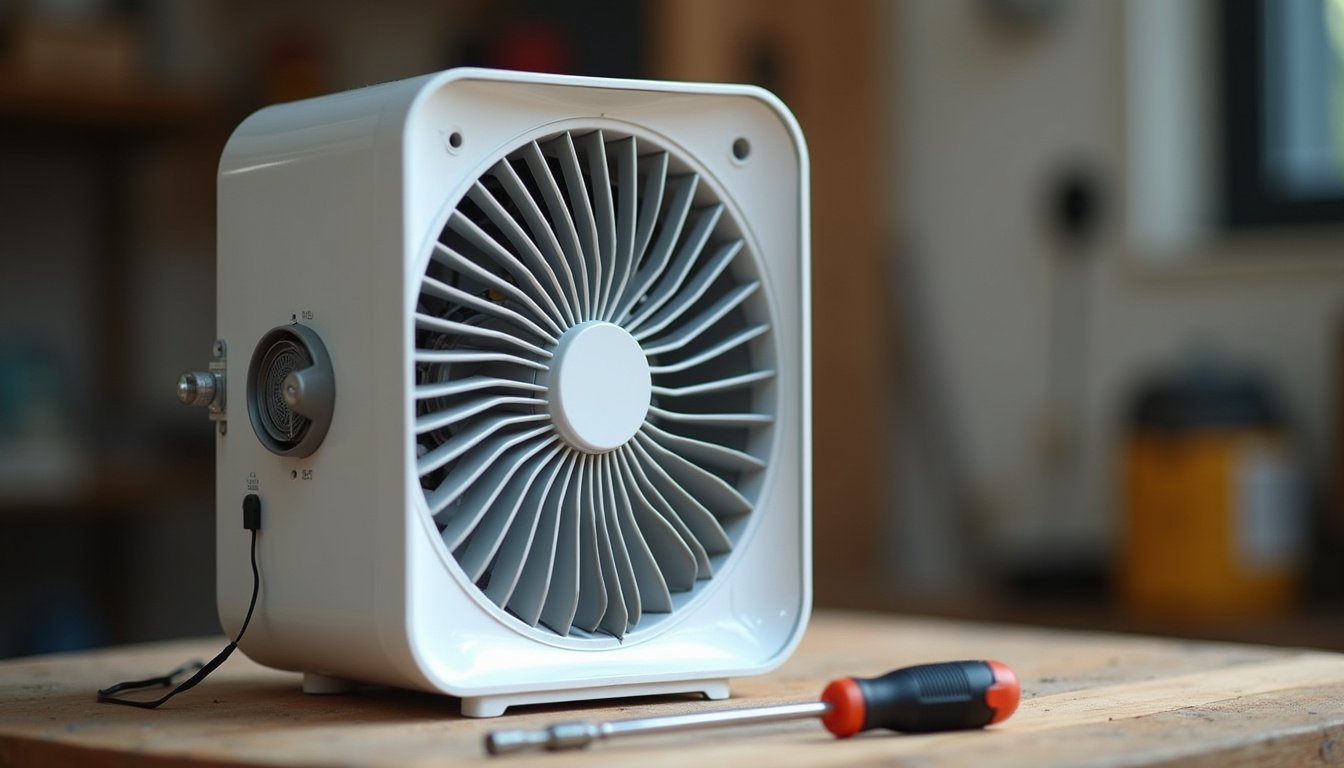
A purifier whose fan has gone quiet, started grinding or runs on one speed is frustrating: filters and housing are fine, and one small motor has turned the machine into a box. Replacing the unit feels wasteful, and the motor looks swappable. Sometimes it is. Often the motor is not the problem.
Most air purifier fan failures are not motor failures. A unit that will not spin, spins slowly, rattles or stops at certain speeds is more often suffering from a clogged filter, debris on the impeller, a loose blade, a failed capacitor or speed board, or a dirty sensor that keeps the fan idling. A careful owner can check those with the unit unplugged, a screwdriver and a flashlight, and most are fixed by cleaning or reseating a part. A true motor failure, worn bearings that grind or seize, a burned winding that smells hot, a motor that is warm but silent, is less common and harder: motors are often riveted or glued in, and replacement parts exist only from the maker for some models and not at all for others. Where a maker sells the blower assembly and the unit is out of warranty, a swap is a reasonable afternoon’s work for someone comfortable with small appliances. Where it does not, or the unit is under warranty, or the fault involves burning smells, sparks or a hot plug, the repair ends with unplugging it and calling the maker. Electrical faults are not a home repair.
In short: diagnose before you buy a motor. Most fan faults are blockage, debris, a capacitor or a board. Replace a motor only with the maker’s part, and stop at any electrical fault.
Maker manuals direct owners to unplug before any access, to clean the fan area routinely and to contact service for motor and electrical faults; several makers sell blower assemblies as parts. Safety guidance treats burning smells, sparking and hot plugs as reasons to disconnect the appliance.
This guide is research-based, drawn from maker service documentation, small appliance repair practice and consumer safety guidance. We have not tested the units in the table and quote no prices or ratings. Nothing here is medical advice or replaces the maker’s instructions.
Fix it yourself if
- The fan is blocked by a clogged filter, debris or a loose blade
- A speed or sensor fault keeps the fan idling and a clean fixes it
- A capacitor or the fan assembly is sold by the maker as a part
- The unit is out of warranty and you are comfortable with small appliances
Stop and call the maker if
- There is any burning smell, smoke, sparking or a hot plug or cord
- The unit is under warranty; opening it voids coverage
- No replacement motor or blower assembly exists for the model
- The motor is sealed into the housing and cannot be removed without breaking it
Key Takeaways
- Most fan faults are not the motor: clogged filters, debris on the impeller, loose blades, a failed capacitor or a speed board are the usual causes.
- Unplug before opening anything; a purifier fan can start on its own from a sensor or timer.
- A motor that grinds, seizes, hums without spinning or smells hot is a real motor fault.
- Replace a motor only with the maker’s part or blower assembly; generic motors rarely match the mount, shaft and speed.
- Capacitors hold a charge after unplugging; discharge before touching, or leave that part to a technician.
- Burning smells, smoke, sparks or a hot plug mean stop, unplug and contact the maker; electrical faults are not a home repair.
- Opening the housing usually voids the warranty; check before you reach for a screwdriver.
Purifiers With Accessible Fans and Available Parts
These widely reviewed units have fan compartments that open for cleaning without destructive disassembly, and makers with parts and service channels. Compare the maker-listed CADR against your room and keep the fan area clean to prevent most faults in the first place.






How This Guide Approaches the Question
We looked at how purifier fans and motors fail, how to tell a motor fault from the far more common blockage and control faults, what owners can safely do, how a motor swap proceeds where a part exists, and where the line sits for electrical safety. Product details in the table come from maker specifications.
A rule that saves money: do not buy a motor until you have ruled out the filter, the impeller, the capacitor and the control board. The motor is the last suspect, not the first.
Safety First
A purifier fan runs from mains electricity through a motor, often a capacitor and a control board, and some units start the fan on their own from a timer, a particle sensor or a filter-check routine. Unplug the unit before opening any panel, not just switch it off, and wait a few minutes. Capacitors store a charge after unplugging and can shock; if the repair involves the capacitor, discharge it with an insulated screwdriver across its terminals or leave that step to a technician. Keep hands and tools out of the fan path even unplugged, since impellers are sharp and spin freely.
Check the warranty before opening the housing. Most makers void coverage if the unit has been opened, and a motor fault within the warranty period is their repair, not yours.
Diagnose Before You Repair
Fan symptoms point at several possible causes, and the motor is the least likely. Work through the cheap and common ones first.
| Symptom | Most likely cause | Less likely | Motor fault? |
|---|---|---|---|
| Fan will not spin; unit lights up | Impeller blocked by debris or a filter packed against it; failed capacitor | Speed board failure | Possible: seized bearing or dead winding |
| Spins slowly or weakly on all speeds | Clogged filter; dirty impeller; failing capacitor | Low voltage from a bad power adapter | Possible: worn bearings |
| Grinding, scraping or rattling | Debris in the housing; loose blade or hub; cracked impeller | Housing screw loose | Possible: dry or worn bearings |
| Works on one speed only | Speed board or switch fault | Wiring connector loose | Rarely |
| Starts, runs, then stops | Overheating from a clogged filter; thermal cutout | Sensor fault | Possible: failing motor running hot |
| Hums but will not turn | Impeller jammed; failed start capacitor | Possible: seized bearing | |
| Hot plastic or electrical smell | Electrical fault | Possible: burned winding; stop using | |
| Fan stuck on low in auto mode | Dirty particle sensor reading clean | No |
Unplug, remove the filters and look into the fan compartment with a flashlight. Spin the impeller by hand. It should turn freely and silently for a second or two. Stiff, gritty or wobbly points at bearings or debris; free but silent with no power points at the capacitor, the board or the windings.
Fixes That Are Not the Motor
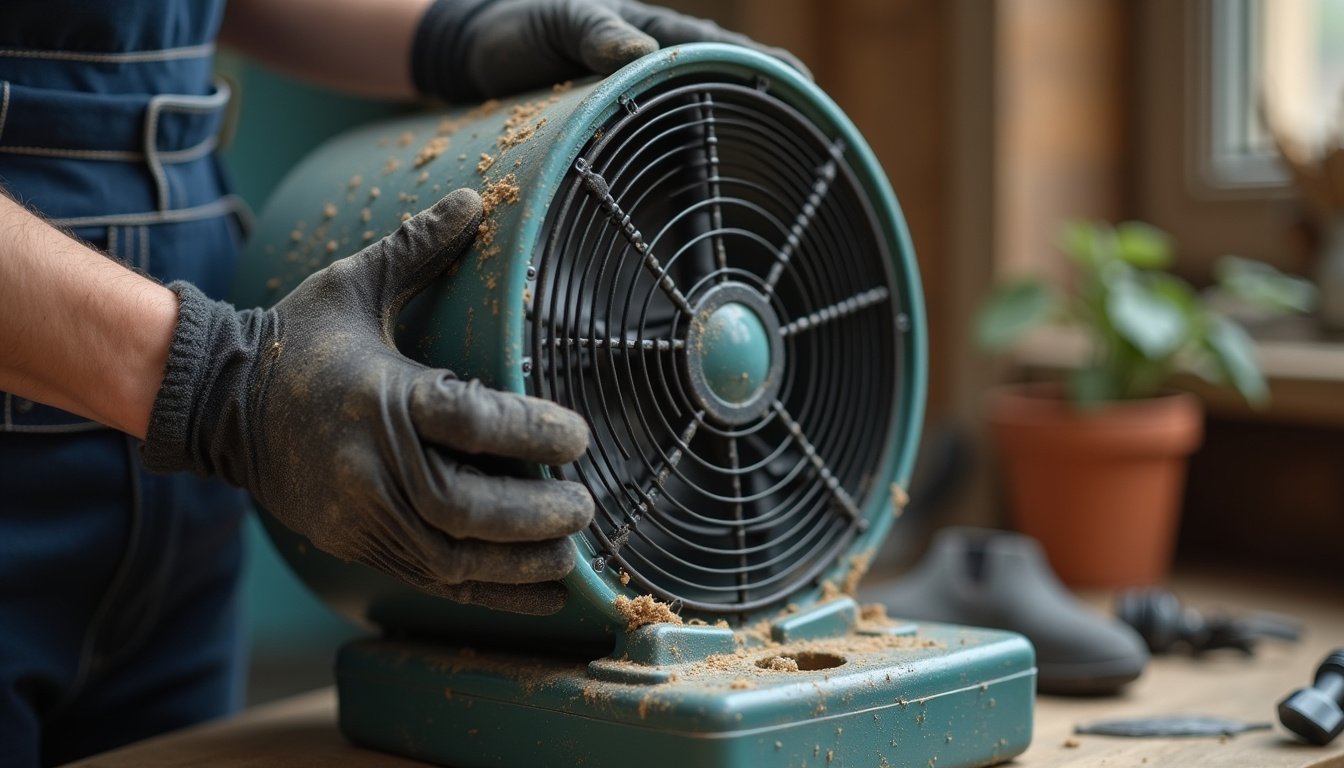
Clogged filters are the first cause of weak airflow and of motors overheating and cutting out. Replace a HEPA that is grey and loaded and rinse the pre-filter. Debris, a hair tie, a cable tie, a toy, lodges in impellers in homes with children and pets; remove it with the unit unplugged and spin the blade by hand to confirm it is clear. A loose impeller hub rattles and wobbles; many are held with a single screw or a push-fit clip and can be reseated. A dirty particle sensor in auto mode reads clean and keeps the fan idling; clean its lens with a dry cotton swab per the manual, never compressed air.
- Replace clogged filters before suspecting anything else; airflow and overheating faults usually end here.
- Remove debris from the impeller and housing with the unit unplugged; check the blade spins freely.
- Tighten or reseat a loose impeller hub; replace a cracked impeller, which is often sold as a part.
- Clean the particle sensor lens with a dry swab if the fan idles in auto mode.
- Check connectors between the motor, capacitor and board for a loose plug; push home gently.
- Vacuum dust from the motor’s cooling vents and the housing with a brush attachment, not compressed air.
Capacitors and Speed Boards
Many purifier motors use a run or start capacitor; when it fails the motor hums and will not start, or starts weakly. A bulging, leaking or discolored capacitor is a visual giveaway. Capacitors are inexpensive and are marked with their capacitance and voltage; a replacement must match both. Discharge the old one before touching its terminals and note the wiring before removing it. Speed boards and switches fail in a different pattern, the fan works on some speeds and not others, and are usually replaced as a whole board from the maker, where available.
If the unit uses a brushless DC motor fed from a control board, there is no capacitor, and a fan that does not start with a healthy impeller is either the board or the motor’s internal electronics; the maker’s blower assembly usually includes both.
When It Really Is the Motor
Bearings wear, especially in units run on high for years in dusty rooms; the fan grinds, squeals, wobbles or finally seizes. Windings burn out from overheating behind a clogged filter; the motor is warm or hot, smells faintly, hums and does not spin, or trips the unit’s thermal protection. Neither is repaired at home: bearings in these small motors are usually sealed and not serviceable, and rewinding is not practical. The repair is replacement, and whether that is possible depends entirely on the maker.
| Situation | Realistic option |
|---|---|
| Maker sells the fan motor or blower assembly; unit out of warranty | Replace it following the maker’s service steps |
| Maker sells the whole fan module including housing | Replace the module; simpler but costlier |
| Unit under warranty | Warranty service; do not open |
| No part available; motor riveted or glued in | Replacement of the unit is usually the only route |
| Motor burned, smells of hot insulation | Stop using; contact maker; do not run |
| Bearings noisy but running | Plan replacement; clean dust; do not oil sealed bearings |
Generic motors from electronics suppliers rarely fit: the mount pattern, shaft diameter, rotation direction, speed and voltage all have to match, and the impeller is balanced to the original. Buy the maker’s part or the exact part number stamped on the motor label, or do not attempt it.
Replacing the Motor, Where a Part Exists
With the maker’s part in hand and the unit unplugged, the swap follows a pattern. Photograph every step so reassembly is not guesswork, and keep screws sorted by location.
- Unplug the unit and wait several minutes; remove filters and set them aside clean.
- Remove the housing panels per the manual, noting hidden screws under labels and feet; do not pry glued joints.
- Photograph the wiring, then unplug the motor connector and, if present, the capacitor leads after discharging it.
- Release the impeller from the shaft; it is usually a central screw, a clip or a press fit. Do not lever on the blades.
- Unbolt the motor from its mount, noting any rubber isolators, which reduce noise and must be refitted.
- Fit the new motor with the isolators, torque the mount screws evenly, and refit the impeller square on the shaft.
- Reconnect the wiring exactly as photographed, reassemble the housing and refit the filters.
- Plug in and test on every speed; listen for rubbing, which means the impeller is not seated square.
Worked example: a five-year-old tower purifier squeals on high and wobbles. Unplugged and opened, the impeller spins gritty by hand, so the bearings are worn. The maker lists a blower assembly for the model; it arrives with motor, impeller and isolators. The swap takes an hour with photographs, the unit runs silently on all speeds, and the old assembly goes to small appliance recycling.
After the Repair, and Preventing the Next One
Run the repaired unit on each speed for a few minutes and listen. A faint whir is normal; rubbing, ticking or vibration means the impeller is off-center or a screw is loose. Check that the fan starts cleanly from off on every speed. Then address what caused the failure: fit filters so no air bypasses them, replace the HEPA on schedule, rinse the pre-filter monthly, keep the unit off the floor in dusty rooms and vacuum the housing yearly. Motors that stay cool and clean last the life of the appliance.
| Test after repair | Pass | Fail means |
|---|---|---|
| Start from off on each speed | Starts cleanly | Capacitor, board or connector fault |
| Listen on low | Faint whir | Rubbing: impeller off-center |
| Listen on high | Steady, no vibration | Loose mount screw or missing isolator |
| Feel housing after 30 minutes | Warm at most | Overheating: airflow blocked or motor failing |
| Check airflow at outlet | Strong and even | Filter seated wrong or impeller reversed |
How to Approach a Fan Motor Fault in 6 Steps
- Unplug the unit, wait several minutes, and remove the filters; replace any that are clogged before suspecting the motor.
- Inspect the fan compartment with a flashlight and spin the impeller by hand; remove debris and reseat a loose hub.
- Check for a failed capacitor, bulging or leaking, and for loose connectors; replace a capacitor only with a matched part after discharging it.
- If the impeller is gritty, wobbly or seized, or the motor hums without turning, treat it as a motor fault.
- Check warranty and whether the maker sells the motor or blower assembly; if under warranty or no part exists, stop and contact the maker.
- Replace the motor with the maker’s part following the manual, test every speed, and fix the dust problem that caused it.
Do and Do Not
Do
- Unplug before opening any panel.
- Rule out filters, debris and the capacitor first.
- Buy only the maker’s motor or blower assembly.
- Photograph wiring before disconnecting anything.
- Refit rubber isolators and seat the impeller square.
Do not
- Do not run a unit that smells hot, sparks or has a hot plug.
- Do not open a unit under warranty.
- Do not fit a generic motor.
- Do not oil sealed bearings or use compressed air.
- Do not touch capacitor terminals before discharging.
Who Should Skip This
If the unit is under warranty, skip every step beyond unplugging it and describing the symptom to the maker; opening it voids the coverage that would have replaced the motor for free.
If there is any burning smell, smoke, sparking or heat at the plug, skip diagnosis entirely: unplug, stop using it and contact the maker. That is an electrical fault, not a fan repair.
Honest Limits
- Procedures vary by model; the maker’s manual overrides any general step here.
- Parts availability differs widely between makers and changes over time.
- We did not perform repairs for this guide and cannot vouch for any specific model’s serviceability.
- Capacitor work carries a shock risk; leave it to a technician if unsure.
- Opening a housing typically voids the warranty.
- Nothing here is medical advice; electrical faults are a fire and shock matter, not a home repair.
When to See a Professional
Contact the maker’s service line for any unit under warranty, any electrical fault, or any model where the motor is not sold as a part; many makers will quote a repair or replacement.
Use a small appliance repair technician for capacitor replacement or a motor swap you are not comfortable doing, and dispose of a failed unit through electrical appliance recycling rather than household trash.
Frequently Asked Questions
Can I repair an air purifier fan motor myself?
Sometimes. Most fan faults are not the motor but clogged filters, debris, a loose impeller, a failed capacitor or a speed board, which an owner can address with the unit unplugged. A true motor fault is fixed only by fitting the maker’s replacement blower assembly, and only on a unit out of warranty.
How do I know if the fan motor is actually bad?
Unplug the unit, remove the filters and spin the impeller by hand. Gritty, stiff or wobbly turning points at worn bearings; a motor that is warm, hums and does not spin, or smells hot, has a failed winding. Free, silent spinning with no power usually means the capacitor or board.
Why does my air purifier fan hum but not spin?
Either the impeller is jammed by debris or a packed filter, or the start capacitor has failed, or a bearing has seized. Unplug, clear any obstruction and spin the blade by hand. If it turns freely and still only hums when powered, a bulging or leaking capacitor is the usual culprit.
Why is my air purifier fan grinding or rattling?
Debris in the housing, a loose or cracked impeller or a loose screw cause most rattles and are fixed by cleaning and reseating with the unit unplugged. A steady grinding or squeal that changes with speed, with the blade gritty by hand, is worn sealed bearings: replace the motor assembly.
Can I use any motor to replace my purifier’s fan motor?
No. The mount pattern, shaft diameter, rotation direction, speed, voltage and connector all have to match, and the impeller is balanced to the original. Use the maker’s blower assembly or the exact part number on the motor label. A generic motor that fits loosely vibrates, runs hot and can fail dangerously.
Is it safe to open an air purifier to fix the fan?
Only unplugged, after waiting several minutes, and only if the unit is out of warranty. Capacitors hold a charge after unplugging and must be discharged or left alone; impellers are sharp. Any burning smell, sparking, smoke or heat at the plug means stop, unplug and contact the maker rather than open anything.
Can I oil the fan motor bearings?
Usually not. Small purifier motors use sealed bearings or bushings with no oil port, and oil applied from outside attracts dust and does not reach the wear surface. A gritty or squealing bearing is replaced as part of the motor assembly. Keeping dust off the motor through proper filter fit is the real maintenance.
How much does fan motor repair cost compared with a new unit?
We quote no prices, but the useful comparison is the maker’s part cost plus an hour of your time against the unit’s replacement and the filters you would otherwise discard. On units a few years old with a listed blower assembly, repair often makes sense; with no parts, it is not possible.
Why does the fan stop after running a while?
A clogged filter makes the motor work harder and run hot until a thermal cutout trips, then it restarts once cool; a new filter fixes it. If filters are fresh and the motor still overheats and stops, its bearings or windings are failing. A dirty particle sensor can also idle the fan in auto mode.
Does opening the purifier void the warranty?
Almost always. Makers typically void coverage if the housing has been opened or the unit shows evidence of user repair. If the unit is still under warranty, unplug it, describe the symptom to the maker and let them repair or replace it; a motor fault inside the warranty period is their responsibility.
Bottom Line
Repairing an air purifier fan motor starts with not repairing the motor. Clogged filters, debris on the impeller, a loose blade, a failed capacitor or a speed board explain most fan faults and are addressed with the unit unplugged, a flashlight and a screwdriver. Only gritty, seized or hot motors are true motor faults, and those are replaced, never rebuilt, with the maker’s own blower assembly on an out-of-warranty unit.
The lines not to cross are plain: do not open a unit under warranty, do not fit a generic motor, do not touch a capacitor before discharging it, and at the first burning smell, spark or hot plug, unplug the unit and call the maker. Fix the dust problem that killed the motor, and the new one will outlast the filters.
Related reading: Air purifier fan not working, Why is air purifier fan so loud, Air purifier making grinding noise.