Last updated:
Disclosure: As an Amazon Associate we earn from qualifying purchases. Some links below are affiliate links, and we may earn a commission at no extra cost to you. Our picks are research-based and do not come from lab tests. We do not show prices because they change, so check the store page for current details.
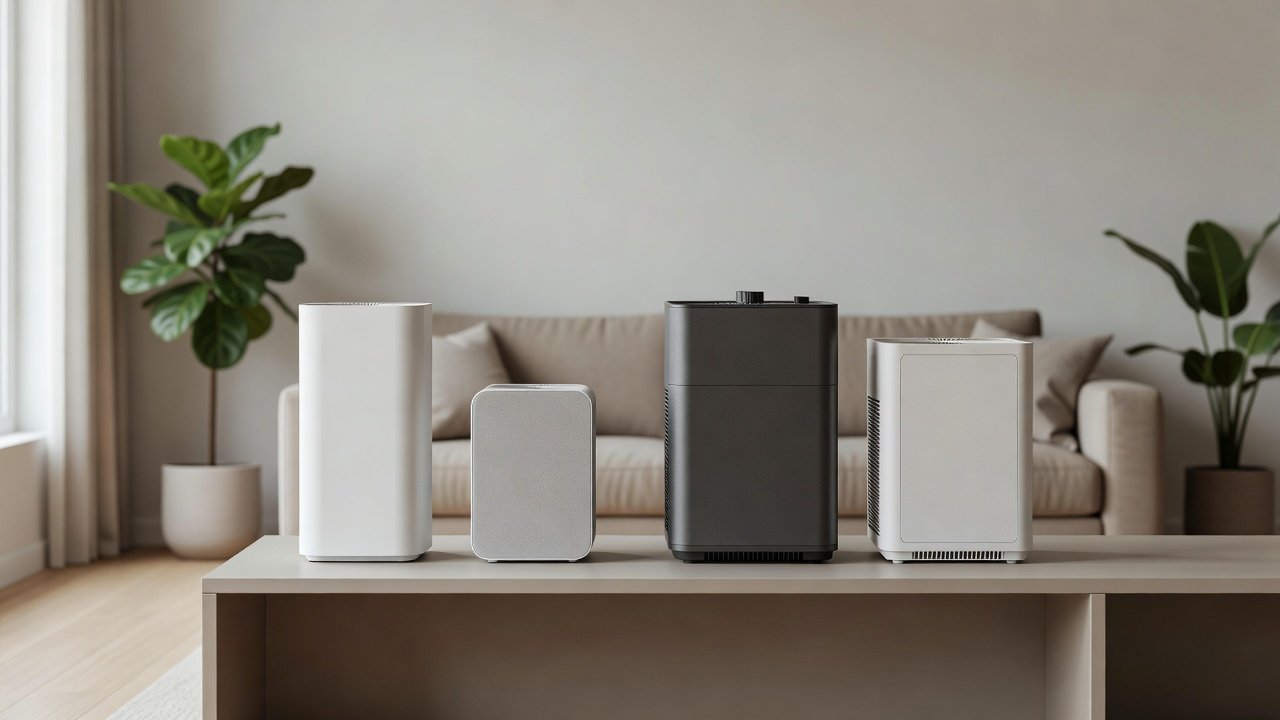
Levoit and Winix are two of the best-known names in home air purifiers, and shoppers comparing them usually want the same thing: a clear answer without a stack of spec sheets. This guide compares the brands’ popular models on filtration, noise, smart features, upkeep and room fit. The list below covers six models, three from each brand, so you can see how each one behaves in a small, medium or large room.
Choose Levoit if you want a compact, quiet-leaning purifier for a bedroom or small to medium room, with a simple filter stack and an optional app-connected version. Choose Winix if you want a larger unit for a living area, with a washable carbon filter, an auto mode driven by an air quality sensor, and a roomier body. Both brands pair True HEPA filtration with activated carbon on the models covered here, so neither wins on filter grade alone. What decides it is room size, how much noise you will accept while sleeping, whether you want an ionizer-style feature, and how you feel about replacing filters.
In short: match the machine to the room first, then compare brands. A unit that is too small runs flat out and still falls behind, while one that is far too big costs more to run and can be louder than you need.
The Association of Home Appliance Manufacturers (AHAM) says to match a purifier’s tobacco smoke CADR to roughly two-thirds of your room’s floor area. The American Lung Association advises choosing HEPA units and avoiding air cleaners that produce ozone or rely on ultraviolet or ionizer features. We use both pieces of guidance throughout this comparison.
These are research-based picks drawn from manufacturer information and widely reviewed listings, not laboratory tests. Model lines change often, so confirm the exact model on the store page before you buy.
Pick Levoit if you want
- A compact tower for a bedroom, nursery or small office (Core 300 or 300S)
- Optional app and voice control without extra tech beyond the filters
- A large-room option that stays in the same brand family (Core 600S)
Pick Winix if you want
- A bigger unit for a medium to large living area (5500-2 or 5510)
- A carbon filter you can wash and an auto mode driven by a sensor
- An ionizer-style extra (PlasmaWave) that you can choose to leave off
Key Takeaways
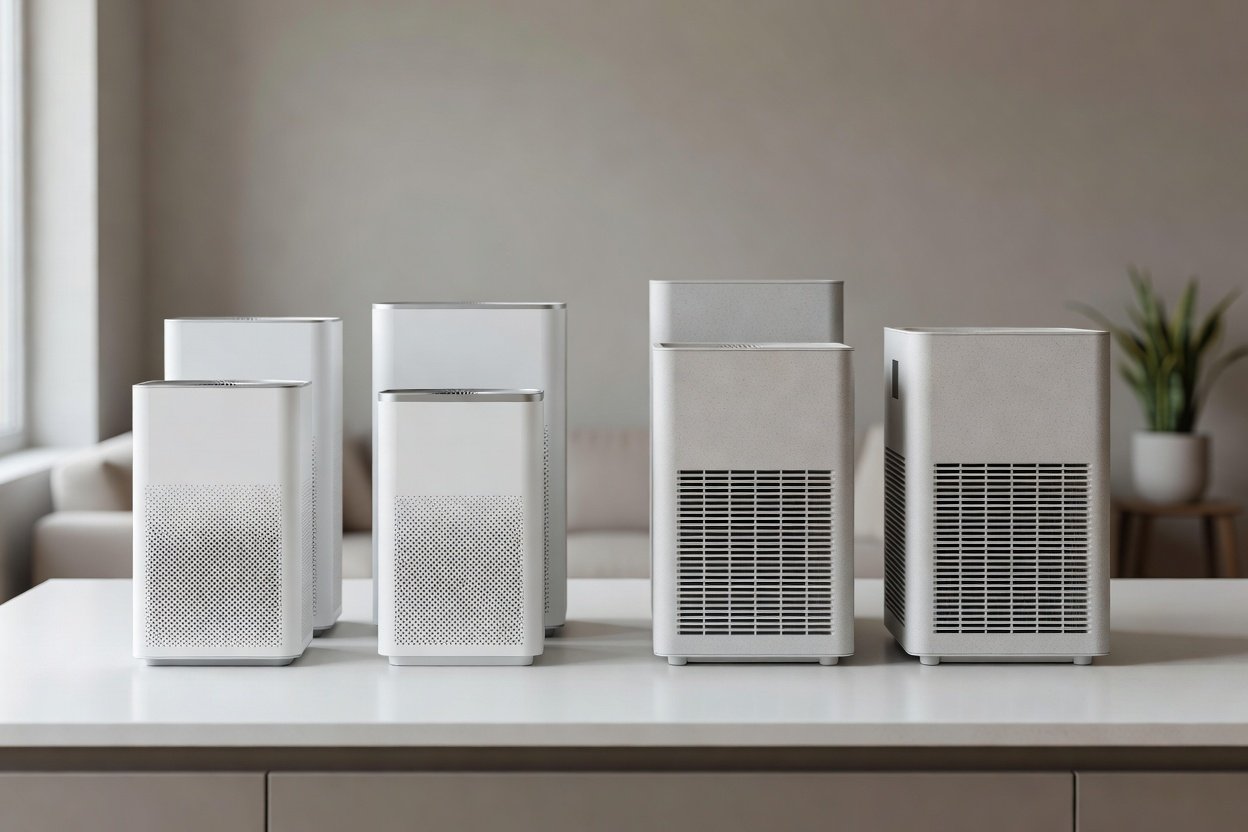
- Both brands’ popular models pair True HEPA with activated carbon, so filter grade does not separate them.
- The Levoit Core 300 and 300S target bedrooms and small rooms, while the Core 600S is Levoit’s large-room model.
- The Winix 5500-2 and 5510 target larger rooms, and the 5510 is listed as the app-enabled successor to the 5500-2.
- Winix lists PlasmaWave, an ionizer-style feature, on some models. The American Lung Association advises avoiding ionizer features, so check your manual and consider leaving it off.
- App control is available on the Levoit 300S and 600S and on newer Winix models. It adds convenience, not filtering power.
- Use AHAM’s two-thirds rule to turn your room size into a CADR target before you compare brands.
- Budget for replacement filters on either brand, and check the filter for your exact model before you buy.
Top Picks: Levoit and Winix Models
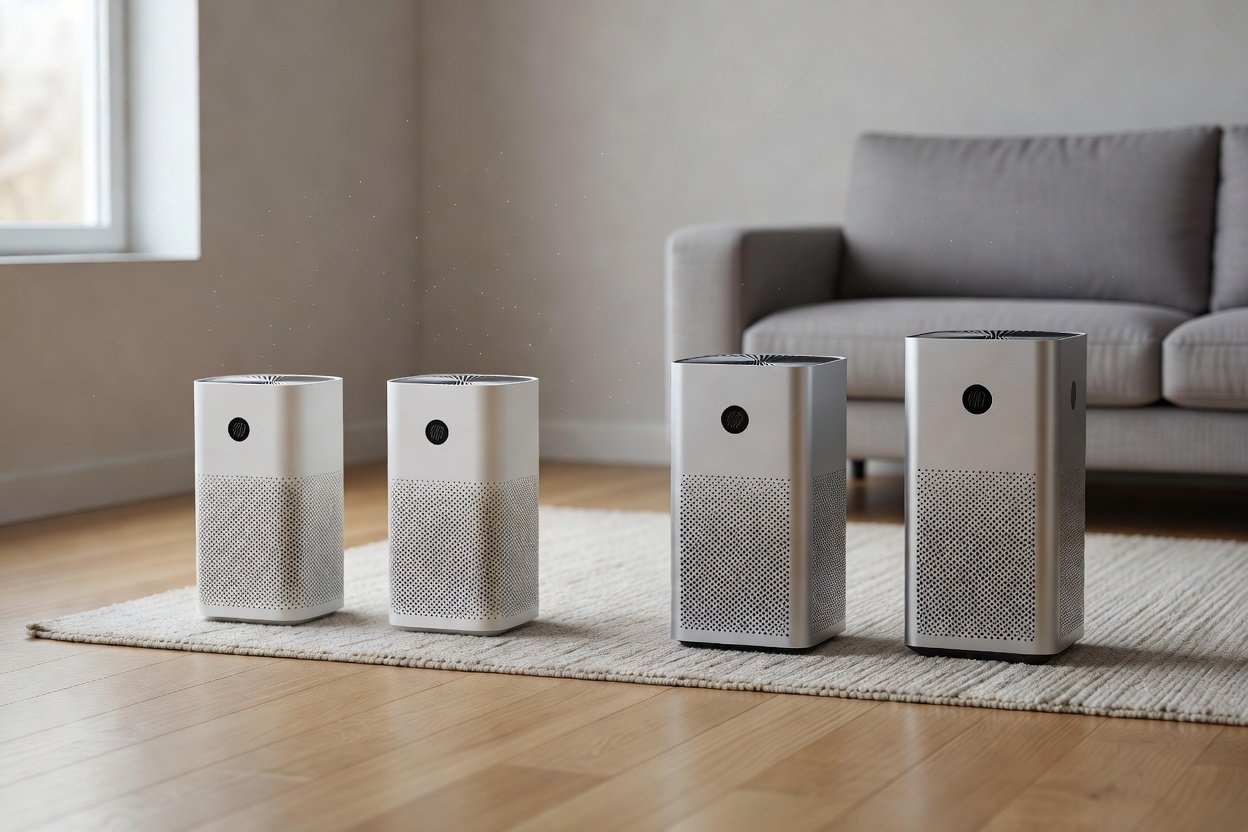
Three models from each brand, from small rooms to large. Each button opens the Amazon listing, where you can confirm the exact variant and current details.





How We Compared Levoit and Winix
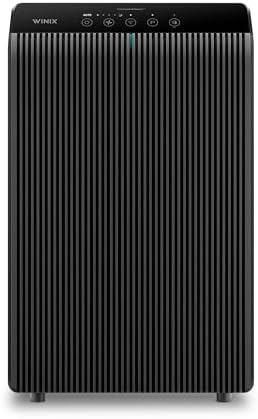
We compared the two brands using manufacturer information, published specifications and the wording of Amazon listings, together with guidance from AHAM and the American Lung Association. We did not run laboratory or in-home tests, so nothing here comes from our own measurements. Where a figure comes from a maker or a listing, we say so.
To keep the comparison fair, we picked three popular models from each brand that span small, medium and large rooms: the Levoit Core 300, Core 300S and Core 600S, and the Winix 5500-2, 5510 and C545. Sellers sometimes list several variants under one name, and model lines change, so always confirm the exact model on the store page.
Filtration: What Is Inside Each Brand
A True HEPA filter is rated to capture at least 99.97 percent of particles 0.3 microns in size under test conditions. That figure applies to that particle size in a lab test, not to every pollutant in a real room. The models listed above are described as using True HEPA filters, so filter grade does not separate the brands.
The difference is in the supporting stages. Levoit’s Core line pairs a pre-filter that catches hair and large dust with a True HEPA filter and an activated carbon layer for odors, according to the listings. Winix pairs True HEPA with a carbon filter, and the 5500-2 listing describes that carbon filter as washable. Carbon helps with some smells and fumes, but it is a thin layer in a household unit, so do not expect it to remove every gas.
| Feature | Levoit (Core 300, 300S, 600S) | Winix (5500-2, 5510, C545) |
|---|---|---|
| Main filter | True HEPA, per listings | True HEPA, per listings |
| Odor stage | Activated carbon layer | Carbon filter; washable on the 5500-2 listing |
| Extra tech | None marketed beyond filtration | PlasmaWave named on the 5500-2 and C545 listings |
| App or Wi-Fi | 300S and 600S | 5510 and C545 listings mention app or Wi-Fi support |
| Auto mode | Listed on several models | Listed on the 5500-2 and 5510 |
| Sleep mode | Yes, per listings | Yes on the models above; confirm in the manual |
| Typical room fit | 300 and 300S: small to medium. 600S: large | Medium to large, per listing coverage claims |
Ionizers, PlasmaWave and Ozone: The One Real Difference
The one feature the brands do not share is PlasmaWave. The listings present it as an extra stage beside the filters, and it is named on the 5500-2 and C545 listings. It belongs to the same family as ionizer features, and the American Lung Association advises avoiding air cleaners that use ionizer features or produce ozone, because newer technologies have unclear benefits and the United States has no testing standards for them. Check your manual for how to switch PlasmaWave off, and consider leaving it off.
Many shoppers mix up four different terms. This table separates them.
| Term | What it means | What to do |
|---|---|---|
| True HEPA | A filter rated to capture at least 99.97 percent of 0.3 micron particles in testing | Look for it |
| HEPA-type or HEPA-like | Marketing terms for filters that do not meet the HEPA standard | Treat as a lower grade |
| Ionizer feature | Releases charged particles meant to make dust clump and fall | The American Lung Association advises avoiding it; use it only if you can switch it off |
| Ozone generator | A device that deliberately produces ozone | Avoid it; ozone can irritate the lungs |
Room Size and Coverage
Start with the room, not the brand. AHAM says to choose a unit whose tobacco smoke CADR is about two-thirds of the room’s floor area. CADR, the clean air delivery rate, is a certified number that shows how quickly a unit cleans air of smoke, dust and pollen. For a 200 square foot bedroom, that works out to a tobacco smoke CADR of about 133.
The AHAM Verifide label on certified models lists CADR and a suggested room size, and AHAM runs a searchable directory of certified models. Amazon listings often quote a different number, such as the area a unit can clean in an hour, which rests on the maker’s own assumptions. Compare like with like, and do not treat a listing’s coverage claim as a certified room size.
Used that way, the picks sort themselves. The Levoit Core 300 and 300S suit bedrooms, nurseries and small offices. The Levoit Core 600S and the Winix 5500-2 and 5510 are aimed at larger living spaces, and the Winix C545 sits in the middle. AHAM also warns that an oversized unit wastes energy and adds noise, so bigger is not automatically better.
Noise, Lights and Sleep
Noise matters most in bedrooms. Every purifier gets louder as the fan speeds up, so the useful question is how quiet the lowest setting is and whether the unit can dim or turn off its lights. Both brands offer a sleep setting on the models above. One Levoit listing cites 24 dB on the lowest setting, but that is the listing’s claim and we have not measured it.
If the unit will run in a bedroom, choose the smallest model that meets your CADR target. A unit running below full speed is quieter than a small unit pushed to its limit. Read the manual for how the display behaves at night, since a bright indicator can bother light sleepers more than the fan does.
Smart Features and Auto Mode
App control, schedules and voice assistants are convenient, but they do not change how well the filter works. The Levoit 300S and 600S add Wi-Fi and app control, and the Winix 5510 and C545 listings mention app or Wi-Fi support. Basic models such as the Levoit Core 300 and Winix 5500-2 keep the controls on the unit.
Auto mode is the feature that changes day-to-day behavior. A small sensor reads particles in the air, and the fan speeds up or slows down in response. It suits set-and-forget use, but the sensor mainly responds to particles rather than gases, and it only reads the air next to the unit. If you prefer predictable noise, run a fixed low speed instead.
Filters and Running Costs
Every model here uses filters that wear out, so upkeep is a real part of the cost. Follow the schedule in your manual, because the right interval depends on how often you run the unit and how dirty the air is. Carbon layers tend to fill faster in smoky or smelly homes, and the American Lung Association notes that charcoal filters may need frequent replacement.
Before you buy, find the replacement filter for the exact model and check how easy it is to get. Winix’s washable carbon filter removes one chore, but the HEPA filter still needs replacing. For Levoit, check the manual for whether you can clean the pre-filter. Compare filter prices on the store page, since we do not show prices here.
How to Choose Between Levoit and Winix in 7 Steps
- Measure the room. Multiply length by width in feet to get the floor area.
- Set a CADR target. Multiply the area by two-thirds, following AHAM’s rule.
- Check the certified label. Look up candidate models in the AHAM Verifide directory and compare their tobacco smoke CADR and suggested room size.
- Decide on ionizer features. If you want to avoid them, choose a model without one or confirm you can switch it off.
- Decide on smart features. Pick an app-enabled model only if you will use schedules or remote control.
- Check upkeep. Find the replacement filter for your exact model and confirm where you can buy it.
- Place it well. Leave clear space around the unit and run it with doors and windows closed, as the American Lung Association advises.
Do and Do Not
Do
- Match CADR to your room using the two-thirds rule
- Use the unit consistently, since steady use is what the American Lung Association links to modest benefits
- Replace filters on the manual’s schedule
- Keep the intake and outlet clear of curtains and furniture
Do not
- Buy on a listing’s coverage claim alone
- Use an ozone-producing device in a living space
- Rely on one unit to clean a whole large home
- Ignore the sleep setting if the unit goes in a bedroom
Who Should Skip Each Brand
Skip Levoit if you want a mid-size to large unit with a washable carbon filter, since that detail is listed for the Winix. Skip Winix if you want to avoid ionizer-style features altogether and cannot confirm that PlasmaWave switches off on your model. Skip both if your main problem is gases or chemical fumes rather than particles. A household carbon layer is thin, and source control and ventilation matter more.
Honest Limits
An air purifier reduces airborne particles but does not eliminate them, and it does not replace source control or ventilation. The American Lung Association makes the same point. Carbon helps with some odors but is limited for gases. The comparison above is based on maker and listing information rather than our own testing, and specifications differ between variants of the same model name. Treat every figure as a starting point and confirm it on the store page and in the manual.
When to See a Professional
If you have persistent breathing symptoms, allergies or asthma, talk to a doctor or allergist rather than relying on a purifier. For whole-home air quality or a ventilation problem, ask a qualified heating and cooling professional. For a unit that smells of burning, makes unusual noises or has a damaged cord, stop using it and contact the maker. This guide is general information, not medical advice.
Frequently Asked Questions
Is Levoit better than Winix?
Neither wins across the board. Both pair True HEPA with carbon on the models covered here. Levoit leans toward compact units for smaller rooms, while Winix leans toward larger bodies and sensor-driven auto mode. Room size and your comfort with ionizer features usually decide it.
Which is quieter, Levoit or Winix?
Both offer sleep settings, and noise depends on the model and fan speed. One Levoit listing cites 24 dB on the lowest setting, but that is the listing’s claim and we have not measured it. Compare each maker’s stated noise at the lowest speed for the exact model.
Do Levoit and Winix use True HEPA filters?
According to the listings for the models above, yes. Variants of the same model name can differ, so confirm True HEPA on the specific listing you choose, and be wary of terms like HEPA-type.
What is PlasmaWave, and should I use it?
PlasmaWave is Winix’s name for an ionizer-style feature on some models. The American Lung Association advises avoiding ionizer features. Check your manual for how to switch it off, and consider leaving it off.
Which brand is better for a bedroom?
The Levoit Core 300 and 300S are aimed at bedrooms and small rooms. A larger bedroom may suit the Winix C545. Use the two-thirds rule to check that the CADR fits your floor area.
Which is better for pet owners?
Both brands include carbon for odors and a pre-filter stage, and pet hair clogs pre-filters quickly. Choose a unit that meets your CADR target, and plan to clean or replace filters more often. Check the manual for what you can wash.
Do I need the app version?
No. App control adds schedules and remote control, not filtering power. The Levoit Core 300 and Winix 5500-2 keep controls on the unit, which many people prefer for simplicity.
How often should I replace the filters?
Follow your manual, because the interval depends on use and air quality. Carbon layers can fill faster in smoky or smelly homes, and the American Lung Association notes that charcoal filters may need frequent replacement.
Is the biggest model worth it?
Only if your room needs it. AHAM warns that an oversized unit wastes energy and adds noise. For a large living room, the Levoit Core 600S or the Winix 5500-2 and 5510 make sense. For a bedroom, the Core 300 line is usually enough.
Are these purifiers safe to run all day?
Used as the manual directs, yes. Avoid ozone-producing devices, keep the unit clear of obstructions, and stop using it if you notice a burning smell or damage. For health concerns, talk to a doctor.
Bottom Line
If you are buying for a bedroom or small room, start with the Levoit Core 300 or 300S. If you are buying for a larger living space and like a sensor-driven auto mode, start with the Winix 5500-2 or 5510, and decide in advance whether to leave PlasmaWave off. For a very large room, the Levoit Core 600S is the other model to check against your CADR target.
Whichever brand you choose, let the room decide. Work out the two-thirds target, confirm the certified numbers on the AHAM Verifide label, and check the replacement filter before you buy. For related reading, see our guide to air purifiers for bedrooms versus living rooms and our explainer on multiple fan speeds versus single-speed models. Our editorial policy explains how we research. Sources: AHAM Verifide and the American Lung Association.