Last updated:
Disclosure: As an Amazon Associate we earn from qualifying purchases. This does not change what we recommend. See our affiliate disclaimer.
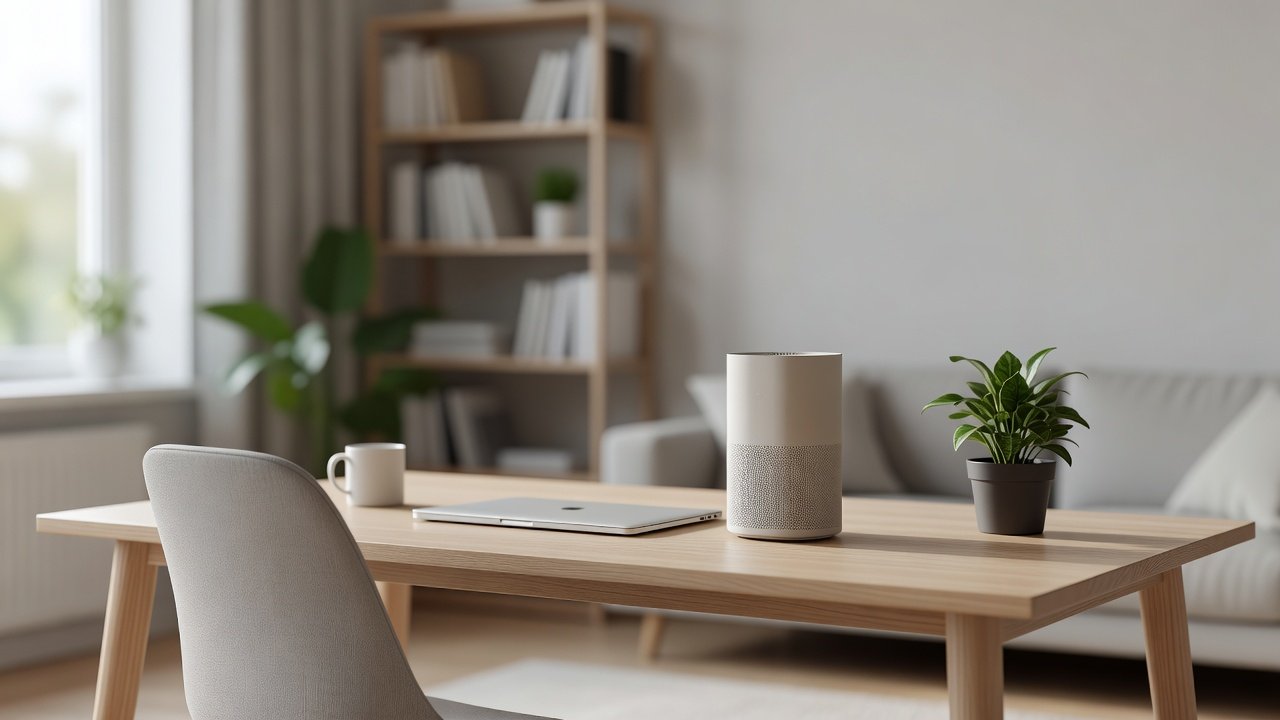
A desk air purifier is a compact unit meant to clean the air in your immediate workspace. Because of their small size, these units move a limited amount of air, so they work best in a small cubicle or home office rather than a large open space. Look for a true HEPA filter, a CADR that suits the area, quiet operation and a footprint that fits your desk without blocking airflow.
This guide covers what to expect from a desk unit, how to place it, how to keep noise down and when a larger room purifier makes more sense. We have not tested these products ourselves, so confirm specifications on product pages. Nothing here is medical advice.
Look for
- True HEPA
- Quiet low speeds
- Compact footprint
Be realistic about
- Limited coverage
- Personal-space effect only
- Filter costs
Key Takeaways
- Desk units have limited coverage
- Choose quiet true HEPA models
- Place with clearance
- Check filter costs
Choosing Between a Desk Unit and a Room Unit
If you work in a small cubicle or a tiny home office, a compact unit may be enough. If your space is larger than about the size the unit is rated for, a room unit with a higher CADR will clean more of the air and can run on a quieter speed. Consider noise, space and budget. A room unit placed a few feet away can be better than a desk unit aimed at your face.
If you share the space, check that others are comfortable with noise and airflow, and choose a unit without strong scents or bright lights.
Setting Up Your Workspace
Place the unit on a stable surface at least a few inches from walls and monitors. Aim the airflow away from your face and papers. Run it continuously on a low speed while you work, and raise the speed during cleaning or when the room feels stuffy. Keep the desk tidy so airflow is not blocked.
Combine the unit with good habits: wipe surfaces, avoid eating at your desk and ventilate the room when you can.
Allergies and Sensitive Workers
If you have allergies or asthma, ask your clinician about triggers and a plan. A purifier may help reduce some airborne triggers but is not a treatment. Ask facility managers about ventilation and filter maintenance in the building.
Buying Checklist
Confirm true HEPA, CADR, noise at several speeds, filter replacement cost, footprint and warranty. Check return policy so you can send it back if it is too loud or ineffective.
What a Desk Unit Can and Cannot Do
A small purifier on a desk cleans the air immediately around it and, in a small closed office, can make a modest difference to the whole room. In an open-plan office or a large room, it clears the air near the user for a while and does little beyond that. That is still worth something for a person who sits in one spot for eight hours, but it is not a replacement for building ventilation or a properly sized room unit. Check whether the unit publishes a CADR; if it does not, assume it is low.
Treat a desk unit as personal comfort, not room cleaning.
Choosing a Desk Purifier
- A published CADR, even if small
- True HEPA rather than vague HEPA-type claims
- Quiet enough at the speed you will use to sit beside all day
- No ozone generation and no ionizer, since you are very close to the outlet
- Powered by mains or a reliable USB supply; battery units move little air
- A carbon stage if printer or cleaning smells are an issue
Noise and ozone matter more at arm’s length than anywhere else.
Placement on a Desk
Put the unit on the desk, not under it, with its intake clear of papers and its outlet aimed across the desk rather than at your face. Keep it away from a printer’s exhaust and a window. A unit at head height within a metre of you gives the best personal effect. Do not block the outlet with a monitor or stack of files.
Shared and Open-Plan Offices
In open offices, a desk unit helps the user and nobody else, and colleagues may object to noise. Several medium room units placed around the floor, or an upgrade to the building’s filtration, serve everyone better. Raise it with facilities rather than relying on personal units. Keep desk units off during meetings if noise is an issue.
Maintenance
Small filters load quickly in dusty offices. Check the pre-filter monthly and replace the HEPA on the manufacturer’s schedule or when airflow drops. Wipe the housing weekly; desk units collect dust from paper and printers. Keep a spare filter in a drawer.
Alternatives
If the aim is cleaner air for the whole office, a correctly sized room unit on the floor near your workspace does far more than a desk unit. If the aim is to avoid a colleague’s fragrance or a printer smell, a desk unit with carbon helps, but moving the printer or asking facilities to ventilate helps more. Choose the tool for the actual problem.
Final Word
A desk purifier helps the air around one person in a small closed office and little beyond that. Choose one with a published CADR, true HEPA, no ozone, and quiet operation, place it at head height on the desk, and raise whole-office air quality with facilities rather than with gadgets.
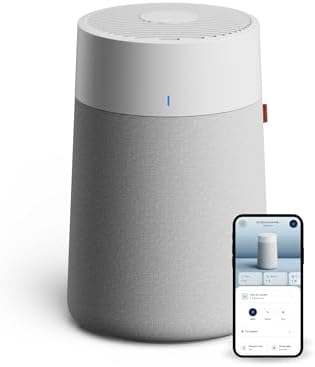
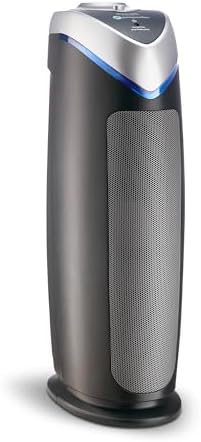
Compact Air Purifiers for Desks and Small Spaces
These picks come from the Hostinger affiliate plugin. Specs change by model year, so confirm filter type, CADR, noise and replacement filter costs on the product page.




What a Desk Unit Can Do
A small unit can reduce airborne dust and some pollen near you. It will not clean a large office, and its effect fades with distance.
Think of it as a personal-space supplement, not a room-wide solution.
CADR and Coverage
Check the CADR and the recommended room size. A compact unit may suit a few dozen square feet at best. If you work in a larger room, choose a unit sized for it.
Noise at Close Range
A desk unit sits close to your ears, so noise matters. Check decibels at low and medium speeds, and consider the pitch of the fan as well as the volume.
Placement
Place the unit on the desk or nearby with clearance, aiming airflow away from your face and papers. Keep intake and outlet clear of clutter.
Filters and Cost
Small units may use small filters that need frequent replacement. Check yearly cost and availability.
Shared Offices
Ask colleagues about noise and smells before adding a unit. Choose quiet models and avoid scented features.
Respect building rules about electrical devices.
Home Offices
In a home office, a room-sized unit may be better than a desk unit.
Close the door and place it with clearance.
Cables and Safety
Keep cables tidy and avoid overloading outlets. Place the unit on a stable surface.
Keep liquids away.
Odors and Carbon
Desk units with small carbon filters have limited capacity for odors.
Remove the source if possible.
Maintenance
Clean pre-filters, wipe the unit and replace filters on schedule.
Keep records.
How to Choose
- True HEPA filtration
- Quiet low and medium speeds
- CADR suited to the space
- Affordable replacement filters
Do
- Match the unit’s rated coverage to your room first
- Run it consistently, not only when the air feels bad
- Leave space around the unit for airflow
- Replace filters on the maker’s schedule
Don’t
- Do not buy on looks or price alone
- Do not block the intake or exhaust
- Do not skip filter changes
- Do not expect a purifier to fix every source of pollution
Honest Limits
- This guide uses manufacturer information and public guidance from the EPA and AHAM, not our own lab tests.
- Features and room ratings change between model years, so confirm on the listing before you buy.
- A purifier is not a medical device and does not replace medical advice or treatment.
Who Should Skip This
When to See a Professional
Frequently Asked Questions
Do desk purifiers work?
They can reduce particles near you but have limited coverage.
What CADR do I need?
Match it to the space you work in.
Are they noisy?
Check noise at low and medium speeds.
Should I buy a larger unit?
If the room is larger, yes.
Bottom Line
A desk purifier is a modest, personal-space tool. Choose a true HEPA unit that is quiet and sized for your area, place it with clearance and keep filters fresh.
Related reading: sens,fan,bed
Sources: EPA, Guide to Air Cleaners in the Home; AHAM Verifide.