Last updated:
As an Amazon Associate we earn from qualifying purchases. This does not change what we recommend. See our affiliate disclaimer.
The room feels stuffy, the air is stale by evening, and someone suggests an air purifier to improve the ventilation. It is a natural thought: the purifier moves air and the air feels better afterward. But the two words describe different things, and a purifier bought to fix ventilation leaves one problem untouched while solving another.
An air purifier does not improve ventilation, strictly speaking, because ventilation means exchanging indoor air with outdoor air, and a purifier exchanges nothing; it recirculates the room’s air through a filter and returns it. What a purifier does is remove particles, and with enough activated carbon some gases, from the air already there, which addresses much of what people mean by stuffy: dust, dander, smoke, cooking haze and odors. What it cannot do is bring in oxygen, remove the carbon dioxide that builds from breathing, dilute moisture, or clear the many volatile compounds a thin carbon stage does not hold. Those need actual air exchange: windows, trickle vents, exhaust fans, a heat recovery ventilator or an HVAC fresh air intake. The EPA treats the two as complementary, ventilation diluting pollutants and filtration removing the ones ventilation cannot, and the practical answer for most homes is both: ventilate as much as climate, outdoor air and energy costs allow, and filter continuously. A carbon dioxide monitor settles whether a room’s problem is ventilation at all, since a purifier running flat out will not move that number.
In short: a purifier cleans the air you have; ventilation replaces it. Stuffiness from particles and odors responds to a purifier; stuffiness from carbon dioxide and moisture responds only to fresh air.
The EPA identifies three strategies for indoor air quality, source control, ventilation and air cleaning, and notes that portable air cleaners reduce particles but do not provide fresh air or remove carbon dioxide. ASHRAE residential ventilation standards specify minimum outdoor air rates that filtration does not substitute for, and CDC guidance on ventilation lists HEPA cleaners as a supplement to, not a replacement for, outdoor air.
This guide is research-based, drawn from EPA, ASHRAE and CDC ventilation guidance and maker specifications. We have not tested the units in the comparison table and quote no prices or ratings.
A purifier helps when the problem is
- Dust, dander, pollen or smoke particles hanging in the air
- Cooking haze and settled odors, with a real carbon stage
- Outdoor pollution or pollen you do not want to let in by opening windows
- A room that must stay closed for noise, security or weather
Only ventilation helps when the problem is
- Carbon dioxide building up from people breathing in a closed room
- Moisture, condensation and humidity from showers, cooking and breathing
- Volatile compounds from new furniture, paint or cleaning that exceed carbon capacity
- A feeling of stuffiness that persists with the purifier running and the air clean
Key Takeaways
- Ventilation exchanges indoor air for outdoor air; a purifier recirculates and filters the same air, so it does not ventilate.
- A purifier removes particles and, with enough carbon, some gases, which covers much of what makes a room feel stuffy.
- Carbon dioxide, moisture and bulk volatile compounds need air exchange: windows, vents, exhaust fans or a ventilation system.
- A carbon dioxide monitor tells you whether a room’s problem is ventilation; a purifier will not move that reading.
- The EPA treats ventilation and filtration as complementary; most homes need both.
- Filtration matters most when windows must stay closed for pollution, pollen, noise or weather.
- Pair brief, regular ventilation with continuous filtration for the best result at reasonable energy cost.

Purifiers That Pair Well With Ventilation
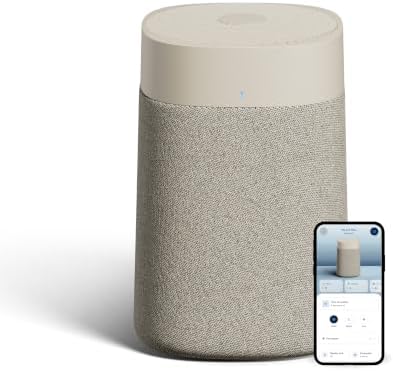
These widely reviewed units carry true HEPA with a meaningful carbon stage and list CADR figures suited to a living room, so they handle the particles and odors that fresh air cannot while windows and fans handle the rest. Compare the maker-listed CADR to your space.





How This Guide Approaches the Question
We looked at what ventilation means in building science, what a purifier physically does to air, which complaints each addresses, how to tell them apart with a carbon dioxide monitor, and how to combine the two in an ordinary home. Product details in the table come from maker specifications.
One instrument makes the whole topic concrete: a carbon dioxide monitor on the shelf. If it climbs through the evening with the purifier running, the room needs air, not filtration.
What Ventilation Actually Means
Ventilation is the movement of outdoor air into a building and indoor air out. It dilutes everything that builds up indoors, carbon dioxide from breathing, moisture from showers and cooking, volatile compounds from furnishings and cleaning, odors, and particles, by replacing stale air with fresh. It happens by infiltration through leaks, by opening windows and doors, through exhaust fans in bathrooms and kitchens, and by mechanical systems that bring in and condition outdoor air. Building standards specify minimum rates in air changes per hour or cubic feet per minute per person, and modern tight homes often fall short without deliberate ventilation.
| Ventilation method | What it does | Limits |
|---|---|---|
| Opening windows | Fast air exchange; free | Lets in pollen, pollution, noise, heat or cold |
| Trickle vents | Continuous low-level exchange | Small rates; depends on wind and stack effect |
| Bathroom and kitchen exhaust fans | Remove moisture and cooking pollutants at source | Need make-up air; must vent outdoors |
| Whole-house fan | Large exchange in mild weather | Unconditioned air; not for extreme seasons |
| HVAC fresh air intake | Filtered, conditioned outdoor air | Only while the system runs; depends on design |
| Heat or energy recovery ventilator | Continuous exchange with heat recovered | Installation cost; filters need maintenance |
What a Purifier Does Instead
A purifier takes room air in, passes it through a pre-filter, a HEPA filter and usually a carbon stage, and pushes the same air back out. Nothing enters or leaves the building. Particles are removed; some gases are adsorbed by carbon in proportion to how much carbon there is; carbon dioxide, oxygen, water vapor and most of the air’s bulk pass through unchanged. The result is cleaner air, not fresher air. For a room whose problem is particles, pollen from outside, dust, dander, smoke, cooking haze, the purifier is the right tool and ventilation may make things worse by bringing more in. For a room whose problem is stale air, a purifier running on high all evening does nothing a carbon dioxide meter can see.
| Pollutant | Ventilation | HEPA purifier | Purifier with substantial carbon |
|---|---|---|---|
| Dust, dander, pollen | Dilutes; may bring more in | Removes | Removes |
| Smoke and cooking particles | Dilutes | Removes | Removes |
| Cooking and pet odors | Dilutes | No effect | Reduces |
| Volatile organic compounds | Dilutes | No effect | Reduces until carbon saturates |
| Carbon dioxide | Removes | No effect | No effect |
| Moisture and humidity | Removes or adds, by season | No effect | No effect |
| Outdoor pollution and pollen | Brings in | Removes what enters | Removes what enters |
Stuffy Room: Which Kind?
Stuffiness is a feeling, and two different things produce it. The first is a load of particles and odors, which makes air feel heavy and smell used; a purifier clears that within an hour. The second is carbon dioxide and moisture from people breathing in a closed room, which makes air feel close, warm and tiring, and which no filter changes. A carbon dioxide monitor distinguishes them. Outdoor air sits around 400 to 450 parts per million; a well-ventilated room stays under about 800; a closed bedroom with two sleepers can pass 1,500 to 2,000 by morning. If the reading climbs through the evening with the purifier running, the room needs ventilation.
Worked example: a home office feels stuffy by mid-afternoon despite a purifier on medium. A monitor shows 450 ppm at 9 a.m. and 1,400 by 3 p.m. with the door closed. Opening the window a few inches and the door brings it to 700 within twenty minutes; the purifier keeps running to catch the pollen that comes in. The stuffiness was carbon dioxide, and the purifier was never going to touch it.
When Filtration Is the Better Answer
Sometimes ventilation is the problem rather than the solution. On high pollen days, during wildfire smoke, next to a busy road or in winter cold, opening windows brings in what you are trying to avoid or costs more than it is worth. In those cases the purifier carries the load: windows stay closed, the purifier runs continuously, and ventilation is limited to short bursts when outdoor air is cleanest, early morning after rain for pollen, when smoke readings dip, at night for traffic. A HVAC system with a MERV 13 filter on its fresh air intake can ventilate and filter at once, which is the ideal for polluted or pollen-heavy areas.
- Wildfire smoke: windows closed; purifier on high; minimal ventilation until readings fall.
- High pollen: windows closed in the morning; brief ventilation after rain or in the evening; purifier continuous.
- Traffic pollution: ventilate at night; purifier running by day.
- Winter: short, wide-open bursts of ventilation several times a day; purifier continuous; a heat recovery ventilator if available.
- Noise or security: windows closed; purifier for particles; mechanical ventilation for fresh air.
Combining Ventilation and Filtration
The EPA’s framing is source control first, ventilation second, air cleaning third, and in practice the three run together. Ventilate deliberately: open windows wide for ten minutes several times a day rather than a crack all day, which exchanges more air for less heat loss; run bathroom and kitchen exhaust fans during and after use; keep trickle vents open. Filter continuously: a purifier sized for the room on medium, so it handles the particles ventilation brings in and the ones generated indoors. Control sources: cook with the hood on, choose low-emission furnishings, keep humidity at 30 to 50 percent. A carbon dioxide monitor and a particle monitor between them tell you which lever to pull on a given day.
Worked example: a two-bedroom apartment in a city with traffic pollution ventilates for ten minutes at 6 a.m. and 10 p.m. when the road is quiet, runs a 200 CADR purifier in the living room on medium all day and a smaller one on sleep mode in the bedroom, and keeps the kitchen hood on while cooking. Carbon dioxide stays under 900, particles stay low, and the heating bill is barely affected.
When a Purifier Is Not Enough: Mechanical Ventilation
Tight modern homes, basements, interior rooms without windows, and bedrooms with several sleepers often cannot ventilate adequately by opening windows, and a purifier does not help with the carbon dioxide and moisture that result. The options are mechanical: a continuous low-rate exhaust fan with make-up air, an HVAC fresh air intake with a damper, or a heat or energy recovery ventilator that brings in outdoor air while recovering most of the heat from the outgoing air. These are installed by an HVAC professional, sized to the house, and the purifier then does what it does best alongside them.
| Situation | Why windows fall short | Mechanical answer |
|---|---|---|
| Tight new build | Little infiltration; CO2 and moisture build | Heat recovery ventilator |
| Basement room | No windows; damp | Exhaust fan with make-up air; dehumidifier |
| Interior bedroom | No exterior wall | Transfer grille and whole-house ventilation |
| Cold climate winter | Window ventilation costs heat | Energy recovery ventilator |
| Polluted location | Open windows bring in pollution | HVAC intake with MERV 13 filter |
Choosing a Purifier to Pair With Ventilation
Because the purifier’s job here is particles and odors while ventilation handles the rest, choose by CADR for the room, by carbon weight if odors matter, and by quiet operation on medium so it runs continuously. Sensors and auto mode are useful for catching what ventilation brings in; a unit with a carbon dioxide reading on its display is reporting ventilation, not fixing it, which is handy as long as that is understood. Nothing about the unit needs to be special; it simply needs to be the right size and left on.
How to Improve Ventilation and Air Quality Together in 6 Steps
- Put a carbon dioxide monitor in the room for a day to learn whether stuffiness is a ventilation problem or a particle and odor problem.
- Ventilate deliberately: windows wide for ten minutes several times a day, exhaust fans during and after showers and cooking, trickle vents open.
- Size a true HEPA purifier for the room by CADR, with a real carbon stage if odors matter, and run it continuously on medium.
- On high pollen, smoke or pollution days, close windows, run the purifier on high and ventilate only in brief windows when outdoor air is cleanest.
- Keep humidity at 30 to 50 percent and control sources: cook with the hood on, choose low-emission furnishings.
- If carbon dioxide stays high despite window ventilation, ask an HVAC professional about mechanical ventilation or a heat recovery ventilator.
Do and Do Not
Do
- Measure carbon dioxide to diagnose stuffiness.
- Ventilate in short, wide-open bursts.
- Run the purifier continuously for particles.
- Close windows and filter on bad outdoor air days.
- Use exhaust fans at the source.
Do not
- Do not expect a purifier to add fresh air or lower carbon dioxide.
- Do not leave windows cracked all day in winter; burst ventilation is better.
- Do not ventilate during peak pollen or smoke.
- Do not rely on a thin carbon sheet for volatile compounds.
- Do not treat a purifier’s CO2 reading as something it can fix.
Who Should Skip This
If a carbon dioxide monitor stays under 800 ppm with people in the room, skip worrying about ventilation; the room is exchanging air adequately, and any remaining stuffiness is particles or odors for the purifier.
If outdoor air is the pollutant, during wildfire smoke or on peak pollen mornings, skip ventilation for now and let the purifier carry the room until outdoor readings improve.
Honest Limits
- Ventilation rates depend on the building, weather and wind, and are hard to measure without instruments.
- Carbon dioxide thresholds are comfort guides, not health limits, and vary by guidance.
- Purifier carbon capacity for volatile compounds varies widely by model and is finite.
- Outdoor air quality varies by location and day; local monitoring data is the guide.
- Mechanical ventilation needs professional sizing and installation.
- Nothing here is medical advice.
When to See a Professional
Call an HVAC professional for mechanical ventilation, a heat or energy recovery ventilator, an HVAC fresh air intake or a MERV 13 filter upgrade when window ventilation cannot keep carbon dioxide and moisture down, particularly in tight homes, basements and interior rooms.
See a doctor if symptoms such as headaches, drowsiness or breathing difficulty persist in a room regardless of ventilation and filtration; those are not air quality equipment questions. Nothing here is medical advice.
Frequently Asked Questions
Does an air purifier improve ventilation?
No. Ventilation means exchanging indoor air with outdoor air, and a purifier recirculates the room’s air through a filter without exchanging any. It removes particles and, with enough carbon, some gases, which addresses much of what feels stuffy, but it adds no fresh air and does not lower carbon dioxide or moisture.
Can an air purifier replace opening windows?
For particles and odors, largely yes, and on high pollen, smoke or pollution days it is better than opening windows. For carbon dioxide from breathing, moisture and bulk volatile compounds, no; those need air exchange. Most homes do best with brief regular ventilation plus continuous filtration rather than one or the other.
Why does my room still feel stuffy with the purifier on?
Because the stuffiness is probably carbon dioxide and moisture from people breathing in a closed room, which no filter changes. A carbon dioxide monitor confirms it: readings climbing past 1,000 ppm with the purifier running mean the room needs fresh air. Open a window or the door and the feeling lifts within minutes.
Does an air purifier add oxygen or remove carbon dioxide?
Neither. Oxygen and carbon dioxide are gases that pass through HEPA and carbon unchanged, and a purifier has no mechanism to generate or absorb either. Only air exchange with outdoors restores oxygen and removes carbon dioxide. A purifier that displays a carbon dioxide reading is measuring ventilation, not providing it.
How do I know if my home needs more ventilation?
Put a carbon dioxide monitor in the main living space and a bedroom for a day. Outdoor air is about 400 to 450 ppm; under 800 indoors with people present means ventilation is adequate; readings regularly over 1,000, or a bedroom reaching 1,500 by morning, mean the room needs more fresh air.
Should I open windows if I have an air purifier?
Yes, deliberately: wide open for ten minutes several times a day exchanges more air with less heat loss than a crack all day, and the purifier runs continuously to catch the particles that come in. Skip ventilation during wildfire smoke, peak pollen mornings or heavy traffic hours and let the purifier carry the room.
Can a purifier remove VOCs from new furniture or paint?
Partly, if it has a substantial activated carbon stage measured in pounds; a thin carbon sheet does little and saturates fast. Ventilation is the main remedy for off-gassing, with the purifier reducing what remains. Air out new furnishings before use and ventilate heavily for the first days after painting.
What about purifiers that show a carbon dioxide reading?
The display is a sensor, not a remedy. It is useful as a prompt to ventilate, since it tells you when the room is becoming stale, but the purifier cannot lower the number. Treat a rising reading as a cue to open a window or door, and the purifier keeps handling particles meanwhile.
Is ventilation or filtration more important?
The EPA lists source control, then ventilation, then air cleaning, and treats them as complementary. Ventilation dilutes everything but brings outdoor pollutants in and costs energy; filtration removes particles and some gases but adds no fresh air. In most homes the practical answer is both, with the balance shifting by season and outdoor air quality.
What if windows cannot provide enough ventilation?
Tight homes, basements and interior rooms often cannot ventilate adequately by window, and carbon dioxide and moisture build regardless of the purifier. The answer is mechanical: a continuous exhaust fan with make-up air, an HVAC fresh air intake, or a heat recovery ventilator, sized and installed by an HVAC professional, with the purifier alongside.
Bottom Line
An air purifier does not improve ventilation, because it exchanges no air with outdoors; it cleans the air a room already has. That covers particles, pollen, smoke, dust and, with real carbon, odors and some gases, which is much of what makes a room feel stuffy. It does not cover carbon dioxide, moisture or heavy off-gassing, which only fresh air dilutes, and a carbon dioxide monitor shows in a day which kind of stuffiness a room has.
The practical answer is both: ventilate deliberately in short wide-open bursts, run exhaust fans at the source, and keep a correctly sized purifier running continuously to handle what ventilation brings in and what is generated indoors. On days when outdoor air is the problem, close the windows and let the purifier carry the room; when windows cannot do the job at all, mechanical ventilation is the next step.
Related reading: Air purifier vs opening a window, Can air purifiers reduce VOCs, How to check air purifier air quality.