Last updated:
As an Amazon Associate we earn from qualifying purchases. This does not change what we recommend. See our affiliate disclaimer.
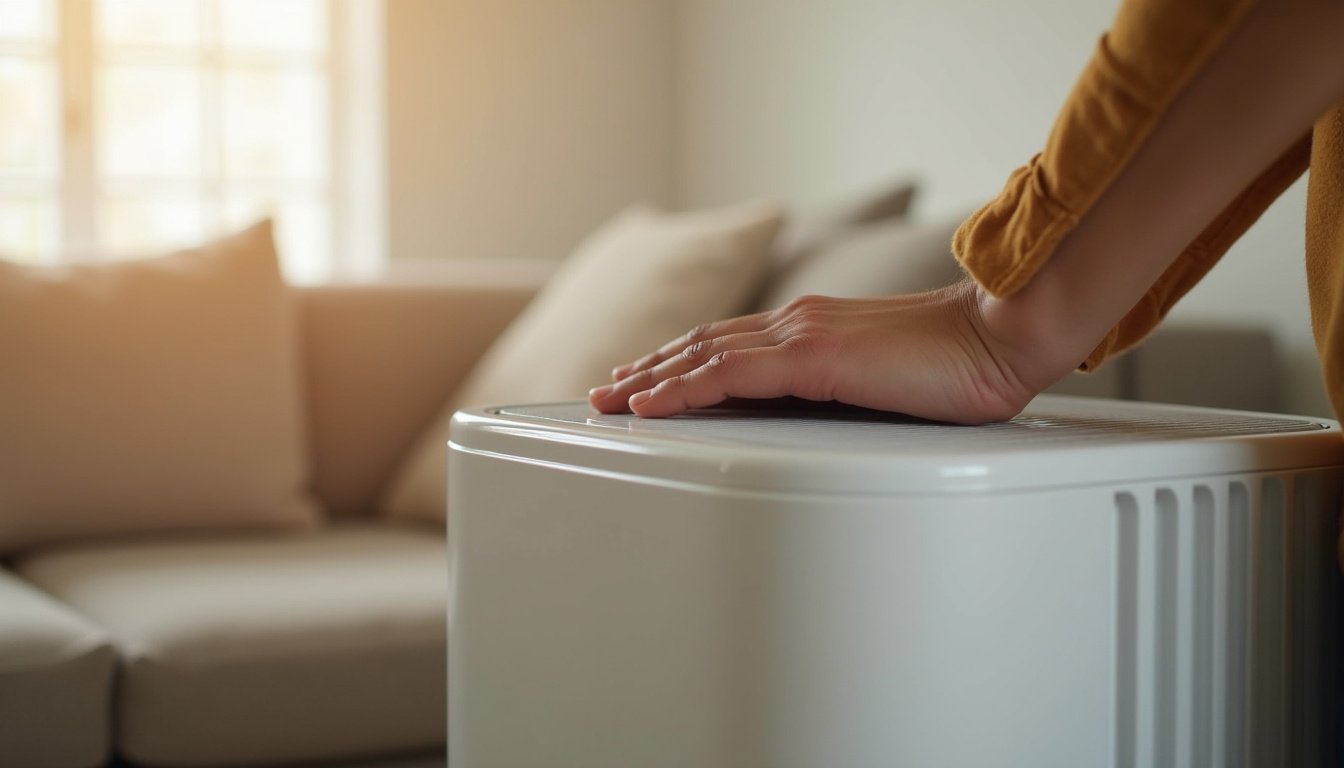
Put a hand on a purifier that has run all day and it is warm. That is unremarkable; a motor turns electricity into moving air and a little heat. The worry starts when warm becomes hot, when there is a smell of hot plastic, when the unit cuts out and restarts, or when the plug is warm. Those are different things.
An air purifier motor overheats for one main reason: it is working too hard against too little airflow. A clogged HEPA filter, a pre-filter felted with pet hair, an intake pressed against a wall, a filter still in its shipping plastic, or motor vents packed with dust all force the fan to push against resistance while the air that should carry heat away from the windings is not moving. The motor runs hotter and its thermal protection may cut it out until it cools. Nearly all of this is fixed by a fresh filter, a foot of clearance and a vacuumed housing. The smaller set of causes is electrical: a failing capacitor, a shorted winding, a seized bearing, or a cord, plug or outlet problem, and those produce heat that no cleaning cures. A housing warm to the touch after hours on high is normal. A housing too hot to hold, a smell of hot insulation, buzzing, discoloration, a warm plug or a tripped breaker is an electrical fault: unplug it, do not plug it back in, and contact the maker.
In short: warm is normal, hot with a smell is not. Replace the filter, give it clearance, vacuum the vents; if it still runs hot, smells or has a warm plug, unplug it and call the maker.
Maker manuals list clogged filters and blocked intakes as causes of overheating and thermal cut-out, instruct owners to unplug before cleaning, and direct electrical faults to service. Safety guidance treats a hot plug, burning smell, buzzing or discoloration on any appliance as a reason to disconnect it.
This guide is research-based, drawn from maker manuals, small appliance practice and consumer electrical safety guidance. We have not tested the units in the table and quote no prices or ratings. Nothing here is medical advice; the maker’s instructions override anything here.
Normal warmth
- Housing comfortably warm after hours on high
- No smell beyond faint new-appliance plastic in the first days
- Fan speed steady; no cut-outs
- Plug and cord at room temperature
Overheating or an electrical fault
- Housing too hot to rest a hand on, or hot in one spot
- Smell of hot plastic, scorched dust or burning insulation
- Unit cuts out and restarts, hums without spinning, or trips a breaker
- Warm plug or cord, discoloration or buzzing: unplug and call the maker
Key Takeaways
- A warm housing after hours of running is normal; hot with a smell, buzzing or a warm plug is not.
- The main cause of a hot motor is restricted airflow: a clogged filter, matted pre-filter, blocked intake or dusty motor vents.
- Thermal cut-out that stops and restarts the unit is the motor protecting itself; fix the airflow before it ages the motor.
- Replace the HEPA, rinse the pre-filter, unwrap any shipping plastic and give the unit a foot of clearance.
- Vacuum dust from housing and motor vents with a brush; never use compressed air, which drives dust into the motor.
- Electrical causes, a failing capacitor, shorted winding, seized bearing or faulty cord, produce heat that cleaning cannot fix; they are service matters.
- Any burning smell, warm plug, discoloration, sparking or tripped breaker means unplug, do not reuse, and contact the maker.
Purifiers That Run Cool With Good Airflow
These widely reviewed units have open intakes that tolerate real placement, filters that lift out for easy changes and motors that run on moderate speeds in rooms their CADR suits, which is what keeps a motor cool. Compare the maker-listed CADR against your room and keep the filter on schedule.






How This Guide Approaches the Question
We looked at why fan motors heat up, at the airflow causes that account for most overheating, at the electrical faults that account for the rest, at how to tell them apart from outside the housing, and at where safety guidance draws the line. Product details in the table come from maker specifications.
A motor’s cooling is the air it moves. Starve the airflow and the motor heats; restore it and the motor cools. That single idea explains most hot purifiers.
Why Purifier Motors Heat Up
Every electric motor wastes some energy as heat in its windings and bearings, and a purifier motor is cooled by the air passing through the unit and over its housing. When the fan pushes against a loaded filter, the motor draws more current for less airflow, so it produces more heat while less air carries it away. The result is a motor running hotter than designed, often for months before anyone notices. Most units have a thermal cut-out that stops the motor when it reaches a limit and restarts it once it cools, which is why an overheating purifier often runs, stops, and runs again.
| Cause | How it heats the motor | Fix |
|---|---|---|
| Loaded HEPA filter | High resistance; more current, less cooling air | Replace the HEPA |
| Pre-filter matted with hair | Surface blockage upstream | Rinse, dry fully, refit |
| Shipping plastic on a new filter | Near-total blockage | Unwrap |
| Intake against a wall or in a cabinet | Starved fan | A foot of clearance; open placement |
| Dust packed in motor vents and housing | Insulates windings; unbalances impeller | Vacuum with brush attachment |
| Running on high in a hot room all day | Normal heat with little margin | Acceptable; keep airflow clear |
| Failing run capacitor | Motor runs slow and hot | Service; matched part only |
| Shorted winding or seized bearing | Heat with little or no rotation | Unplug; service or replace |
| Damaged cord, plug or outlet | Heat at the connection, not the motor | Unplug; stop using; electrician or maker |
Warm Versus Hot: Telling Them Apart
The housing of a purifier that has run on high for hours is warm, perhaps noticeably so near the motor, and that is the appliance working. The signs that it has crossed into overheating or into an electrical fault are specific and are read from outside the housing, with the unit running and then unplugged.
| Sign | Normal | Overheating from airflow | Electrical fault |
|---|---|---|---|
| Housing temperature | Warm, even | Hot near motor; uncomfortable to hold | Hot, possibly in one spot; may be discolored |
| Smell | None, or faint plastic when new | Hot dust, warm plastic | Burning insulation, acrid, electrical |
| Sound | Steady fan | Strained, higher pitch; cut-outs | Buzzing, humming without spin, crackle |
| Running pattern | Continuous | Runs, stops, restarts | Will not start; trips breaker; runs regardless of controls |
| Plug and cord | Room temperature | Room temperature | Warm or hot; discolored; soft |
| Airflow | Normal | Weak | Weak or none |
| Action | None | Fix filter, clearance, dust | Unplug; do not reuse; contact maker |
The Airflow Fixes
Unplug the unit and let it cool. Pull the filters: a HEPA grey or brown across its face, or past the maker’s interval, is replaced; a pre-filter felted with hair and lint is rinsed, dried completely and refitted; a new filter is checked for every scrap of plastic and tape and seated squarely. Look into the fan and motor area with a light and vacuum visible dust from the housing, the impeller and the motor’s cooling slots with a brush attachment, never with compressed air, which drives dust into bearings and windings. Move the unit so every intake has a foot of clearance and nothing sits on top or drapes over it, and out of any cabinet, closet or under-desk spot where it recirculates its own warm exhaust.
- Unplug; wait until the housing is cool.
- Remove and inspect filters; replace a loaded HEPA; rinse and dry the pre-filter; unwrap any plastic.
- Vacuum dust from grilles, housing, impeller and motor vents with a soft brush.
- Reseat filters squarely and close the compartment.
- Place the unit in the open with a foot of clearance on every intake side.
- Plug in, run on high for an hour, and check housing temperature, smell and the plug.
Worked example: a two-year-old unit in a home with two cats runs hot and cuts out on summer afternoons. The pre-filter is a felt of fur, the HEPA brown, and the unit sits in a cabinet alcove. New filters, a vacuumed housing and a move into the open return it to running warm and steady with no cut-outs. The motor was never faulty; it was suffocating.
The Thermal Cut-Out
Most purifier motors carry a thermal protector that opens when the windings reach a set temperature and closes again once they cool, so an overheating unit stops for a few minutes and restarts, often repeatedly through a hot afternoon. This is protection working, not a fault in itself, but it is a warning: each cycle means the motor has reached its limit, and insulation that is repeatedly cooked ages fast. A unit that cycles on and off needs its airflow fixed that day. If it continues to cut out with fresh filters, clearance and a clean housing, the motor itself is running hot from a capacitor or winding fault and needs service.
Electrical Causes
When filters are fresh, the unit has clearance and the housing is clean, remaining heat is electrical. A run capacitor losing capacitance lets the motor start slowly and run below speed, drawing more current and heating; a bulging or leaking capacitor is the visual sign, and replacement is with a matched part after discharging, which is a technician’s job for most owners. A winding with damaged insulation shorts partially, runs very hot, hums and may smell of varnish; it is not repairable, and the motor or blower assembly is replaced. A dry or seized bearing stalls the motor so it heats without turning. A frayed cord, a loose plug or a worn outlet heats at the connection and can ignite independent of anything inside the unit.
| Electrical cause | Sign | Home action | Then |
|---|---|---|---|
| Failing run capacitor | Slow start; hot; hums | None; unplug | Service with matched capacitor |
| Shorted winding | Very hot; varnish or burning smell; hums | Unplug; do not reuse | Replace blower assembly or unit |
| Seized bearing | Hums, no spin; hot | Unplug | Replace blower assembly or unit |
| Speed board fault | Runs on one speed; hot on low | Unplug | Service |
| Damaged cord or plug | Warm or hot plug; discoloration | Unplug; do not reuse | Maker; never tape a damaged cord |
| Worn outlet | Warm faceplate; plug loose | Unplug; stop using outlet | Electrician |
None of these is a home repair on a sealed appliance, and opening the housing voids most warranties. The home action is the same for all: unplug, do not plug it back in, and contact the maker or a technician.
Keeping the Motor Cool for Good
A cool motor is a well-fed one. Replace the HEPA on the maker’s interval or sooner in homes with pets, smoke or renovation, judging by the color of the media rather than the light; rinse the pre-filter monthly; vacuum the housing and grilles each season; keep a foot of clearance and nothing on top; and size the unit generously for its room so it runs on medium rather than high all day. A unit that struggles on high in a room twice its rating runs hot by design, and the fix is a larger unit or a second one, not a repair.
When to Stop Using It
Some signs end the diagnosis and the use of the unit at once: a smell of burning insulation or acrid smoke, a housing too hot to touch or discolored, a plug or cord that is warm, soft or discolored, sparking, a tripped breaker, or a unit that runs regardless of its controls. Unplug it, move it away from anything flammable while it cools, do not plug it back in to see whether the problem recurs, and contact the maker. If a smell of burning persists in the room with the unit unplugged, or there is any sign of fire, leave and call emergency services. Electrical fires in small appliances are uncommon but real, and the cost of caution is a phone call.
How to Deal With an Overheating Motor in 6 Steps
- Unplug the unit and feel the plug and cord; if either is warm or the housing smells of burning, stop here and contact the maker.
- Let it cool, then remove the filters: replace a loaded HEPA, rinse and dry the pre-filter, and unwrap any shipping plastic.
- Vacuum dust from grilles, housing, impeller and motor vents with a soft brush; never use compressed air.
- Place the unit in the open with a foot of clearance on every intake side and nothing on top.
- Run it on high for an hour and check: housing warm but holdable, no smell, no cut-outs, plug at room temperature means fixed.
- If it still runs hot, cycles on and off, hums or smells with everything clean and clear, keep it unplugged and contact the maker.
Do and Do Not
Do
- Feel the plug and cord as well as the housing.
- Replace loaded filters and unwrap new ones.
- Vacuum motor vents with a brush.
- Give the unit a foot of clearance.
- Unplug at the first burning smell.
Do not
- Do not use compressed air on the motor or filters.
- Do not run a unit that cycles on and off repeatedly.
- Do not open the housing to inspect the motor.
- Do not tape a damaged cord or plug.
- Do not plug a unit back in to see if the smell returns.
Who Should Skip This
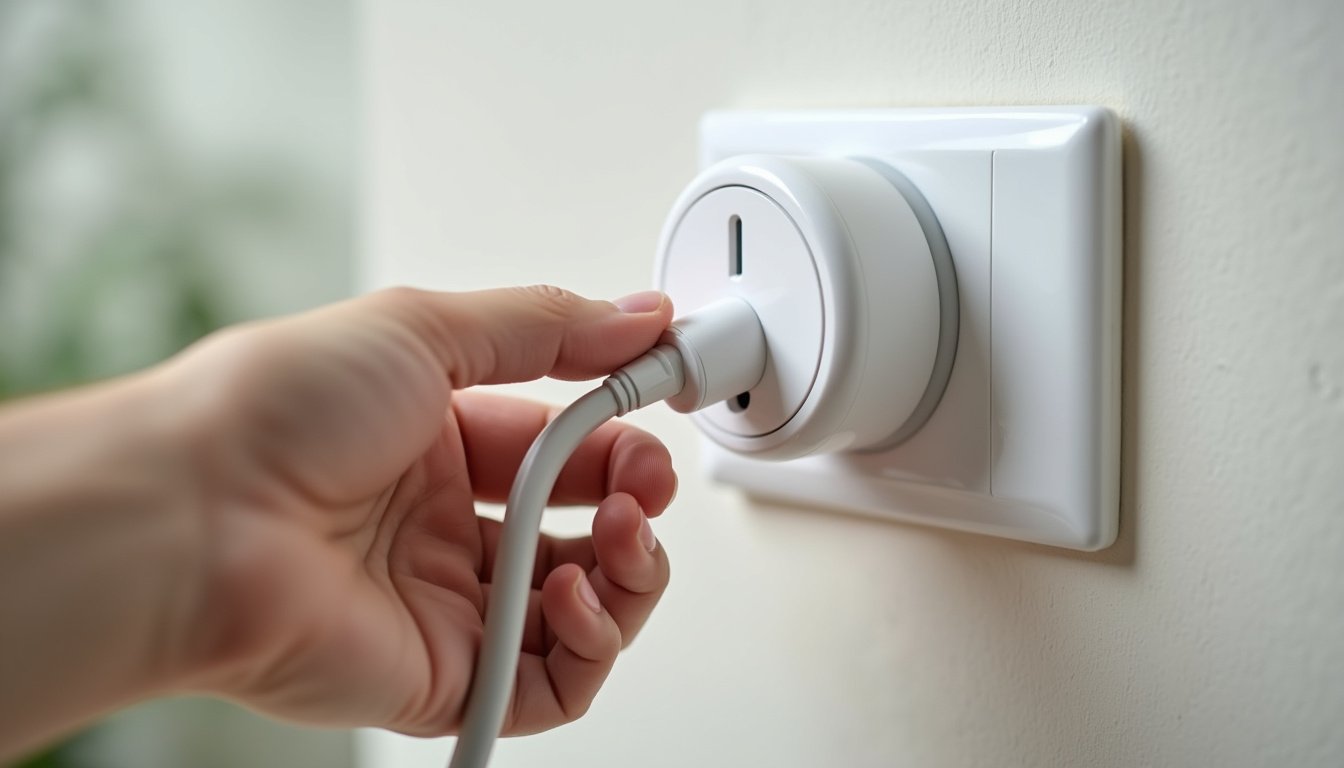
If the plug, cord or outlet is warm, skip the filter and airflow steps; that is a connection fault, not a motor problem, and the unit stays unplugged until the maker or an electrician has seen it.
If the housing is merely warm after hours on high, with no smell, no cut-outs and a cool plug, skip the worry; that is a motor working normally, and the only maintenance is the usual filter schedule.
Honest Limits
- Hand tests for temperature are rough; we did not measure any unit.
- Thermal cut-out behavior varies by model; some units show an error code instead of restarting.
- Capacitor and winding faults are inferred from symptoms, not confirmed from outside.
- Opening the housing typically voids the warranty.
- Maker manuals override any general step here.
- Nothing here is medical advice; electrical faults are a fire and shock matter, and any sign of fire means leave and call emergency services.
When to See a Professional
Contact the maker for any unit that runs hot, cycles or hums with fresh filters and clear airflow, for any burning smell, and for any damaged cord or plug; motor, capacitor and cord faults are service matters on a sealed appliance.
Call an electrician if the outlet or faceplate is warm or the plug sits loose in it, and emergency services for any sign of fire; dispose of a failed unit through appliance recycling.
Frequently Asked Questions
Is it normal for an air purifier to get warm?
Yes. A motor and fan turn electricity into moving air and some heat, and a housing comfortably warm after hours on high is normal. It is not normal for it to be too hot to hold, to smell of hot plastic or burning, to cut out and restart, or for the plug to be warm.
Why is my air purifier motor overheating?
Almost always restricted airflow: a clogged HEPA, a pre-filter matted with hair, shipping plastic on a new filter, an intake against a wall or in a cabinet, or dust packed in the motor vents. The motor pushes against resistance while less air carries heat away. Less often a failing capacitor, shorted winding or seized bearing.
Why does my air purifier turn off and on by itself when hot?
The motor’s thermal protector is opening when the windings reach a limit and closing once they cool. It is protection working, but each cycle means the motor is at its limit and its insulation is aging. Fix the airflow that day: fresh filters, clearance, a vacuumed housing. If cycling continues, the motor needs service.
Can a dirty filter make the motor overheat?
Yes, and it is the commonest cause. A loaded filter raises resistance, so the motor draws more current for less airflow and the air that should cool it barely moves. Replace a HEPA that is grey or brown or past its interval, rinse and dry the pre-filter, and the motor usually runs steady again.
What does a burning smell from an air purifier mean?
Hot dust on a straining motor in mild cases, but a smell of burning insulation, varnish or acrid smoke means a winding or wiring fault. Unplug the unit, move it from anything flammable, do not plug it back in to test, and contact the maker.
Why is the plug on my air purifier warm?
A warm plug, cord or outlet faceplate is a connection fault, not a motor problem: a loose plug, a worn outlet or a damaged cord heating at the joint, which can start a fire independently of anything inside the unit.
Can I open the purifier to check or cool the motor?
No. The housing is sealed, opening it voids most warranties, capacitors hold a charge, and nothing inside is a home repair. Everything useful is done from outside: filters, clearance, vacuuming vents with a brush, and feeling the housing and plug. If those do not cure the heat, the unit goes to the maker.
Does running on high all day overheat the motor?
Not if airflow is clear; motors are designed for continuous duty on high. It does leave less margin, so a unit that runs on high all day in a room larger than its rating, with aging filters and a wall behind it, is the one that overheats.
Can I use compressed air to clean dust off the motor?
No. Compressed air drives dust deep into bearings and windings, where it insulates and abrades, and it tears nearby filter media. Vacuum visible dust from grilles, housing, impeller and motor vents with a soft brush attachment, with the unit unplugged and cool. That removes the dust rather than relocating it.
When should I stop using an overheating air purifier entirely?
At any burning smell, a housing too hot to touch or discolored, a warm plug or cord, sparking, a tripped breaker, or a unit that cycles on and off or hums after filters, clearance and dust have been dealt with. Unplug it, do not plug it back in, and contact the maker.
Bottom Line
An air purifier motor overheats because it is suffocating. A clogged filter, a matted pre-filter, an intake against a wall or vents packed with dust make the motor work harder while the air that should cool it stops moving, and the cure is a fresh filter, a foot of clearance and a brush on the vents. Warm after a day on high is normal; a unit that cycles on and off, strains or smells of hot dust needs that cure today.
The remaining causes are electrical, a capacitor, a winding, a bearing or a cord, and they announce themselves with heat that cleaning does not fix, a smell of burning insulation, buzzing or a warm plug. For those there is one action: unplug, do not reuse, and call the maker. The cost of caution is a phone call.
Related reading: How to repair air purifier fan motor, Air purifier airflow issues, Air purifier smells like burning.