Last updated:
As an Amazon Associate we earn from qualifying purchases. This does not change what we recommend. See our affiliate disclaimer.
Most of an air purifier is built to last for years. A few parts are built to be used up, and a few more fail or go missing along the way. Knowing which is which saves money in both directions: you stop paying for parts that were never the problem, and you stop throwing away a sound unit because one small component gave out.
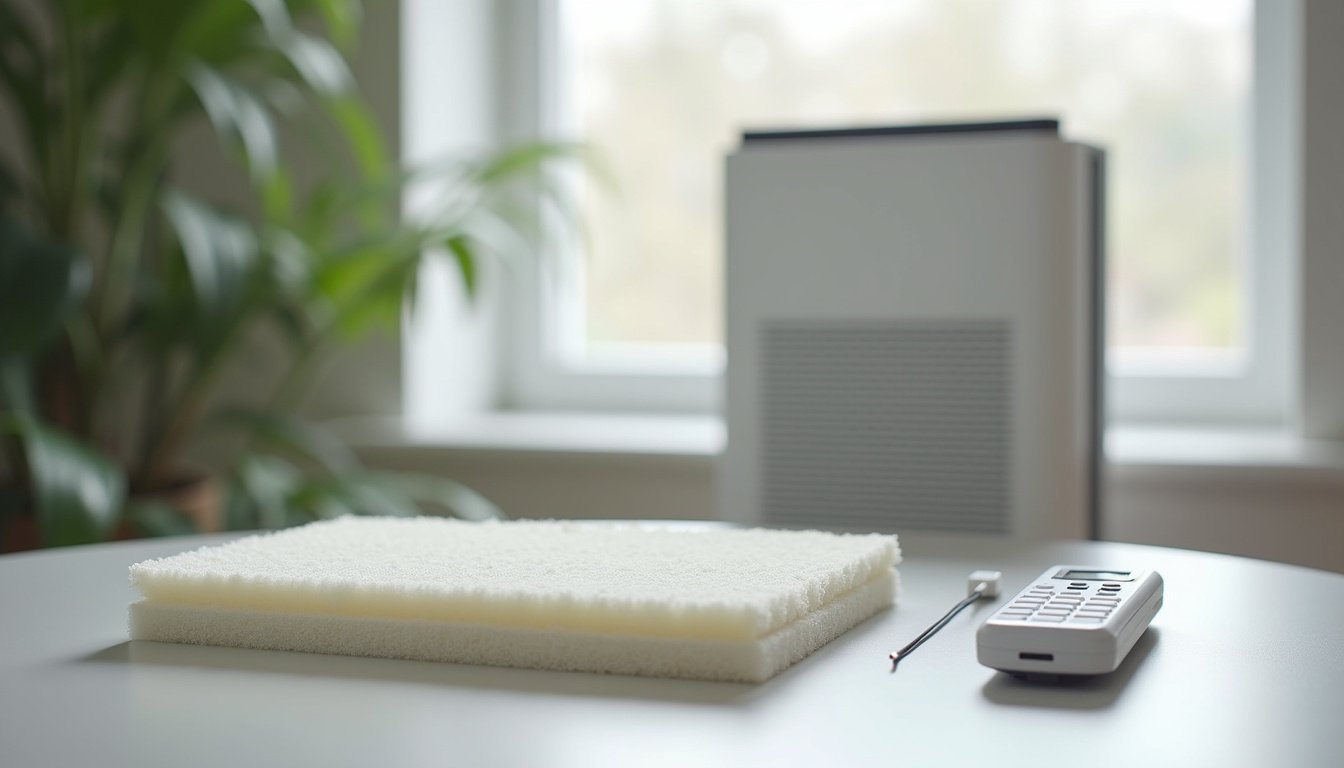
The replacement parts you will actually buy for an air purifier are, in order of frequency, the HEPA filter, the activated carbon stage, the pre-filter if it is disposable, and on some models the UV-C bulb. Those are consumables with maker-stated intervals, typically 6 to 12 months for HEPA, 3 to 6 for carbon and about a year for UV bulbs. A second group is occasionally replaced: remote controls, casters and feet, filter covers and grilles, washable pre-filter frames, and on some units the particle sensor module. A third group, the fan motor, control board and power supply, is not sold to consumers by most makers and is not a home repair; failures there mean warranty service or a new unit. Buy consumables that match the exact model, from the maker or a reputable brand labeled for it, because filters that almost fit let air bypass the media.
In short: budget for filters and carbon, keep an eye on the small parts that go missing, and treat anything electrical as the maker’s job.
The EPA’s guide to air cleaners in the home advises considering filter replacement cost and availability when choosing a unit and following the manufacturer’s maintenance instructions. Makers’ manuals list the parts they sell and warn against opening the housing beyond the filter compartment, which is where the line between owner maintenance and service lies.
This guide is research-based, drawn from maker manuals and parts pages, EPA guidance and the mechanics of fans and filters. We have not tested the units in the comparison table and quote no prices or ratings, only published features relevant to parts and upkeep.
Easy owner replacements
- HEPA filter, carbon stage and pre-filter
- UV-C bulb on models that have one, following the manual
- Remote control, casters, feet and filter cover
- Washable pre-filter frame or mesh
Leave to the maker
- Fan motor, bearings or blades
- Control board, display or buttons
- Power cord, plug or internal power supply
- Anything that requires opening the housing beyond the filter bay
Key Takeaways
- Filters are the parts you will buy most: HEPA every 6 to 12 months, carbon every 3 to 6, UV bulbs about yearly where fitted.
- Buy filters labeled for the exact model; a near-fit filter lets air bypass the media.
- Remotes, casters, feet and covers are the small parts that go missing and are usually available from the maker.
- Sensor modules are replaceable on some units, but a dirty sensor is far more common than a failed one.
- Motors, boards and power supplies are not consumer parts; failures mean warranty service or replacement.
- Check replacement availability before buying a unit; a discontinued filter ends the unit’s life.
- Never open the housing beyond the filter compartment or run a unit with electrical symptoms.
Purifiers With Widely Available Parts to Compare
These widely reviewed filter-based units come from makers with established parts supply, clear filter designations and published replacement intervals. Compare the maker-listed filter schedule and CADR against your room, and favor models whose filters are stocked by more than one seller.






How This Guide Sorts the Parts
We grouped every part of a typical portable purifier by how often it needs replacing, whether the maker sells it to owners, and whether replacing it is safe to do at home. Guidance comes from maker manuals and parts pages and from EPA advice on filter maintenance. Product details in the table come from maker specifications.
A simple rule separates the categories: if the part is reached by opening the filter door or is on the outside of the unit, it is yours to replace. If it requires tools or opening the housing, it belongs to the maker.
Consumables: The Parts You Will Actually Buy
Three or four parts account for nearly all replacement spending over a purifier’s life, and they are designed for it. Each has a maker-stated interval and a designated part number or letter.
| Part | What it does | Typical interval | Signs it is due | Notes |
|---|---|---|---|---|
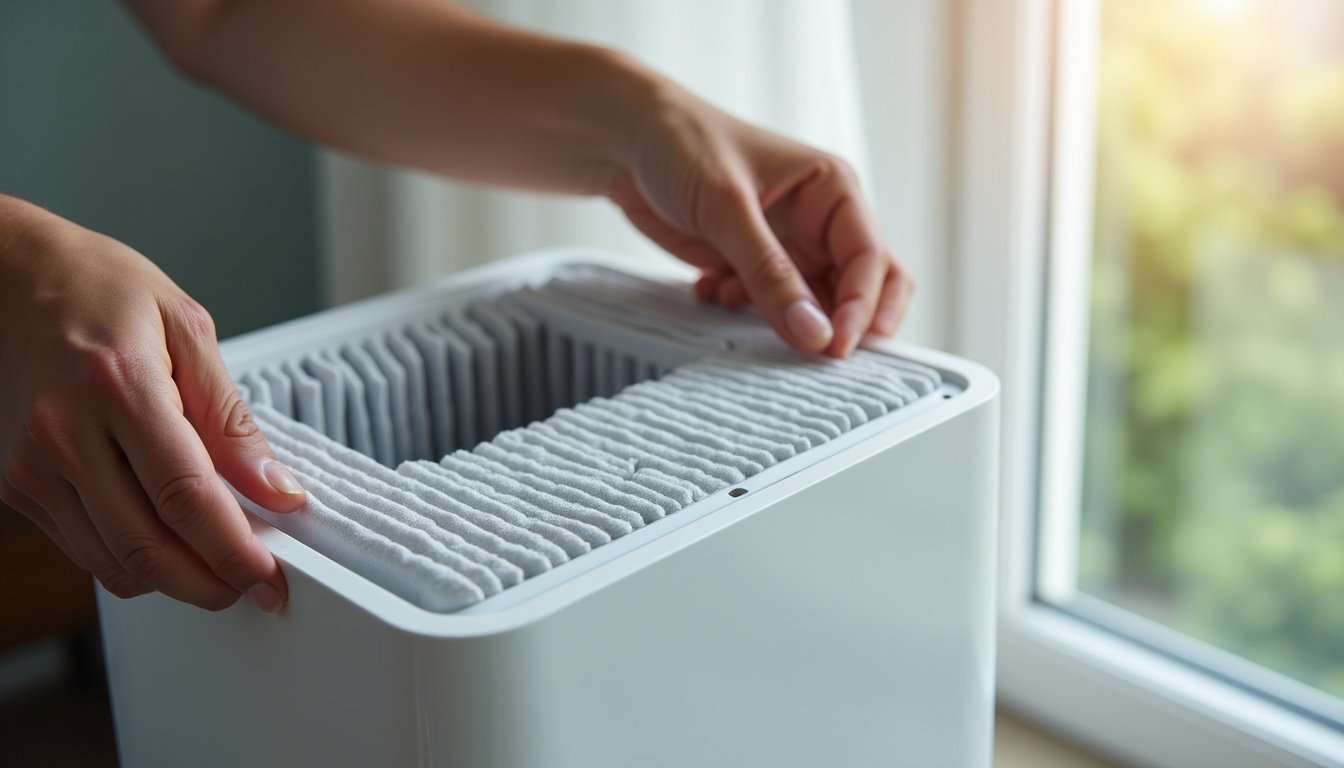
| HEPA filter | Captures particles | 6 to 12 months; some longer | Gray or brown pleats, weaker airflow, louder fan | Never washable; buy exact model fit |
| Activated carbon stage | Adsorbs odors and some gases | 3 to 6 months | Odors return | Often bundled with HEPA on compact units |
| Disposable pre-filter | Catches hair and lint | 3 to 6 months | Visible matting | Some are vacuumable between changes |
| Washable pre-filter | Same | Rinse monthly; replace if torn | Tears, frame damage | Dry fully before refitting |
| UV-C bulb | Lamp on some models | About 10 to 12 months per manual | Bulb indicator; lamp dark | Follow manual; do not look at an exposed lamp |
Combined cartridges, common on compact units, bundle pre-filter, HEPA and carbon into one part replaced when the carbon saturates, typically every 6 to 8 months. Separate stages let you replace carbon alone on its shorter schedule, which usually costs less per year. Our filter life and maintenance cost guides cover the details.
Buying the Right Filter
Makers designate filters by model family, often with a letter or number printed on the filter frame and in the manual. The same brand frequently has several sizes that look alike, so match the designation, not the photo. A filter that is slightly small leaves a gap around the edge through which unfiltered air flows; one that is slightly large will not seat and may jam the cover switch. Check the gasket or foam edge on the new filter and press it firmly into place with the airflow label oriented as the manual shows.
- Maker-brand filters are the default: correct media grade, carbon amount and seal.
- Reputable third-party filters labeled for the exact model can be acceptable; confirm true HEPA, check the fit and gasket, and know some warranties exclude them.
- Avoid filters sold as fits most or universal; they rarely seal.
- Beware of counterfeits on marketplaces: mismatched packaging, missing designation, thin or loose media and strong chemical smell are warning signs.
- Buy a spare when you buy a unit so a loaded filter is never left in place for want of a replacement.
Small Parts That Go Missing or Break
A second group of parts fails or disappears rather than wearing out. Most makers sell them through their parts pages or support lines, and replacing them restores a unit that is otherwise fine.
| Part | Common problem | Owner replaceable? | Where to get it |
|---|---|---|---|
| Remote control | Lost; battery leak | Yes | Maker parts page; universal remotes rarely work |
| Casters or feet | Snapped; lost in a move | Yes, usually press-fit or screw-in | Maker; generic feet if non-structural |
| Filter cover or back panel | Cracked latch; lost | Yes | Maker; cover switch must still engage |
| Grille or louver | Broken fin | Often yes if clip-on | Maker |
| Washable pre-filter frame | Torn mesh | Yes | Maker |
| Water tank on combination units | Cracked; lost cap | Yes | Maker |
| Power cord, if detachable | Frayed | Yes if detachable; no if hardwired | Maker; never splice |
Worked example: a tower purifier survives a move with a snapped caster and a lost remote. The caster is a press-fit part available from the maker; the remote is a model-specific part the maker also sells. Neither affects filtration, and the unit runs normally on its panel buttons meanwhile. Total effort is two small orders and five minutes.
Sensors: Replace or Just Clean
Particle sensors drive auto mode and the air quality light. Many apparent sensor failures are dust on the lens: the unit reads clean air and idles on low, or reads dirty air constantly near a kitchen or humidifier. Cleaning the sensor inlet with a dry cotton swab or a gentle puff from a hand bulb fixes most of these. Only a sensor that reads nothing, or reads randomly after cleaning, has failed.
Some makers sell sensor modules that plug into an accessible bay; others do not. If yours is not replaceable, the unit still filters perfectly on manual speeds, and auto mode is a convenience rather than a necessity. A sensor fault is not a reason to discard a working purifier.
UV-C Bulbs
Units with a UV-C lamp treat the bulb as a consumable, typically replaced about every 10 to 12 months per the manual, often prompted by its own indicator. The lamp’s contribution to cleaning is small; the EPA notes that UV exposure in a fast airstream is brief and effectiveness in consumer units is not established, while the HEPA filter does the particle work. Replacing the bulb is optional in that sense, and leaving the UV function off has no effect on filtration.
If you do replace it, follow the manual: unplug the unit, let the lamp cool, handle the new bulb by its base, and never operate the lamp outside the housing or look at it when lit. Dispose of UV bulbs as you would other mercury-containing lamps where that applies.
Parts That Are Not for Owners
Fan motors, bearings, blades, control boards, displays, button membranes, internal wiring and power supplies are not sold to consumers by most makers, and replacing them means opening the housing, which exposes mains wiring and voids warranties. Symptoms that point to these parts include a fan that grinds or squeals, weak airflow with new filters and clear grilles, a dead display with a known-good outlet and latched cover, buttons that do not respond, and any burning smell, sparking or breaker trip.
| Symptom | Likely part | What to do |
|---|---|---|
| Grinding, squealing, slowing fan | Motor bearing | Stop using; contact the maker |
| Weak airflow with new filters | Motor or fan damage | Contact the maker |
| Dead display, good outlet, cover latched | Control board or power supply | Contact the maker |
| Buttons unresponsive | Membrane or board | Contact the maker; use the remote or app meanwhile |
| Burning smell, smoke, sparks, breaker trips | Electrical fault | Unplug permanently; contact the maker; retire if out of warranty |
| Hardwired cord frayed | Cord | Do not splice; contact the maker; retire if unrepairable |
A unit under warranty is typically replaced rather than repaired for these faults. Out of warranty, weigh the maker’s service quote against a new unit, and retire anything with electrical symptoms regardless.
Checking Parts Availability Before You Buy a Unit
The most expensive parts problem is a filter that no longer exists. Makers discontinue models and, eventually, their filters, and a purifier with no available filter is finished however good its fan. Before buying, check that the filter is stocked by the maker and by at least one other seller, that the model has been on sale for a while or belongs to a long-running family that shares filters, and that the maker has a parts page at all.
- Prefer models whose filters are shared across a family; those stay in production longest.
- Look for filter designations that appear on multiple retailers, not a single listing.
- Check that the maker sells small parts such as remotes and casters; a maker that does not is unlikely to support the unit later.
- Favor washable pre-filters, which remove one consumable entirely.
- Read the warranty terms on third-party filters if you plan to use them.
Keeping a Small Parts Kit
Owners who keep a spare filter and a few basics on hand never run a loaded filter for weeks while waiting for a delivery. A sensible kit is one spare HEPA filter per unit, one spare carbon stage if separate, spare remote batteries, and a note of the filter designation and the maker’s support contact. Store filters sealed in their packaging in a dry closet, not a damp basement or garage, and write the install date on each filter frame when it goes in.
Check the maker’s site once a year for recall notices for your model, and keep the manual, which lists part numbers and the reset procedure for the filter indicator.
How to Handle Replacement Parts in 6 Steps
- Write down the filter designation, UV bulb type if any, and the maker’s parts page from the manual.
- Keep one spare HEPA filter and, if separate, one carbon stage per unit, stored dry.
- Replace consumables on the maker’s interval or on evidence: dark pleats, weak airflow, returning odors.
- For lost or broken small parts, order the exact part from the maker; do not improvise structural or electrical parts.
- Clean the sensor inlet before assuming a sensor has failed; replace the module only if the maker sells it and cleaning does not help.
- For motor, board, cord or any electrical symptom, stop using the unit and contact the maker; never open the housing.
Do and Do Not
Do
- Match the exact filter designation.
- Check the gasket and seating on every new filter.
- Buy spares before you need them.
- Clean sensors before replacing them.
- Keep the manual and part numbers.
Do not
- Do not use fits-most or universal filters.
- Do not wash HEPA or carbon filters.
- Do not splice or repair power cords.
- Do not open the housing beyond the filter compartment.
- Do not keep running a unit with grinding, burning or sparking.
Who Should Skip This
If the fault is a motor, control board, power supply or cord and the unit is out of warranty, skip the parts hunt. Most makers do not sell these to owners, home repair of mains-powered appliances is unsafe, and a replacement unit with a current filter supply is the sound choice.
If the only problem is a dead or dirty particle sensor, skip replacing anything. Clean the inlet with a dry swab; if it still misreads, run the unit on manual speeds, which filter exactly as well without auto mode.
Honest Limits
- Parts availability varies by maker and changes over time; check before relying on it.
- Third-party filters vary in media grade, carbon amount and fit, and may affect warranty coverage.
- Intervals in this guide are typical; your manual’s figures govern.
- UV bulbs add little to cleaning; replacing them is optional for filtration.
- Electrical and mechanical repairs are outside owner maintenance and this guide does not describe them.
- A discontinued filter ends a unit’s useful life regardless of its condition.
When to See a Professional
Contact the maker’s support line for any motor, board, cord or electrical symptom, and stop using the unit until resolved; under warranty it is usually replaced, and out of warranty with electrical faults it should be retired. An electrician should check any outlet that is warm, loose or scorched.
See a doctor or allergist if symptoms persist in a room with a correctly maintained purifier; the trigger may not be airborne. Nothing on this page is medical advice.
Frequently Asked Questions
What parts of an air purifier need replacing?
Mainly the consumables: the HEPA filter every 6 to 12 months, the activated carbon stage every 3 to 6 months, a disposable pre-filter every 3 to 6 months and, on some models, the UV-C bulb about yearly. Remotes, casters, feet and covers are replaced occasionally when lost or broken.
Can I use a different brand’s filter in my air purifier?
Only a third-party filter labeled for your exact model, confirmed true HEPA, with a gasket that seals in the housing. Fits-most or universal filters rarely seal, and a gap around the edge lets dust bypass the media. Some warranties exclude non-maker filters.
How do I know which filter my purifier takes?
The designation, often a letter or number, is printed on the existing filter’s frame and in the manual, and the maker’s site lists it by model. Match the designation rather than the photo, since the same brand often has several similar-looking sizes.
Can I replace the motor in my air purifier?
No. Most makers do not sell motors to owners, and replacing one means opening the housing and working near mains wiring. A grinding, squealing or weak fan with new filters is a maker service issue; stop using the unit and contact them. Out of warranty, a new unit is usually the answer.
My air quality sensor seems broken. Do I need a new one?
Probably not. Most sensor problems are dust on the lens, which makes the unit read clean air and idle on low. Clean the small sensor inlet with a dry cotton swab or a hand-bulb puff. If it still misreads, run manual speeds; filtration is unaffected, and only some makers sell sensor modules.
Do I have to replace the UV-C bulb?
Not for filtration. The HEPA filter does the particle work, and the EPA notes UV exposure in a fast airstream is brief with unproven benefit in consumer units. If you do replace it, follow the manual, unplug first and never operate or view the lamp outside the housing.
Where can I get a replacement remote or casters?
From the maker’s parts page or support line, which most established brands offer. Remotes are model-specific and universal remotes rarely work. Casters and feet are usually press-fit or screw-in; use the maker’s part for anything structural and confirm the unit stays stable.
Can I repair a frayed power cord on a purifier?
No. Splicing or taping a mains cord is unsafe. If the cord is detachable, buy the maker’s replacement; if it is hardwired, contact the maker for service, and retire the unit if that is not available. Never run a purifier with a damaged cord or plug.
What happens if my purifier’s filter is discontinued?
The unit’s useful life effectively ends, since running without a correct filter is unsafe for the fan and useless for cleaning. Check whether a reputable third-party filter is made for the model; otherwise plan a replacement, and next time choose a unit whose filter is shared across a family.
Should I keep spare parts on hand?
Yes: one spare HEPA filter per unit, a spare carbon stage if separate, remote batteries, and a note of the filter designation and the maker’s contact. Store filters sealed in a dry closet and date each one on installation. A spare means a loaded filter is never left in place for weeks.
Bottom Line
Air purifier replacement parts fall into three tidy groups. Filters, carbon and the occasional UV bulb are consumables you will buy on schedule, and matching the exact designation is what keeps them working. Remotes, casters, covers and sensor modules are the small parts that go missing or fail and are usually a quick order from the maker. Motors, boards, cords and anything behind the housing belong to the maker and, out of warranty, usually mean a new unit.
Check filter availability before you buy, keep a spare on the shelf, clean the sensor before you blame it, and never open the housing or run a unit with electrical symptoms. Handled that way, a purifier’s parts are a small, predictable line in the budget rather than a series of surprises.
Related reading: How long do HEPA filters last in air purifiers, Air purifier maintenance cost, Air purifier maintenance checklist.