Last updated:
As an Amazon Associate we earn from qualifying purchases. This does not change what we recommend. See our affiliate disclaimer.
It sounds backwards. An appliance bought to make breathing easier should not be able to make it harder. Yet people with asthma do sometimes report feeling worse after bringing a purifier home, and the reasons are not mysterious. A few designs emit an irritant gas, a few habits turn a good unit into a dust source, and a few expectations lead people to drop measures that were actually helping.
Yes, certain air purifiers can make asthma worse, and the main culprit is ozone. Ozone generators release it deliberately, and some ionizers, electrostatic, plasma and UV devices produce it as a by-product. Ozone is a respiratory irritant that can inflame airways, and the EPA advises against ozone-generating air cleaners in occupied spaces. A filter-based purifier, a fan pushing air through true HEPA media, produces no ozone and is the safe design. Beyond ozone, a purifier can worsen things indirectly: a filter left loaded or damp can shed odor and particles, a new unit can off-gas plastics for a few days, a badly placed unit can stir up settled dust, and a strong fan near the bed can blow cold air across a sleeper. All of these are avoidable with the right choice and a little care.
In short: filter-based units do not make asthma worse when maintained; ozone-producing designs can. Choose true HEPA, keep ionizers off, maintain the filters and follow the doctor’s plan.
The EPA’s guidance on ozone generators is unambiguous that ozone is harmful to health at concentrations that would be needed to clean air, and its air cleaner guide notes that some electronic devices emit ozone. The American Lung Association likewise cautions against ozone-producing devices for people with lung conditions. California’s CARB limits ozone emissions from air cleaners sold in the state and publishes a certified list.
This article is research-based and educational, drawn from EPA, ALA and CARB material and maker specifications. We have not tested the units in the comparison table and quote no prices or ratings. Nothing here is medical advice; asthma care belongs with a physician.
A purifier is unlikely to worsen asthma if
- It is a filter-based true HEPA unit with no ozone output
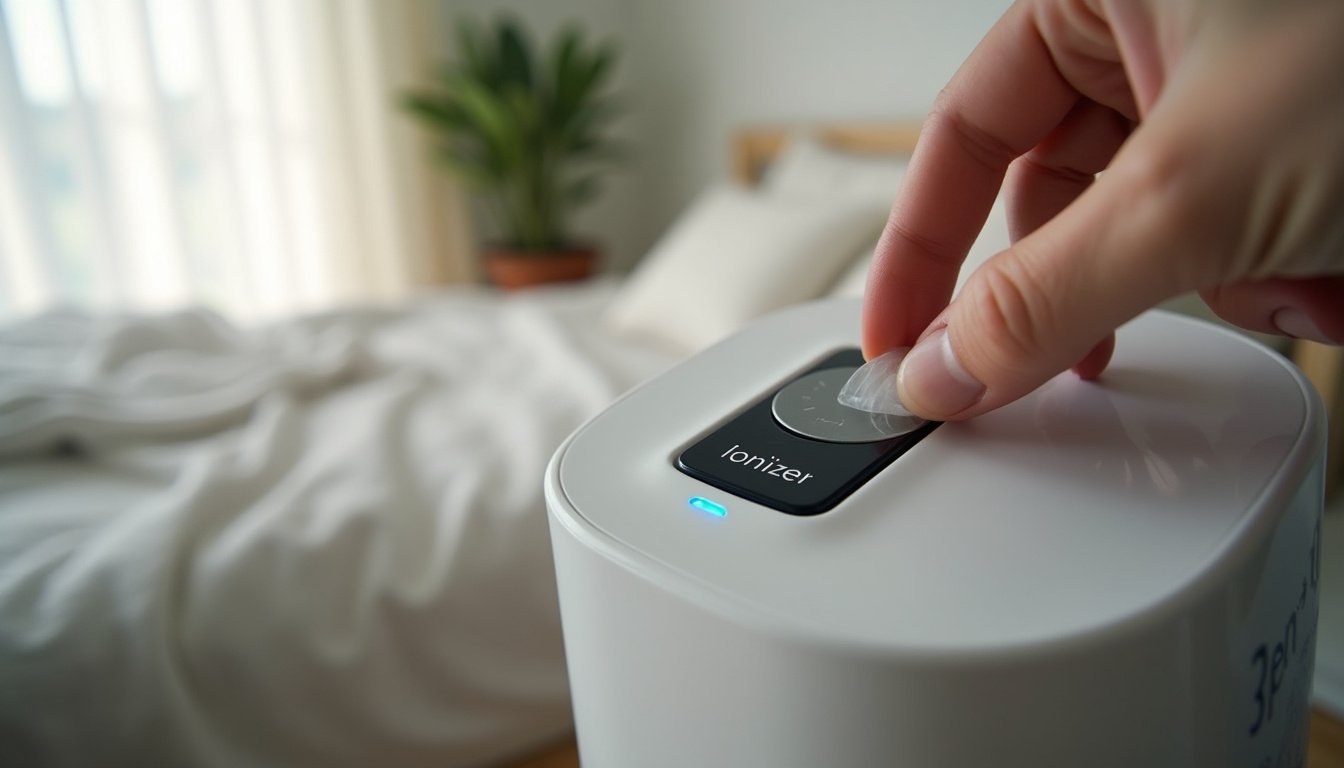
- Any ionizer or plasma feature is switched off
- Filters are cleaned and replaced on schedule
- It is sized by CADR and placed with clearance, not aimed at the bed
A purifier may worsen asthma if
- It is an ozone generator or ionizer-only device
- It emits a sharp, metallic or chlorine-like smell
- The filter is loaded, damp or musty
- It is used as a reason to skip medication or source control
Key Takeaways
- Ozone is the main way an air cleaner can worsen asthma; the EPA advises against ozone-generating devices.
- Ionizers, electrostatic, plasma and some UV units can emit ozone as a by-product; keep those features off or avoid them.
- Filter-based true HEPA purifiers produce no ozone and are the safe design for asthma households.
- A loaded or damp filter can shed odor and particles; maintain and replace on schedule.
- New units may off-gas for a few days; run them in a ventilated room first.
- Do not aim the outlet at the bed; cold moving air can irritate some people.
- A purifier is an environmental measure that supports a medical plan, never a substitute for it.
Filter-Based Purifiers Suited to Allergy and Asthma Homes
These widely reviewed units are filter-based, built around true HEPA with carbon, and commonly chosen for allergy households. Compare maker-listed CADR and room size against the bedroom, and switch off any optional ionizer function.


How We Examined the Risk
We looked at each way a purifier could add an irritant or allergen to a room: gases it emits, particles it sheds, odors from its own materials and airflow effects. For each we checked EPA, ALA and CARB guidance and maker documentation. Product details in the table come from maker specifications.
We also separated real risks from misplaced blame. Asthma symptoms vary with weather, pollen, infections and many other factors, and a purifier that arrives during a bad week is not necessarily the cause. The sections below give the specific mechanisms that can make a difference, so you can check each.
Ozone: The Main Risk
Ozone is a reactive form of oxygen. Outdoors it is a major component of smog and a well-documented trigger for asthma symptoms. Indoors it comes from devices that create an electrical discharge in air or use certain UV wavelengths. Ozone generators sold as air cleaners release it on purpose, claiming to destroy odors and microbes. The EPA states that at concentrations that do not exceed public health standards ozone is ineffective against most indoor pollutants, and at concentrations that might work it is harmful.
Ionizers, electrostatic precipitators, plasma or bipolar ionization devices and some UV lamps can release ozone as a by-product. Amounts vary widely by design. CARB tests air cleaners sold in California and certifies those below its ozone emission limit; checking that list is the practical way to screen an electronic unit. A sharp, metallic or chlorine-like smell near a running purifier is a common sign of ozone and a reason to switch the feature off.
| Technology | Produces ozone? | Risk for asthma | What to do |
|---|---|---|---|
| Fan with true HEPA and carbon | No | None from the device | Preferred choice |
| Ozone generator | Yes, by design | High; EPA advises against | Do not use in occupied rooms |
| Ionizer, needlepoint or plate | Possible by-product | Varies by design | Keep off; check CARB list |
| Electrostatic precipitator | Possible by-product | Varies | Keep off; prefer filtration |
| Plasma or bipolar ionization | Possible by-product | Varies; evidence limited | Avoid for asthma homes |
| UV-C lamp | Depends on wavelength and design | Usually low; some emit | Treat as unnecessary extra |
Why Filter-Based Units Are the Safe Design
A mechanical purifier has no chemistry. A fan moves air, fibers trap particles and carbon adsorbs some gases. Nothing is created in the process, so nothing new enters the room. True HEPA media captures 99.97 percent of particles at 0.3 microns under test conditions, and the dust, pollen, dander, spores and smoke that commonly trigger asthma are in or above that range. The air leaving the unit simply has fewer particles.
Many filter-based units include an optional ionizer button. Leaving it off removes the only ozone pathway while keeping the filtration intact. Choose true HEPA rather than HEPA-type, size the unit by CADR so it runs on a quiet speed, and the device is doing only what the EPA and ALA describe as useful.
Loaded, Damp or Neglected Filters
A filter that has been left well past its interval does not usually leak particles, since loaded fibers capture well, but it restricts airflow so the room is cleaned less, and when the unit starts it can puff loose dust from the pre-filter. A filter that has been damp, from a humidifier nearby, a spill or a damp room, can grow mold and release a musty smell and spores. For a person with asthma that is a trigger coming from the device itself.
- Clean the pre-filter every two to four weeks and replace the HEPA stage on the maker’s schedule, typically 6 to 12 months.
- Replace any filter that smells musty regardless of age and remove the moisture source.
- Keep the unit away from humidifier mist and off damp floors; never run it with a wet filter.
- Unplug before opening, and bag old filters immediately rather than shaking them out indoors.
Neglect is the most common way a good purifier turns into a mild irritant source. Maintenance removes it entirely.
New Unit Off-Gassing
A brand-new purifier often smells of plastic or something chemical for the first days as components off-gas. The amounts are small, but for a sensitive person the smell alone can be unpleasant and some volatile compounds can irritate airways. Run a new unit on high in a well-ventilated room, or a room nobody is using, for a day or two before moving it into the bedroom. New filters, especially carbon stages, can also have a faint odor that fades quickly.
If a smell persists for more than a week, or if it is sharp and metallic rather than plastic, suspect an ionizer or UV feature producing ozone and switch it off. If the smell is of burning or hot plastic, unplug the unit and contact the maker; that is an electrical issue, not off-gassing.
Airflow, Placement and Stirring Up Dust
A purifier is a fan, and a fan can move air across a sleeper and disturb settled dust. Some people with asthma react to cold moving air on the face at night. Place the unit so the outlet points away from the bed, a few feet off, with a foot of clearance around it. Many units blow upward, which avoids the problem.
Placing a unit on deep carpet with a bottom intake, or right beside a dust-shedding sofa, can stir up settled particles briefly when it starts. Use a hard floor or a low stand, keep the intake clear, and run the unit continuously rather than cycling it on and off, which keeps air moving steadily instead of in gusts. Worked example: a 12 by 13 foot bedroom, 156 square feet, needs a dust CADR of about 104; a unit that reaches that on medium can sit on a stand in the corner opposite the bed and run all night without a draft reaching the sleeper.
The Indirect Risk: Dropping What Works
The subtlest way a purifier can make asthma worse is by changing behavior. A humming unit and a green light can make a household feel the problem is handled, so bedding goes unwashed, the pet moves back onto the bed, humidity creeps up, or medication gets skipped. The device removes airborne particles in one room; it does nothing for dust mites in a mattress, mold in a damp bathroom, smoke that follows a smoker indoors, or the airway inflammation that medication controls.
How to Check a Purifier Before You Buy
| Check | Where to look | What you want to see |
|---|---|---|
| Filtration type | Spec sheet, manual | True HEPA or H13, replaceable filter |
| Ozone-producing features | Feature list, manual | None, or an ionizer that can be switched off |
| CARB certification | CARB certified air cleaner list | Model listed, if it has any electronic feature |
| CADR and room size | AHAM Verifide or maker listing | Dust CADR at least two-thirds of the bedroom’s floor area |
| Noise on medium | Spec sheet | Quiet enough to run all night |
| Filter schedule | Manual | Clear intervals, washable pre-filter, filters in stock |
| Odor language | Marketing copy | No claims of killing germs with ozone, plasma or activated oxygen |
A filter-based unit that passes these checks poses no device-related risk that we know of for a person with asthma. The remaining variables are maintenance and how the rest of the home is managed.
Signs the Purifier Is the Problem
If symptoms worsened after a purifier arrived, a few checks separate the device from coincidence. Switch the unit off for two or three days and note any change. Smell the outlet air for sharp or metallic notes. Inspect the filter for dampness or must. Check whether the outlet is blowing on the sleeper. Confirm no ionizer or UV feature is active. If turning the unit off helps and the unit is an ozone-producing type, replace it with a filter-based model. If a filter-based unit seems to be the trigger, replace the filters and reassess before concluding anything.
Talk to the doctor about any change in symptoms regardless of what you find. Asthma can worsen for reasons unrelated to the room, and a new appliance is only one possibility.
| Observation | Points to | Next step |
|---|---|---|
| Sharp or metallic smell at the outlet | Ozone from an ion or UV feature | Switch the feature off; if none, replace the unit with a filter-based model |
| Musty smell from the unit | Damp filter | Replace filters; move away from moisture |
| Symptoms worse only at night | Draft on the sleeper or dust stirred at startup | Aim the outlet away; use a stand; run continuously |
| No change with the unit off for three days | Trigger is elsewhere | Review bedding, humidity, pets, pollen; talk to the doctor |
How to Choose a Safe Purifier in 6 Steps
- Choose a filter-based true HEPA unit; rule out ozone generators and ionizer-only devices entirely.
- If the unit has any electronic feature, confirm it is on CARB’s certified list and that the feature can be switched off.
- Size by AHAM’s rule: dust CADR at least two-thirds of the bedroom’s floor area, reached on medium.
- Run a new unit in a ventilated room for a day or two before moving it to the bedroom.
- Place it on a hard floor or stand with the outlet aimed away from the bed and a foot of clearance.
- Set a maintenance schedule: pre-filter every two to four weeks, HEPA per the maker, replace anything musty; keep the full asthma plan in place.
Do and Do Not
Do
- Choose true HEPA filtration.
- Keep ionizer, plasma and UV features off.
- Maintain and replace filters on schedule.
- Aim the outlet away from the sleeper.
- Keep following the doctor’s plan and source control.
Do not
- Do not use ozone generators or activated oxygen devices.
- Do not run a unit with a damp or musty filter.
- Do not place a bottom-intake unit on deep carpet.
- Do not treat a green light as a reason to drop other measures.
- Do not change medication because the air feels cleaner.
Who Should Skip This
If you already own an ozone generator, ionizer-only or plasma device and someone in the home has asthma, skip the question of whether to keep it. The EPA’s guidance on ozone is clear enough: retire it and replace it with a filter-based unit.
If your purifier is filter-based, maintained and placed sensibly, and symptoms still seem worse, skip blaming the device and talk to the doctor. Pollen, weather, infections and other triggers change week to week, and the appliance is rarely the cause.
Honest Limits
- This is general information; individual sensitivities vary and only a doctor can assess symptoms.
- Ozone output from electronic devices varies by model; CARB certification is a screen, not a guarantee of zero emission.
- A filter-based purifier removes particles only; it cannot address gases, humidity or allergens in fabric.
- Off-gassing from new units is usually brief but can bother sensitive people.
- Maintenance failures are the owner’s part of the equation and no design removes them.
- No purifier of any type treats asthma or replaces medication.
When to See a Professional
See a doctor or allergist for any change in asthma symptoms, whether or not a purifier is involved, and before changing medication. Allergy testing identifies which triggers matter and which environmental measures are worth pursuing. Nothing on this page is medical advice.
Contact the maker, not a home repair, for any purifier that smells of burning, sparks or trips a breaker, and stop using it. Call a mold professional for growth over about 10 square feet, as the EPA suggests, since a damp home can be a far larger trigger source than any appliance.
Frequently Asked Questions
Can an air purifier make asthma worse?
Some can. Ozone generators and devices that emit ozone as a by-product, such as some ionizers, electrostatic, plasma and UV units, release a respiratory irritant, and the EPA advises against ozone-generating air cleaners. Filter-based true HEPA units produce no ozone and do not carry that risk.
Is ozone from an air purifier dangerous for asthma?
Yes. Ozone inflames airways and is a known asthma trigger outdoors in smog. The EPA states that indoor concentrations high enough to clean air are harmful, and concentrations low enough to be safe do little. Avoid ozone generators and switch off ionizer features.
Are ionizers safe for people with asthma?
Not reliably. Many ionizers emit some ozone as a by-product and they move particles onto surfaces rather than removing them. For an asthma household, use a true HEPA unit and leave any ionizer function off; if the unit has electronic features, check CARB’s certified list.
Can HEPA filters cause asthma symptoms?
A filter-based HEPA unit does not create pollutants. Problems arise only from neglect: a loaded filter can puff dust at startup and a damp filter can grow mold and release a musty smell. Clean the pre-filter regularly, replace the HEPA stage on schedule and replace anything musty.
Why does my new air purifier smell?
New units often off-gas plastics for a few days, and new carbon filters can have a faint odor. Run the unit on high in a ventilated room for a day or two first. A sharp, metallic or chlorine-like smell suggests ozone from an ionizer or UV feature; switch it off.
Should the purifier blow toward the bed?
No. Cold moving air across the face can irritate some people with asthma at night. Place the unit a few feet from the bed with the outlet aimed away or upward, on a hard floor or stand with a foot of clearance, and run it on a steady medium speed.
Can a purifier stir up dust and trigger asthma?
Briefly, if a bottom-intake unit sits on deep carpet or starts beside a dusty sofa. Use a hard floor or stand, keep the intake clear and run the unit continuously rather than cycling it, so air moves steadily and settled dust is not puffed into the room.
How do I know if my purifier produces ozone?
Check the feature list for words like ionizer, plasma, bipolar, activated oxygen or UV, look for a sharp metallic smell at the outlet, and search CARB’s certified air cleaner list for the model. A plain fan-and-HEPA unit with no electronic features produces none.
Which type of air purifier is safest for asthma?
A filter-based unit with a true HEPA stage and no ozone-producing features, sized so its dust CADR is at least two-thirds of the bedroom’s floor area and run continuously on a quiet speed. Add carbon if smoke or odors are triggers, and keep any ionizer off.
Can an air purifier replace asthma medication?
No. A purifier is an environmental measure that may reduce exposure to some airborne triggers in one room. It does not treat airway inflammation. Follow the doctor’s plan, keep source control measures in place and discuss any symptom changes with a physician.
Bottom Line
Air purifiers can make asthma worse, but only certain kinds and only in certain ways. Ozone generators and devices that emit ozone as a by-product add a respiratory irritant to the room, and the EPA’s guidance against them is clear. Neglected filters, new unit off-gassing, drafts on the sleeper and stirred-up dust are smaller, avoidable risks.
A filter-based true HEPA unit with the ionizer off, sized by CADR, maintained on schedule and placed with care poses none of these problems and removes the particles that commonly trigger symptoms. Keep the rest of the plan, bedding, humidity, source control and the doctor’s treatment, and the purifier does its part safely.
Related reading: Air purifier vs dehumidifier for asthma, What are the different types of air purifiers, Air purifier causing a chemical smell.