Last updated:
Disclosure: As an Amazon Associate we earn from qualifying purchases. This does not change what we recommend. See our affiliate disclaimer.
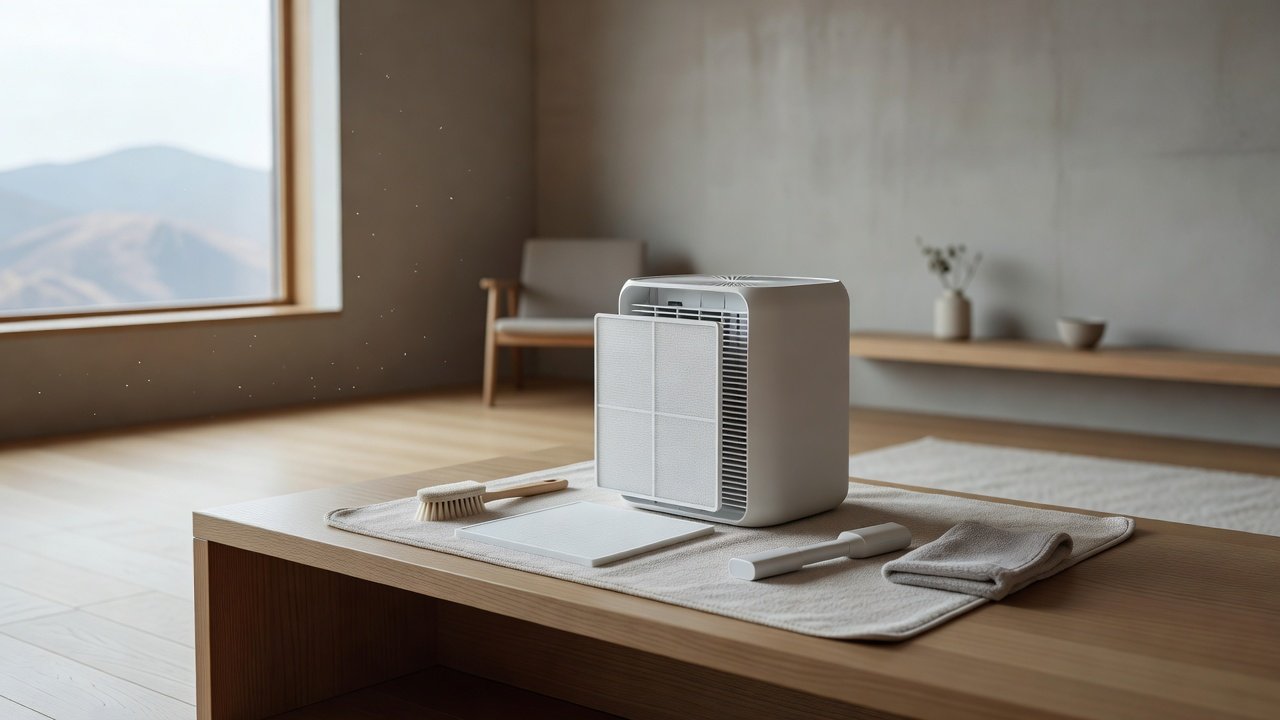
People living in mountain towns and high plateaus often ask whether an air purifier needs different care. The cleaning steps are largely the same, but the environment matters: dry air, fine dust, wildfire smoke and strong sunlight can all change how quickly filters load and how fast parts dry. Fans and motors may also behave differently in thinner air, so it is worth checking what the manufacturer says about altitude.
We have not tested these products ourselves, so follow your manual. Unplug the unit before cleaning, keep liquids away from electronics and contact the manufacturer if you are unsure whether your model is rated for your elevation.
What stays the same
- Vacuum pre-filters
- Replace HEPA and carbon
- Wipe the exterior
What may change
- Faster dust loading
- Faster drying
- Check altitude ratings
Key Takeaways
- Cleaning steps are the same; dust loading and smoke can be faster
- Check pre-filters more often in dry, dusty homes
- Never wash HEPA or carbon filters; replace on schedule
- Confirm altitude ratings with the manufacturer
A Step-by-Step Cleaning Routine for Dry Climates
Unplug the unit and move it to a spot where you can work. Remove the cover and pre-filter, and vacuum the pre-filter gently with a soft brush attachment. If your manual allows rinsing, rinse with cool water, shake off the excess and let it dry fully. Vacuum the housing, wipe the exterior with a slightly damp cloth and check the main filter for loading or damage. Reassemble, close the cover until it clicks and run the unit. Write the date in your log.
Why Static Matters for Filters and Plastics
In dry air, static can cause dust to cling to plastic housings, vents and the fan area. A slightly damp cloth wipes dust off more effectively than a dry one in these conditions. Avoid anti-static sprays and cleaning chemicals near vents or electronics unless the manual allows them. Vacuuming first lifts loose dust before you wipe.
Pets, Wood Stoves and Local Dust Sources
Mountain homes often have wood stoves, pets and outdoor gear that bring in dust, ash and pollen. Place the unit away from the stove and keep ash cleanup separate from the purifier. Vacuum pre-filters more often when using a stove. Avoid blowing ash with compressed air near the unit, and ventilate when cleaning.
Choosing a Unit for Dusty Homes
In dusty homes, favor a unit with an easy-to-clean pre-filter, a clearly stated CADR and affordable replacement filters. AHAM CADR ratings help compare models, and a unit with a CADR of about two-thirds of your floor area suits typical 8-foot ceilings. Confirm the operating range for your elevation with the maker before buying.
Wildfire Smoke Readiness Plan
If you live in an area with wildfire risk, plan ahead. Keep one or two spare filters in sealed packaging, know your unit’s filter model number and set a reminder to check the pre-filter during smoke events. Keep windows and doors closed, run the unit continuously in the room you use most and avoid activities that add particles indoors, such as frying or burning candles. After the event, inspect the main filter and replace it if it is visibly dark or the indicator says so. Do not try to wash or bake a smoke-loaded filter.
Travel, Seasonal Homes and Storage
If you split time between elevations or leave a cabin empty for months, clean and dry the unit before storage, remove old filters and store spares sealed. When you return, inspect the unit for dust, insects and moisture, check the cord and run it briefly before regular use. A filter that sat in a closed cabin through humid or cold periods may smell musty and should be replaced instead of cleaned.
Common Mistakes to Avoid
Common mistakes include rinsing a HEPA filter, drying parts with high heat, spraying cleaner into vents, running the unit with the cover off and ignoring a filter indicator for months. Another mistake is assuming the same filter schedule applies everywhere. In dusty or smoky regions, the schedule often needs to be shorter. Following your manual and keeping a log avoids most problems.
Air Purifiers to Consider for Dusty, Dry Homes
These picks come from the Hostinger affiliate plugin. Specs change by model year, so confirm filter type, CADR and replacement costs on the product page before you buy.






Does Altitude Change How You Clean?
The basic routine does not change: unplug, vacuum the pre-filter and vents, wipe the housing and replace HEPA and carbon filters on schedule. What changes is the environment around the unit. Dry mountain air and dust can load filters faster, and wildfire smoke seasons can shorten filter life. Check the manual for any altitude or operating range stated by the manufacturer.
Dry Air, Dust and Static
In dry climates, dust travels easily and static can make it cling to plastic surfaces and filters. You may need to vacuum the pre-filter more often and wipe the exterior more frequently. Use a slightly damp cloth for the exterior to reduce static, and keep liquids away from vents and electronics.
Faster Drying Times, Same Caution
Washable pre-filters often dry quickly in dry air, but do not rush with heat. Let them air dry fully away from direct sun or heaters, and check that they are completely dry before reinstalling. A filter that is dry on the surface can still be damp inside, so allow a little extra time.
Wildfire Smoke Season
During smoke events, filters can load quickly. Check the pre-filter more often and replace the main filter when it is visibly loaded or the indicator says so. Keep windows closed and run a correctly sized unit. Keep spare filters on hand, because supplies can run short during smoke seasons.
Checking the Maker’s Specifications
Some manufacturers state a maximum operating altitude or note that performance varies. If you live at high altitude, check the manual or contact support to confirm that your model is suitable and ask whether filter intervals should change. Keep the model number and your elevation handy when you ask.
Setting a Check Schedule for Dusty Homes
In a dry, dusty setting, check the pre-filter every two weeks and the main filter every month or two. Vacuum the exterior vents weekly if dust settles quickly. Adjust the schedule after you see how fast filters load. A log of dates and filter appearance gives you a personal schedule better than a generic one.
Humidity and Indoor Comfort
Dry air can make homes feel uncomfortable, and many people add a humidifier. If you do, keep humidity between roughly 30 and 50 percent and keep the humidifier away from the purifier, since moisture near filters and electronics is a concern. Clean the humidifier as its manual says.
Storage and Spare Filters
Store spare filters in their sealed packaging in a cool, dry place away from dust and direct sun. Check packaging for damage before use. If you travel or move between elevations, take the unit’s manual and spare filters with you and clean the unit before storage.
Power and Outlet Considerations
Mountain homes may have older wiring or generators. Plug the unit directly into a wall outlet, avoid overloaded strips and use a surge protector if you have frequent outages. If the unit resets after power events, unplug it for several minutes before restarting.
When to Ask Support
Contact the manufacturer if the unit runs hot, is unusually noisy, shows error codes after a move to higher elevation or you are unsure about suitability at your altitude. Give the model number, your elevation and what you have tried.
How to Choose
- Check the maker’s stated operating range
- Look for a washable pre-filter
- Compare replacement filter costs
- Match the CADR to the room
Do
- Match the unit’s rated coverage to your room first
- Run it consistently, not only when the air feels bad
- Leave space around the unit for airflow
- Replace filters on the maker’s schedule
Don’t
- Do not buy on looks or price alone
- Do not block the intake or exhaust
- Do not skip filter changes
- Do not expect a purifier to fix every source of pollution
Honest Limits
- This guide uses manufacturer information and public guidance from the EPA and AHAM, not our own lab tests.
- Features and room ratings change between model years, so confirm on the listing before you buy.
- A purifier is not a medical device and does not replace medical advice or treatment.
Who Should Skip This
When to See a Professional
Frequently Asked Questions
Does altitude change cleaning?
The steps are the same, but dry dust and smoke can mean more frequent checks.
Do purifiers work at high altitude?
Check the manual for the operating range and ask the maker if unsure.
Can I dry filters faster?
Allow them to air dry fully. Do not use high heat.
How often should I replace filters?
Follow the manual and indicator, and replace sooner if heavily loaded.
Bottom Line
Cleaning an air purifier at high altitude follows the same steps as anywhere else, but dry air, dust and smoke can load filters faster. Check pre-filters more often, replace HEPA and carbon filters on schedule and confirm your model’s operating range with the manufacturer.
Related reading: sens,fan,bed
Sources: EPA, Guide to Air Cleaners in the Home; AHAM Verifide.