Last updated:
Disclosure: As an Amazon Associate we earn from qualifying purchases. This does not change what we recommend. See our affiliate disclaimer.
Cleaning a HEPA filter is one of the most misunderstood air purifier tasks. Most true HEPA filters are disposable and should be replaced, not washed or blasted with compressed air, because moisture and force can damage the fine fiber mat. Some models use washable or permanent filters, but only if the manufacturer says so. The safe approach is to read the manual, clean pre-filters and accessible surfaces regularly and replace the main filter on schedule.
We have not tested these products ourselves, so follow your manual. Nothing here is medical advice. Wear a mask and gloves when handling very dusty filters if you are sensitive.
Usually safe
- Vacuuming or rinsing washable pre-filters
- Wiping the casing and intake
- Replacing HEPA filters on schedule
Usually avoid
- Washing disposable HEPA filters
- Compressed air on HEPA
- Reinstalling damp filters
Key Takeaways
- Most true HEPA filters are replaced, not washed
- Clean pre-filters regularly
- Never reinstall damp filters
- Do not use compressed air on HEPA
Step-by-Step Cleaning Routine
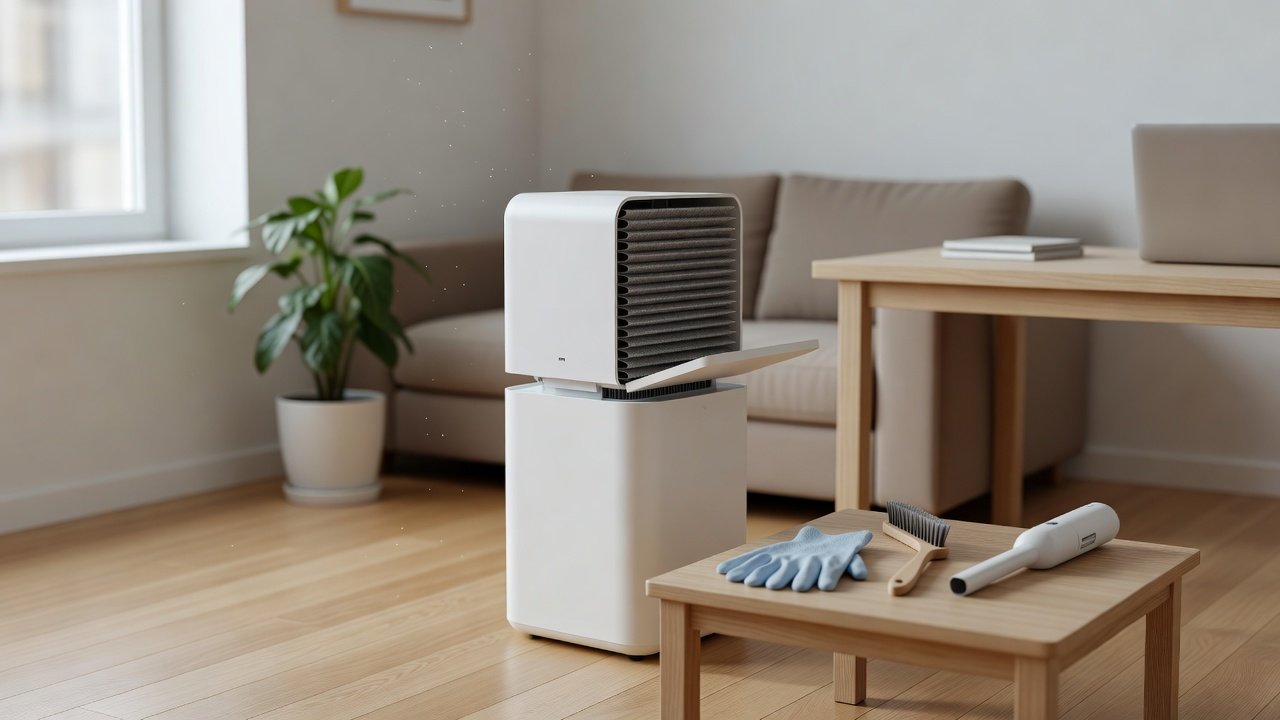
Unplug the unit and open the cover. Remove the pre-filter and tap it over a trash can, then vacuum it with a soft brush. If the manual allows washing, rinse under lukewarm water, shake off excess and let it dry completely. Check the HEPA filter for tears, dark dirt and odors without touching the pleats. If it is disposable and loaded, replace it. Wipe the interior with a dry cloth and vacuum the intake. Reinstall the dry filters, making sure they are seated correctly and the cover closes. Plug in and run on low to confirm normal sound and airflow. Note the date and set a reminder for the next check.
Mistakes That Damage Filters
Common mistakes include washing disposable filters, using detergents, drying with heat, using high-pressure air, installing filters backward and forgetting to remove packaging. Follow the arrow or marking on the filter and read the manual.
Allergy-Friendly Handling
Dust can be released during cleaning. Clean outdoors if possible, wear a mask, and wash hands afterward. Have a non-allergic household member do it if you are very sensitive.
Replacement Schedules by Home Type
Dusty, smoky or pet homes need earlier replacement. Check often and adjust.
Cost and Value
Compare long-term filter costs, not just unit price. Washable filters may save money but only if approved.
Troubleshooting After Cleaning
If the unit is still noisy or weak after cleaning, check seating, airflow and the sensor and contact support.
Record Keeping
Keep notes on cleaning and replacement so you can plan purchases.
Washable and Permanent Filters: Special Cases
Some purifiers use filters marketed as washable or permanent. These are designed differently from standard disposable true HEPA filters, and the manual will give exact steps. Follow the temperature, detergent and drying instructions precisely, and never reinstall a filter until it is bone dry, which can take a full day. Check the filter for deformation or odor after washing. Even washable filters wear out, so track how long they last and replace them if airflow drops or damage appears. If you cannot find clear instructions, assume the filter is not washable and contact the manufacturer for guidance before you try anything that could damage it.
Carbon Filters and Cleaning
Carbon filters are generally replaced rather than washed. Shaking or washing can release dust and damage them. Replace on schedule or when odors return. Handle gently and dispose of used filters in a sealed bag.
Allergy Safety During Filter Changes
Dust released during filter changes can trigger symptoms. Change filters in a ventilated area, avoid shaking them, wear a mask if sensitive and wash hands afterward. Seal the old filter in a bag before disposal.
How Often to Inspect
Check the pre-filter monthly and the main filter every few months. Inspect after smoke, renovation or heavy pollen events. Replace when needed.
Building a Filter Care Calendar
Pick a recurring day each month for a quick check and add reminders for full filter changes. On check day, remove and tidy the pre-filter, wipe the intake, glance at the main filter for dark dirt or damage and confirm that the cover closes properly. Every few months, replace carbon filters if your unit uses them, and replace the main HEPA filter according to the manufacturer’s schedule or sooner after smoke or renovation. Keep spare filters on hand and note purchase dates. If you share a home, assign responsibility so it does not fall through the cracks. A calendar turns filter care into a quick routine and prevents costly mistakes, such as running a loaded filter for too long.
Troubleshooting After a Filter Change
If the unit is noisy, weak or showing a filter error after a change, check that the filter is seated correctly, packaging is removed and the indicator has been reset. If the problem remains, contact support with the model and part number.
Quick Reference
Most HEPA filters are replaced, not washed. Gentle surface vacuuming buys a little time; water, compressed air, and banging ruin them. Only filters labelled washable get rinsed, with lukewarm water and a full day of drying. Pre-filters are the washable layer; let them take the load.
Air Purifiers With Washable Pre-Filters and Easy Filter Access
If cleaning does not restore performance, you may prefer to replace the unit or filters. These picks come from the Hostinger affiliate plugin. Specs change by model year, so confirm filter type, CADR, noise and replacement filter costs on the product page.






Check Whether Your Filter Is Washable
Look for wording such as washable or permanent in the manual or on the filter. If it does not say so, assume the HEPA filter is disposable. If unsure, contact the manufacturer.
Cleaning the Pre-Filter
Pre-filters catch hair and large dust. Vacuum with a soft brush or rinse if allowed, then let them dry completely before reinstalling. Clean monthly or more often in dusty homes.
If Your HEPA Filter Is Washable
Follow the manual exactly: use cool or lukewarm water, avoid detergents unless allowed, gently rinse and let it air-dry completely, which can take a day or more. Never use a hair dryer or heat.
Why Not to Wash Disposable HEPA
Water and force can tear or deform the filter and reduce efficiency. Compressed air can damage the fibers and blow dust into the room. Replace instead.
Cleaning the Unit
Unplug the unit, vacuum the intake and exhaust grilles and wipe the exterior with a dry cloth. Clean the sensor area gently as the manual allows.
Vacuuming a HEPA Filter: Pros and Cons
Some manuals allow gentle vacuuming of the surface. Others do not. If allowed, use a soft brush and low suction, and do not press on the pleats. It will not restore a clogged filter.
How to Tell a HEPA Filter Needs Replacing
Reduced airflow, louder noise, visible dark dirt, odors or a filter indicator suggest replacement. Follow the schedule.
Handling and Disposal
Handle filters by the frame, avoid shaking indoors and seal used filters in a bag before disposal. Wash hands afterward.
Storing Spare Filters
Store spares in sealed bags in a cool, dry place and label them with the date.
Genuine Versus Third-Party Filters
Check fit, specifications and warranty. Poorly fitting filters reduce performance.
How to Choose
- Washable pre-filter
- Easy filter access
- Clear replacement guidance
- Affordable filters
Do
- Match the unit’s rated coverage to your room first
- Run it consistently, not only when the air feels bad
- Leave space around the unit for airflow
- Replace filters on the maker’s schedule
Don’t
- Do not buy on looks or price alone
- Do not block the intake or exhaust
- Do not skip filter changes
- Do not expect a purifier to fix every source of pollution
Honest Limits
- This guide uses manufacturer information and public guidance from the EPA and AHAM, not our own lab tests.
- Features and room ratings change between model years, so confirm on the listing before you buy.
- A purifier is not a medical device and does not replace medical advice or treatment.
Who Should Skip This
When to See a Professional
Frequently Asked Questions
Can I wash a HEPA filter?
Only if the manual says it is washable.
Can I vacuum it?
Only if the manual allows.
How often to replace?
Follow the manufacturer’s schedule.
What about compressed air?
Avoid it on HEPA filters.
Bottom Line
Clean pre-filters regularly, wipe the unit and replace true HEPA filters on schedule unless the manual says they are washable. Never reinstall damp filters or use compressed air on HEPA.
Related reading: sens,fan,bed
Sources: EPA, Guide to Air Cleaners in the Home; AHAM Verifide.