Last updated:
As an Amazon Associate we earn from qualifying purchases. This does not change what we recommend. See our affiliate disclaimer.
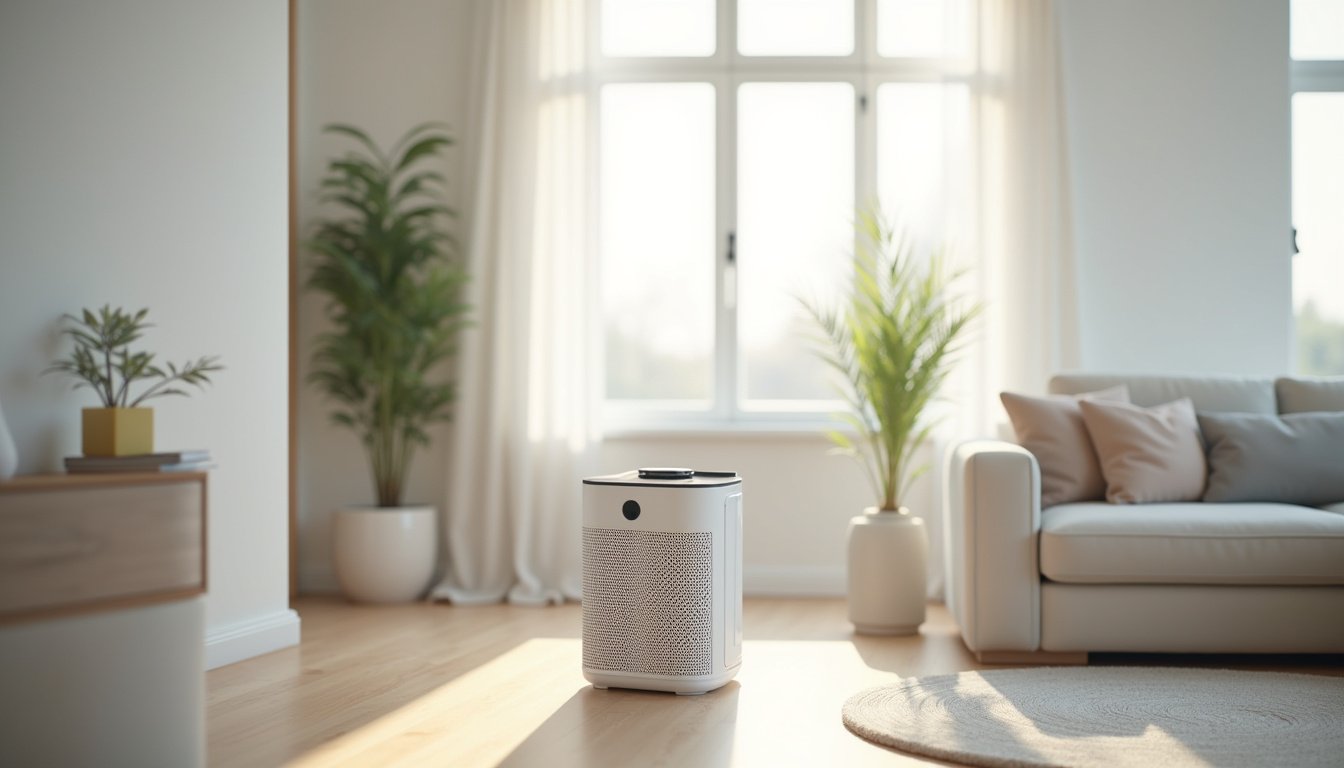
Two homes can own the same purifier and get completely different results. In one it sits in a corner behind a chair, runs on low when someone remembers, and holds a filter that is a year past due; in the other it sits a few feet from the bed with the door closed, runs on medium around the clock, and gets a clean pre-filter every two weeks. The unit is identical. The air is not.
Improving an air purifier’s performance is mostly about the seven things that happen outside the filter. Size matters first: the unit’s dust CADR should be at least two-thirds of the room’s floor area in square feet, AHAM’s rule of thumb. Placement is second: a foot of clearance, away from corners and furniture, near where people breathe. The door is third, because a purifier cleans the room it is in and an open door turns a bedroom into a hallway. Run time is fourth; particles return within an hour or two of switching off, so continuous running beats bursts on high. Filter condition is fifth: a loaded HEPA stage or matted pre-filter cuts airflow and therefore cleaning. Source control is sixth, since a purifier fighting a dusty carpet or an unvented range is always behind. And the HVAC system is seventh: a pleated MERV 11 to 13 filter, where supported, lowers the whole-house load.
In short: size it, place it, close the door, run it all the time, keep the filters fresh, cut the dust at its source and upgrade the furnace filter. Each step is small; together they are the difference between a humming ornament and clean air.
The EPA’s guide to air cleaners in the home makes the same points: choose by CADR relative to room size, run the unit continuously at the highest tolerable setting, maintain the filter, and treat portable cleaners as a supplement to source control and ventilation. AHAM’s Verifide program publishes the CADR figures that make sizing straightforward.
This guide is research-based, drawn from EPA and AHAM guidance, maker manuals and the way particles move in rooms. We have not tested the units in the comparison table and quote no prices or ratings. Nothing here is medical advice.
Your purifier is probably underperforming if
- It lives on low speed with the door open
- The pre-filter has not been cleaned in months
- It sits in a corner, behind furniture or against a wall
- You run it only when the air seems bad
It is probably doing its job if
- Its CADR meets two-thirds of the room’s floor area on medium
- It runs continuously with a foot of clearance and the door closed
- Filters are inspected quarterly and replaced on schedule
- A PM2.5 monitor across the room drops within an hour
Key Takeaways
- Size by CADR: at least two-thirds of the room’s floor area in square feet, met on medium speed, not high.
- Place the unit with a foot of clearance, out of corners, near where people breathe and dust is made.
- Close the door; a purifier cleans one room, and an open door makes that room the whole house.
- Run continuously on medium or auto; particles return within an hour or two of switching off.
- Keep the pre-filter clean every two to four weeks and replace the HEPA stage on schedule or when airflow weakens.
- Cut sources: range hood, HEPA vacuum, bedding washes, closed windows on dusty days, no indoor smoking.
- Upgrade the furnace filter to pleated MERV 11 to 13 where supported so every portable unit works on a smaller load.
Purifiers That Reward Good Setup
These widely reviewed filter-based units pair true HEPA with carbon and publish the CADR figures the sizing rule depends on. Compare the maker-listed CADR against your room, size a step up so medium is enough, and give the unit the placement and run time described here.






How This Guide Is Organized
We listed the factors that change how much clean air a given purifier delivers to the people in a room, ranked them by impact, and drew on EPA and AHAM guidance and maker manuals for each. Product details in the table come from maker specifications.
The organizing idea is that a purifier’s rated performance assumes a closed room of the right size, a clean filter and continuous running. Every deviation from that costs clean air, and every correction gets some back.
Factor 1: Size It for the Room
Nothing else matters if the unit is too small. AHAM’s rule of thumb is a dust CADR of at least two-thirds of the room’s floor area in square feet for 8 foot ceilings, which gives roughly 4.8 air changes an hour. A unit rated below that for its room cleans too slowly to stay ahead of the dust being made. Aim to meet the figure on medium speed, which means choosing a unit rated for a room one size larger, so it runs quietly and gets left on.
Worked example: a 14 by 16 foot bedroom is 224 square feet, so the target dust CADR is about 150. A compact unit rated at 90 will run on high all night and still fall short. A unit rated at 200 on high delivers about 150 on medium, meets the target quietly and loads its filter more slowly. For 10 foot ceilings add a quarter; for an open-plan area, measure the whole connected space.
| Room | Floor area | Minimum dust CADR | Comfortable target on medium |
|---|---|---|---|
| 10 by 12 ft bedroom | 120 sq ft | 80 | 100 to 120 |
| 12 by 14 ft bedroom | 168 sq ft | 112 | 140 to 170 |
| 14 by 16 ft bedroom | 224 sq ft | 150 | 190 to 230 |
| 16 by 20 ft living room | 320 sq ft | 213 | 260 to 320 |
| 20 by 30 ft open plan | 600 sq ft | 400 | 450 or more, or two units |
Factor 2: Put It Where It Can Work
A purifier pulls air from a few feet around its intake and pushes clean air out into the room, and it needs space to do both. Give it a foot of clearance on all sides, more behind a rear intake. Keep it out of corners boxed in by furniture, away from curtains and off deep carpet if the intake is at the base. Place it near where people spend time, a few feet from the bed or sofa, and near where dust is generated, with the outlet aimed to circulate rather than at a wall.
- Bedroom: a few feet from the bed on the side away from the door, outlet aimed upward or away from the sleeper.
- Living room: central or near the main seating, not behind the sofa.
- Near the source: beside the litter area, by the entry where grit comes in, across the room from the stove rather than beside it.
- Height: floor or a low stand is fine for most units; a high shelf starves bottom intakes.
- Avoid: humidifier mist, bathroom doorways, radiators, direct sun on the sensor.
Factor 3: Close the Door
A portable purifier cleans the air that reaches its intake, and almost all of that air comes from the room it is in. Leave the bedroom door open and the unit is trying to clean the hallway and every room beyond it; the bedroom never reaches its clean floor. Close the door and a correctly sized unit achieves several air changes an hour. This single habit often produces a bigger improvement than any upgrade.
If the door must stay open, for a child, a pet or airflow, treat the connected area as the room and size the unit for it, or accept a smaller improvement. A unit in an open-plan space is sized for the whole connected footprint.
Factor 4: Run It Continuously
Particles arrive constantly from people, pets, the HVAC system and the outdoors, and a room returns to its baseline within one to three hours of the purifier switching off. A unit run for an hour after vacuuming spends that hour catching up and is switched off as it finishes. Continuous running on medium or auto holds the level low around the clock and costs little: a mid-size unit on medium draws roughly the power of a couple of LED bulbs.
| Pattern | Clean air delivered | Result |
|---|---|---|
| An hour a day | Minimal | Little noticeable change |
| Evenings only | A few hours of benefit | Mild improvement while present |
| Overnight only, bedroom | Eight hours where it matters most | Clear benefit for sleepers |
| Continuous on medium or auto | Most of the day | Steady low particle level; slower dust build-up |
Use high in bursts after cooking, vacuuming or coming home on a smoky day, then return to medium. Auto mode is fine by day if the sensor inlet is kept clean; a fixed speed overnight avoids surges that wake light sleepers.
Factor 5: Keep the Filters Fresh
A loaded HEPA filter does not leak particles, but it restricts airflow, so the fan moves less air and the room is cleaned more slowly; the CADR you bought assumes a clean filter. A matted pre-filter does the same and starves the HEPA stage early. Carbon that is saturated stops removing odors. Filter condition is the one factor that degrades silently over months.
- Clean the pre-filter every two to four weeks, every two with pets, and dry it fully before refitting.
- Inspect the HEPA face every two to three months; replace it when it is uniformly gray and the outlet breeze has weakened, or at the maker’s 6 to 12 month interval.
- Replace carbon every 3 to 6 months or when odors return.
- Wipe the sensor inlet monthly with a dry swab so auto mode reads the room.
- Seat filters against the gasket and latch the cover until it clicks; a bypass gap wastes airflow.
- Keep a spare HEPA filter so a loaded one is never left in place for want of a replacement.
Factor 6: Cut the Dust at Its Source
The EPA’s order for indoor air is to reduce sources, ventilate and then filter, and a purifier working against a strong source is always behind. Lower the load and the same unit looks far more effective, its filters last longer and the room stays cleaner between cleanings.
| Source | Measure | Effect on the purifier |
|---|---|---|
| Carpet and upholstery | Sealed HEPA vacuum twice weekly; hard floors in bedrooms | Less coarse dust re-launched |
| Bedding | Hot wash weekly; allergen-proof encasements | Less dust mite allergen and fiber |
| Pets | Grooming, washing bedding, pets off the bed | Less dander and hair on the pre-filter |
| Cooking | Vented range hood on every burner | Far fewer fine particles and grease aerosols |
| Outdoor dust and pollen | Windows closed on dusty or high-count days; door mats; shoes off | Lower inflow |
| Smoke | No smoking indoors; no candles or incense in the purifier’s room | The heaviest fine particle load removed |
| Humidity | Hold 30 to 50 percent with ventilation or a dehumidifier | Less mold and dust mite growth; carbon works better |
Worked example: a bedroom purifier sized correctly still leaves a dusty dresser. The owner adds a weekly hot wash of bedding, a HEPA vacuum of the carpet twice a week and door mats at the entry. The purifier’s pre-filter needs cleaning half as often, the HEPA stage lasts closer to its interval and the dresser stays clean longer, with no change to the unit.
Factor 7: Upgrade the Furnace Filter
In a home with forced-air heating and cooling, the furnace filter touches every room’s air each time the blower runs. A thin fiberglass pad captures little and redistributes fine dust; a pleated MERV 11 to 13 filter, where the system supports it as the EPA suggests, captures much of that dust on every pass and lowers the particle load every portable unit sees. Running the blower on a circulate schedule extends the effect.
Check the system’s manual or ask a technician before fitting MERV 13 in an older system, since dense filters can restrict airflow; MERV 11 is a safe step for most. Change the furnace filter every one to three months. Leaky return ducts in attics and crawlspaces should be sealed, since they pull dust into the system and blow it into every room.
Measuring the Improvement
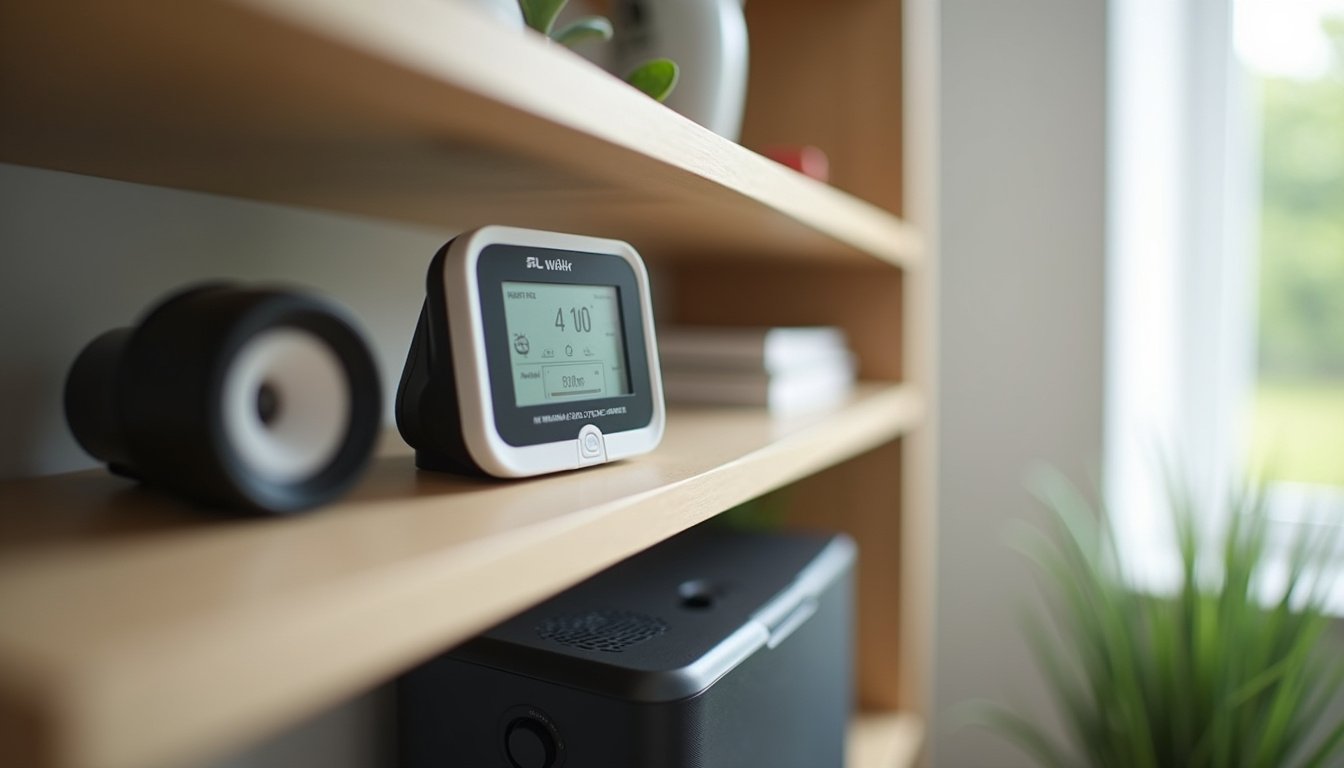
An inexpensive PM2.5 monitor at breathing height across the room from the purifier turns all of this into numbers. Note the reading with the unit off, then watch it with the unit on medium and the door closed; a correctly sized, well-placed unit drops it substantially within an hour and holds it there. Try each change, position, door, speed, a fresh filter, and keep what moves the number. Surface dust and symptoms follow over one to two weeks.
| Reading pattern | What it means | Adjust |
|---|---|---|
| Drops fast and stays low | Setup is right | Maintain |
| Drops a little, plateaus high | Undersized, open door or poor placement | Close the door; move the unit; size up |
| Drops then climbs during the day | Sources active: cooking, pets, windows | Source control; high after events |
| Barely changes | Unit far too small, filter loaded, or bypass | Check CADR, filter, seating |
| Low on the purifier’s light, high on the monitor | Dusty purifier sensor | Clean the inlet; trust the monitor |
Common Mistakes That Waste a Good Purifier
- Buying for the coverage number on the box rather than CADR; many claims assume one air change an hour.
- Running on low all the time to save noise, when sizing up would make medium quiet.
- Leaving the door open and expecting one unit to serve several rooms.
- Switching it on only when the air seems bad.
- Ignoring the pre-filter, which halves HEPA life and cuts airflow.
- Parking it in a corner behind furniture or against a wall.
- Trusting the purifier’s own light over a standalone monitor.
- Running an ionizer or UV feature instead of relying on the HEPA filter; the EPA advises against ozone-producing features.
- Expecting it to fix odors with a thin carbon pad or to lower humidity, radon or carbon monoxide, which it cannot.
How to Get the Most From Your Purifier in 7 Steps
- Measure the room and confirm the unit’s dust CADR is at least two-thirds of the floor area on medium; if not, move it to a smaller room and size up for this one.
- Place it with a foot of clearance, out of corners, a few feet from where people breathe, with the outlet circulating into the room.
- Close the door, or size for the whole connected space if it must stay open.
- Run it continuously on medium or auto, with high in bursts after cooking or cleaning.
- Clean the pre-filter every two to four weeks, wipe the sensor monthly, inspect the HEPA quarterly and replace filters on schedule.
- Cut sources: range hood, HEPA vacuum, bedding washes, pets off the bed, windows closed on dusty days, no indoor smoking, humidity at 30 to 50 percent.
- Upgrade the furnace filter to pleated MERV 11 to 13 where supported and seal leaky return ducts; confirm results with a PM2.5 monitor.
Do and Do Not
Do
- Size by CADR with headroom.
- Give the unit clearance and a sensible spot.
- Close the door.
- Run it all the time.
- Keep filters fresh and the sensor clean.
Do not
- Do not trust coverage claims over CADR.
- Do not run on low because high is loud; size up instead.
- Do not expect one unit to serve a hallway of rooms.
- Do not skip the pre-filter.
- Do not rely on ionizers, UV or the purifier’s own light.
Who Should Skip This
If a PM2.5 monitor across the room already drops fast and stays low with the door closed and the unit on medium, skip the upgrades. The setup is working; maintain the filters and keep the habits.
If the problem is odors, humidity, radon or gas appliances, skip tuning the purifier. Odors need carbon by the pound and source control, humidity needs a dehumidifier, and radon and carbon monoxide need testing and alarms; no purifier setting addresses them.
Honest Limits
- A purifier cleans one room while running; no setup extends it to closed rooms or other floors.
- Rated CADR assumes a clean filter and a closed room; real rooms with open doors and active sources deliver less.
- Source control reduces but cannot eliminate dust in homes with pets, carpet and open kitchens.
- HVAC filtration applies only to homes with forced air and only while the blower runs.
- Monitors show particles only; gases, humidity and radon need their own instruments.
- Nothing here is medical advice; symptoms belong with a doctor.
When to See a Professional
Call an HVAC professional before fitting a dense MERV 13 filter in an older system, to seal leaky return ducts or if dust blows from vents, and a mold professional for growth over about 10 square feet or persistent damp, as the EPA suggests.
See a doctor or allergist if symptoms persist despite a well-set-up purifier; the trigger may be in bedding, humidity or something not airborne. Nothing on this page is medical advice.
Frequently Asked Questions
How can I make my air purifier work better?
Size it so its dust CADR is at least two-thirds of the room’s floor area on medium, give it a foot of clearance away from corners, close the door, run it continuously, clean the pre-filter every two to four weeks, replace the HEPA on schedule, cut dust at its source and upgrade the furnace filter.
Where is the best place to put an air purifier?
A few feet from where people breathe most, the bed or main seating, with a foot of clearance on all sides, out of corners and away from curtains, deep carpet, humidifier mist and radiators, with the outlet circulating into the room. Near a dust source, such as the entry or litter area, also helps.
Should the door be open or closed when running a purifier?
Closed. A portable unit cleans the room it is in, and an open door turns a bedroom into part of a hallway and every room beyond it, so the bedroom never reaches its clean level. If the door must stay open, size the unit for the whole connected space.
Is it better to run an air purifier all day or just when needed?
All day. Particles return within one to three hours of switching off, so a unit run only when the air seems bad is always catching up. Continuous running on medium or auto holds the level low and costs about as much electricity as a couple of LED bulbs.
What speed should I run my air purifier on?
Medium or auto continuously, with high in bursts after cooking, vacuuming or coming home on a smoky day. If the unit needs high to meet the room’s CADR target, it is undersized; a unit one size larger on medium is quieter, cleans faster and loads filters more slowly.
How do I know if my air purifier is the right size?
Multiply the room’s length by width for square feet and take two-thirds of that as the minimum dust CADR, per AHAM’s rule for 8 foot ceilings. A 14 by 16 foot room, 224 square feet, needs about 150; choose a unit that reaches that on medium. Add a quarter for 10 foot ceilings.
Does a dirty filter reduce air purifier performance?
Yes. A loaded HEPA filter or matted pre-filter restricts airflow, so the fan moves less air and the room is cleaned more slowly; the rated CADR assumes a clean filter. Clean the pre-filter every two to four weeks and replace the HEPA when its face is gray and the outlet breeze weakens.
Can I improve air quality without buying a bigger purifier?
Often. Close the door, move the unit out of the corner, run it continuously, clean the pre-filter, replace a loaded HEPA, cut sources with a range hood, HEPA vacuum and bedding washes, and upgrade the furnace filter to MERV 11 to 13 where supported. Each lowers the load on the unit you have.
How do I check whether my purifier is actually working?
Place an inexpensive PM2.5 monitor at breathing height across the room, note the reading with the unit off, then run it on medium with the door closed. A correctly sized, well-placed unit drops the reading substantially within an hour and holds it. Surface dust and symptoms follow over one to two weeks.
Does upgrading the furnace filter help my portable purifier?
Yes, in homes with forced air. A pleated MERV 11 to 13 filter, where the system supports it, captures dust on every pass through every room with a vent and lowers the whole-house load, so each portable unit works on less and reaches the long end of its filter interval.
Bottom Line
Improving an air purifier’s performance rarely means buying a different purifier. It means giving the one you have the conditions its rating assumes: a room it is sized for, a spot with clearance, a closed door, continuous running, fresh filters and a home that is not feeding it dust faster than it can filter. Add a better furnace filter and a monitor across the room to prove the result.
Work through the seven factors in order, sizing, placement, door, run time, filters, sources and HVAC, and keep whatever moves the monitor. The unit that seemed to do nothing in the corner on low will turn out to have been waiting for exactly that.
Related reading: How many air purifiers do I need, Should you leave a HEPA air purifier on all the time, How to check indoor air quality at home.