Last updated:
As an Amazon Associate we earn from qualifying purchases. This does not change what we recommend. See our affiliate disclaimer.
Air purifiers sit in an odd category. They are not essential like a refrigerator, not purely a luxury like a sound system, and their effect is invisible unless you own a particle monitor. So people ask a fair question before spending the money: is it actually worth having one at home, or is it a hum in the corner that makes you feel better without doing much?
For many households the honest answer is yes, with conditions. A filter-based purifier sized to the room and run most of the day measurably lowers airborne particles such as dust, pollen, pet dander, mold spores and smoke in that room. People with allergies, asthma triggered by particles, pets, wildfire smoke seasons or a dusty older home usually notice the difference within a week or two, most often as easier mornings and less visible dust in the air. For a clean, well-ventilated home with no allergies, no pets and no smoke, the benefit is real but small, and the money might do more elsewhere. The device is worth it when there is a particle problem to solve and you are willing to leave it running.
In short: a purifier is worth it if you have a reason, a room and the patience to run it continuously. It is not worth it as a general wellness gadget switched on now and then.
The EPA’s guide to air cleaners in the home frames the choice the same way: source control and ventilation come first, and a portable air cleaner is a worthwhile supplement for reducing particles in a room. The American Lung Association echoes that, and AHAM’s CADR ratings give a way to size a unit so the benefit actually arrives.
What follows is research-based rather than tested. We draw on maker specifications, EPA and AHAM guidance and the physics of indoor particles. We do not quote prices or ratings for the units in the comparison table, only their published features.
Worth it for you if
- Someone has allergies or asthma triggered by dust, pollen or dander
- You have pets, carpet or an older, dusty home
- Your area gets wildfire smoke or heavy outdoor pollution
- You will run it continuously in the bedroom or main room
Probably not worth it if
- Nobody has symptoms and the home is clean and well ventilated
- You expect it to remove odors without a real carbon stage
- You would only run it occasionally
- Your real problem is humidity, radon or a gas appliance
Key Takeaways
- A sized, continuously run HEPA purifier lowers airborne particles in one room; that is the whole value proposition.
- People with particle-triggered allergies or asthma, pets, or smoke exposure see the clearest benefit.
- Clean homes with no symptoms gain less; the money may be better spent on a MERV 13 HVAC filter.
- Run time decides worth: a unit used an hour a day delivers almost nothing.
- Odors and gases need a substantial carbon stage; a HEPA-only unit will disappoint on smells.
- The purchase price is the smallest cost; filters and electricity over several years matter more.
- A purifier never replaces fixing sources, ventilating, or seeing a doctor about symptoms.
Filter-Based Purifiers Worth Considering
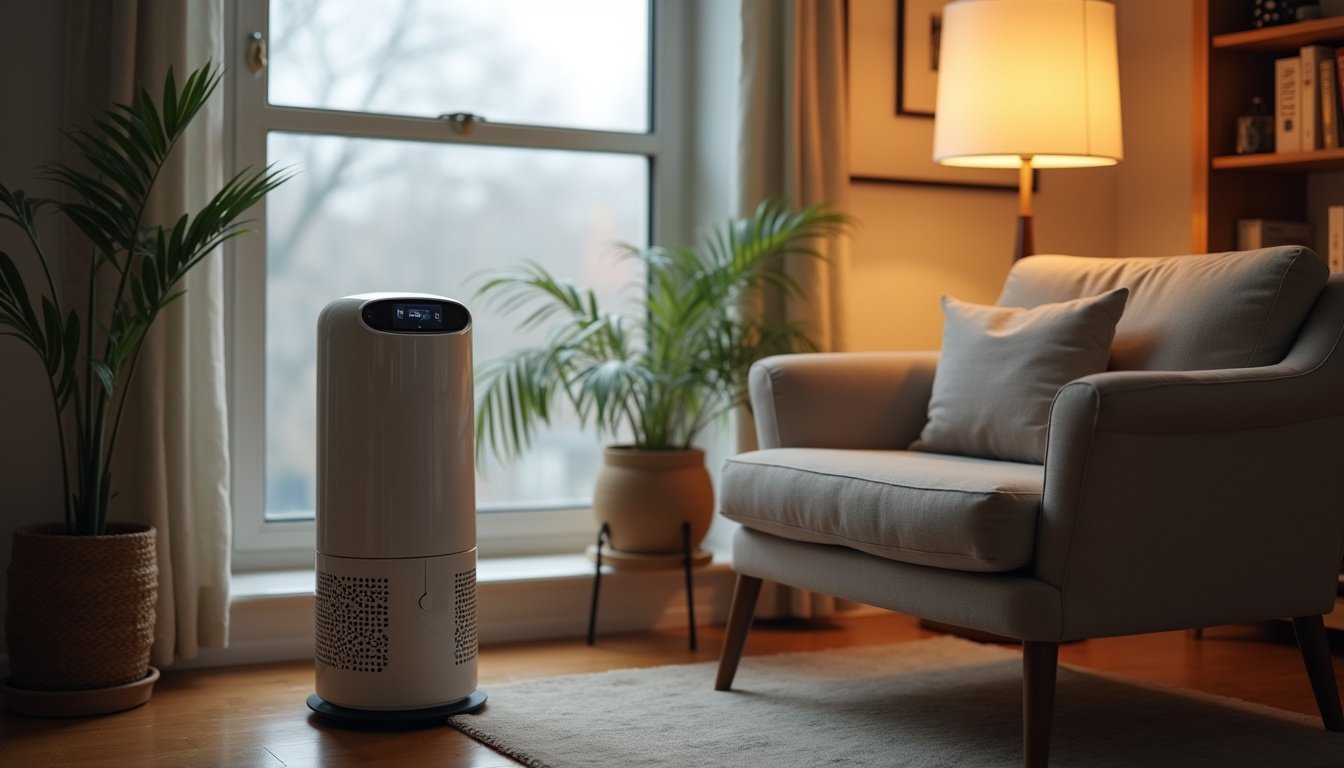
These widely reviewed units cover bedrooms through large living rooms and publish clear filter schedules. Compare maker-listed CADR and room size against the room where the purifier will live, and favor models quiet enough on medium to leave on all day.






How We Judged Worth
We separated the question into three parts: does a purifier do anything measurable, who notices that effect, and what does it cost over time to keep it doing so. For each we used maker documentation, EPA and AHAM guidance and the way airborne particles behave indoors, not personal testing.
The honest framing matters because purifiers are often sold on vague promises. Clean air sounds good; fewer airborne particles in one room while the fan runs is what you actually get. Whether that is worth paying for depends entirely on your home and your health, which the sections below work through.
What Actually Changes When You Run One
A true HEPA purifier captures 99.97 percent of particles at 0.3 microns under test conditions, and larger particles such as pollen and dander are even easier to catch. When the fan moves enough air through that filter, the concentration of particles in the room drops within an hour and stays low as long as the unit runs. Inexpensive PM2.5 monitors show this plainly: a closed bedroom with a correctly sized unit often reads a small fraction of the hallway outside.
What you perceive is more subtle. Fewer motes drift through sunbeams. Shelves gray over more slowly, though they still need dusting. Allergy sufferers often report easier mornings, since night-time exposure to dander and dust mite allergen near the bed is reduced. During smoke events the difference between a closed room with a purifier and the rest of the house is obvious to the nose.
| What you hope for | What a HEPA purifier delivers | What it does not do |
|---|---|---|
| Less dust | Fewer airborne particles; slower build-up on surfaces | Does not lift settled dust |
| Allergy relief | Lower airborne pollen, dander and spores in the room | Does not touch allergen in bedding or carpet |
| Cleaner-smelling home | Some odor removal if it has real carbon | HEPA alone does nothing for smells or gases |
| Protection during smoke | Strong reduction of smoke particles in a closed room | Cannot clean the whole house |
| Fewer illnesses | Reduces airborne particles, including some biological ones | No claim about preventing disease; ask a doctor |
Who Benefits Most
The clearest winners are people whose symptoms are triggered by airborne particles. Seasonal pollen allergies, pet dander sensitivity and dust-triggered asthma all respond to lower particle counts, and allergists commonly list HEPA filtration among the supporting measures alongside source control. A unit in the bedroom, running overnight with the door closed, targets the eight hours of heaviest exposure.
Pet owners are next. Dander is light and stays airborne, which makes it a near-perfect target for a purifier, and a unit near where the animal sleeps or the family gathers removes a good share of it. Households in wildfire regions or near busy roads benefit during pollution events, when outdoor particles leak indoors and a purifier can hold one room clean.
Older homes with original carpet, forced-air systems with leaky ducts, and homes undergoing nearby construction all produce more dust than a vacuum alone keeps up with. In those settings a purifier earns its place even without symptoms, simply by cutting the visible dust load.
Who Gains Little
A newer home with hard floors, good ventilation, no pets and no allergy sufferers has little airborne particle load to remove. A purifier there still works, but there is less to measure and little anyone will notice. The same money spent on a pleated MERV 13 HVAC filter, which the EPA suggests where the system supports it, cleans every room with a vent and may do more.
People whose real complaint is odor, humidity or a gas appliance are also likely to be disappointed. Smells need a substantial carbon bed, not the thin pad in most compact units. Musty rooms and condensation need a dehumidifier and ventilation. Carbon monoxide and radon need alarms and testing; no purifier addresses them.
A Simple Worth-It Test
Before buying, run a short checklist. Each yes makes a purifier more likely to pay off; three or more and it is almost certainly worth it for at least one room.
- Does anyone wake up congested, sneeze in the morning or have asthma symptoms indoors?
- Do you have pets that shed, or carpet in the bedrooms?
- Do you see dust floating in sunlight most days?
- Does your region get wildfire smoke or high outdoor pollution days?
- Is the home older, near traffic or construction, or served by a forced-air system with questionable ducts?
- Will you run the unit at least 12 hours a day in one room?
Worked example: a family in a 1970s house with a dog, carpeted bedrooms and one child who wakes up stuffy answers yes to five of six. A bedroom unit sized by the AHAM rule, dust CADR of about two-thirds of the floor area, is clearly worth it for them. A couple in a new hard-floored condo with no pets and no symptoms answers yes to one at most; a better HVAC filter is the smarter spend, with a purifier added only if smoke season arrives.
Sizing Decides Whether You Notice Anything
Many people who say a purifier did nothing bought one too small for the room. AHAM’s rule of thumb is a dust CADR of at least two-thirds of the floor area in square feet for 8 foot ceilings, about 4.8 air changes an hour. A compact unit rated for a small bedroom will barely register in a 300 square foot living room, however good its filter.
Buy for the room where it will live, and lean larger rather than smaller. A unit with headroom runs on medium or low, which is quieter and cheaper, and it still reaches the target. A unit at its limit has to run on high, which is loud enough that most people switch it off, at which point it is worth nothing.
Run Time: The Habit That Makes or Breaks It
A purifier only cleans while running, and particles return within an hour or two of switching it off as people move, pets shed and the HVAC cycles. Someone who runs it for an hour after vacuuming gets almost nothing for the money. Someone who leaves it on medium around the clock in the bedroom gets the full benefit.
| How it is used | Benefit you will notice | Verdict |
|---|---|---|
| An hour a day after cleaning | Almost none | Not worth it |
| Evenings only in the living room | Mild, while present | Marginal |
| Overnight in the bedroom, door closed | Clear for allergy sufferers | Worth it |
| Continuous on auto or medium in the main rooms | Clear reduction in dust and symptoms | Worth it |
| Clean room during smoke events | Large difference in that room | Worth it for the season |
What It Costs to Keep Running
The purchase price is the entry fee. Over several years, replacement filters usually cost more than the unit, and electricity adds a modest amount. A HEPA stage is typically replaced every 6 to 12 months per the maker, carbon every 3 to 6 months, and washable pre-filters are rinsed rather than replaced. A mid-size unit on medium draws roughly as much power as a couple of LED bulbs.
| Cost line | Typical pattern | How to keep it low |
|---|---|---|
| Unit price | One-time | Buy for the room, not the biggest number |
| HEPA filter | Every 6 to 12 months per the maker | Keep the pre-filter clean; run on medium |
| Carbon filter | Every 3 to 6 months if present | Fix odor sources; skip carbon if odors are not an issue |
| Pre-filter | Rinse monthly if washable | Choose washable over disposable |
| Electricity | A few watts on low to about 50 on high | Run on medium or auto; look for Energy Star |
When weighing worth, compare candidates on five years of filters and electricity, not on the box price. Units with washable pre-filters, annual HEPA filters and Energy Star listings keep the yearly number down. Our maintenance cost guide walks through the formula in detail.
Alternatives to Try First or Alongside
Public health guidance is consistent: reduce the source, ventilate, then filter. Several cheap steps lower particles before any purifier is plugged in, and they make a purifier work better once it is.
- Upgrade the HVAC filter to a pleated MERV 11 to 13 where the system allows, and consider the thermostat’s circulate setting.
- Wash bedding weekly in hot water and use allergen-proof mattress and pillow encasements.
- Vacuum with a sealed HEPA vacuum twice a week if there is carpet.
- Use door mats inside and out and take shoes off at the door.
- Run the range hood on every burner and vent bathrooms to control moisture.
- Hold indoor humidity between 30 and 50 percent, as the EPA suggests, with ventilation or a dehumidifier.
If symptoms or visible dust persist after those steps, a purifier is the logical next layer, and at that point it is almost always worth it.
How to Decide and Choose in 6 Steps
- Run the worth-it checklist above; with two or more yes answers, continue.
- Pick the room where it matters most, usually the bedroom of the most affected person.
- Measure that room and take two-thirds of the floor area as the minimum dust CADR.
- Choose a true HEPA unit with a quiet medium speed; add a real carbon stage only if odors are part of the problem.
- Check the filter schedule and replacement availability, then estimate five years of running cost.
- Commit to running it continuously for two weeks before judging the result.
Do and Do Not
Do
- Buy for a specific room and a specific problem.
- Run it continuously, especially overnight.
- Fix sources and upgrade the HVAC filter alongside it.
- Measure with a PM2.5 monitor if you want proof.
- Replace filters on the maker’s schedule.
Do not
- Do not buy a HEPA-only unit to fix odors.
- Do not expect it to clean other rooms or settled dust.
- Do not treat it as a CO, radon or gas safeguard.
- Do not use ozone generators; the EPA advises against them.
- Do not judge it after a day of occasional use.
Who Should Skip This
If your home is new, hard-floored, pet-free and well ventilated, and nobody has symptoms, you can reasonably skip a portable purifier for now. Put the money into a MERV 13 HVAC filter and good ventilation habits, and revisit the question if smoke season, a pet or a new allergy arrives.
If the problem you are trying to solve is a musty basement, condensation on windows or a chemical smell from a fuel-burning appliance, a purifier is the wrong first purchase. Moisture control, ventilation, appliance service and alarms address those; a purifier can come later for the particles that remain.
Honest Limits
- It cleans one room, only while running, and only the air that passes through it.
- It does not remove settled dust, surface mold or allergen in fabrics.
- HEPA does nothing for gases and odors; carbon helps only if there is enough of it.
- It does not detect or remove carbon monoxide, radon or gas leaks.
- Benefits are measured in particle counts and symptoms, not in cures; no disease claims are justified.
- Filters must be replaced on schedule or airflow and capture fall off.
When to See a Professional
See a doctor or allergist if you are considering a purifier because of persistent congestion, wheezing, asthma or skin reactions. Testing identifies the trigger, and treatment plans differ; a purifier may support the plan but is not a substitute for care. Nothing on this page is medical advice.
Call an HVAC professional before fitting a MERV 13 or denser filter to an older system or if dust pours from vents, which suggests duct leaks. Use a mold professional for growth over about 10 square feet, as the EPA suggests, and a certified radon professional for testing and mitigation. For a gas smell, leave and call the utility.
Frequently Asked Questions
Is an air purifier worth it for allergies?
Usually yes. A true HEPA unit sized to the bedroom and run overnight lowers airborne pollen, dander and dust mite allergen near the bed, and many allergy sufferers report easier mornings. It works best alongside hot-washing bedding, mattress encasements and source control, and your allergist can advise on the full plan.
Is an air purifier worth it if I have no allergies?
It depends on the home. With pets, carpet, an older house, nearby traffic or smoke seasons, it still cuts visible dust and particle exposure. In a clean, well-ventilated home with none of those, the benefit is small, and a MERV 13 HVAC filter may be the better spend.
Do air purifiers actually make a measurable difference?
Yes, in the room where they run. An inexpensive PM2.5 monitor will show particle levels falling within an hour in a closed room with a correctly sized HEPA unit, and staying low while it runs. The effect disappears within hours of switching the unit off.
Is it worth running an air purifier all the time?
Yes. Particles return continuously from people, pets and the HVAC system, so total hours of operation drive the benefit. Running on medium or auto around the clock typically draws as much power as a couple of LED bulbs, far less than people assume.
Will a purifier get rid of dust so I do not have to clean?
No. It reduces airborne dust, so surfaces gray over more slowly, but settled dust stays until wiped or vacuumed. Think of it as slowing the rate of dusting, not ending it, and pair it with a sealed HEPA vacuum and regular bedding washes.
Is a purifier worth it for pet odors?
Only if it has a substantial activated carbon stage. HEPA filters capture dander but not odor molecules, and thin carbon pads saturate quickly. For odors, choose a unit with a thick or pelletized carbon bed, clean litter and bedding often, and ventilate.
Is a purifier worth it during wildfire smoke?
Very much so. Smoke particles are exactly what HEPA filters capture, and the EPA recommends creating a clean room: close the house, run a HEPA unit continuously in one room and spend time there. The difference between that room and the rest of the house is usually obvious.
What is the cheapest alternative to buying a purifier?
Upgrade the HVAC filter to a pleated MERV 11 to 13 where the system supports it, wash bedding weekly, vacuum with a sealed HEPA vacuum, use door mats and run the range hood. These reduce particles in every room and make any purifier you add later more effective.
How long before I know whether it was worth it?
Give it two weeks of continuous use in one closed room. Floating particles drop within a day; surface dust and allergy symptoms take a week or two to show a clear trend. If nothing changes, check the unit’s CADR against the room size and whether the door is closed.
Are the health benefits of air purifiers proven?
Studies show HEPA filtration lowers indoor particle levels and can reduce allergy and asthma symptoms for some people, but results vary and no purifier prevents disease. Treat it as one supporting measure, follow public health guidance, and rely on your doctor for medical decisions.
Bottom Line
An air purifier is worth having at home when there is a particle problem to solve, a room to solve it in and a willingness to leave it running. Allergies, pets, dust, smoke and older housing all qualify. For those households a correctly sized HEPA unit in the bedroom, and perhaps a second in the living area, delivers a clear and measurable improvement for a modest running cost.
Where none of those apply, the honest answer is that the benefit is small, and a better HVAC filter plus good habits does more for less. Decide with the checklist, size by the AHAM rule, run it continuously for two weeks, and you will know for your own home rather than taking anyone’s word for it.
Related reading: Air purifier maintenance cost, What do air purifiers clean, Best air purifier under 100.