Last updated:
As an Amazon Associate we earn from qualifying purchases. This does not change what we recommend. See our affiliate disclaimer.
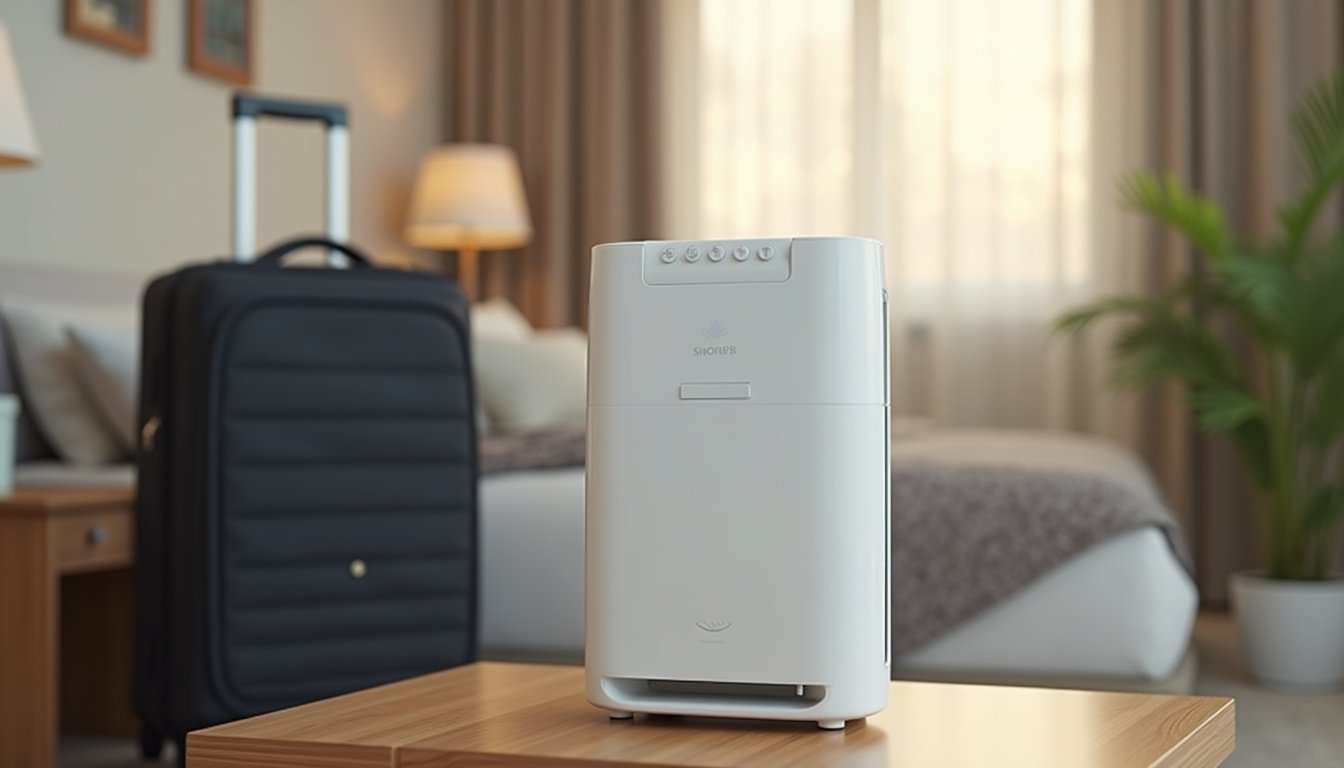
Most air purifiers are portable in the sense that they plug into a wall and can be carried, but the word has come to mean something more specific: compact units light enough to move room to room daily, take on a trip or set on a desk. They are tempting because they promise cleaner air wherever you are. Whether that promise holds depends on matching the unit’s small capacity to small spaces and real habits.
A portable air purifier makes sense when the air that matters is in a small, closed space that changes through the day. One true HEPA unit that follows you from the home office to the bedroom, or travels to a hotel room, a dorm or a nursery, cleans the air you are actually breathing without buying a purifier for every room. Its benefits are real: lower airborne dust, pollen, dander and smoke in a space of roughly 100 to 200 square feet, quick setup, low power draw and the flexibility to put clean air where the day takes you. Its limits are just as real. Capacity is small, so it cannot handle a living room or an open plan; carbon stages are thin, so odors are mostly untouched; and a unit left in the wrong room helps nobody. Sized by AHAM’s rule, a dust CADR of about two-thirds of the floor area in square feet, and moved with intention, a portable purifier is an efficient tool.
In short: a portable purifier is a good answer to a small room that moves with you, and a poor answer to a large room that does not.
The EPA’s guide to air cleaners in the home notes that portable cleaners are designed for a single room and should be sized by CADR relative to that room, and that performance depends on run time. AHAM’s Verifide program publishes the CADR figures that make small-unit sizing honest, since compact units often advertise coverage based on a single air change per hour.
This guide is research-based, drawn from EPA and AHAM guidance and maker specifications. We have not tested the units in the comparison table and quote no prices or ratings, only published CADR, room ratings, weight and noise figures.
A portable unit is the right call if
- You spend the day in one small room and the night in another
- You travel often and want clean air in hotel rooms or rentals
- A nursery, dorm or office under about 200 square feet is the target
- You will actually move it rather than leaving it in a corner
Choose a fixed, larger unit if
- The room is over about 200 square feet or open to other spaces
- Odors or smoke are a major part of the problem
- Several people need clean air in different rooms at once
- You know the unit will stay put, in which case size it for that room
Key Takeaways
- A portable purifier cleans a small room well and a large room poorly; size it by CADR, not by its coverage claim.
- Its main benefit is following you: office by day, bedroom by night, hotel on the road.
- Compact units draw little power and set up in seconds, which makes travel and daily moves practical.
- Thin carbon layers mean portable units do little for odors; expect particle removal only.
- Moving a unit means the room it left is untreated; for several people in several rooms, buy more units.
- A quiet low speed matters more in a small room where the unit is close to you.
- True HEPA, a sealed filter bay and no ozone features are non-negotiable, portable or not.
Compact Portable HEPA Purifiers to Compare
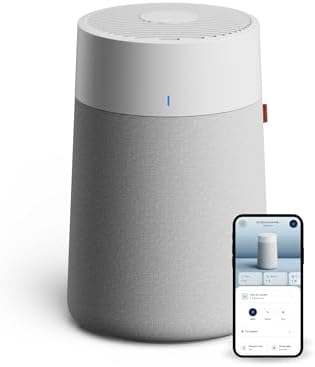
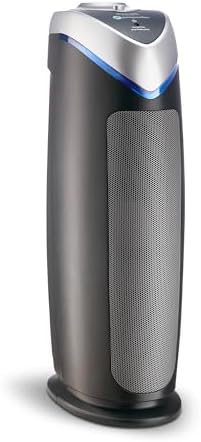
These widely reviewed small-room units pair true HEPA with carbon in compact, light housings suited to moving between rooms or packing for travel. Compare the maker-listed CADR against the rooms you will use them in and check weight and noise on low.




How This Guide Judges Portables
We looked at where portable units deliver measurable value, small closed rooms and changing locations, and where they fall short, large spaces and odors, using AHAM’s CADR sizing and EPA guidance. Product details in the table come from maker specifications.
One rule drives everything: a purifier only cleans the room it is in, so a movable unit is valuable exactly to the extent that it is moved to where you are.
What Counts as Portable
In practice a portable purifier is one you will pick up with one hand and carry without thinking: typically under about 10 pounds, with a handle or a shape that invites lifting, a footprint that fits a nightstand or desk, and a dust CADR somewhere between 50 and 130. Tower and console units with casters are movable too, but moving them is a chore people stop doing. Travel-sized units go further, with cases small enough for a carry-on and CADR figures suited to a hotel room or a car.
| Class | Typical weight | Typical dust CADR | Honest room size at AHAM rate | Best use |
|---|---|---|---|---|
| Travel or desk unit | Under 5 pounds | 30 to 70 | Up to about 100 sq ft | Hotel rooms, desks, cars, cribs |
| Compact room unit | 5 to 10 pounds | 70 to 130 | 100 to 200 sq ft | Bedrooms, offices, nurseries, moved daily |
| Mid-size with handle or casters | 10 to 20 pounds | 130 to 250 | 200 to 375 sq ft | Living rooms; moved occasionally |
| Console or tower on casters | Over 20 pounds | 250 and up | 375 sq ft and up | Stays put; rolled only to clean behind |
The honest room size is the dust CADR multiplied by about 1.5, which inverts AHAM’s rule that CADR should be two-thirds of the floor area. A unit advertising 300 square feet with a CADR of 70 handles about 105 square feet at the rate that makes a difference.
Benefit 1: It Follows You
The strongest case for a portable purifier is that people are not in one room all day. A home worker spends eight hours in an office and eight in a bedroom; a parent moves between a nursery and a living room; a student has a dorm room and a shared lounge. One compact unit carried between those spaces cleans the air being breathed, which is the only air that matters, at the cost of one filter schedule instead of two or three.
The habit has to be real. A unit that is carried on the first day and then lives in one corner is simply a small fixed purifier, and if that corner is a large room it is an undersized one. Make the move part of a routine, to the bedroom at bedtime and back in the morning, and the benefit arrives; forget it, and the unit should be sized for the room it ends up in.
Benefit 2: Clean Air Away From Home
Hotel rooms, vacation rentals, dorms and relatives’ spare rooms are where allergy and asthma sufferers often sleep worst: unfamiliar dust, old carpet, pet dander from previous guests, or smoke drifting from a balcony. A travel-sized true HEPA unit in a carry-on changes a 200 square foot hotel room in an hour and runs all night on a quiet speed. It cannot fix a smoky room’s odor, but it handles the particles that trigger sneezing and wheezing.
Check voltage and plug type for international travel, since many compact units use a USB or low-voltage adapter that travels easily. Pack a spare filter for long trips in dusty destinations, and place the unit on the nightstand with the door closed, exactly as at home.
Benefit 3: Right-Sized for Small Rooms
Small rooms are where compact units are at their best, not as a compromise but as the correct size. A 10 by 12 bedroom is 120 square feet and needs a dust CADR of about 80; a 9 by 11 office needs about 66; a nursery of 11 by 12 needs about 88. A compact unit meets those figures on low or medium, quietly, drawing a few watts and loading its filter slowly. A large unit in the same room would work but would be oversized, louder than needed and more expensive to filter.
Worked example: a 10 by 12 foot home office, 120 square feet, with a laser printer and a door that stays closed all day. A compact unit with a dust CADR of 100 on high delivers about 70 on medium and 50 on low; medium meets the room’s target quietly during work hours, and the unit moves to the bedroom at night, where a similar calculation applies.
Benefit 4: Low Power and Simple Upkeep
Compact units draw a few watts on low and perhaps 20 to 40 on high, so running one continuously costs little, and many are quiet enough at low speed to disappear into a bedroom. Filters are usually a single combined cartridge replaced every six to eight months per the maker, with a removable mesh pre-filter on better models that can be vacuumed to extend it. Setup is a plug and a button, which is why they travel well.
The flip side is that combined cartridges replace the HEPA layer whenever the thin carbon layer saturates, and small filters load faster than large ones in dusty or pet homes. Keep a spare cartridge and vacuum the pre-filter mesh monthly.
The Limits That Decide Whether It Fits You
| Limit | Why | What it means for you |
|---|---|---|
| Small capacity | Small fan and filter; CADR 50 to 130 | Fine for rooms under about 200 sq ft; inadequate for living rooms and open plans |
| Thin carbon | Little room for a real carbon bed | Expect particle removal only; odors need a mid-size unit with carbon by the pound |
| One room at a time | Any purifier cleans only its room | Moving it leaves the previous room untreated |
| Louder per unit of cleaning | Small fan must spin faster | Size a step up so low or medium suffices; compare noise on that speed |
| Combined cartridges | Convenience over separate stages | HEPA layer replaced when carbon saturates; keep a spare |
| Coverage claims | Often based on one air change per hour | Use CADR times 1.5 for the honest room size |
| Open doors | Small unit cannot keep up with a hallway | Close the door of the room it is in |
Portable Versus Fixed: Deciding
The decision comes down to how many rooms need clean air at the same time and how large they are. One person moving between two small rooms is the portable’s ideal case. Two people in two bedrooms at once need two units, portable or not. A family with a large living area and several bedrooms needs a fixed unit sized for the living area and smaller units for the bedrooms, some of which can be portable if they also serve an office by day.
| Situation | Portable | Fixed | Both |
|---|---|---|---|
| One person, small office by day, small bedroom by night | Yes, one unit moved daily | ||
| Frequent travel with allergies | Yes, travel unit | ||
| Couple, one bedroom, small living room | Compact fixed in bedroom; portable moved to living room by day | ||
| Family, large living area, three bedrooms | Yes for the living area | Portable units for bedrooms and office | |
| Living room over 200 sq ft or open plan | Yes, sized by CADR | ||
| Odor, smoke or pet smell as the main issue | Yes, with carbon by the pound |
Using a Portable Purifier Well
- Measure each room it will serve and confirm its dust CADR is at least two-thirds of the floor area; if a room is too big, the unit is not for that room.
- Pick a spot in each room a few feet from where you sit or sleep, with a foot of clearance, off deep carpet, outlet aimed away from your face.
- Close the door of whichever room it is in.
- Run it continuously on low or medium rather than high; use high for an hour when you first arrive in a room that has been closed up.
- Move it with the routine: to the bedroom at bedtime, back in the morning, into the bag for trips.
- Vacuum the pre-filter mesh monthly, replace the cartridge on the maker’s schedule or when airflow weakens, and keep a spare.
- Dim the display at night and skip ionizer or UV features; the EPA advises against ozone, and a small room concentrates it.
Special Cases: Nurseries, Cars and Desks
Nurseries suit compact units well, provided the unit sits out of reach with the cord secured, is stable against tipping and runs on a quiet low speed that still meets the room’s CADR. Filter-based only; no ionizers or UV near an infant.
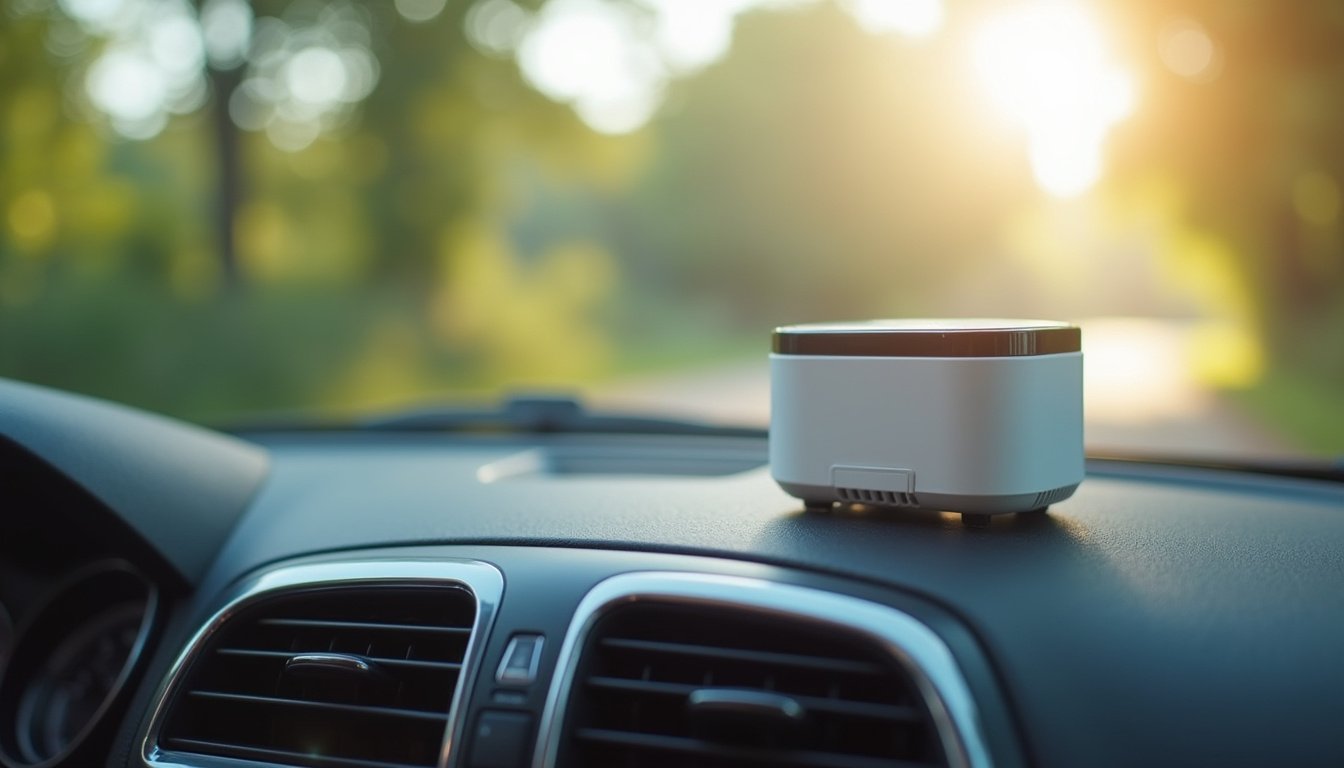
Car purifiers are a specific category: small units powered from the car’s outlet that filter a very small volume. They help with dust and pollen in the cabin on long drives if sized honestly, though the car’s own cabin filter, replaced on schedule, does more. Desk units handle the air immediately around a seated person in an open office and nothing beyond it; useful for a desk in a dusty shared space, meaningless for the room.
In every special case the rule holds: match the small CADR to a small, closed volume and the unit performs; stretch it and it does not.
How to Choose a Portable Purifier in 6 Steps
- List the rooms it will serve and measure each; every one must be small enough that two-thirds of its floor area is at or below the unit’s dust CADR.
- Shortlist true HEPA units under about 10 pounds with a handle or liftable shape and no ozone-producing features.
- Check published noise on low and medium, since you will be close to it; pick one that meets the CADR target on a quiet speed.
- Confirm filter availability, a vacuumable pre-filter mesh if possible, and buy a spare cartridge.
- For travel, check voltage, adapter type and case size for a carry-on.
- Set up a ready spot in each room and make the move part of a daily routine.
Do and Do Not
Do
- Size by CADR times 1.5 for the honest room size.
- Move it with a routine, not an intention.
- Close the door of the room it is in.
- Run it continuously on a quiet speed.
- Keep a spare cartridge and vacuum the pre-filter.
Do not
- Do not leave a compact unit in a large living room and expect results.
- Do not trust coverage claims based on one air change per hour.
- Do not expect odor removal from a thin carbon layer.
- Do not use ionizer or UV features, especially in a nursery.
- Do not buy one portable for a family that needs clean air in several rooms at once.
Who Should Skip This
If your main concern is a living room over about 200 square feet, an open plan or odors, skip the portable category. A fixed unit sized by the two-thirds rule, with carbon by the pound if smells matter, is the tool, and a portable can supplement it in a bedroom.
If you know you will never move the unit, skip the portability premium and simply buy the correctly sized purifier for the room where it will live, portable or not.
Honest Limits
- Compact units clean only rooms under about 200 square feet at the rate that matters.
- Thin carbon layers do little for odors.
- A moved unit leaves the previous room untreated; it cannot serve two rooms at once.
- Combined cartridges replace the HEPA layer when the carbon saturates.
- Small fans are louder per unit of cleaning; sizing a step up is the fix.
- No purifier, portable or fixed, addresses humidity, radon or gas appliances.
When to See a Professional
See a doctor or allergist if a portable purifier is being bought for persistent symptoms, especially for travel or a nursery; identifying the trigger decides whether filtration will help at all. Nothing on this page is medical advice.
Stop using and contact the maker for any unit that smells of burning, sparks or runs hot, which matters especially for units used unattended in hotel rooms or near a crib. Check voltage compatibility with the maker before using a unit abroad.
Frequently Asked Questions
What are the benefits of a portable air purifier?
It cleans the air of a small room you are actually in, follows you from office to bedroom or into a hotel room, sets up in seconds, draws little power and runs quietly on low. Sized honestly by CADR for rooms under about 200 square feet, it lowers dust, pollen, dander and smoke.
How big a room can a portable air purifier handle?
Multiply its dust CADR by about 1.5 for the room size it cleans at AHAM’s recommended rate. A unit with a CADR of 70 handles about 105 square feet; one with 130 handles about 195. Coverage figures on the box often assume one air change per hour, which is far less cleaning.
Is a portable purifier as good as a regular one?
In a small closed room, yes, because the correct size for that room is small. In a living room or open plan, no; its capacity is a fraction of what the space needs. The technology is the same true HEPA; the difference is capacity, and capacity must match the room.
Can I move one purifier between rooms instead of buying two?
Yes, if one person uses one room at a time: office by day, bedroom by night. The room it leaves is untreated meanwhile, so two people in two rooms at once need two units. Make the move a routine; a unit that stops moving should be sized for the room it ends up in.
Do portable air purifiers remove odors?
Not well. Most carry a thin carbon layer bonded to the HEPA filter that saturates within weeks. They handle particles such as dust, pollen and dander; for cooking, pet or smoke odors you need a mid-size unit with carbon by the pound, and source control matters more than either.
Are portable purifiers good for travel?
Yes, for hotel rooms, rentals and dorms, which often have unfamiliar dust, dander or smoke. A true HEPA travel unit changes a 200 square foot room’s air in about an hour and runs all night quietly. Check voltage and adapter type for international trips and pack a spare filter.
Can I use a portable purifier in a nursery?
A filter-based true HEPA unit is suitable, placed out of reach with the cord secured, stable against tipping, display dimmed and run on a quiet low speed that meets the room’s CADR. Skip ionizer and UV features; the EPA advises against ozone, and a small room concentrates it.
Are portable air purifiers loud?
On high, most sound like a small desk fan, which is why sizing matters. A unit whose low or medium speed meets the room’s CADR runs quietly enough for sleep and work. Compare published noise figures at the speed you will use, not the quietest setting.
How often do I replace the filter in a portable purifier?
Most use a combined cartridge replaced every six to eight months per the maker, sooner with pets, dust or smoke. Vacuum any removable pre-filter mesh monthly to extend it, inspect the pleats every couple of months, and keep a spare so a loaded filter is never left in place.
When is a portable purifier the wrong choice?
When the room is over about 200 square feet or opens onto other spaces, when odors or smoke are the main problem, when several people need clean air in different rooms at once, or when you know it will never be moved and the room it lives in needs a larger unit.
Bottom Line
A portable air purifier’s benefits are specific: it cleans a small room well, it goes where you go, it travels, it costs little to run and it sets up in seconds. Those benefits arrive only when the rooms it serves are small enough for its CADR and when it is actually moved to where you are breathing. In an office by day and a bedroom by night, or a hotel room on the road, it is an efficient tool.
Its limits are just as specific: small capacity, thin carbon, one room at a time. Size it honestly by CADR times 1.5, close the door, run it continuously on a quiet speed, and buy a fixed, larger unit for any big room or odor problem. Used that way, a portable purifier is not a compromise but the right size for the job.
Related reading: Air purifier for small rooms, Air purifiers with easy to move features vs fixed models, How many air purifiers do I need.