Last updated:
As an Amazon Associate we earn from qualifying purchases. This does not change what we recommend. See our affiliate disclaimer.
A purifier that was silent last month now buzzes against the floor, or hums through the desk, or sets a loose panel chattering. The sound is small and maddening, especially at night, and the fear is that the motor is on its way out. Usually it is not. Vibration almost always has a mechanical cause a hand and a flashlight can find.
An air purifier vibrates when something spinning is out of balance or something stationary is loose, and the fix depends on which. The commonest cause is the impeller: a fan blade with a crust of dust on one side, a hair tie or scrap of paper caught in it, or a hub that has worked loose spins unevenly and shakes the housing, and the shake grows with speed. Next come loose parts: an unseated filter, an unlatched door, a snapped clip or a backed-out screw, each rattling at fan frequency. Then the surface: a hollow floor or wobbly table amplifies a vibration inaudible on a solid floor, as do hardened or missing rubber feet. Last are worn motor mounts and worn bearings, which add grinding or whine and point to the motor itself. The diagnosis is a sequence: press on panels while it runs, move it to a solid floor, then unplug it and look at the impeller. Vibration with a burning smell, a hot housing or an electrical buzz is different and means unplug.
In short: clean or clear the impeller, seat the filter and latch the door, put the unit on a solid level surface with its feet intact, and only then suspect mounts or bearings. Unplug before touching anything inside.
Maker manuals attribute vibration to debris or dust on the fan, unseated filters and panels and uneven surfaces, and direct owners to unplug before cleaning and to contact service for bearing noise. Safety guidance treats buzzing with heat or smell as a reason to disconnect an appliance.
This guide is research-based, drawn from maker manuals and support documentation, small appliance practice and consumer electrical safety guidance. We have not tested the units in the table and quote no prices or ratings. Nothing here is medical advice.
Mechanical, fixable at home
- Dust or debris on the impeller; a loose hub
- A filter not seated, a door not latched, a grille clip gone
- A hollow floor, wobbly table or missing rubber feet
- Something touching the housing: a cable, a curtain, a wall
Needs service
- Grinding, squealing or a whine that rises with speed: bearings
- Vibration that persists with a clean impeller on a solid floor: motor mounts
- A cracked impeller, which cannot be balanced
- Buzzing with heat, smell or a warm plug: unplug and contact the maker
Key Takeaways
- Vibration comes from something spinning out of balance or something stationary left loose; find which before suspecting the motor.
- Dust crusted on one side of the impeller, or debris caught in it, is the commonest cause and is cleaned with the unit unplugged.
- An unseated filter, unlatched door or snapped clip rattles at fan frequency; press on panels while it runs to find it.
- A hollow floor or wobbly table amplifies vibration; a solid level surface and intact rubber feet often end it.
- Vibration that grows with speed and comes with grinding or squeal is bearings, a service matter.
- Never use compressed air on the impeller or motor; brush and vacuum instead.
- Buzzing with heat, a hot smell or a warm plug is electrical: unplug and contact the maker.
Purifiers That Run Smooth and Quiet
These widely reviewed units have balanced impellers behind accessible panels, firm filter seating and rubber feet that isolate them from floors, so they stay quiet for years with ordinary cleaning. Compare the maker-listed CADR against your room and keep the fan compartment dusted.






How This Guide Approaches the Question
We looked at where vibration originates in a fan appliance, at the sequence that isolates the cause from outside and then inside the housing, at the fixes within an owner’s reach and at the signs that mean a motor or bearing fault. Product details in the table come from maker specifications.
The first useful fact is that vibration has a frequency, and that frequency is the fan’s. Anything that rattles in time with the fan is being shaken by it, and the question is only what is loose and what is unbalanced.
Where Vibration Comes From
A purifier has one moving part, the fan impeller on its motor shaft, and every vibration traces back to it in one of three ways: the impeller itself is out of balance and shakes the chassis; the chassis is sound but something attached to it is loose and rattles; or the chassis is sound but the surface it stands on amplifies a vibration that would otherwise be too small to hear. Bearings and motor mounts, the parts that connect the spinning to the stationary, wear last and announce themselves with distinctive sounds.
| Source | Sound | Changes with | Fix |
|---|---|---|---|
| Dust on one side of impeller | Low hum or buzz growing with speed | Speed | Clean impeller; unplugged |
| Debris in impeller | Tick, rattle or thump | Speed; may stop and start | Remove debris |
| Loose impeller hub | Wobble; buzz; sometimes scrape | Speed | Reseat and tighten per manual, or service |
| Unseated filter or unlatched door | Rattle or chatter | Pressing on the panel | Reseat; latch |
| Snapped grille clip or loose screw | Rattle at one spot | Pressing on that spot | Tighten; replace part |
| Hollow floor or wobbly table | Hum through the surface | Moving the unit | Solid level floor; rubber feet |
| Missing or hardened rubber feet | Hum; unit shimmies | Lifting the unit slightly | Replace feet; rubber pad |
| Object touching housing | Buzz where it touches | Moving the object | Clear a foot around the unit |
| Worn motor mounts | Vibration persists with everything above fixed | Nothing | Service |
| Worn bearings | Grinding, squeal, whine | Speed; worsens over weeks | Service or blower replacement |
The Outside Tests
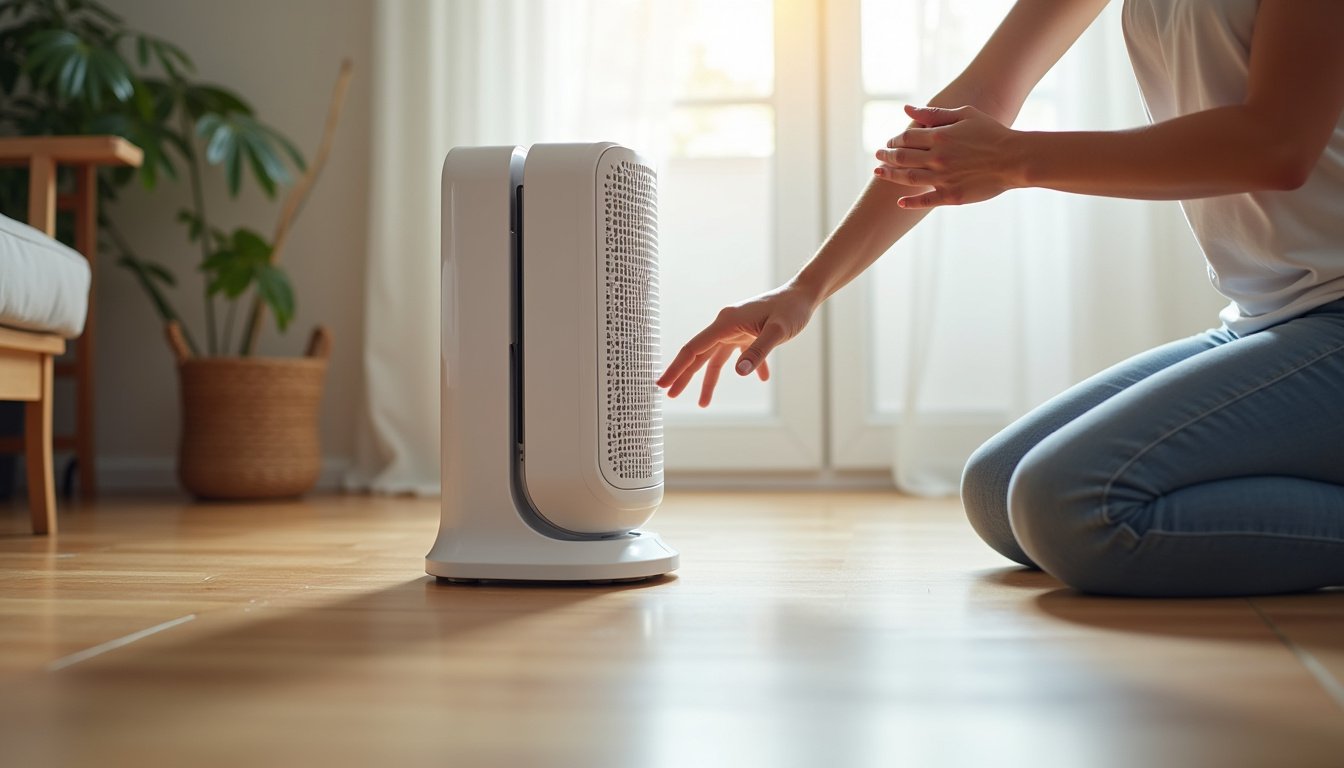
Start with the unit running on the speed that vibrates, and use your hands. Press firmly on each panel, the filter door and the grilles in turn; if the sound stops or changes when you press somewhere, that part is loose. Lift the unit an inch off the floor; if the vibration drops away, the floor or the feet are amplifying it. Move it to a solid, level floor such as tile over concrete and listen again. Check that nothing touches the housing: a cable, a curtain, a wall, a plant pot. These four tests take two minutes and settle half of all vibration complaints without a tool.
- Run the unit on the vibrating speed.
- Press on each panel, door and grille; note where pressing changes the sound.
- Lift the unit slightly; note whether the vibration fades.
- Move it to a solid level floor away from walls and objects.
- Check and reseat the filter; latch the door firmly.
- If the vibration remains, unplug and go inside.
The Impeller
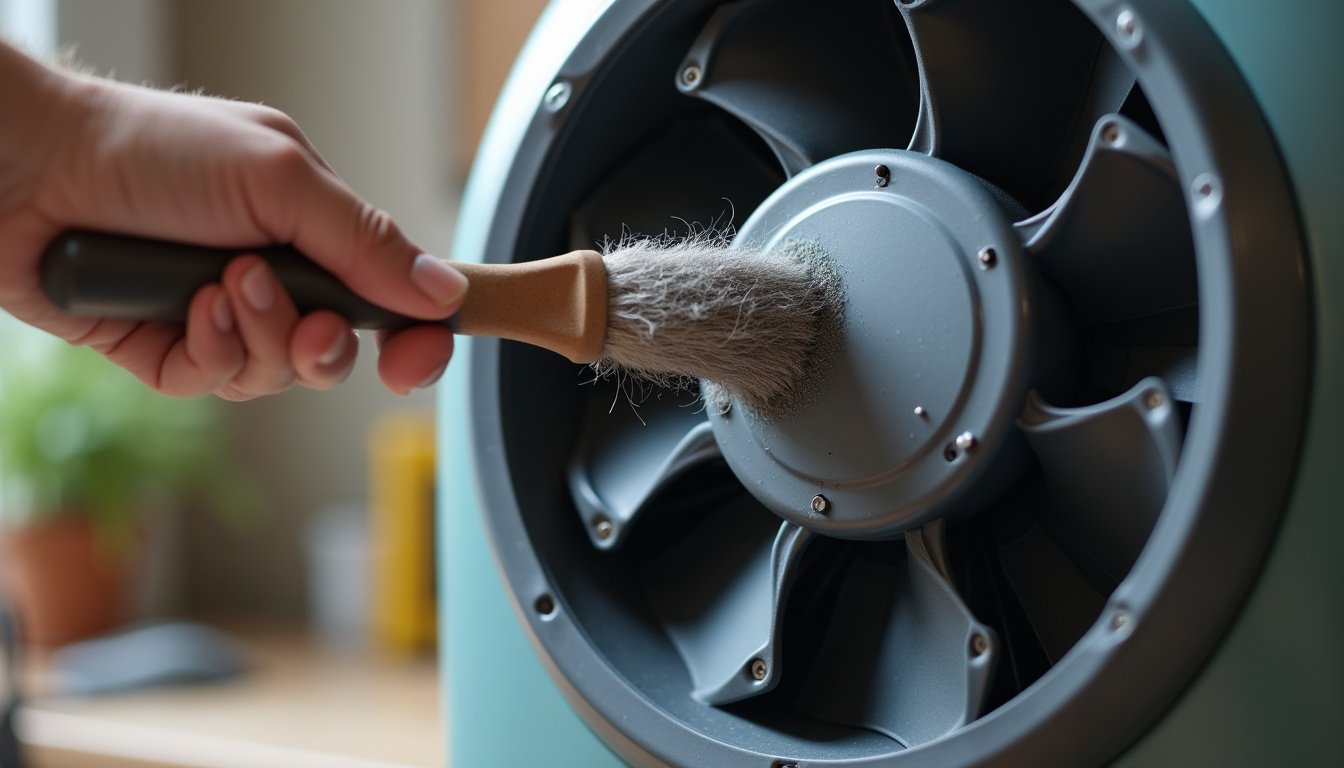
If the outside tests do not find it, the impeller is the next suspect. Unplug the unit and wait a minute. Remove the filters and look into the fan compartment with a flashlight; on many units the impeller is visible behind the filter, on others a panel comes off. Look for a crust of grey dust thicker on one side than the other, which unbalances the blade exactly as a lump of mud on a car tyre does; for a hair tie, cable tie, leaf or paper caught in the blades; and for a hub that moves on its shaft when you press it gently. Spin the impeller by hand; it should turn freely and silently for a second or two. Brush dust off with a soft brush and vacuum it away, or wipe the blades with a barely damp cloth; remove debris by hand; and if the hub is loose, tighten its central screw or reseat its clip per the manual.
- Unplug and wait; impellers can start from a timer or sensor.
- Remove filters; locate the impeller; use a flashlight.
- Brush and vacuum dust; never compressed air, which drives dust into the bearings.
- Remove any debris; check the housing walls for scrape marks.
- Press the hub gently; tighten or reseat if it moves.
- Spin by hand: free and silent is good; gritty or stiff is bearings.
Filters, Doors and Clips
Loose parts rattle rather than hum. A filter that is not pressed fully home, is the wrong size or has a folded gasket sits proud and chatters against its door; a door that is not latched vibrates against its frame; a grille whose plastic clip has snapped buzzes at one corner; and a panel screw backed out by months of vibration lets the panel drum. Reseat the filter squarely, check its gasket lies flat, close the door until it clicks, and tighten any accessible screws. A snapped clip is a parts order; makers sell grilles and doors for many models, and gluing a tab rarely holds against vibration. A strip of foam tape between a buzzing grille and the housing is a harmless stopgap.
| Loose part | Sound | Fix |
|---|---|---|
| Filter sitting proud | Chatter against the door | Reseat squarely; gasket flat; remove plastic |
| Door not latched | Rattle at the door edge | Close until it clicks |
| Snapped grille clip | Buzz at one corner | Order grille or door; foam tape as stopgap |
| Backed-out panel screw | Panel drums | Tighten |
| Loose impeller hub | Wobble and buzz | Tighten central screw or reseat clip per manual |
Feet, Floors and Surfaces
The rubber feet on a purifier do real work, isolating the motor’s small vibration from the floor. Over years they harden, compress or fall off, and the unit begins to hum through whatever it stands on. Replacement feet are a parts order or a pack of adhesive rubber bumpers from a hardware shop; a dense rubber mat under the unit does the same job. The surface matters too: hollow floors, side tables, shelves and the tops of cabinets all amplify, and a unit on thick carpet rocks and shimmies. A solid, level floor is the quiet baseline against which every other fix is judged.
| Surface | Effect on vibration | Better choice |
|---|---|---|
| Tile or concrete floor | Minimal; the reference | Leave it there |
| Suspended wooden floor | Amplifies hum | Dense rubber mat under the unit |
| Thick carpet | Unit rocks; intake may be starved | Low solid stand with rubber feet |
| Side table or shelf | Resonates; drums | Floor, or a heavy solid stand |
| Top of a cabinet or dresser | Hollow box; loud | Floor |
| Against a wall | Transmits hum into the wall | A foot of clearance |
Mounts and Bearings
When the impeller is clean and balanced, the filter seated, the door latched and the unit on a solid floor, remaining vibration is in the motor’s connection to the chassis or in the motor itself. Motor mounts, usually rubber isolators, harden and crack with age and let a healthy motor shake the housing; they are replaced as part of the blower assembly on most units. Bearings announce themselves differently: a grinding, squealing or rising whine that changes with speed and worsens over weeks, and an impeller that feels gritty or stiff when spun by hand. Bearings in these motors are sealed and are not oiled or serviced; the fix is the maker’s blower assembly or motor, fitted on an out-of-warranty unit by someone comfortable with small appliances, or service. Our guide on repairing the fan motor covers that decision.
Worked example: a three-year-old tower unit hums through a bedroom floor on medium. Pressing panels changes nothing; lifting it an inch kills the hum, so the floor is amplifying. Its rubber feet have compressed flat. Four adhesive rubber bumpers from a hardware shop and a move off the suspended floorboards onto a rubber mat return it to silence. The impeller, checked anyway, had a light dust crust that a brush removed.
When the Buzz Is Electrical
A mechanical vibration changes with fan speed and stops when the fan stops. An electrical buzz is a steady hum at mains frequency from a transformer, a ballast or a failing capacitor, often present even with the fan on its lowest speed or in standby, and sometimes accompanied by warmth, a hot smell or a flicker. That is not a vibration to chase with a brush. Unplug the unit, feel the plug and the housing for heat, and if there is any smell, discoloration or warmth at the plug, do not plug it back in; contact the maker. A faint transformer hum from a healthy unit in standby is normal on some models; a buzz that is new, loud or warm is not.
How to Stop a Vibrating Purifier in 6 Steps
- With the unit running, press on each panel, the filter door and the grilles; where pressing changes the sound, reseat, latch or tighten that part.
- Lift the unit an inch and move it to a solid level floor away from walls and objects; if the vibration fades, fix the surface or replace the rubber feet.
- Unplug, remove the filters and inspect the impeller with a flashlight for dust crust, debris and a loose hub; brush and vacuum, clear debris, reseat the hub.
- Spin the impeller by hand: free and silent is good; gritty, stiff or scraping points to bearings or a blade touching the housing.
- Refit the filter squarely, latch the door, restart and test on each speed.
- If vibration persists on a solid floor with a clean impeller, or there is grinding, treat it as mounts or bearings and contact the maker; if there is heat or smell, keep it unplugged.
Do and Do Not
Do
- Press panels and lift the unit before opening anything.
- Unplug before touching the impeller.
- Brush and vacuum dust; clear debris by hand.
- Use a solid floor and intact rubber feet.
- Replace a cracked impeller rather than running it.
Do not
- Do not use compressed air on the impeller or motor.
- Do not run a unit with a cracked blade or loose hub.
- Do not oil sealed bearings.
- Do not glue snapped clips and expect them to hold.
- Do not ignore a buzz that comes with heat or smell.
Who Should Skip This
If lifting the unit an inch ends the vibration, skip the inside of the housing entirely; the floor or the feet are the cause, and a rubber mat or new feet is the fix.
If the noise is a grinding or squeal that rises with speed and the impeller feels gritty by hand, skip cleaning; that is bearings, and the fix is the maker’s blower assembly or service.
Honest Limits
- Impeller access varies by model; some require disassembly that may affect warranty.
- We did not test any unit or induce faults.
- Bearing and mount diagnosis from outside is inferred from symptoms.
- Resonance on one speed depends on the unit and the surface.
- Parts availability differs by maker and model age.
- Nothing here is medical advice; electrical faults are a fire and shock matter.
When to See a Professional
Contact the maker for grinding or squealing bearings, vibration that persists with a clean impeller on a solid floor, a cracked impeller or snapped clips; blower assemblies, impellers and grilles are service parts.
Unplug and keep unplugged any unit whose buzz comes with heat, smell, discoloration or a warm plug, and use the maker or a qualified technician; recycle a failed unit through appliance recycling.
Frequently Asked Questions
Why is my air purifier vibrating all of a sudden?
Most often dust has built up unevenly on the impeller or something has been sucked into it, so it spins out of balance; or a filter, door or grille has worked loose and rattles; or the rubber feet have compressed and the floor is amplifying a hum.
How do I find what is rattling in my air purifier?
Run it on the speed that rattles and press firmly on each panel, the filter door and the grilles in turn; where pressing changes the sound, that part is loose. Then lift the unit an inch; if the noise fades, the surface is the cause.
Can dust on the fan make a purifier vibrate?
Yes, and it is the commonest cause. Dust crusts thicker on one side of the impeller and unbalances it exactly as mud on a car tyre does, and the shake grows with speed. Unplug, remove the filters, brush the blades with a soft brush and vacuum the dust away; never use compressed air.
Why does my purifier hum through the floor?
Because the surface is amplifying a small motor vibration. Suspended wooden floors, side tables, shelves and cabinet tops all resonate, and hardened or missing rubber feet transmit the hum straight into them. Lift the unit an inch to confirm, then set it on a dense rubber mat or a solid floor and replace the feet.
Is a vibrating air purifier dangerous?
Not usually; most vibration is dust, debris, a loose panel or a resonant floor. The exceptions are a cracked impeller or loose hub, which can break apart at speed and should not be run, and a buzz that comes with heat, a hot smell, discoloration or a warm plug, which is electrical.
Why does my purifier only vibrate on one speed?
Resonance. Every unit and surface has a frequency at which small vibrations build up, and one fan speed happens to hit it. A clean impeller and a solid floor usually shift or remove it; otherwise using the adjacent speed, or a rubber mat under the unit, changes the resonance.
Can I oil the fan to stop the vibration?
No. Bearings in purifier motors are sealed with no oil port, and oil applied from outside attracts dust without reaching the wear surface. Vibration from dust or debris is fixed by cleaning; vibration from worn bearings, which also grind or squeal, is fixed by replacing the blower assembly or motor, a service matter.
Why does my purifier rattle after I changed the filter?
The filter is not seated squarely, its gasket has folded, shipping plastic was left on, it is the wrong size, or the door did not latch. Unplug, pull the filter, check for plastic, refit it pressed fully home with the gasket flat, and close the door until it clicks.
What does grinding or squealing with the vibration mean?
Worn bearings. The sound rises with speed, worsens over weeks and comes with an impeller that feels gritty or stiff when spun by hand with the unit unplugged. Bearings are sealed and not serviceable; the fix is the maker’s blower assembly or motor on an out-of-warranty unit, or service.
Should I open the purifier to fix a vibration?
Only as far as the manual allows, with the unit unplugged: filters out, the fan compartment inspected with a flashlight, dust brushed off, debris removed, a loose hub reseated. Opening the housing beyond that voids most warranties, and motor mounts, bearings and cracked impellers are service parts, not home repairs.
Bottom Line
An air purifier vibrates because something spinning is out of balance or something stationary is loose, and ten minutes with a hand, a flashlight and a brush finds which. Press the panels, lift the unit, move it to a solid floor; then unplug it and look at the impeller for the dust crust, debris or loose hub that unbalances nine vibrating fans in ten. Reseat the filter, latch the door, replace hardened feet, and the hum is gone.
What remains after that is mounts or bearings, which announce themselves with persistence or with grinding and belong to the maker, and the electrical buzz with heat or smell, which belongs to the maker too and to an unplugged socket in the meantime. Never blow compressed air into the fan, never run a cracked impeller, and never oil a sealed bearing.
Related reading: Why is air purifier fan so loud, How to repair air purifier fan motor, Air purifier making grinding noise.