Last updated:
As an Amazon Associate we earn from qualifying purchases. This does not change what we recommend. See our affiliate disclaimer.
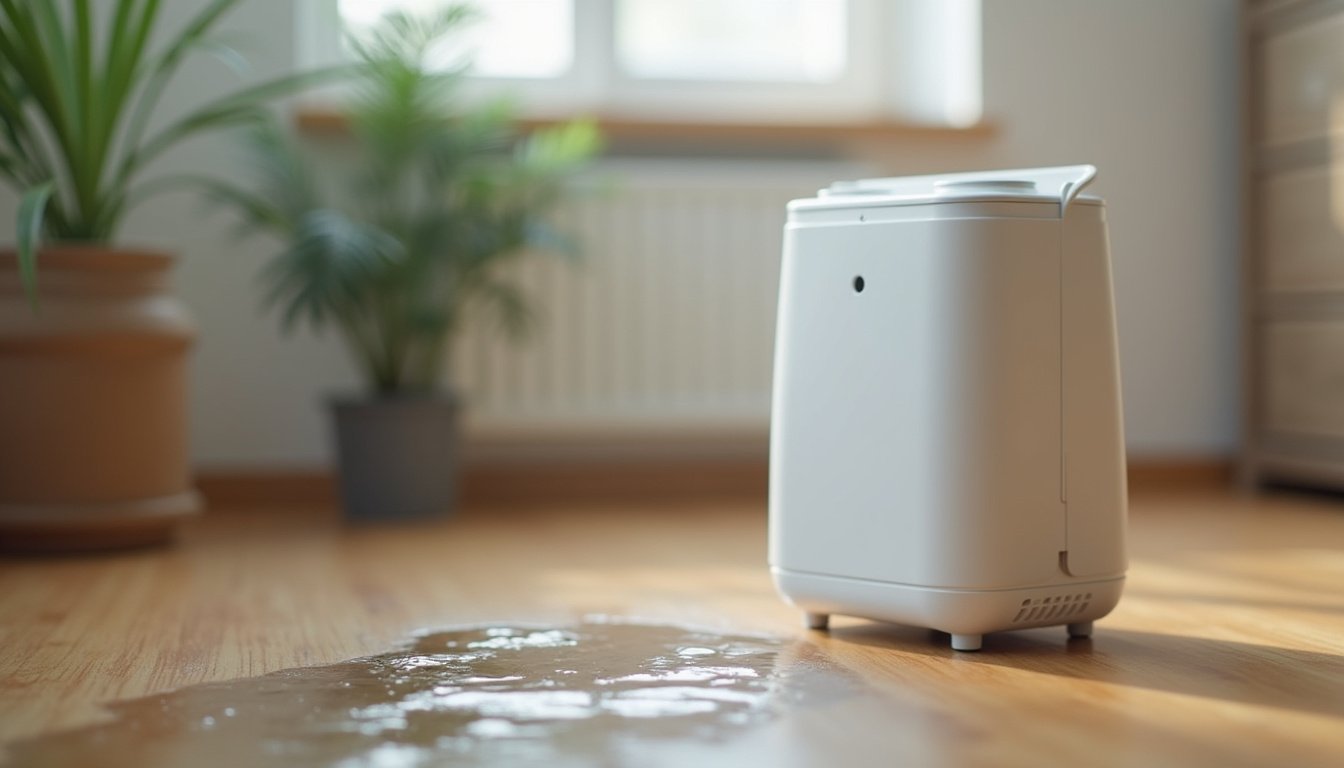
A plain air purifier contains no water. It has a fan, filters and electronics, and nothing in it should ever be wet. So a puddle under one, or beads of water on the housing, is either coming from somewhere else or from a combination unit’s humidifier side, and the first job is to make the appliance safe before working out which.
When an air purifier appears to leak water, the explanation is almost always one of four things. The unit is a purifier-humidifier combination and its tank, wick tray or seal is leaking, which is the one case where the water truly comes from the appliance. Condensation has formed on a cold unit brought in from a garage or car, on a unit sitting against a cold exterior wall or under a sweating window, or in a very humid room, and the moisture is running down the housing. Water from a nearby source, a humidifier’s mist, an overwatered plant, a spilled drink, a pet bowl, a radiator valve or a mopped floor, has reached the base and been wicked up by the filters. Whatever the source, unplug the unit, do not run it until it is dry inside, replace any damp filter, and if water reached the electronics let the maker decide whether it is safe.
In short: unplug, dry, find the water. A plain purifier does not make water; a combination unit’s humidifier side can leak; and any water inside the housing is a safety question for the maker.
Maker manuals instruct owners to keep purifiers away from water, humidifiers and steam, never to run a unit that has been wet, and to unplug and contact the maker if liquid enters the housing. For combination purifier-humidifiers they describe tank seating, seal care and cleaning schedules. The EPA’s humidity guidance, 30 to 50 percent relative humidity indoors, explains why condensation appears and how to stop it.
This guide is research-based, drawn from maker manuals, EPA guidance and the physics of condensation. We have not tested the units in the comparison table and quote no prices or ratings. Nothing here involves opening the housing or working near wet electronics; both belong to the maker.
Likely external water or condensation if
- The unit is a plain purifier with no tank
- A humidifier, plant, pet bowl or radiator sits within a few feet
- The unit was recently moved in from a cold space or sits by a cold wall
- A hygrometer reads above 60 percent in the room
Stop using it and contact the maker if
- Water is inside the housing, near the motor or controls
- The unit trips a GFCI or breaker
- It smells of burning, buzzes or the fan sounds wrong after getting wet
- A combination unit leaks from a cracked tank or housing rather than a seal or overfill
Key Takeaways
- A plain purifier contains no water; a puddle under one came from somewhere else or from condensation.
- Combination purifier-humidifiers can leak from the tank, wick tray, seals or overfilling.
- Unplug immediately; never run a unit with water inside the housing or a damp filter.
- Condensation forms on cold units and in rooms above 60 percent humidity; warm the unit and dehumidify.
- Nearby humidifiers, plants, pets, spills and radiators are the usual outside sources.
- Damp filters are replaced, not dried; the housing is dried with the cover open.
- Water that reached the motor or electronics is a maker decision, not a home repair.
Filter-Based Purifiers to Compare
If a water-damaged unit is being retired, these widely reviewed filter-based purifiers have no water system to leak and accessible bays that are easy to keep dry. Compare the maker-listed CADR against your room and give the new unit a stand, away from humidifiers and plants.






How This Guide Traces the Water
We listed every realistic way water can appear on or under a purifier, split them into water from the appliance itself, which only combination units can produce, and water from the room, and matched each to the clues it leaves and the safe response. Product details in the table come from maker specifications.
The first question settles half the cases: does the unit have a water tank? If not, the water is not the purifier’s.
First Steps
- Unplug the purifier at the wall. Do not touch the plug with wet hands; if the outlet or cord is wet, switch off the breaker for that circuit first.
- Move the unit off the wet area onto a dry towel and look at where the water is: under the base, on the housing, inside the filter bay, around a tank.
- Note whether the unit has a humidifier tank or wick; if so, check the tank seating, cap and tray before anything else.
- Remove the filters and feel them; damp filters are bagged and replaced.
- Open the cover and let the housing air dry; do not use a hair dryer or heater on it.
- Look around the unit for a water source within six feet.
Quick Diagnosis Table
| Where the water is | Unit type | Likely source | Action |
|---|---|---|---|
| Puddle under a plain purifier, housing dry | Plain | Spill, plant, pet bowl, radiator, mopped floor, damp basement floor | Find the source; set the unit on a stand; dry and replace damp filters |
| Beads on the outside of the housing | Plain or combo | Condensation: cold unit, cold wall, humid room | Warm to room temperature; move off cold wall; dehumidify |
| Filter damp, housing dry outside | Plain | Humidifier mist or steam drawn into the intake | Move six feet from humidifier; replace filter |
| Water around the tank or tray | Combination | Overfilled tank, unseated tank, worn seal, cracked tank | Reseat; fill to the line; replace seal or tank via maker |
| Water inside the housing near electronics | Any | Spill into the top, heavy condensation, combo leak into the base | Unplug; do not run; contact the maker |
| Water appears only on humid or rainy days | Plain | Condensation in a damp room | Dehumidify to 30 to 50 percent; relocate |
| GFCI trips after water was found | Any | Moisture inside | Unplug; do not run; contact the maker |
Combination Purifier-Humidifiers: The One Real Leak
Units that combine a purifier with a humidifier carry a water tank and a wick or ultrasonic tray, and they can leak. The usual reasons are an overfilled tank, a tank not seated squarely so its valve stays open, a worn or missing tank cap seal, a cracked tank from a drop or from freezing, mineral scale around the valve, a tray overflowing because the wick is clogged, or a drain plug left open after cleaning. Water typically appears around the base of the tank or runs out of the tray area.
- Unplug and remove the tank; empty it and inspect the cap seal and the valve for cracks, scale or a missing gasket.
- Check the tray and wick: a clogged, scaled wick does not absorb and lets the tray overflow; clean or replace it per the manual.
- Reseat the tank squarely and listen for the valve to seat; fill only to the marked line.
- Wipe the base dry and run the humidifier side with the purifier side off, watching for leaks for an hour.
- If the tank is cracked or the seal cannot be replaced, contact the maker; tanks and caps are usually sold as parts.
- If water reached the purifier side’s filters, replace them; if it reached the electronics, stop and contact the maker.
Condensation: Water From the Air
Water condenses on any surface colder than the air’s dew point. A purifier brought from a cold garage, car or storage into a warm room sweats as humid air meets its cold housing and filters, and the water runs down to the base. A unit against an uninsulated exterior wall or under a window that fogs sits in a cold pocket and collects condensation nightly. In a very humid room, above about 60 percent relative humidity, even a room-temperature unit can show beads on cool surfaces such as the base plate.
Condensation stops when the unit is warmer than the dew point or the air is drier. Let a cold unit stand unplugged at room temperature for several hours with the cover open before running it. Move units off exterior walls and away from sweating windows to an interior wall. Bring the room to the EPA’s 30 to 50 percent range with ventilation or a dehumidifier; fogged windows are a sign the room is above it.
Water From Nearby: Humidifiers, Plants, Pets and Spills
Most puddles under a plain purifier came from something else in the room. A cool-mist or ultrasonic humidifier within a few feet throws droplets that a purifier’s intake draws in; they condense on the filters and drip to the base. An overwatered plant overflows its saucer onto the floor the purifier sits on. A pet bowl is knocked, a drink is spilled, a radiator valve drips, a floor is mopped and the unit is switched on before it dries. Units with a base intake wick water up into the filters within minutes.
| Source | Clue | Fix |
|---|---|---|
| Humidifier or diffuser nearby | Damp filters; mist visible toward the intake | Move the purifier at least six feet away, out of the mist path |
| Plant watering | Saucer overflow; soil nearby | Move plants; use deeper saucers |
| Pet bowl or accident | Puddle at the base; smell | Relocate the unit; clean and dry the base |
| Spilled drink | Sticky or sugary residue | Wipe the housing; replace damp filters |
| Radiator or window drip | Water tracks from above or behind | Fix the valve or seal; move the unit |
| Mopped or steam-cleaned floor | Water at the base after cleaning | Let floors dry before running; set on a stand |
| Damp basement floor or sump | Unit on concrete; musty smell | Set on a stand or shelf; dehumidify; fix seepage |
Worked example: a bedroom purifier shares a nightstand with an ultrasonic humidifier and begins leaving a damp ring each morning. The filters are heavy and cool; the housing exterior is wet on the side facing the humidifier. Moving the humidifier across the room, replacing the filters and leaving the housing open to dry overnight ends the ring. The purifier never leaked; it was collecting mist.
Dealing With Damp Filters
Whatever the source, a filter that has become damp is replaced rather than dried. HEPA fibers clump and the mat deforms when wet, and mold and bacteria begin growing in damp, dusty media within a day or two, remaining after it dries to be blown into the room. Carbon adsorbs water and loses capacity. Bag damp filters immediately, wipe the bay and reachable fan blades with a cloth and a little mild soap, dry with a cloth and leave the cover open overnight before fitting new filters.
Only a plastic mesh or foam pre-filter can be rinsed and dried for reuse, and only when completely dry before refitting.
When Water Reached the Inside
Water on the housing exterior or in the filter bay is manageable. Water that ran into the top vents, pooled in the base around the motor, or reached the control panel or cord entry is not. Moisture on circuit boards corrodes and shorts; moisture in a motor can cause it to arc, run hot or seize. A unit that trips a GFCI or breaker after getting wet, hums or buzzes, has a fan that sounds different, or smells of burning when plugged in is telling you the water went where it should not.
- Keep it unplugged. Do not plug it in to see if it works.
- Do not open the housing or use a hair dryer or heater to dry it.
- Do not run it on a non-GFCI outlet to avoid a trip; the GFCI is detecting a real fault.
- Contact the maker with the model and a description of what got wet and how; units under warranty are often replaced.
- Out of warranty, a unit with water inside the electronics is retired and recycled as e-waste rather than risked.
Keeping Water Away From the Purifier
| Measure | Why |
|---|---|
| Six feet or more from any humidifier or diffuser, out of the mist path | No droplets reach the intake |
| On a low stand or shelf in basements, near plants and pets, and where floors are mopped | Spills and floor water stay below the intake |
| Interior wall placement, away from sweating windows and radiators | No condensation, no drips |
| Cold units warmed to room temperature before running | No condensation on first use |
| Room humidity held at 30 to 50 percent | Nothing to condense; filters stay dry |
| Combination units cleaned on schedule, filled to the line, tank seated squarely | Seals and valves hold |
| Nothing placed on top of the unit | No drinks or vases spilling into the vents |
| Quarterly touch-and-smell check of the filters | Dampness caught early |
How to Handle a Leaking Purifier in 6 Steps
- Unplug at the wall; if the cord or outlet is wet, switch off the breaker first.
- Move the unit onto a dry towel, remove the filters and bag any that are damp.
- Decide whether the unit has a humidifier tank; if so, check overfill, seating, seals, wick and tray; if not, the water came from the room or condensation.
- Look within six feet for a humidifier, plant, pet bowl, spill, radiator or wet floor; check for a cold wall, window or a cold unit; read a hygrometer.
- Dry the housing with a cloth and leave the cover open overnight; if water reached the motor, controls or cord entry, or the unit trips a GFCI, stop and contact the maker.
- Fix the source, relocate the unit onto a stand away from moisture, hold humidity at 30 to 50 percent, and fit new dry filters.
Do and Do Not
Do
- Unplug before touching the unit.
- Replace damp filters rather than drying them.
- Check tank seating and seals on combination units.
- Warm a cold unit before running it.
- Keep the unit on a stand away from humidifiers and plants.
Do not
- Do not plug in a unit with water inside to test it.
- Do not open the housing or use a heater to dry it.
- Do not bypass a tripping GFCI.
- Do not run a unit with a damp filter.
- Do not place drinks or vases on top of the purifier.
Who Should Skip This
If the unit is a plain purifier with no tank and the puddle appeared after a plant was watered, a floor was mopped or a drink was spilled nearby, skip the search for a defect. Dry the housing, replace damp filters, set the unit on a stand and move the water source.
If water reached the interior, the unit trips a GFCI, buzzes, smells of burning or the fan sounds wrong, skip every other step. Unplug it, do not run it and contact the maker; out of warranty, retire and recycle it.
Honest Limits
- A plain purifier produces no water; any leak traces to a combination unit’s humidifier side or to the room.
- Condensation depends on temperature and humidity that a purifier cannot change.
- Damp filters cannot be made safe by drying; replacement is the only remedy.
- Water inside the housing may cause faults that appear days later; appearance is not a safety test.
- Combination unit water systems have their own parts and cleaning rules in the manual.
- Nothing here involves opening the housing or repairing seals, tanks or electronics beyond fitting maker parts.
When to See a Professional
Contact the maker for any water inside the housing, a GFCI or breaker trip after the unit got wet, a buzzing or altered fan, a burning smell, or a cracked tank or housing on a combination unit; stop using the unit meanwhile and do not open it. Call a plumber for radiator or pipe drips and a contractor for basement seepage.
See a doctor if anyone develops respiratory symptoms after a damp or moldy filter has been running. Nothing on this page is medical advice.
Frequently Asked Questions
Why is there water under my air purifier?
A plain purifier contains no water, so the puddle came from condensation on a cold or damp-room unit or from a source within a few feet: a humidifier’s mist, a plant, a pet bowl, a spill, a radiator drip or a wet floor wicked up through a base intake.
Can an air purifier leak on its own?
Only if it is a purifier-humidifier combination with a tank, wick tray or seals, which can leak from overfilling, an unseated tank, a worn cap seal, a cracked tank or a clogged wick. A purifier without a tank has nothing to leak; water on or under it is condensation or came from the room.
Is it safe to use an air purifier that got wet?
Not until it is dry inside and any damp filters are replaced, and not at all if water reached the motor, controls or cord entry, trips a GFCI or breaker, or the unit buzzes or smells of burning.
Why does my purifier sweat or have beads of water on it?
Condensation. A unit brought from a cold garage or car into a warm room, sitting against a cold exterior wall or under a fogging window, or running in a room above 60 percent humidity collects moisture on its cool surfaces.
My purifier-humidifier combo is leaking. What should I check?
Unplug and remove the tank; check for overfilling past the line, a tank not seated squarely, a worn or missing cap seal, scale on the valve, a cracked tank and a clogged wick letting the tray overflow.
Can I dry out a damp filter and reuse it?
No. HEPA fibers clump and deform when wet, carbon loses capacity, and mold and bacteria begin growing in damp media within a day or two and remain after drying. Bag and replace damp HEPA and carbon filters; only a mesh or foam pre-filter can be rinsed and dried if the manual allows.
The purifier trips the GFCI after getting wet. What now?
Unplug it and do not run it. A GFCI trips when current leaks to ground, which means moisture reached the electronics or motor. Do not move it to a non-GFCI outlet or open the housing to dry it.
How far should a purifier be from a humidifier?
At least six feet and out of the path the mist drifts, ideally across the room. Both can share a bedroom; the purifier’s intake simply must not pull in droplets, which condense on the filters and drip to the base. Hold the room at 30 to 50 percent humidity so the humidifier is not overworking.
How do I dry the inside of the purifier after a spill?
Unplug, remove and bag damp filters, wipe the bay and reachable surfaces with a cloth and a little mild soap, dry with a cloth and leave the cover open overnight in a dry room. Never use a hair dryer or heater, and never open the housing.
How do I stop water reaching the purifier again?
Keep it six feet from humidifiers and plants, on a stand in basements and where floors are mopped, on an interior wall away from windows and radiators, warmed before use if it was cold, in a room held at 30 to 50 percent humidity, with nothing placed on top of it.
Bottom Line
An air purifier leaking water is, in nearly every case, an air purifier sitting in water that came from somewhere else: a humidifier’s mist, a plant, a pet, a spill or condensation on a cold housing in a damp room. The exception is a combination unit whose humidifier side has an overfilled or unseated tank, a worn seal or a clogged wick. Unplug first, find the water second, and replace any filter that got damp.
Then treat water inside the housing as the safety matter it is: no testing, no hair dryers, no opening the case, just the maker’s decision. Set the purifier on a stand, away from moisture, in a room held at 30 to 50 percent humidity, and the only thing it will ever hold is dust.
Related reading: Why is my air purifier filter damp, Air purifier tripping the breaker, Air purifier leaking oil or greasy liquid.