Last updated:
As an Amazon Associate we earn from qualifying purchases. This does not change what we recommend. See our affiliate disclaimer.
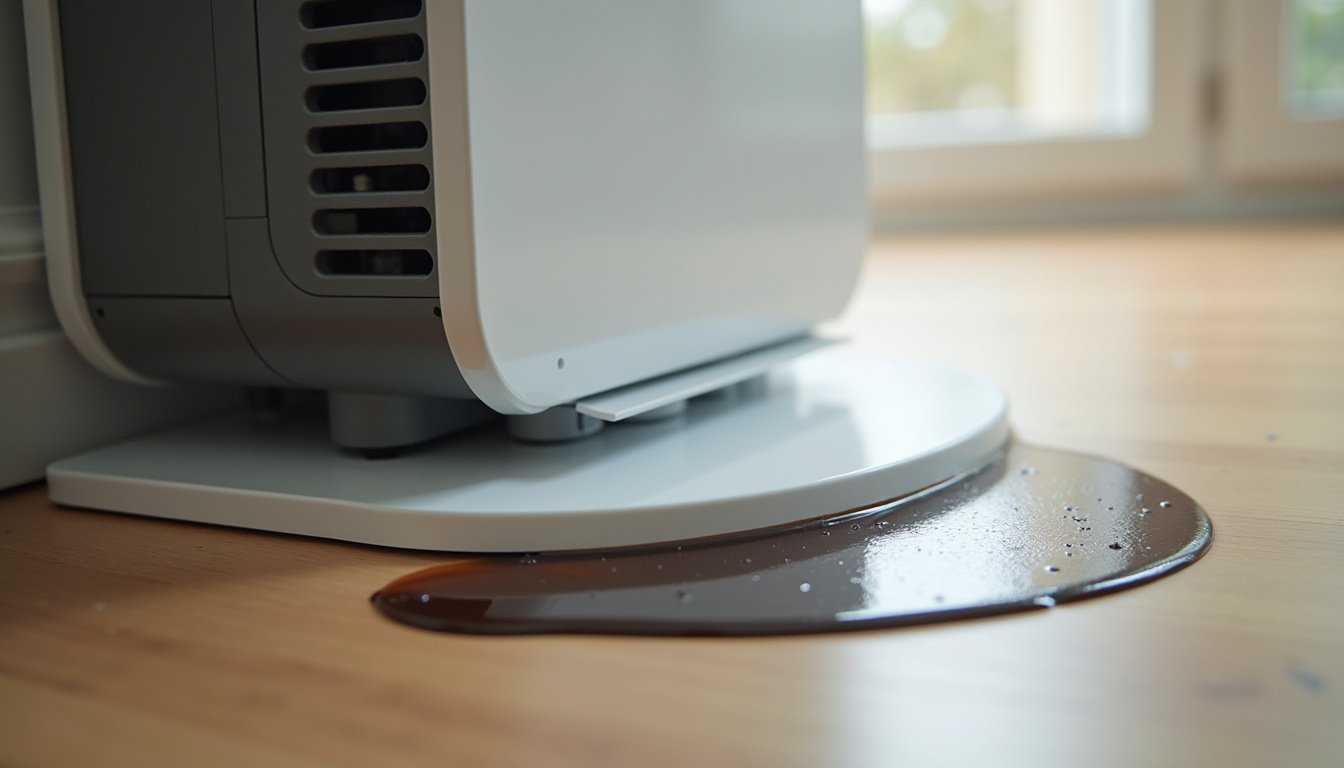
A purifier is supposed to leave the air cleaner and the floor untouched, so an oily ring under the unit or a greasy film on its grille is alarming. It is also unusual enough that most owners have no idea where to start. The good news is that the list of possible sources is short, and most of them are things that went into the purifier rather than things that came out of it.
If an air purifier is leaking oil or a greasy liquid, unplug it before doing anything else. Then consider the likely causes in order. Most often the residue is something the unit collected: airborne cooking grease from a nearby kitchen, aerosolized essential oils or fragrance from a diffuser, or nicotine tar from indoor smoking, all of which condense on the filter, housing and fan and can drip or smear. Next comes condensation: a unit moved from a cold garage or placed beside a humidifier can sweat water that mixes with dust into a dark, greasy-looking film. Only after those is the unit itself the suspect, with a failing fan motor bearing releasing lubricant, a damaged filter shedding oily binder, or in rare cases a fluid-filled component leaking.
In short: unplug, identify whether the oil came from the room or from the machine, clean what you safely can, and for anything from the motor or electronics, stop using the unit and call the maker.
The EPA’s guide to air cleaners in the home notes that purifiers capture airborne particles including cooking aerosols, which is exactly how grease ends up inside one, and that essential oils and fragrance products add volatile compounds and droplets to indoor air. Maker manuals universally say not to put oils, fragrances or liquids into or near a purifier and to stop using a unit with unusual smells, residues or sounds.
This guide is research-based, drawn from maker manuals, EPA material and the mechanics of fans and filters. We have not tested the units in the comparison table and quote no prices or ratings. Any burning smell, smoke or sparking is an electrical emergency: unplug and do not use the unit again.
Likely something the unit collected if
- The purifier sits near a kitchen, a diffuser or a smoker
- The film smells of cooking, fragrance or tobacco
- The residue is on the filter face and intake grille
- The unit otherwise runs normally
Stop and contact the maker if
- The liquid is clear or amber with a machine or chemical smell
- It appears around the base near the motor, not the filter
- The fan grinds, squeals or runs hot
- There is any burning smell, smoke, sparking or discoloration
Key Takeaways
- Unplug the unit before inspecting anything.
- Most greasy residue is cooking aerosol, essential oil or tobacco tar the purifier pulled from the air.
- Condensation mixed with dust can look like oil; check for humidifiers, cold starts and damp rooms.
- Essential oils and fragrance should never be added to or diffused near a purifier; makers prohibit it.
- Lubricant from a failing motor is uncommon and is a maker issue, not a home repair.
- A damaged or counterfeit filter can shed oily binder or leak carbon dust.
- Burning smell, smoke, sparks or heat mean stop using the unit permanently and contact the maker.
Reliable Filter-Based Purifiers to Compare
If the leak points to a worn-out or unsuitable unit, these widely reviewed filter-based models publish clear filter schedules and are straightforward to keep clean. Compare maker-listed CADR against your room, and keep any unit well away from kitchens and diffusers.






How This Guide Approaches the Problem
We listed every realistic way oil or an oily liquid can appear on or under a purifier, sorted them into substances the unit collected versus substances the unit produced, and matched each to the clues that identify it. Safety issues are separated out, because the right response there is to stop using the unit. Product details in the table come from maker specifications.
The guiding question is where the oil came from. The smell, the location on the unit and what sits nearby usually answer it within a minute.
First Steps Before Anything Else
- Unplug the unit. Do not run it again until you know what the liquid is.
- Look for emergency signs: burning or hot plastic smell, smoke, scorch marks, melted plastic, sparking, a cord or plug that is warm. Any of these means the unit is finished; set it aside safely and contact the maker.
- Note where the residue is: on the filter and intake grille, inside the fan housing, at the base near the motor, or on the floor beneath.
- Smell it carefully from a distance: cooking, fragrance, tobacco, musty, or machine and chemical.
- Note the color: yellow or brown and sticky suggests grease, nicotine or fragrance; dark and gritty suggests condensation mixed with dust; clear or amber with a petroleum smell suggests lubricant.
- Check what is nearby: kitchen, diffuser, humidifier, candles, a smoker, a recently used garage or cold storage.
Quick Diagnosis Table
| What you see | Smell | Location | Likely cause | Action |
|---|---|---|---|---|
| Yellow-brown sticky film | Cooking, fried food | Filter face, intake grille, fan blades | Airborne cooking grease | Clean exterior; replace filter; relocate away from kitchen |
| Thin oily film, fragrant | Essential oil, perfume | Filter, housing, sensor lens | Diffuser or fragrance near the unit | Stop diffusing nearby; clean; replace filter |
| Amber sticky residue | Stale tobacco | Filter, grille, interior | Nicotine tar from smoking | Replace filter; clean housing; move smoking outdoors |
| Dark, gritty damp smear | Dusty or musty | Base, under the unit | Condensation mixed with dust | Dry the unit; move away from humidifier or cold draft |
| Clear or amber liquid, few drops | Machine oil or chemical | Base near motor, not the filter | Motor bearing lubricant | Stop using; contact the maker |
| Black fine powder or smear | Charcoal-like | Outlet grille, filter edges | Carbon dust from a damaged or poor filter | Replace with a genuine filter |
| Melted or scorched plastic | Burning | Anywhere | Electrical fault | Unplug permanently; contact the maker |
Cooking Grease From the Air
Frying, searing and roasting release grease as an aerosol, a mist of tiny oil droplets that drifts through the home and settles on everything. A purifier within reach of the kitchen, especially in an open-plan living area, pulls that mist in by design. It condenses on the pre-filter, HEPA face, fan blades and the inside of the housing, builds up over weeks into a yellow-brown sticky film, and can eventually run or drip when warmed by the motor.
The fix is cleaning and relocation. Unplug, remove the filters and discard any that are visibly greasy; grease ruins HEPA media and clogs carbon. Wipe the housing, grille and fan blades you can reach from the filter compartment with a cloth dampened with warm water and a little dish soap, then dry thoroughly. Do not spray liquid into the fan or electronics. Move the unit farther from the range, use the range hood on every burner, and consider a purifier with a washable pre-filter and a real carbon stage for kitchen-adjacent rooms, since both can be cleaned or replaced more often.
Essential Oils, Diffusers and Fragrance
Ultrasonic diffusers and fragrance sprays put fine droplets of oil into the air, and a purifier nearby collects them exactly as it collects grease. The result is a thin, strongly scented oily film on the filter, housing and sensor lens, and sometimes drips from the intake. Some owners also add oils directly to a purifier’s intake, pre-filter or a non-existent reservoir, having confused it with a diffuser. Makers prohibit this; oils coat and ruin HEPA media, can damage plastics and may stress the motor.
Stop diffusing within several feet of the purifier, or run the diffuser at a different time. Replace oil-contaminated filters, clean the housing and sensor inlet with a dry or barely damp cloth, and never add anything to a purifier. If a unit is marketed as both purifier and diffuser, follow its manual exactly and expect the filter to need more frequent changes. The EPA notes that fragrance products add volatile compounds to indoor air, which is a separate reason to keep them away from a device meant to clean it.
Nicotine Tar From Indoor Smoking
Tobacco smoke contains semi-volatile tar compounds that condense on surfaces as a sticky amber film. A purifier in a smoking room concentrates that film on its filter and interior, and after months it can look and feel like oil, especially around the fan where warmth softens it. The smell of stale smoke gives it away.
Replace the filters, clean the housing with mild soapy water on a cloth and dry it, and expect to repeat the cycle often if smoking continues indoors. Filters in smoking rooms load several times faster than makers assume. The only full fix is smoking outdoors; see our smoke guide for the purifier side of the problem.
Condensation That Looks Like Oil
Water can masquerade as oil. A purifier brought in from a cold garage or car and switched on in a warm room sweats as moisture condenses on its cold surfaces; the same happens to a unit sitting in a humidifier’s mist or in a damp basement. That water mixes with dust on the housing and base into a dark, slightly greasy-looking smear, and can pool under the unit.
Unplug, let the unit reach room temperature and dry completely before running it; a damp filter should be replaced, since moisture in HEPA media can grow mold. Keep the purifier several feet from any humidifier and away from cold drafts, and in a damp room address humidity with ventilation or a dehumidifier so that indoor relative humidity sits in the EPA’s 30 to 50 percent range.
Lubricant From the Fan Motor
Fan motors in purifiers use sealed bearings with a small quantity of lubricant. A failing bearing can run hot and release a few drops of clear to amber oil with a distinct machine smell, usually at the base of the unit near the motor rather than on the filter. It is often accompanied by a new whine, grind or rattle, a hot housing, or a fan that slows. This is uncommon, and it is not an owner repair.
Stop using the unit. Do not open the housing beyond the filter compartment, do not add lubricant, and do not run the fan to see if it improves. Contact the maker; a unit under warranty is typically replaced. An out-of-warranty unit with a failing motor should be retired, because a bearing that is losing lubricant can seize or overheat.
Filters That Shed
Two filter faults can produce an oily or greasy appearance. Some low-quality or counterfeit HEPA filters use binders and coatings that can off-gas or weep in a warm unit, leaving a faint film on the outlet grille. Damaged or poorly made carbon filters can leak fine carbon dust that smears black and slightly greasy when touched. Genuine filters from the maker, or reputable replacements labeled for the exact model, rarely do either.
Replace a suspect filter with a genuine one, clean the housing and outlet, and see whether the film returns. If it does with a known-good filter, the source is elsewhere on this list.
Cleaning the Unit Safely
Whatever the source, cleaning follows the same rules. Unplug first. Remove and inspect filters; discard any that are greasy, oily, damp or smell wrong, since none of those conditions can be washed out of HEPA media. Wipe reachable surfaces, the housing, grilles and fan blades visible from the filter compartment, with a soft cloth dampened with warm water and a drop of dish soap, then a dry cloth. Clean the sensor inlet with a dry swab only.
- Never spray water, cleaners or solvents into the fan, motor or electronics.
- Never use solvents, alcohol or degreasers on plastics unless the manual permits; they can craze or weaken the housing.
- Let everything dry completely before refitting filters and plugging in.
- Run the unit on high for a few minutes in a ventilated room and listen; any new noise or smell means stop and contact the maker.
- Reset the filter indicator after fitting new filters.
Worked example: an open-plan apartment runs a tower purifier eight feet from a gas range. After three months the intake grille is tacky and yellow and a ring has formed on the floor. The owner unplugs, finds the HEPA face coated and discards it, washes the housing and fan blades with soapy water on a cloth, dries everything, fits a new filter, and moves the unit to the far side of the living area with the range hood now used for every frying session. The film does not return.
| Part | Safe to clean | How | Never |
|---|---|---|---|
| Housing and grilles | Yes | Cloth with warm soapy water, then dry | Spray liquids; solvents |
| Fan blades visible from filter bay | Yes, gently | Damp cloth, unit unplugged | Reach into the motor |
| Sensor inlet | Yes | Dry cotton swab | Liquids; canned air |
| HEPA and carbon filters | No | Replace | Wash or rinse |
| Washable pre-filter | Yes if manual allows | Rinse, dry fully | Refit damp |
| Motor and electronics | No | Contact the maker | Open, lubricate, spray |
Preventing It Next Time
| Source | Prevention |
|---|---|
| Cooking grease | Range hood on every burner; purifier 10 to 15 feet from the cooktop; washable pre-filter cleaned every two weeks |
| Essential oils and fragrance | Diffuse in another room or at another time; never add anything to the purifier |
| Tobacco tar | Smoke outdoors; if indoors, dedicated room and frequent filter changes |
| Condensation | Let a cold unit warm up before use; keep it away from humidifiers and damp spots; hold humidity at 30 to 50 percent |
| Motor wear | Keep the pre-filter clean so the fan does not strain; stop at the first grind or whine; contact the maker |
| Filter shedding | Use genuine or reputable model-specific filters |
How to Handle an Oily Purifier in 6 Steps
- Unplug the unit and check for burning smell, smoke, sparks or heat; if present, stop here and contact the maker.
- Identify the residue by smell, color and location: cooking, fragrance, tobacco, condensation, or machine oil near the motor.
- If the source is the room, discard contaminated filters, clean the housing with mild soapy water on a cloth, dry fully and fit new filters.
- If the source is condensation, dry the unit completely, replace any damp filter, and relocate it away from humidifiers and cold drafts.
- If the liquid smells of machine oil or appears near the motor, do not run the unit again; contact the maker.
- Fix the cause: range hood, no diffusing nearby, smoking outdoors, humidity control, genuine filters.
Do and Do Not
Do
- Unplug before touching anything.
- Discard greasy, oily or damp filters.
- Clean only the housing and reachable surfaces with a damp cloth.
- Relocate the unit away from kitchens and diffusers.
- Contact the maker for motor or electrical signs.
Do not
- Do not add essential oils or fragrance to a purifier.
- Do not spray liquids into the fan or electronics.
- Do not open the housing beyond the filter compartment.
- Do not add lubricant to a motor.
- Do not keep running a unit that smells of burning or grinds.
Who Should Skip This
If the unit shows any electrical sign, burning smell, smoke, sparks, melted plastic or heat, skip every cleaning step. Unplug it, keep it away from flammable materials and contact the maker. This is not a situation for diagnosis at home.
If the oil clearly came from a diffuser you added to or ran beside the purifier, skip the search for a defect. Replace the filters, clean the housing, and keep oils away from the unit from now on; the maker’s manual will have warned against it.
Honest Limits
- This guide covers common causes; a maker’s manual may list model-specific warnings.
- Filters contaminated with oil, grease or moisture cannot be restored by washing.
- Lubricant leaks and electrical faults are outside owner maintenance entirely.
- Cleaning removes residue but not its source; the film returns if cooking, diffusing or smoking continues nearby.
- A purifier placed near a kitchen will always load faster and need more frequent filter changes.
- No purifier should ever be used as a diffuser unless specifically designed and labeled for it.
When to See a Professional
Contact the maker’s support line for any clear or amber liquid near the motor, a fan that grinds or runs hot, or any burning smell, smoke, sparking or melted plastic; stop using the unit at once and do not attempt a repair. Units under warranty are usually replaced; out of warranty, retire them.
Call an electrician if an outlet shows heat or scorching, and see a doctor if anyone has symptoms after exposure to a burning smell or heavy fragrance residue. Nothing on this page is medical advice.
Frequently Asked Questions
Why is my air purifier leaking oil?
Most often it is not producing oil but collecting it: airborne cooking grease, essential oil droplets from a diffuser or nicotine tar from smoking condense on the filter and housing and can drip. Less often, condensation mixed with dust looks oily. Rarely, a failing motor bearing leaks lubricant, which is a maker issue.
Is it safe to keep using a purifier that is leaking something oily?
Unplug it first. If the residue smells of cooking, fragrance or smoke and the unit otherwise runs normally, you can clean it, replace the filters and continue. If the liquid smells like machine oil, appears near the motor, or there is any burning smell, heat, smoke or sparking, stop using it and contact the maker.
Can I put essential oils in my air purifier?
No. Makers prohibit adding oils, fragrances or any liquid to a purifier. Oil droplets coat and ruin HEPA media, can damage plastics and stress the motor, and leave an oily film that drips. Run a diffuser in another room or at another time, several feet from the purifier.
How do I clean grease out of an air purifier?
Unplug it, remove and discard any greasy filters, and wipe the housing, grilles and fan blades reachable from the filter compartment with a cloth dampened with warm water and a little dish soap, then dry thoroughly. Never spray liquid into the fan or electronics, and fit new filters before plugging in.
Can a greasy or oily HEPA filter be washed?
No. Grease, oil and moisture cannot be washed out of HEPA media; washing damages the fibers and can leave moisture that grows mold. Discard the filter and fit a genuine replacement. A washable pre-filter, if the unit has one, can be rinsed and dried.
What does motor oil from a purifier look like?
A few drops of clear to amber liquid with a distinct machine or chemical smell, usually at the base near the motor rather than on the filter, often with a new whine, grind or a hot housing. It is uncommon and not an owner repair; stop using the unit and contact the maker.
Could the oily film just be condensation?
Yes. A purifier moved from a cold space into a warm room, or placed in a humidifier’s mist or a damp basement, can sweat water that mixes with dust into a dark, greasy-looking smear. Dry the unit fully, replace any damp filter and relocate it away from moisture sources.
Why is black powder coming out of my purifier?
Fine black dust at the outlet or filter edges is usually carbon shed by a damaged or poor-quality carbon filter, and it can smear slightly greasy when touched. Replace it with a genuine filter for your model and clean the housing; if it persists with a good filter, contact the maker.
How far should a purifier be from the kitchen?
At least 10 to 15 feet from the cooktop where the layout allows, out of the direct path of cooking aerosols, with the range hood used on every burner. A kitchen-adjacent unit will still load faster; clean the pre-filter every two weeks and inspect the HEPA face monthly for a yellow tinge.
When should I throw the purifier away?
When there are electrical signs such as burning smell, smoke, sparking, melted plastic or a hot housing, or when a motor is leaking lubricant or grinding and the unit is out of warranty. Units under warranty go back to the maker. Collected grease, fragrance or tar is a cleaning job, not a reason to discard.
Bottom Line
An air purifier leaking oil is usually an air purifier that has been doing its job in the wrong place: pulling in cooking grease, diffuser oil or tobacco tar and condensing it on the filter and housing until it drips. Condensation mixed with dust can look the same. Unplug, identify the residue by smell and location, discard contaminated filters, clean the housing with a damp cloth and move the unit away from the source.
The exceptions are the ones that matter: clear or amber liquid near the motor with a machine smell, or any burning smell, heat, smoke or sparking. Those are not cleaning jobs. Stop using the unit and contact the maker. Never add oils to a purifier, never spray liquids inside it, and never open it beyond the filter compartment.
Related reading: Why isn’t my air purifier working, Air purifier causing a chemical smell, Air purifier maintenance checklist.