Last updated:
As an Amazon Associate we earn from qualifying purchases. This does not change what we recommend. See our affiliate disclaimer.
Most air purifiers are bought for dust and allergies, but a large share of owners are really trying to fix a smell: a litter box, last night’s fish, a musty basement, a new sofa that reeks of chemicals. Then they discover that the HEPA filter they paid for does nothing about any of it. Odors are a different kind of pollutant, and they need a different kind of filter.
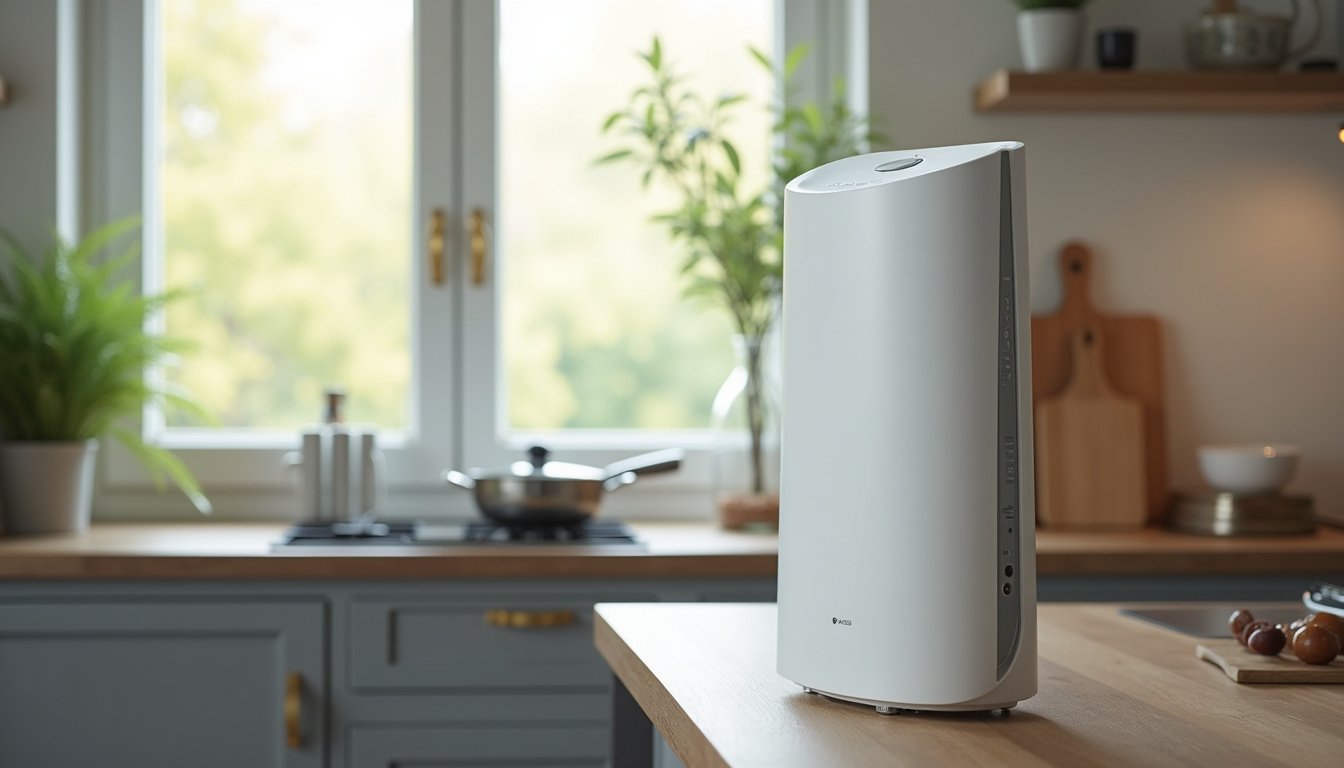
The best type of air purifier for odors is a filter-based unit with a substantial activated carbon stage, measured in pounds of granular or pelletized carbon rather than a thin coated pad, alongside a true HEPA stage for the particles that often accompany smells. Odor molecules are gases; they pass through HEPA media untouched, and only adsorption onto carbon, or onto specialty media blended with it, pulls them out of the air. Capacity decides everything: a thin pad saturates in weeks, while a thick bed keeps working for months. The unit should be sized by CADR for the room and run continuously, because odor sources are usually ongoing. No carbon filter removes the source, and for cooking, pets and damp, source control and ventilation remain the first steps.
In short: judge an odor purifier by how much carbon it carries, size it for the room, run it constantly, and fix the source alongside it.
The EPA’s guide to air cleaners in the home notes that removing gases and odors requires sorbent media such as activated carbon, that effectiveness depends on the amount and type of sorbent, and that sorbents saturate and must be replaced. AHAM’s CADR covers particles only, so no rating tells you how a unit handles smell; the spec sheet’s carbon weight is the closest thing.
This guide is research-based, drawn from EPA guidance, the chemistry of adsorption and maker specifications. We have not tested the units in the comparison table, and we quote no prices or ratings, only published features that bear on odor removal.
A carbon purifier will help if
- The smell is everyday: cooking, pets, mild mustiness, new furniture
- The unit carries a pound or more of granular or pelletized carbon
- You can run it continuously in the room with the source
- You also ventilate and clean the source
Look elsewhere first if
- The smell is gas, sewer or burning; those need a utility or professional
- Mustiness comes with damp or visible mold
- The source is strong and continuous, such as indoor smoking
- You are considering an ozone generator or fragrance cartridge
Key Takeaways
- Odors are gases; HEPA filters capture particles and do nothing for smell.
- Activated carbon adsorbs odor molecules, and the amount of carbon decides how well and how long.
- Thin carbon-coated pads saturate within weeks; look for a pound or more of granular or pelletized carbon.
- Size by CADR for the room and run continuously, since odor sources are usually ongoing.
- Some gases need specialty media: formaldehyde is poorly held by plain carbon.
- Gas smells, sewer odors and burning are emergencies, not purifier problems.
- Ozone generators and scented filters mask or add pollutants; the EPA advises against ozone.
HEPA and Carbon Purifiers to Compare for Odors
These widely reviewed units combine true HEPA with activated carbon across bedroom to large-room sizes. Compare the maker-listed carbon stage, CADR and room size against the room where the smell lives, and favor models that state carbon weight over ones that just say carbon layer.






How We Judged Odor Performance
We worked from the chemistry of adsorption, EPA guidance on sorbent media, and the carbon specifications makers publish, then matched common household odors to the media and quantity that address them. Product details in the table come from maker specifications.
One idea organizes the guide: carbon is a sponge with a fixed capacity. More sponge holds more smell for longer; a saturated sponge holds nothing. Every recommendation follows from that.
Why HEPA Alone Does Nothing for Smell
A HEPA filter is a mat of fibers that traps particles by sieving, impact and diffusion. Odor molecules are individual gas molecules, thousands of times smaller than the smallest particle a filter is designed to catch, and they flow through the fiber mat as freely as oxygen does. A HEPA-only purifier can clear a kitchen’s smoke haze and still leave the fish smell entirely intact.
Some odors arrive with particles, such as cooking grease aerosols or smoke, and the HEPA stage helps with those components. But the smell itself is in the gas phase and needs a sorbent. This is why a two-stage design, HEPA plus carbon, is the standard for odor work.
| Household odor | Gas, particle or both | HEPA stage helps | Carbon stage helps | Primary fix |
|---|---|---|---|---|
| Cooking smells | Mostly gas, some grease aerosol | Partly | Yes | Vented range hood |
| Pet odor, litter box | Gas, plus dander particles | For dander | Yes | Clean litter and bedding often |
| Musty basement | Gas from mold compounds, plus spores | For spores | Partly | Moisture control, mold removal |
| New furniture, paint, flooring | Gas, VOCs | No | Partly; formaldehyde needs treated media | Ventilation, time, low-emission products |
| Garbage, diapers | Gas | No | Yes | Sealed bins, frequent removal |
| Smoke | Both | Yes for haze | Yes for odor | Smoke outdoors; clean residue |
How Activated Carbon Works
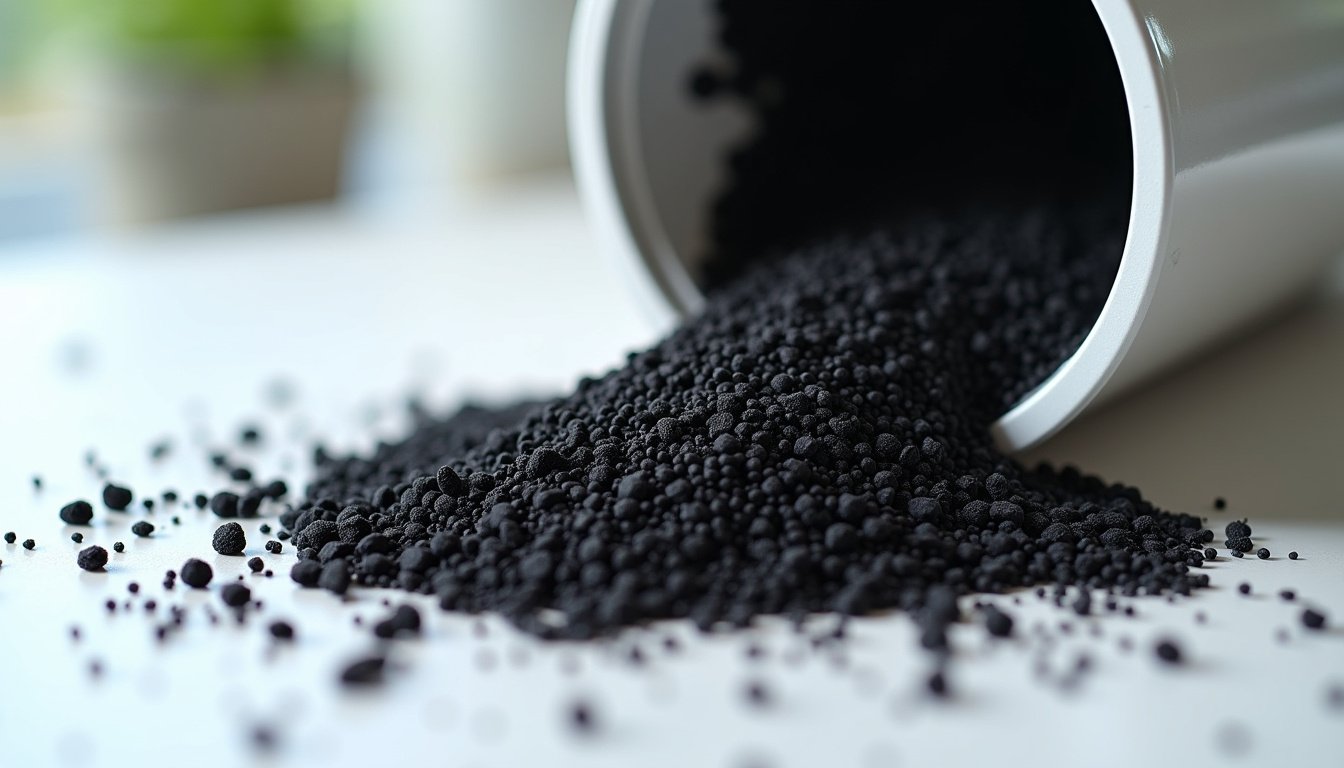
Activated carbon is charcoal that has been treated to open up a vast network of microscopic pores. A single gram can have an internal surface area of several hundred square meters. Gas molecules drifting through the bed stick to that surface, held by weak attractive forces, which is adsorption. Larger, heavier odor molecules, the kind that make up cooking, pet and musty smells, are held well. Small, light gases such as formaldehyde, carbon monoxide and ammonia are held poorly or not at all unless the carbon is chemically treated.
Capacity is finite. Once the surface is covered, new molecules pass through and some previously held ones can be displaced. A saturated carbon filter is not merely ineffective; in a warm room it can slowly release what it holds. That is why replacement on schedule matters more for carbon than for HEPA, and why the quantity of carbon in a unit is the single most important odor specification.
How Much Carbon Is Enough
The right amount depends on how strong and how constant the source is. A bedroom with a faint mustiness needs little; a kitchen-adjacent living room with daily frying or a room with two litter boxes needs a lot. The table gives a practical ladder.
| Carbon stage | Typical form | Suited to | Expected life in use |
|---|---|---|---|
| Under 4 ounces | Coated fabric pad | Very light, occasional odors | Weeks |
| 4 ounces to 1 pound | Carbon sheet or honeycomb | Light everyday odors in a bedroom or office | One to three months |
| 1 to 3 pounds | Granular or pelletized bed | Pet, cooking and musty odors in a living area | Three to six months |
| 3 pounds and up | Deep granular bed, often a separate canister | Strong or continuous sources, smoke, renovation | Six months or more, source dependent |
| Carbon plus treated media | Blended bed | Formaldehyde and other light VOCs | Similar to the bed it is in |
Worked example: a 14 by 18 foot open living and kitchen area, 252 square feet, with a gas range used nightly and a dog bed in the corner. The CADR floor is about 170 for particles; for the odor load, a unit with 2 to 3 pounds of granular carbon is a reasonable match, run on medium continuously and on high during and after cooking. A bedroom in the same home with no pets would be well served by a far lighter carbon stage.
Specialty Media for Stubborn Gases
Plain carbon holds some gases poorly. Formaldehyde, released by pressed-wood furniture, flooring and cabinetry, is the most common example in homes, and it is a known irritant. Makers address it with carbon impregnated with potassium permanganate, potassium iodide or amine compounds, or with blended media such as zeolite or alumina pellets that react with or hold the small molecules carbon misses. The EPA notes that effectiveness of these media varies by product, so look for a maker that names the target gas and the media used.
Ammonia from litter boxes and some cleaning products is another light molecule that plain carbon handles weakly; treated media helps. None of these media remove carbon monoxide or radon in any useful amount, and a gas smell from an appliance is never a filter problem.
Sizing and Running an Odor Purifier
Size the fan by the particle rule, a CADR of at least two-thirds of the room’s floor area in square feet, so the carbon bed sees the whole room’s air several times an hour. Carbon only works on air that passes through it, and a smell in the far corner is not removed until that air reaches the unit. Place it near the source, with a foot of clearance, and keep the door closed if you want quick results.
- Run continuously; odor sources are ongoing and a carbon filter that is off removes nothing.
- Use high during and after the odor event, such as cooking or cleaning the litter box, then settle to medium.
- Do not trust auto mode alone; particle sensors cannot detect gases and will drop to low while the smell remains.
- Replace carbon on the maker’s schedule or when the smell returns, whichever comes first.
- Ventilate too: a range hood vented outdoors or a cracked window moves gases out faster than any filter.
Source Control and Ventilation Come First
The EPA’s ordering for indoor air is to remove the source, ventilate, then filter, and odors obey it strictly. A carbon filter working against a constant source is a sponge under a dripping tap. Reduce the drip and the same filter lasts longer and the room smells better. For each common odor the first step is cheap.
- Cooking: run a range hood that vents outdoors on every burner, cover pans, clean grease filters monthly.
- Pets: scoop litter daily and change it weekly, wash pet bedding weekly, bathe and groom on schedule, clean accidents with enzyme cleaners.
- Musty rooms: find the moisture, dehumidify to 30 to 50 percent relative humidity as the EPA recommends, remove any mold growth.
- New furniture and finishes: air items out in a garage or ventilated room for days before bringing them in; choose low-emission products.
- Garbage and diapers: sealed bins, liners, frequent removal to outdoor containers.
- Drains and plumbing: run water in unused drains weekly; a sewer smell means a dry trap or a vent problem for a plumber.
Technologies That Mask, Move or Add Pollutants
Odor is where questionable technologies cluster. Ozone generators do react with odor compounds, but ozone is a lung irritant that the EPA advises against in occupied spaces, and the reactions can produce new irritants. Ionizers push particles onto surfaces and some emit ozone; they do nothing for gas-phase odor. Scented filters, fragrance cartridges and plug-in fresheners add volatile compounds to the air to cover a smell, which is the opposite of cleaning it. UV lamps have no effect on odor molecules.
| Feature | What it does to odor | Verdict |
|---|---|---|
| Activated carbon bed | Adsorbs odor molecules; finite capacity | Use, by the pound |
| Treated or specialty media | Holds light gases such as formaldehyde | Use for VOC problems |
| Ozone generator | Reacts with some odors; adds ozone | Avoid |
| Ionizer | Nothing for gases; possible ozone | Avoid or keep off |
| Scented filter or fragrance | Masks odor with more VOCs | Avoid |
| UV lamp | Nothing for odor | Irrelevant |
| Photocatalytic oxidation | Breaks down some gases; possible by-products | Not recommended for homes |
Carbon Replacement and Running Cost
Carbon is the consumable that drives the cost of an odor purifier. Expect to replace a thin pad every one to three months, a one to three pound bed every three to six, and a deep canister every six to twelve, all shortened by a strong source. Units with separate HEPA and carbon stages let you replace only the carbon when the smell returns, which is cheaper than swapping a combined cartridge in which the HEPA layer still has life.
When comparing models, estimate a year of carbon replacements rather than looking at the price of the unit. A heavier carbon bed costs more per filter but often less per month of effective odor removal, and it is the only kind that handles a kitchen or a multi-pet home for more than a few weeks.
How to Choose an Odor Purifier in 7 Steps
- Identify the smell and rule out emergencies: gas, sewer and burning odors go to the utility, a plumber or an electrician, not a purifier.
- Reduce the source: hood, litter, moisture, airing out new items. This lowers the load on any filter.
- Measure the room and set a CADR floor of two-thirds of the floor area so the carbon sees the whole room’s air.
- Choose a unit with a stated carbon weight, a pound or more in granular or pelletized form for everyday odors, more for strong sources.
- Add specialty media if formaldehyde or ammonia is the issue.
- Pick true HEPA alongside the carbon, and reject ozone, ionizer and fragrance features.
- Plan carbon replacement by the smell, not the light, and budget a year of filters.
Do and Do Not
Do
- Judge the unit by carbon weight.
- Run it continuously near the source.
- Ventilate and fix the source alongside it.
- Replace carbon when the smell returns.
- Hold a manual medium speed rather than trusting sensors.
Do not
- Do not expect HEPA alone to remove any smell.
- Do not buy a coated pad for a kitchen or pet room.
- Do not use ozone generators or scented filters.
- Do not ignore a gas, sewer or burning smell.
- Do not let saturated carbon sit in the unit.
Who Should Skip This
If the smell is musty and the room is damp, skip the purifier for now and buy a hygrometer and a dehumidifier. Holding humidity at 30 to 50 percent and removing any mold removes the source; a carbon purifier afterward handles what lingers. A purifier in a damp room is treating a symptom.
If the odor is from indoor smoking, see our dedicated smoke guide; the approach is the same but the quantities are larger, the filters load far faster and the only real fix is moving the smoking outdoors.
Honest Limits
- Carbon has finite capacity and must be replaced; a saturated filter removes nothing.
- No sorbent removes carbon monoxide, radon or natural gas in a useful amount.
- Plain carbon holds light gases such as formaldehyde poorly without treated media.
- A purifier treats the air in one room; odors absorbed into fabrics and walls keep re-emitting.
- Particle sensors cannot detect smells, so auto mode under-runs for odor.
- Filtration cannot keep up with a strong continuous source; source control is not optional.
When to See a Professional
Leave the home and call the gas utility from outside for any rotten egg or sulfur smell; call an electrician or the appliance maker for burning or electrical smells after switching off the suspect device; call a plumber for persistent sewer odor. None of these are purifier problems.
Call a mold professional for musty smells with visible growth over about 10 square feet or hidden damp, as the EPA suggests. See a doctor if odors seem to trigger headaches, breathing symptoms or other health effects; identifying the compound matters, and nothing on this page is medical advice.
Frequently Asked Questions
What type of air purifier is best for odors?
A filter-based unit with a substantial activated carbon stage, a pound or more of granular or pelletized carbon rather than a thin coated pad, alongside true HEPA for particles. Size it by CADR for the room, run it continuously near the source, and replace the carbon when the smell returns.
Do HEPA filters remove odors?
No. HEPA media captures particles, and odor molecules are gases thousands of times smaller than any particle it is designed to trap. A HEPA-only purifier can clear smoke haze or dander but leaves cooking, pet and musty smells untouched. Activated carbon is required for odor.
How much activated carbon does an air purifier need?
It depends on the source. Light bedroom odors are handled by a few ounces to a pound; pet, cooking and musty odors in a living area call for one to three pounds of granular or pelletized carbon; strong or continuous sources need three pounds or more. Look for the stated weight.
How long does a carbon filter last?
Thin coated pads saturate in weeks; one to three pound beds last roughly three to six months; deep canisters six to twelve. A strong source shortens all of these. Replace carbon when the smell returns, since a saturated filter removes nothing and can slowly release what it holds.
Will an air purifier remove pet odors?
Yes, for the airborne share, if it carries real carbon and runs continuously near the litter box or pet bed. Ammonia from litter is held weakly by plain carbon, so treated media helps. Daily scooping, weekly litter changes and washing pet bedding remove the source and extend filter life.
Can an air purifier remove cooking smells?
A HEPA and carbon unit with a pound or more of carbon reduces lingering cooking odors in an open living area, especially run on high during and after cooking. A range hood vented outdoors is far more effective at the moment of cooking and should be the first step.
Does activated carbon remove formaldehyde from new furniture?
Only partly. Formaldehyde is a small molecule that plain carbon holds poorly. Filters with treated carbon or blended media designed for formaldehyde do better, and the EPA notes effectiveness varies by product. Airing out new items and choosing low-emission products are the primary fixes.
Are ozone purifiers good for odors?
No. Ozone does react with some odor compounds, but it is a lung irritant that the EPA advises against in occupied spaces and can create new irritants. Scented filters simply mask smells with more chemicals. Use activated carbon, ventilation and source control instead.
Why does my purifier not remove the smell in auto mode?
Particle sensors cannot detect gases, so auto mode sees clean air and drops to low while the odor remains. Set a manual medium speed, use high during and after odor events, and make sure the carbon stage is not saturated.
What smells should never be handled with a purifier?
Rotten egg or sulfur smells may be natural gas: leave and call the utility. Burning or electrical smells mean switching off the appliance and calling an electrician or the maker. Sewer odors need a plumber. Strong musty smells with damp need moisture control and possibly a mold professional.
Bottom Line
The best type of air purifier for odors is defined by one number the box rarely shows: how much activated carbon it holds. Odor molecules are gases, HEPA media ignores them, and only a carbon bed measured in pounds adsorbs them for more than a few weeks. Pair that carbon with true HEPA for the particles that travel with smells, size the fan by CADR for the room, place it near the source and run it constantly.
Then do the unglamorous part: vent the range hood, scoop the litter, dry the basement, air out the new sofa, and replace the carbon the day the smell comes back. Treat gas, sewer and burning odors as emergencies for professionals, skip ozone and fragrance gimmicks, and the carbon does the rest.
Related reading: What type of air purifier is best for cigarette smoke, What do air purifiers clean, Air purifier causing a chemical smell.